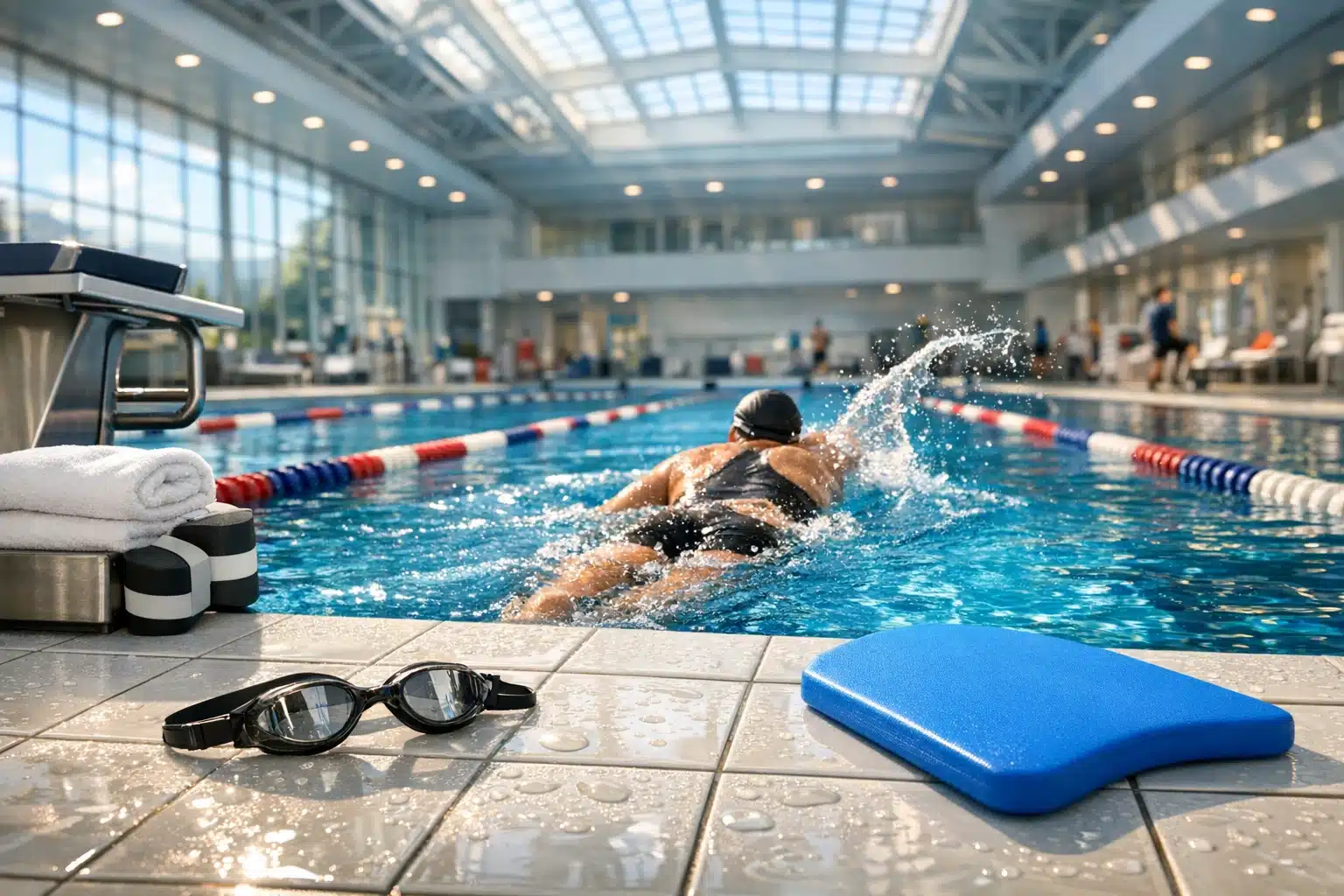
Explore the world of swimming
Swimming is one of the rare activities that feels playful, practical, and demanding at the same time. It builds fitness without the pounding stress common in many land-based workouts, teaches a skill that can improve personal safety, and creates space for recreation, competition, and recovery. From busy public pools to calm lakes at sunrise, it links health, confidence, and freedom in a way few sports can match. That mix of usefulness and joy is exactly why swimming stays relevant across ages, goals, and lifestyles.
Article outline:
- The nature of swimming and what makes movement in water unique
- The physical and mental health benefits that make swimming widely useful
- A comparison of the main strokes and what each one teaches the body
- Practical advice for beginners, training structure, and safety habits
- A concluding guide for readers who want to make swimming part of everyday life
Swimming in Context: Why Water Changes the Rules
Swimming looks graceful from the deck, but anyone who has spent ten focused minutes in a lane knows that water is a strict teacher. It does not forgive rushed breathing, careless balance, or wasted motion. That is precisely what makes swimming so valuable. Unlike many sports that allow momentum to hide technical flaws for a while, swimming reveals them almost immediately. Lift your head too high and your hips sink. Kick wildly and you tire out without moving efficiently. Forget to relax and the water seems to tighten around you. In that sense, the pool is not only a place to exercise; it is also a place to learn economy, rhythm, and control.
Water changes movement in several important ways. First, buoyancy reduces the impact placed on joints, which is one reason swimming is popular among older adults, people returning from injury, and those seeking lower-impact exercise. Second, water provides resistance in every direction. That means even simple actions, such as extending the arm or rotating the torso, require steady muscular engagement. On land, gravity dominates the challenge. In water, drag becomes the constant opponent. This is why a calm-looking lap session can leave the shoulders, back, core, and legs surprisingly fatigued.
Swimming also stands out because it combines technique and conditioning more tightly than many other activities. A runner with imperfect form can still complete a jog. A novice swimmer with poor breathing patterns may struggle after one short length. This technical barrier can feel frustrating at first, yet it is also a strength. Improvements are often measurable and satisfying. A smoother glide, a better exhale underwater, or a cleaner turn can make a session feel easier almost overnight.
Its relevance goes well beyond sport. Swimming matters in public health, education, and recreation. It is a survival skill around beaches, rivers, hotel pools, and family holidays. It is a competitive discipline with global visibility at events such as the Olympic Games. It is also a social activity that welcomes many forms of participation:
- lap swimming for fitness
- learn-to-swim lessons for children and adults
- rehabilitation and water-based therapy
- masters swimming for lifelong competition
- open-water swimming for adventure and endurance
That broad reach explains why swimming never belongs to only one audience. It can be a child’s first confidence-building challenge, an athlete’s cross-training tool, or an adult’s return to movement after years away from exercise. Few activities travel so comfortably between play, performance, and practical safety.
Health Benefits: Fitness, Recovery, and Mental Reset
One reason swimming remains so widely recommended is that it does many jobs at once. It can raise the heart rate, build muscular endurance, encourage flexibility through repeated range of motion, and provide an outlet for stress. Public health guidelines commonly advise adults to aim for at least 150 minutes of moderate aerobic activity each week, and swimming is one effective way to contribute to that target. A steady session of laps, a structured water aerobics class, or interval work in the pool can all support cardiovascular fitness while feeling gentler on the body than high-impact exercise.
The physical benefits are broad. Because swimmers move against continuous resistance, the body works through the shoulders, chest, back, core, hips, and legs in an integrated way. That does not mean swimming replaces every other form of training, but it does mean a well-designed session can feel more complete than many people expect. Compared with running, swimming usually places less repetitive stress on knees and ankles. Compared with cycling, it tends to recruit the upper body more directly. Compared with many gym machines, it demands coordination rather than isolated motion. For people who find traditional workouts monotonous, this full-body quality can make the effort more engaging.
The mental side deserves equal attention. Water has a way of narrowing focus. The sound becomes softer, the body falls into patterns, and the mind often shifts from clutter to cadence. Many swimmers describe the experience as meditative, especially during relaxed laps or open-water sessions in safe conditions. Research on aerobic exercise consistently links regular movement with improved mood, lower stress, and better overall well-being, and swimming fits well into that picture. It offers both stimulation and quiet, a rare combination in modern life.
Swimming can also be useful across different stages of life. For children, it supports coordination and safety awareness. For busy adults, it provides efficient exercise when time is limited. For older adults, it can help maintain activity with less impact than some land-based options. For people rebuilding confidence after a break from exercise, the pool often feels less intimidating than a loud training floor.
- Cardiovascular conditioning through continuous movement
- Muscular endurance supported by water resistance
- Joint-friendly exercise for many people with impact concerns
- Stress relief through rhythm, breath control, and sensory focus
- Adaptability for recreation, rehabilitation, and performance goals
That versatility is important. Not everyone needs the same workout, but many people need an activity they can realistically sustain. Swimming often succeeds because it leaves room for intensity, recovery, fun, and progress without forcing a single model on every body.
Understanding the Main Strokes and What Each One Teaches
If swimming were only about moving from one wall to the other, there would be little to learn after the first lesson. In reality, each stroke teaches a different relationship with the water. The four main competitive strokes, freestyle, backstroke, breaststroke, and butterfly, are not simply variations for variety. Each one emphasizes distinct timing, posture, muscle use, and breathing demands. Learning their differences helps swimmers choose the right tool for their goals instead of treating every lap the same way.
Freestyle, usually performed with the front crawl, is the stroke most people associate with speed and efficiency. It rewards rotation through the torso, a streamlined body line, and controlled side breathing. For fitness swimmers, freestyle is often the foundation because it can be sustained for longer distances once technique improves. A smooth front crawl feels almost like slipping through the water rather than fighting it. Beginners, however, often discover that freestyle is less simple than it appears. Poor timing between the kick, pull, and breath can make the stroke exhausting very quickly.
Backstroke offers a useful contrast. Because the face remains above water, many learners initially find it less stressful from a breathing standpoint. It promotes body alignment, hip position, and shoulder mobility, yet it also requires trust. Without looking forward in the usual way, swimmers must learn orientation, lane awareness, and rhythm. Backstroke can feel wonderfully freeing, but it exposes balance problems the moment the hips start to sink or the kick becomes erratic.
Breaststroke is often seen as approachable because the head rises regularly and the pace can be more measured. Still, it is highly technical. The pull, breath, kick, and glide must be timed carefully. Many recreational swimmers enjoy breaststroke for easier cruising, but competitive breaststroke is a specialized craft that demands precise timing and strong lower-body coordination.
Butterfly is the most dramatic of the four, and for good reason. It asks for simultaneous arm recovery, a wave-like body motion, and powerful timing. Even strong swimmers respect it. Butterfly is not merely “hard freestyle”; it is a different language of movement. When done well, it is strikingly beautiful. When done poorly, it becomes a fast lesson in humility.
- Freestyle: generally the fastest and most common for fitness training
- Backstroke: useful for balance, posture, and shoulder rhythm
- Breaststroke: technical, controlled, and often comfortable for steady pacing
- Butterfly: demanding, expressive, and powerful when technique is sound
For most beginners, the best path is not to chase every stroke at once. Start with breathing control, floating, and a stable body position. Then add freestyle and backstroke, followed by breaststroke timing, and only later experiment with butterfly. Skill in swimming grows like layers of paint on a canvas: each one changes the whole picture.
Getting Started: Training Structure, Equipment, and Safety Habits
Beginning to swim seriously does not require elite fitness, expensive gear, or an athlete’s mindset. It requires patience, access to safe water, and a willingness to let technique develop gradually. Many new swimmers imagine they should be able to jump into a lane and complete long distances immediately. That expectation often leads to frustration. Swimming progress tends to come from short, repeatable efforts rather than heroic first sessions. A beginner who practices breathing, floating, kicking balance, and short lengths with rest will usually improve faster than someone who simply thrashes through fatigue.
Equipment can stay simple. A comfortable swimsuit, well-fitting goggles, and a swim cap if desired are enough for most pool sessions. A kickboard, pull buoy, and fins may be helpful training tools, but they should support learning rather than replace it. Good goggles matter more than people think. When they fit well, they reduce distraction and make the water feel friendlier. That alone can improve confidence.
A smart beginner session often includes a clear structure:
- Warm-up with easy movement and relaxed breathing
- Skill practice such as floating, kicking, or arm drills
- Short swimming repeats with planned rest
- A few focused technique cues instead of ten at once
- Cool-down at an easy pace
For example, a new swimmer might do five minutes of gentle movement, then practice exhaling underwater, followed by six short lengths with rest between each, and finish with an easy back float or relaxed kick. That is a real workout, even if the total distance looks modest on paper. In swimming, quality often matters more than early volume.
Safety deserves permanent attention. In pools, lane etiquette, depth awareness, and supervision rules matter. In open water, preparation becomes even more important. Conditions can change quickly, and visibility, temperature, currents, and access points all affect risk. Open-water swimmers should use appropriate flotation markers where recommended, avoid swimming alone, and choose locations with known safety information. Confidence is useful; overconfidence is not.
There are also common mistakes worth avoiding. New swimmers often hold their breath instead of exhaling steadily underwater, which creates tension and rushed inhalations. Others kick too hard from the knees, lift the head excessively, or treat every lap like a sprint. Lessons, even a short series, can shorten the learning curve dramatically. A trained instructor can spot errors that are hard to feel from inside the stroke.
The encouraging truth is that swimming responds well to consistency. Two or three focused sessions a week can produce real gains in comfort and endurance. Progress may begin quietly, then suddenly become obvious: the wall arrives sooner, the breath feels calmer, and the water that once seemed resistant starts to feel almost cooperative.
Conclusion: Making Swimming Work for Your Life
Swimming rewards many kinds of people, which is part of its lasting appeal. The competitive athlete can use it to sharpen speed and discipline. The office worker can use it to break a sedentary routine without punishing sore joints. A parent may see it as an essential safety skill for a child. An older adult may value the chance to keep moving with confidence and less impact. These are different goals, yet the same body of water can hold all of them at once.
If you are new to swimming, the most useful approach is not to chase perfection. Aim for familiarity first. Learn how to breathe without panic, how to float without rigidity, and how to move one length with control. If you already know the basics, look for small improvements that have a large effect: better alignment, steadier pacing, cleaner turns, or a more relaxed exhale. Swimming often advances through refinement rather than spectacle.
For readers interested in long-term fitness, swimming offers a practical advantage: it can change shape as your needs change. During one phase of life, it may be your main workout. In another, it may support recovery from harder training. At a different time, it may become a mental reset after stressful days. That adaptability keeps it useful when more rigid routines collapse.
There is also something quietly memorable about the experience itself. The first confident push off the wall, the sound of bubbles trailing behind a well-timed exhale, the strange satisfaction of finishing tired but refreshed, these moments help explain why swimmers keep returning. The sport asks for patience, but it gives back a rare combination of strength, calm, skill, and self-trust.
So the best audience for swimming is wider than it first appears. It is for the beginner who wants a starting point, the exerciser who needs variety, the cautious learner who wants safety, and the seasoned participant who still enjoys chasing smoother, smarter movement. Start where you are, keep the sessions manageable, and let progress build through repetition with purpose. In time, swimming stops feeling like a challenge you visit occasionally and begins to feel like a place where you belong.