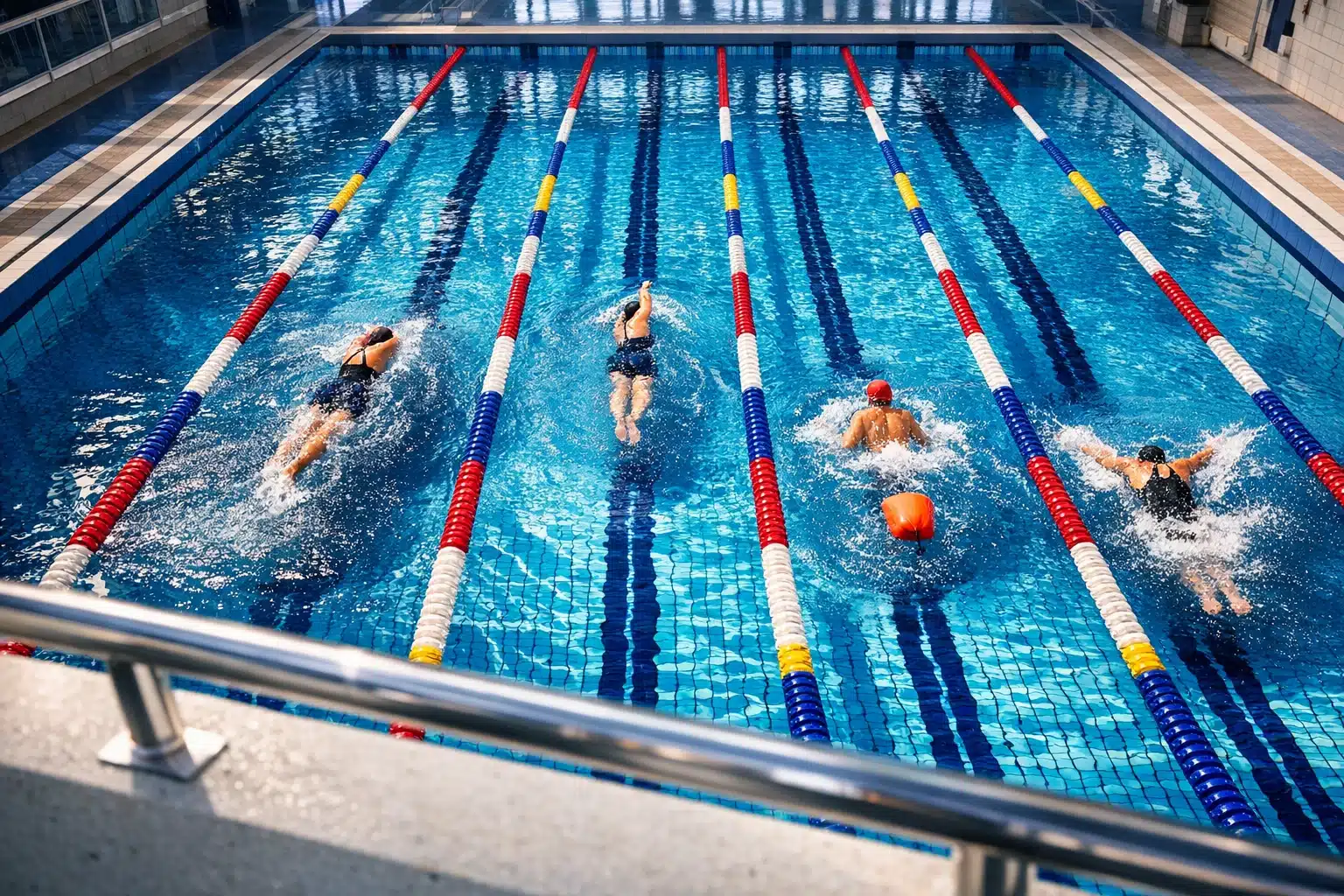
Explore the world of swimming
Introduction
Swimming is one of those rare activities that feels playful and demanding at the same time. It can be a lifesaving skill, a competitive sport, a gentle form of exercise, and a way to reset the mind after a long day. From Olympic lanes to quiet community pools and open-water shores, it meets people at very different ages and fitness levels. That flexibility makes swimming relevant not only for athletes, but for families, students, and anyone trying to move more with less strain.
Outline
• Why swimming stands out as a full-body activity
• The main strokes and how they differ in rhythm, purpose, and difficulty
• Health benefits, training effects, and realistic expectations
• Safety rules, useful equipment, and a smart path for beginners
• A practical conclusion on how different readers can make swimming part of life
Why Swimming Is More Than Just Exercise
Swimming deserves attention because it sits at the crossroads of sport, health, and survival. Unlike many forms of exercise that isolate a few muscle groups or place repeated stress on the same joints, swimming asks the entire body to cooperate. The arms pull, the legs kick, the core stabilizes, and the lungs work in a steady rhythm with movement. Water itself changes the rules. It is far denser than air, which means every stroke meets resistance. At the same time, buoyancy supports part of body weight, reducing the pounding that runners often feel in the knees, hips, and ankles.
That combination explains why swimming is often recommended to a wide range of people. A young athlete may use it to build conditioning. An older adult may value it because the movements are easier on the joints. Someone recovering from an injury may find that water allows motion that feels difficult on land. It is not a cure-all, and it should not replace every other kind of exercise, but it fills an important role that many sports cannot.
Swimming is also unusual because it teaches practical competence. Learning to breathe calmly, float, and move efficiently in water is not only about fitness. It is also about safety and confidence. In many parts of the world, knowing how to swim is treated as a basic life skill for children and a valuable skill for adults who spend time near pools, lakes, rivers, or the sea.
Compared with activities like cycling or gym training, swimming often feels quieter and more immersive. There is no road noise, no heavy equipment, and no impact with the ground. Instead, there is the repeated sound of water, the narrowing focus of each lap, and the strange but satisfying sensation of moving through a medium that always pushes back. For some people, that makes swimming meditative. For others, it is intensely competitive.
A few reasons swimming stands out:
• It combines aerobic work with muscular endurance.
• It can be adapted for beginners, recreational swimmers, and elite competitors.
• It supports skill development as much as raw effort.
• It offers both indoor and outdoor ways to train.
In short, swimming is not just exercise done in water. It is a technical, physical, and highly adaptable activity that can fit many stages of life. That broad usefulness is a large part of its enduring appeal.
The Main Swimming Strokes and What They Reveal About the Sport
One of the most engaging parts of swimming is that it is not a single movement repeated forever. It is a family of strokes, each with its own mechanics, breathing pattern, speed profile, and tactical purpose. The four competitive strokes are freestyle, backstroke, breaststroke, and butterfly. Together, they show how varied swimming can be, even inside the same pool.
Freestyle, usually performed as the front crawl, is the fastest and most commonly taught stroke for lap swimming. The body stays long and relatively flat, the kick is continuous, and the arms alternate in a smooth cycle. Breathing is timed with body rotation, usually every two, three, or more strokes. Freestyle rewards efficiency. A swimmer who fights the water tends to tire quickly, while one who keeps a streamlined position glides with less wasted energy. That is why coaches often say speed in swimming comes as much from reducing drag as from producing force.
Backstroke is sometimes described as freestyle turned skyward, but that comparison only goes so far. Because the swimmer lies on the back, breathing is unrestricted, which makes the stroke less stressful for some beginners. Still, backstroke brings its own challenge: there is no forward view. Swimmers must rely on lane markings, timing, and spatial awareness. It can feel calm and open, almost like floating with purpose, yet in races it becomes highly technical.
Breaststroke is the slowest of the four in competitive terms, but it is often one of the most familiar to casual swimmers. Its pull and kick happen in a more symmetrical pattern, and the head can rise regularly above the surface. That makes it approachable, though efficient breaststroke is far from easy. Timing matters enormously. A poorly timed kick creates drag and interrupts momentum, while a well-timed one produces a smooth surge forward.
Butterfly is the stroke that often commands respect from the deck. Both arms recover together, the body undulates, and the kick usually comes from a dolphin motion. It is powerful, rhythmic, and demanding. To an observer, butterfly can look almost theatrical, as if the swimmer is wrestling and dancing with the water at the same time. In practice, it requires strength, timing, and excellent body control.
These strokes differ in useful ways:
• Freestyle is generally the best choice for speed and long continuous sets.
• Backstroke encourages posture awareness and allows easy breathing.
• Breaststroke suits certain recreational swimmers and emphasizes timing.
• Butterfly builds coordination and power but is technically demanding.
Understanding the strokes helps beginners choose what to learn first and helps spectators appreciate what they are seeing. Swimming becomes more interesting when you realize that each stroke is not merely a style, but a different conversation between the body and the water.
Health Benefits, Training Effects, and Realistic Expectations
Swimming has a strong reputation as a healthy activity, and much of that reputation is well earned. It can improve cardiovascular fitness, muscular endurance, coordination, and overall activity levels. For adults, public health guidelines commonly recommend at least 150 minutes of moderate aerobic activity each week, and swimming can contribute meaningfully to that target. A steady session of laps challenges the heart and lungs, while interval work can raise intensity further for people who want performance gains.
The physical benefits are broad because the body works as an integrated system in the water. The shoulders, back, chest, hips, glutes, and legs all contribute, though the exact emphasis changes from stroke to stroke. Unlike machine-based workouts that often separate body parts into neat categories, swimming encourages linked movement patterns. That matters for posture, coordination, and endurance. It also explains why even experienced gym-goers can feel surprisingly humbled during their first serious swim set.
There are mental benefits too. Repetitive lap swimming often creates a focused state that many people find calming. The rhythm of strokes and breathing can reduce mental clutter, much like a long walk or steady cycle ride. Some swimmers use the pool as a place to think; others value it precisely because thinking gives way to counting lengths, holding pace, and noticing technique. Either way, the water creates a different mental environment from a crowded fitness floor.
Still, realistic expectations matter. Swimming is excellent, but it is not magic. People sometimes assume that because it feels hard, it automatically covers every fitness need. In reality, land-based strength training still offers benefits that swimming alone may not fully provide, especially for bone loading and maximal strength. Likewise, technique affects energy use so much that two swimmers can have very different training effects in the same session. A beginner may be exhausted after 20 minutes because movement is inefficient, while an experienced swimmer can cover a long distance with controlled effort.
Useful training outcomes often include:
• Better aerobic capacity through continuous or interval swimming
• Improved shoulder and hip mobility when technique is sound
• Reduced joint stress compared with many impact-heavy activities
• Greater body awareness through coordinated breathing and movement
The best approach is to view swimming as a valuable pillar of health rather than a complete answer to every goal. Used consistently, and often alongside walking, mobility work, or strength training, it can support long-term fitness in a balanced and sustainable way.
Safety, Equipment, and the Smart Way to Learn
For all its benefits, swimming asks for respect. Water is enjoyable, but it is also an environment where poor decisions can become serious quickly. That is why safety should never be treated as a side note, especially for beginners, children, or anyone moving from pool swimming into open water. Confidence is useful; overconfidence is risky.
In a pool, basic habits matter more than flashy skill. A swimmer should know the depth, understand lane etiquette, and be honest about fatigue. Lifeguards add protection, but they do not replace personal judgment. Children should always be supervised closely, even when they have some swimming ability, because accidents often happen in moments that look ordinary. For adults, one of the most overlooked issues is starting too aggressively. A few fast lengths at the beginning can leave an untrained swimmer breathless and tense, which is exactly the opposite of what good technique requires.
Open water adds a different set of variables. Temperature, currents, waves, visibility, weather, and boat traffic all change the experience. A calm lake can feel inviting from shore and still challenge a swimmer once distance increases. The sea can shift in minutes. That is why open-water swimmers often use bright caps, tow floats, wetsuits suited to conditions, and a buddy system. Swimming alone in unfamiliar natural water is a poor gamble.
Equipment helps, but only when used for the right reasons. Goggles improve visibility and comfort. A well-fitted suit reduces distraction. Kickboards isolate leg work, while pull buoys shift emphasis toward the upper body. Fins can help beginners feel body position more clearly, though relying on them too much may hide technique flaws. For many recreational swimmers, the simplest setup is enough: goggles, a comfortable suit, and a towel. Everything else is optional until a goal demands it.
A sensible learning path often looks like this:
• Get comfortable with floating, exhaling in water, and basic breath control.
• Learn one dependable stroke before chasing speed.
• Build distance gradually instead of treating every visit like a fitness test.
• Ask for feedback from a qualified instructor if progress stalls.
• Treat rest as part of learning, not as failure.
There is also an emotional side to learning. Many adults feel embarrassed starting late, but the pool is full of quiet beginners hiding in plain sight. Some are learning to put their face in the water. Some are returning after decades away. Some can swim a little but want more control. Progress comes faster when ego steps aside. A calm, methodical approach turns swimming from an intimidating skill into an accessible one, and that shift often makes the difference between quitting early and staying with it for years.
Conclusion: Finding Your Place in the Water
Swimming can meet very different needs, which is why it continues to matter long after the first lesson or the first race. For a child, it may begin as water safety and basic confidence. For a busy adult, it may become a reliable form of exercise that fits around work and family life. For an older swimmer, it may offer movement with less joint stress. For a competitor, it can turn into a lifelong pursuit measured in splits, pacing, and technique refinements so small they are almost invisible to anyone outside the sport.
The most practical lesson for readers is that swimming does not demand a single identity. You do not have to become a racer to benefit from regular pool sessions. You do not have to swim butterfly to call yourself a swimmer. You do not need expensive gear, dramatic goals, or a perfect background in sport. What matters more is consistency, patience, and respect for the environment. Even one or two sessions a week can build skill and comfort over time.
If you are deciding whether to start, the barrier is often psychological rather than physical. Pools can seem technical, public, and slightly intimidating. Yet nearly every confident swimmer once stood at the edge wondering how breathing, floating, and forward motion could ever feel natural together. With practice, they do. Then something interesting happens: the water stops feeling like an obstacle and starts feeling like a place where effort becomes smooth.
For readers who want a simple way forward, keep it manageable:
• Begin with clear goals such as learning one stroke or swimming for 20 minutes without stress.
• Use lessons or structured guidance if technique feels confusing.
• Mix ambition with patience, because swimming improves in layers rather than overnight.
• Stay attentive to safety, especially outside the pool.
• Let enjoyment count as progress, not only distance or speed.
In the end, swimming is valuable because it combines usefulness with possibility. It can protect, strengthen, calm, challenge, and connect people to a sport that rewards both discipline and curiosity. Whether you are stepping into the shallow end for the first time or returning to the lane after years away, there is room in swimming for your pace, your purpose, and your version of success. That is the real invitation at the heart of the sport: not simply to move through water, but to discover what kind of swimmer you want to become.