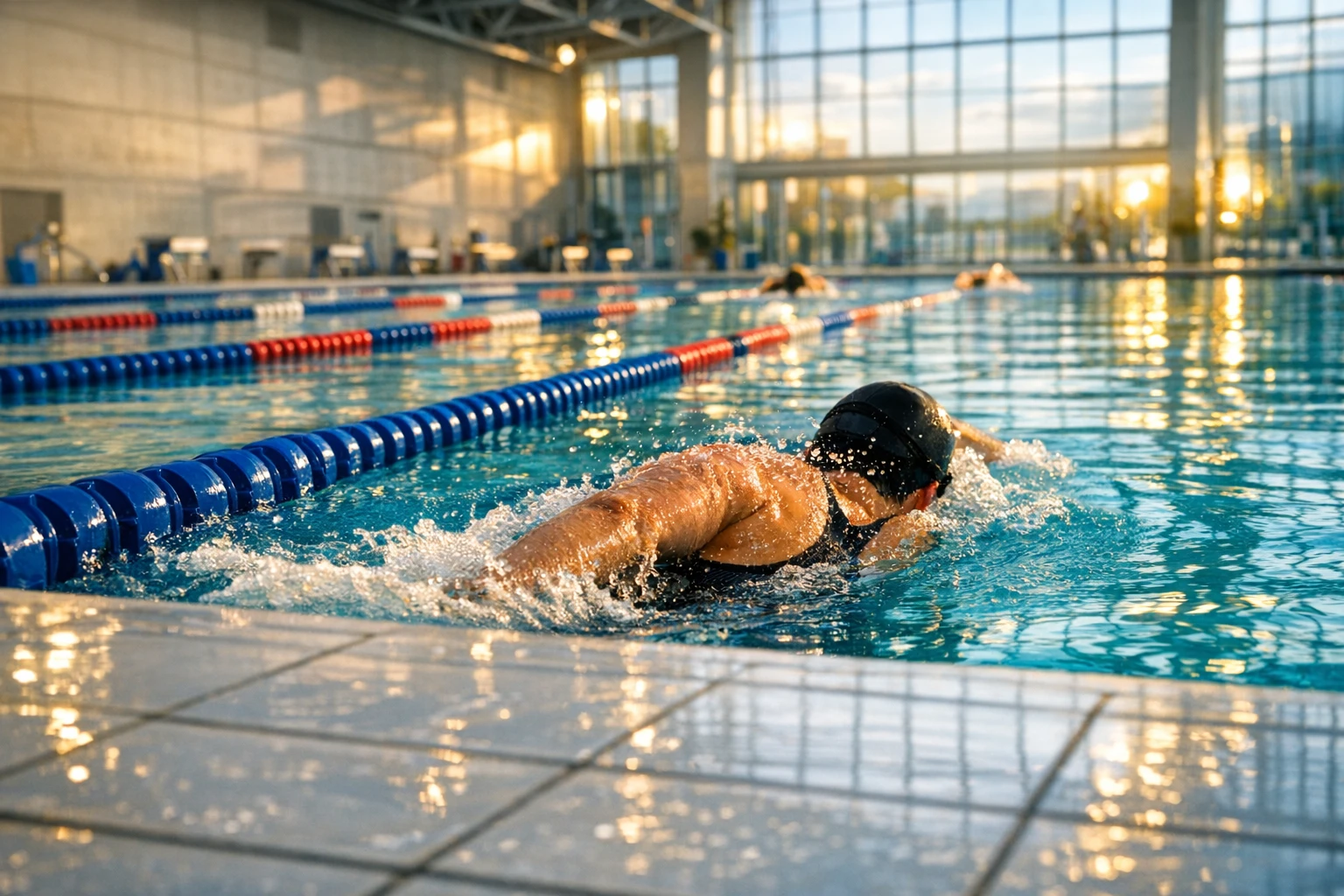
Explore the world of swimming
Swimming sits at a rare crossroads where survival skill, competitive sport, full-body exercise, and quiet recreation meet. A pool lane can hold an Olympian chasing fractions of a second, a child learning confidence, and an adult easing stiff joints after a long day. That range makes swimming especially relevant now, when many people want movement that is effective, low impact, and mentally refreshing. To explore the topic clearly, this article begins with a simple outline and then moves through technique, health, safety, and practical ways to build a lasting habit.
Article Outline
This article is organized into five parts so readers can move from the big picture to everyday practice.
- Why swimming matters as a life skill, sport, and form of exercise
- How the four main strokes work and what good technique looks like
- What swimming can do for cardiovascular health, strength, mobility, and mental well-being
- How safety, equipment, and environment change the swimming experience
- How beginners and regular swimmers can build a routine that lasts
Why Swimming Matters: More Than a Sport
Swimming matters because it solves several problems at once. It teaches water safety, develops physical fitness, offers a competitive pathway, and gives many people a form of movement that feels gentler than pounding through miles on pavement. Few activities can claim that range. A person may begin swimming for one reason and stay with it for another: a child starts with lessons, a teenager joins a team, an adult uses lap swimming to manage stress, and an older athlete returns to the pool because the body still wants challenge even when joints ask for mercy.
Part of swimming’s importance comes from the environment itself. Water changes movement in a way land cannot. It supports body weight while also resisting motion from every direction. That means the body can work hard without always feeling punished. A slow kick against the water can be tiring because the resistance is constant. At the same time, buoyancy can make exercise more accessible for people recovering from injury, living with joint pain, or carrying extra body weight. Compared with running, swimming generally produces less impact stress. Compared with cycling, it usually requires more whole-body coordination. Compared with many gym machines, it asks the body to organize breathing, balance, timing, and propulsion at the same time.
Swimming also has cultural and practical value. In many parts of the world, knowing how to float, tread water, and move efficiently through water is a basic safety skill rather than a luxury. Drowning remains a preventable public health issue, especially for children, which is one reason swim lessons are so widely recommended. Beyond safety, swimming has a global sporting identity. It is a central Olympic sport, a foundation of triathlon, and a key training tool for water polo players, surfers, and lifesavers. Elite competition may look distant from recreational swimming, but the connection is real: both depend on rhythm, breath control, and efficiency.
There is also something quietly distinctive about the experience. In a pool, sound softens, vision narrows, and attention turns inward. The water does not care about a busy schedule or a cluttered inbox. It gives honest feedback. Rush your stroke, and you slip less. Hold a cleaner line, and the lane suddenly feels shorter. That combination of usefulness and immediacy is rare.
- Swimming is a life skill with direct safety value.
- It can serve fitness, rehabilitation, recreation, and competition.
- It offers resistance training and aerobic work in one environment.
- It remains relevant across childhood, adulthood, and older age.
For all of these reasons, swimming deserves attention not only as a sport people watch, but as a practical skill and sustainable habit people can carry for decades.
Understanding the Main Strokes and the Logic of Technique
To an observer, swimming can look simple: arms pull, legs kick, body moves forward. In practice, technique is everything. Water is unforgiving when movement is misaligned. A slightly dropped elbow, a mistimed breath, or a kick that bends too much at the knee can waste energy fast. That is why strong swimmers often appear smoother rather than simply stronger. They are not fighting the water as much; they are learning how to travel through it with less drag and better timing.
The four competitive strokes each have a distinct logic. Front crawl, often called freestyle in racing, is generally the fastest and most efficient over long distances when performed well. The body rotates from side to side, allowing a longer stroke and a cleaner breath. Breathing can happen every two, three, or more strokes depending on speed and comfort. Backstroke shares some of crawl’s rotational principles, but because the face stays above the surface, breathing is easier to organize. Its challenge is orientation. Without a clear view forward, swimmers must learn spatial awareness and trust their line.
Breaststroke is slower, but for many recreational swimmers it feels more approachable because the head can come up naturally during the stroke cycle. The timing is precise: pull, breathe, kick, glide. When the kick is wide or rushed, the stroke loses efficiency quickly. Butterfly is the most demanding of the four for many learners. It uses symmetrical arm recovery and a wave-like body motion powered by the hips and core. Done poorly, it becomes exhausting. Done well, it looks like controlled force flowing through a single line.
Across all strokes, several technical ideas matter again and again:
- Body position: a flatter, more balanced body usually creates less drag.
- Breathing control: calm exhalation in the water helps prevent rushed inhalation.
- Catch and pull: the goal is to hold water effectively, not slap at it.
- Kick function: in many cases the kick supports balance and rhythm as much as raw speed.
- Streamlining: starts, push-offs, and turns reward a tight, aligned shape.
Technique also changes with purpose. A sprinter may use a higher stroke rate and stronger kick, while a distance swimmer usually protects efficiency over many laps. An open-water swimmer may sight ahead and accept a less perfect rhythm in exchange for direction. A beginner often improves fastest not by swimming harder, but by slowing down enough to notice what the hands, hips, and head are doing.
This is one of swimming’s deeper lessons: power matters, but shape matters first. In the water, elegance is not decoration. It is mechanics.
Health, Fitness, and Performance Benefits in the Water
Swimming is often praised as a full-body workout, and that description is fair, but it still undersells what the activity can offer. It combines aerobic training, muscular endurance, coordination, breath control, and mobility in a single session. Depending on pace, stroke choice, and duration, a swim can be restorative, moderately challenging, or brutally demanding. That flexibility is one reason the activity works for such different people, from rehabilitation patients to competitive athletes.
On the cardiovascular side, swimming can help people meet widely accepted physical activity guidelines. Public health organizations such as the World Health Organization recommend at least 150 minutes of moderate-intensity aerobic activity per week for adults, and swimming can absolutely count toward that target. A steady lap session raises heart and breathing rates while sparing the body repeated impact with the ground. Many swimmers also find they can train consistently because the pool leaves them feeling worked, but not beaten up. That consistency may matter more than any dramatic single workout.
Swimming also trains muscles in a way that feels different from lifting weights or using machines. The resistance comes from the water and stays present throughout the movement. The shoulders, back, chest, core, hips, and legs all contribute, though the emphasis shifts by stroke. Front crawl and backstroke rely heavily on shoulder stability and rotational control. Breaststroke asks more from the inner thighs and timing of the kick. Butterfly places large demands on the upper body and trunk. Even easy lap swimming quietly recruits postural muscles because the body is constantly trying to stay long and balanced.
The benefits are not only physical. Many swimmers describe a session as mentally clarifying. The repetitive rhythm, controlled breathing, and reduced sensory clutter can create a meditative quality. Stress does not vanish at the pool door, but the water can interrupt its grip. There is evidence that regular exercise supports mood, sleep quality, and stress management, and swimming is well positioned in that conversation because it can be both absorbing and sustainable.
A few practical points make these benefits easier to understand:
- Swimming can improve endurance without the joint impact associated with some land sports.
- Different strokes distribute effort across the body in different ways.
- Water’s cooling effect may make longer aerobic work feel more manageable.
- Technique strongly influences how effective and comfortable a workout becomes.
Calorie use varies widely, so it is better to think in ranges than promises. A gentle session may be light exercise, while a vigorous set with short rest can be intense conditioning. The real strength of swimming is not a magic number on a watch. It is the combination of challenge, adaptability, and longevity. When an activity can be scaled for beginners and still test elite performers, it has unusual staying power.
Safety, Equipment, and the Different Worlds of the Water
Swimming is rewarding, but it should never be treated casually. Water can be welcoming one moment and demanding the next, especially outside the predictable borders of a pool. That is why any serious discussion of swimming has to include safety, environment, and equipment. Skill is part of safety, but it is not the whole story. Judgment, supervision, and preparation matter just as much.
For beginners and families, the first priority is straightforward: learn basic water competence from a qualified instructor and treat supervision as non-negotiable. In many countries, drowning is a major preventable cause of accidental death among children. Formal lessons can reduce risk, but lessons do not replace attentive adults, pool barriers, or sensible rules. A child who can swim a short distance is not automatically safe in deep water, cold water, surf, or crowded settings. The same principle applies to adults who overestimate their ability after years away from the water.
Equipment plays a supporting role. Good goggles improve comfort and visibility. A well-fitted suit reduces distraction. A swim cap can help with hair management and, in some settings, lower drag. Beyond that, training tools should be used with purpose rather than fashion. Kickboards isolate leg work, pull buoys shift focus to the upper body, fins can improve body position and let swimmers feel speed, and paddles increase resistance but should be introduced carefully to avoid shoulder overload. None of these tools replaces sound technique. They are amplifiers, not shortcuts.
The setting changes the demands dramatically. Pool swimming is controlled, measured, and ideal for learning pace, turns, and repeatable workouts. Open-water swimming is another world altogether. Lakes, rivers, and oceans introduce currents, chop, temperature shifts, limited visibility, and navigation problems. A swimmer who feels smooth in a 25-meter lane may be surprised by how disorienting open water can feel. For that reason, open-water sessions are safer with bright caps, a swim buoy where appropriate, a partner or support group, and knowledge of local conditions.
It also helps to understand the practical culture of swimming spaces:
- Rinse before entering pools when required by facility rules.
- Choose a lane that matches your speed rather than your ambition.
- Rest at the wall without blocking faster swimmers.
- Tell someone if you feel dizzy, cramped, or unusually fatigued.
- Respect weather warnings and never treat open water casually.
Competitive environments add another layer. Starts, turns, pace clocks, and race strategy can make swimming more technical and more exciting. Yet the basics remain the same. Safe habits, suitable gear, and respect for the water are not beginner concerns that disappear later. They are permanent parts of swimming well.
How to Start, Improve, and Keep Swimming for Life
Starting swimming can feel awkward, especially for adults who assume everyone else learned years ago. The good news is that progress in the water rarely depends on background alone. It depends on frequency, patience, and willingness to learn a different kind of movement. Unlike some activities where brute effort can hide weak form for a while, swimming rewards humility. A short, thoughtful session often teaches more than a long struggle through bad habits.
For complete beginners, the first goals should be practical rather than glamorous. Learn to relax in shallow water. Practice blowing bubbles, floating on the front and back, and pushing off the wall in a straight line. Add simple kicking and basic arm actions only after comfort improves. Many adults benefit from lessons because instructors can correct problems that feel invisible from inside the body. Lifting the head too high, holding the breath, or kicking from the knees can make the water feel hostile even when the fix is small.
Once the basics are in place, improvement usually follows a simple pattern: swim a little, rest a little, repeat with intention. Three shorter sessions per week often produce better learning than one heroic workout on the weekend. Technique drills can help, but only if the swimmer understands what each drill is trying to teach. A fingertip drag drill may improve recovery in freestyle. Single-arm work may reveal balance issues. Sculling may build a better feel for the catch. The key is to connect the drill to the full stroke rather than collecting drills like souvenirs.
A sustainable routine often includes variety:
- Easy aerobic laps for comfort and endurance
- Short technique sets with plenty of focus
- Moderate intervals to develop pace control
- Occasional stroke work to prevent monotony and improve coordination
- Dryland mobility or strength training to support shoulders, hips, and core
Goals should also match the swimmer’s stage. One person may aim to swim 500 meters without stopping. Another may want to improve a 100-meter time, complete a triathlon, or join a masters club for structure and community. A parent may simply want enough confidence to enjoy the water safely with children. All of these are legitimate reasons to train.
What keeps people swimming for years is rarely a single benefit. It is the combination. The pool can be a place to rebuild fitness, sharpen discipline, protect mobility, or clear mental noise. Some days it feels like work. Other days it feels like slipping into a second atmosphere where effort becomes rhythm. That versatility is why swimming lasts. It meets people where they are, then quietly asks them to return a little stronger, a little calmer, and a little more skillful the next time.
Conclusion for New and Returning Swimmers
For beginners, casual fitness seekers, parents, and experienced athletes alike, swimming offers a rare blend of utility and enjoyment. It builds skill, supports health, and teaches respect for an environment that rewards patience more than force. If you are just starting, focus on comfort, instruction, and regular practice rather than speed. If you already swim, refining technique, training with purpose, and staying alert to safety can make every session more valuable. In the end, swimming is not only about moving through water; it is about learning a form of movement that can stay useful and meaningful for life.