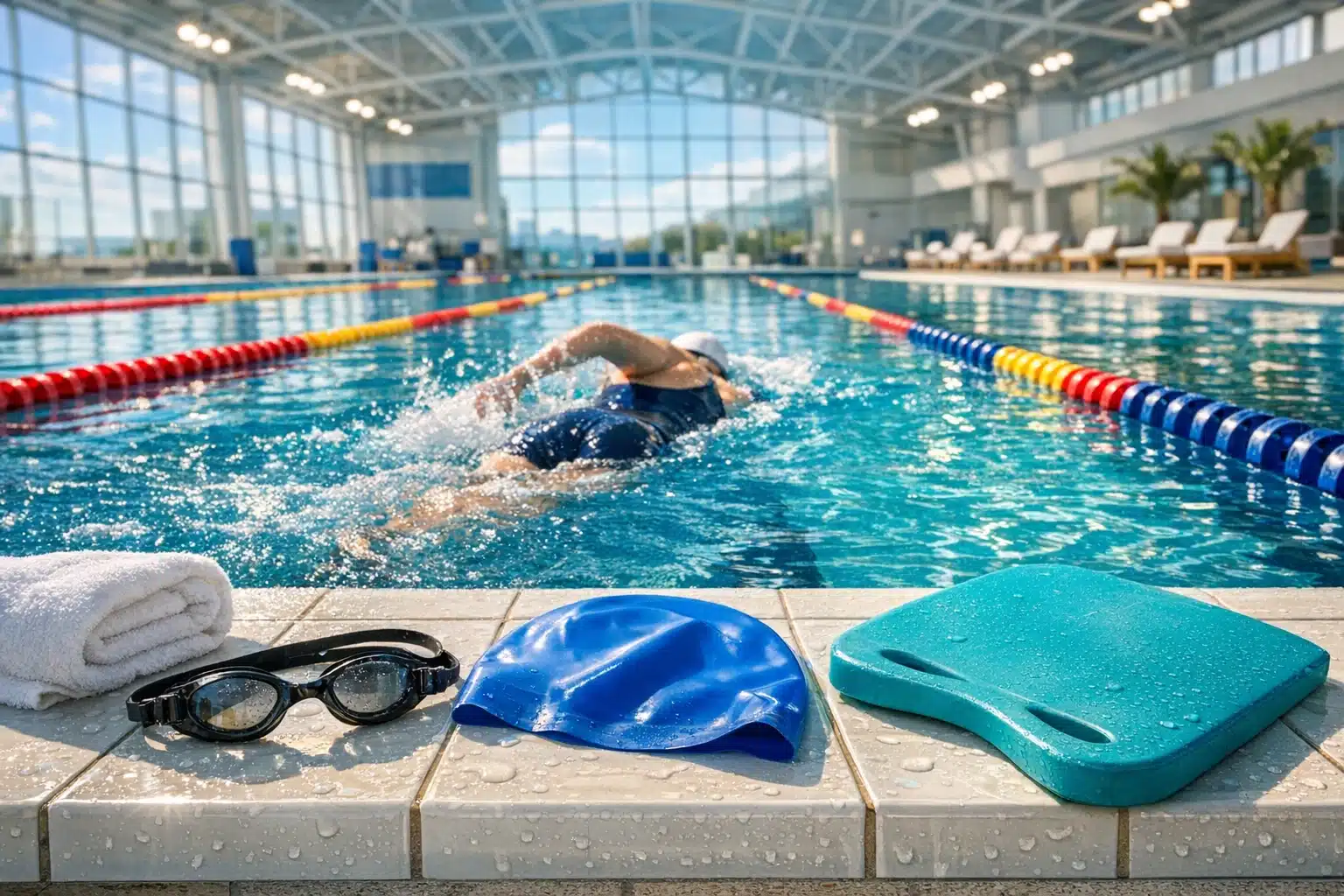
Explore the world of swimming
Introduction and Outline
Swimming is one of the few activities that can feel playful while quietly demanding real skill, because every length of the pool blends movement, breath, and timing. It can teach a child confidence, give a busy adult a joint-friendly workout, and help an older person maintain strength and mobility without the repeated impact common on land. It also stays relevant across a lifetime, serving several goals at once: safety, exercise, recovery, competition, and simple enjoyment. This article explains how swimming works, why technique changes everything, and how readers can build a smarter relationship with the water.
Before diving into details, it helps to see the shape of the discussion ahead. This article is organized around five connected themes:
• why swimming matters for health, safety, and long-term fitness
• how the four main strokes differ in rhythm, efficiency, and difficulty
• what practical training looks like for beginners and experienced swimmers
• how age, injury history, and lifestyle influence the way people use the water
• what kind of mindset helps readers stay consistent and enjoy progress over time
That structure matters because swimming is often misunderstood. Some people see it only as a summer pastime, while others view it as a technical sport reserved for competitors gliding through lanes at dawn. In reality, it sits comfortably between recreation and performance. A relaxed session can lower stress after a long day, while a focused workout can challenge the heart, lungs, muscles, and nervous system all at once. Water changes the rules of movement: buoyancy reduces body weight, resistance comes from every direction, and breathing must sync with motion rather than happen casually in the background.
These qualities give swimming unusual range. A person recovering from impact-heavy training may use the pool for active recovery. A parent may treat lessons as an essential life skill. A triathlete may chase efficiency in open water, where sighting and pacing matter as much as raw fitness. Even casual swimmers learn something valuable every time technique improves, because smoother movement usually means less wasted effort. Think of water as a patient teacher: it does not flatter, but it gives immediate feedback. If the body is tense, the stroke feels heavy. If alignment improves, the whole lane seems to lengthen. That simple honesty is one reason swimming remains so compelling.
Why Swimming Matters: Health, Safety, and Whole-Body Benefits
The strongest case for swimming is not that it does one thing exceptionally well, but that it does many useful things at the same time. It can build cardiovascular endurance, strengthen major muscle groups, improve coordination, and support flexibility, all while being easier on the joints than running or many court sports. Because water is about 800 times denser than air, even simple movements create resistance. That means the arms, shoulders, back, core, hips, and legs all contribute during a session, especially when technique is deliberate instead of rushed.
From a fitness perspective, swimming is remarkably adaptable. A slow recovery swim and a hard interval set can happen in the same pool, yet they place very different demands on the body. Moderate lap swimming commonly burns several hundred calories per hour, with totals often falling somewhere in the 400 to 700 range depending on body size, pace, stroke choice, and skill level. Unlike some forms of exercise that punish beginners with soreness from impact, pool work lets many people train steadily while managing stress on the knees, ankles, and lower back. This does not make it effortless, of course. Anyone who has tried to hold a clean body line for a few lengths quickly learns that the water charges a toll for every technical mistake.
Swimming also matters because it is tied to safety in a direct way. Knowing how to float, breathe, tread water, and move calmly through a pool or natural body of water is more than a hobby; it can be a protective life skill. Formal swim instruction is associated with lower drowning risk in children, and basic water competence remains valuable for adults who boat, travel, or spend time near lakes and beaches. In that sense, swimming is unusual among sports: participation itself can increase personal safety outside the training environment.
Its mental benefits deserve equal attention. Repetitive laps can create a steady, almost meditative rhythm, especially when exhalation in the water becomes controlled and relaxed. Many swimmers describe a session as both energizing and quieting, a combination that sounds contradictory until you experience it. The mind sharpens because the body must stay organized. At the same time, noise fades, vision narrows to the lane, and ordinary distractions lose their volume. For readers searching for an activity that blends fitness with focus, that combination is hard to ignore.
The Language of the Water: Strokes, Technique, and Skill Development
Learning to swim well means learning that speed is not the first goal; efficiency is. The four competitive strokes, freestyle, backstroke, breaststroke, and butterfly, each ask the body to solve a different movement puzzle. Freestyle is usually the fastest and most energy-efficient for distance. Its alternating arm action and steady flutter kick allow continuous propulsion, which is why it dominates lap training, triathlon, and most fitness swimming. Backstroke shares some of that rhythm, but because the swimmer faces upward, it changes breathing demands and can feel more forgiving for people who dislike putting the face in the water continuously. It also highlights body alignment, since hips that sink create instant drag.
Breaststroke is often the first stroke casual swimmers feel comfortable with because the head can rise forward and the pace is easier to control. Still, it is not automatically easy. Timing matters, and poor kick mechanics can strain the knees. Butterfly, by contrast, is the stroke that announces itself dramatically. When done well, it looks almost theatrical, with a wave passing from chest to hips while both arms recover together over the surface. When done poorly, it becomes exhausting in a matter of seconds. That contrast reveals one of swimming’s core truths: elegant technique saves energy in ways brute force never can.
Several technical habits improve every stroke:
• keeping the head in a stable, relaxed position
• rotating or extending from the torso rather than muscling every pull with the shoulders
• finishing exhalation underwater so inhalation feels quick and natural
• reducing drag by lengthening the body line and avoiding rushed, splashing movements
Drills help translate those ideas into muscle memory. Catch-up freestyle can teach patience in the front of the stroke. Kicking on the back improves body balance and ankle relaxation. Single-arm work reveals whether rotation is coordinated or chaotic. Fins can help beginners feel a more streamlined position, while pull buoys isolate upper-body mechanics. None of these tools are magic on their own. They simply make feedback clearer.
Technique is where swimming becomes quietly fascinating. A runner can grind through a poor stride for a while, but a swimmer meets resistance immediately. That is why improvement often arrives in surprising ways. A tiny change in hand entry, breathing timing, or kick rhythm can make the lane feel shorter, calmer, and faster. In the water, small details have a large voice.
Training for Fitness and Performance: Workouts, Equipment, and Open Water Realities
Good swim training is built on intention. Random laps can still be useful, especially for stress relief or general movement, but consistent progress usually comes from structured sessions. In most pools, a length is either 25 meters, 25 yards, or 50 meters, and that measurement shapes the rhythm of every workout. Swimmers often organize training into warm-up, skill work, main set, and cool-down. That simple framework keeps sessions balanced. A warm-up prepares the shoulders, heart, and breathing pattern. Drills sharpen technique while fatigue is still low. The main set targets endurance, speed, pacing, or stroke control. The cool-down helps the body settle rather than stopping abruptly after hard effort.
For beginners, shorter repeats with regular rest are usually more productive than one long struggle. A set such as 8 x 25 meters with 20 to 30 seconds of rest may teach better form than pushing through 400 meters in a single tense effort. Intermediate swimmers often work with sets like 10 x 100, where pacing becomes measurable and consistency matters. More advanced athletes may train stroke rate, lactate tolerance, turns, underwater work, and race-specific pacing. Even then, performance is not only about suffering through difficult sets. It is also about understanding where time is lost. A sloppy turn, a weak push-off, or poor streamlining can waste seconds that no extra arm strength can recover.
Equipment should support a purpose rather than decorate a swim bag. Common items include:
• goggles for clear vision and reduced irritation
• a well-fitted cap to manage hair and minimize drag
• fins for body position and kick development
• a pull buoy to isolate the upper body
• a kickboard for targeted leg work
• a pace clock or waterproof watch for timing intervals
Open water adds another layer of complexity. Unlike a lane pool, lakes, rivers, and oceans do not provide black lines on the bottom or walls every few seconds. Swimmers must sight forward, judge currents, manage temperature, and stay calm when visibility is poor. Wetsuits may improve buoyancy in legal conditions, but they also change body position and stroke feel. Safety becomes non-negotiable: swim with support, know the route, respect weather, and understand local rules. There is romance in open water, certainly, but it is the kind of romance that rewards preparation. The surface may look inviting from shore, yet conditions can shift quickly. Smart swimmers admire the water without underestimating it.
Swimming Across Life Stages: Children, Adults, Older Swimmers, and Recovery
One reason swimming remains so widely recommended is that it can evolve with the person doing it. For children, the earliest value is usually confidence and safety. Learning how to float, submerge the face calmly, recover to the wall, and move through the water with control creates a foundation that extends well beyond organized lessons. Children also benefit from the coordination demands of swimming, since the sport asks the brain and body to synchronize breathing, kicking, arm movement, and balance. It is physical learning in a very literal sense: the child is not only getting stronger but also becoming more comfortable in an environment that behaves differently from solid ground.
Adults often enter the pool for different reasons. Some want fitness without pounding their joints. Others use swimming as a mental reset after hours at a desk or as cross-training alongside cycling, running, rowing, or strength work. In those cases, the appeal is practical. The water allows hard cardiovascular effort with reduced impact, making it useful for people managing orthopedic wear and tear or returning to exercise after time away. Lap swimming also scales well. A complete beginner may alternate one length of easy movement with a short rest, while an experienced athlete may track splits and stroke counts with almost laboratory precision.
Older adults frequently find that the pool offers freedom they do not feel elsewhere. Buoyancy can reduce the sense of heaviness that sometimes discourages land exercise, while the resistance of the water still challenges muscles and balance. That combination can help support mobility, general conditioning, and day-to-day function. Of course, individual medical needs vary, so advice from a clinician or qualified coach may be important when pain, heart conditions, or recent surgery are involved. Swimming is adaptable, but adaptation works best when it is informed.
Recovery settings provide another useful lens. Aquatic exercise is commonly included in rehabilitation programs because water can assist movement while limiting impact and allowing gradual loading. A person with an ankle issue may not tolerate running, yet may be able to walk, kick lightly, or perform controlled drills in chest-deep water. Beyond injury, swimming can also restore variety to a fitness routine that has gone stale. Many runners discover that pool sessions improve breathing discipline and upper-body endurance. Many strength athletes realize that a few relaxed lengths reveal stiffness they had ignored.
In short, swimming is not reserved for one age, body type, or personality. It can meet a playful child, a stressed professional, a recovering athlete, and an active retiree on terms each one can use. Few activities carry that much range so naturally.
Conclusion for Readers: How to Build a Lasting Relationship with Swimming
If you are reading this as someone who is curious about swimming rather than already devoted to it, the encouraging news is simple: you do not need to start like an athlete to benefit like one. The smartest first step is not chasing speed. It is building comfort, consistency, and control. A short session done with attention to breathing and body position will usually teach more than an exhausted session filled with rushed strokes. In that sense, swimming rewards patience unusually well. The water does not care about ego, but it responds generously to practice.
Everything discussed in this article points back to one central idea. Swimming matters because it combines utility and enjoyment. It improves fitness while teaching a safety skill. It can support recovery while still challenging the body. It invites technical learning without demanding that every participant become competitive. That range is rare. Some readers will be drawn to the calm repetition of lap work. Others will enjoy the puzzle of stroke mechanics or the adventure of open water. All of those paths are valid.
If you want to turn interest into action, keep the process simple:
• learn or refresh basic water safety and floating skills
• choose a realistic schedule, even if it is only one or two swims per week
• focus on technique early, because smoother movement reduces frustration
• use modest goals, such as swimming continuously for ten minutes or mastering bilateral breathing
• seek feedback from a coach, instructor, or experienced swimmer when possible
Progress in the pool often arrives quietly. One day the breathing settles. Another day the kick stops fighting the body. Then a distance that once felt impossible becomes routine, almost casual. Those are satisfying moments because they are earned through attention rather than drama. For the beginner, the takeaway is to start with curiosity. For the returning swimmer, it is to respect fundamentals. For the dedicated athlete, it is to remember that refinement never really ends. The world of swimming is broad enough for all three. Step in carefully, learn steadily, and the water can become not just a place to exercise, but a place to think, recover, compete, and belong.