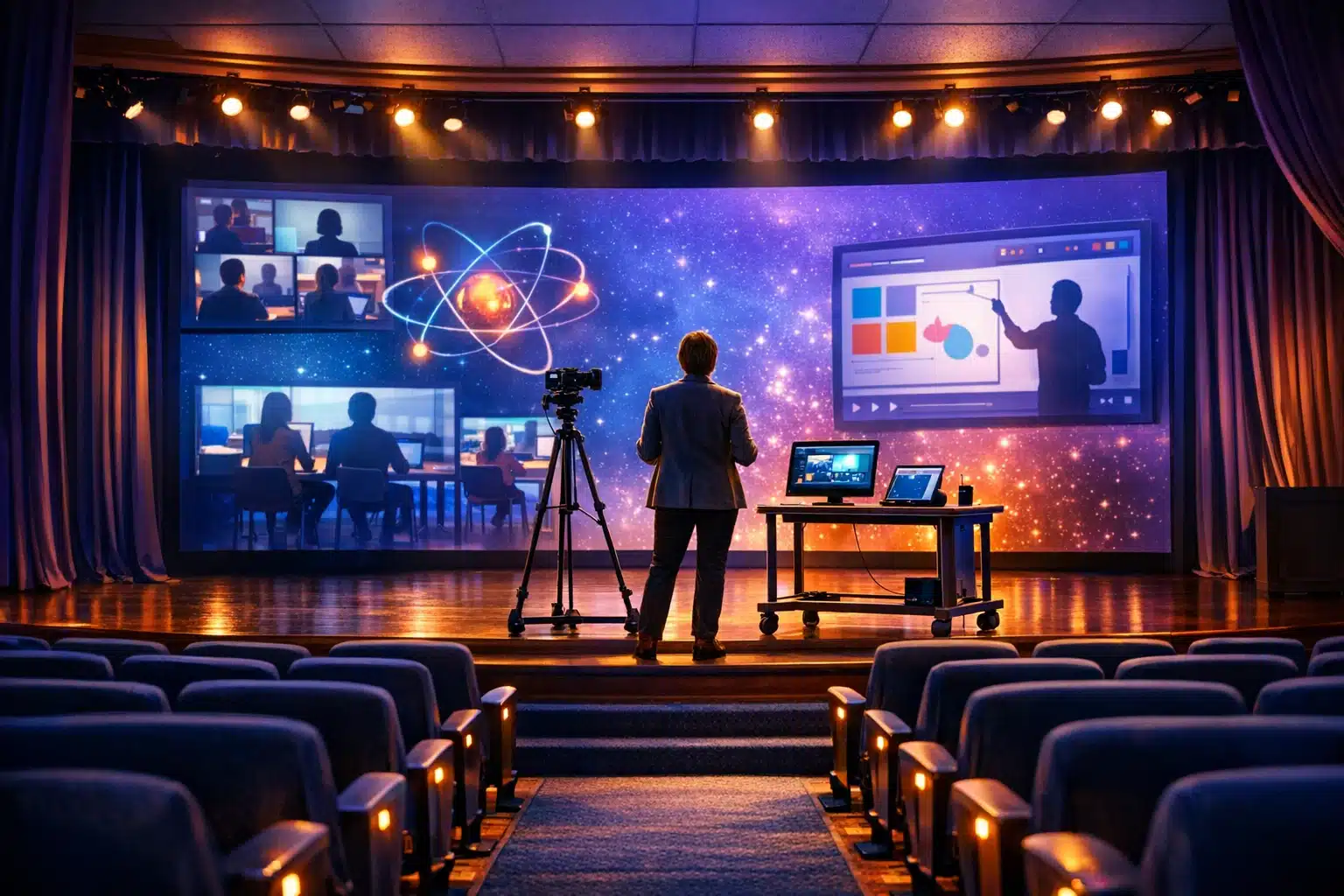
Exploring Technology: Integration of technology in educational processes.
Technology is no longer an occasional classroom guest; it has become part of the architecture of learning itself. From shared documents and virtual labs to adaptive apps and captioned video lessons, digital tools now influence how knowledge is presented, practiced, and measured. Understanding that shift matters because schools are not simply buying devices; they are redesigning attention, access, feedback, and opportunity for a generation that learns in both physical and digital spaces.
Outline of the article:
- How classrooms evolved from occasional computer use to connected digital ecosystems
- What educational technology improves for students, teachers, and families
- Which tools have the strongest practical impact and how they compare
- Why equity, privacy, training, and screen fatigue remain serious concerns
- What a balanced, future-ready approach should look like for educators and institutions
From Chalkboards to Cloud Platforms: How Educational Technology Evolved
The integration of technology into education did not happen in one dramatic leap. It arrived in waves, each one changing the classroom a little more than the last. Early school computers were often placed in separate labs, treated almost like museum exhibits that students visited on schedule. Their use was limited, highly controlled, and disconnected from most daily instruction. Over time, that model gave way to a more integrated approach. Internet access, projectors, interactive whiteboards, tablets, and cloud-based platforms gradually moved technology from the edge of school life to the center of it.
The change became especially visible in the 2000s and 2010s. Learning management systems made it easier to distribute assignments, collect work, and organize course materials. Devices became cheaper, wireless networks improved, and students increasingly arrived at school with digital habits already formed. A history lesson no longer had to depend only on a textbook chapter; it could include archived speeches, interactive maps, and collaborative annotation. A science lesson could move from static diagrams to virtual simulations that let students test variables without a fully equipped lab.
The Covid-19 pandemic accelerated a transition that was already underway. According to UNESCO, school closures in 2020 disrupted learning for more than 1.6 billion learners worldwide. That moment exposed both the power and fragility of digital education. Schools that had platforms, teacher training, and reliable internet could adapt more quickly. Schools without those foundations faced serious interruptions. In other words, technology was not a side issue anymore; it had become part of educational resilience.
There is also an important comparison to make between older and newer models of instruction. Traditional classrooms often revolved around one pace, one location, and one main source of authority. Technology-enabled classrooms can still preserve the teacher’s leadership, but they add flexibility. Students may review a recorded explanation after class, join a discussion board in the evening, or receive automated practice tailored to their level. That does not automatically make learning better, but it changes the conditions under which learning happens.
Several milestones shaped this evolution:
- Computer labs introduced basic digital literacy but often remained separate from core teaching
- Internet access connected classrooms to current information and global collaboration
- Cloud tools enabled shared documents, remote access, and simpler communication
- Mobile devices made learning more portable and continuous
- Video conferencing normalized hybrid and remote instruction when needed
What emerges from this history is not a story of machines replacing teachers. It is a story of schools redefining how knowledge flows. The chalkboard has not vanished, but it now shares the stage with dashboards, digital portfolios, and platforms that never quite sleep.
What Technology Adds to Teaching and Learning in Real Terms
The strongest case for technology in education is not novelty; it is practical improvement. When used well, digital tools can help teachers teach more clearly and help students learn more actively. One major advantage is access to varied formats. A printed page offers one path into a topic, while a digital environment can offer text, audio, visuals, quizzes, and interactive elements. That matters because classrooms contain students with different strengths, language backgrounds, attention patterns, and confidence levels.
Feedback is another area where technology can make a visible difference. In a fully paper-based workflow, a teacher may need days to return a quiz, and by then the learning moment has cooled. Digital tools can shorten that gap. A student practicing algebra or vocabulary can receive immediate correction, hints, and a second attempt. This does not remove the need for teacher judgment, but it gives learners faster signals about what they understand and where they need support. In many cases, the combination works best: automated feedback for routine practice, teacher feedback for deeper thinking.
Technology also expands collaboration. In a conventional classroom, group work often ends when the bell rings. In a connected classroom, students can co-write documents, comment on each other’s ideas, and continue projects outside school hours. Platforms such as Moodle, Google Classroom, or Microsoft Teams are commonly used not because they are glamorous, but because they help organize instruction and communication at scale. A scattered set of worksheets becomes a shared workspace with deadlines, comments, and revision history.
Accessibility is one of the most meaningful benefits, and it is often underestimated. Captions support deaf and hard-of-hearing students, but they also help language learners and students studying in noisy homes. Screen readers assist blind and low-vision learners. Adjustable font sizes, text-to-speech tools, translation features, and recorded lessons give more students a fair chance to participate. In that sense, technology can act like a ramp into learning: designed for a specific need, yet useful to many more people than expected.
Some of the clearest gains appear in these areas:
- Personalized pacing for practice and review
- Faster feedback through quizzes, annotations, and dashboards
- Improved communication between teachers, students, and families
- Better support for accessibility and multilingual learning
- Stronger continuity during absence, travel, or emergency disruption
Still, the gains are not automatic. A slideshow can be as dull as a lecture if it merely transfers old habits onto a screen. The value appears when technology supports a sound teaching goal: clearer explanation, better practice, richer participation, or broader access. Used that way, it becomes less of a gadget and more of a bridge.
Comparing the Tools: LMS Platforms, AI, Video, Simulations, and Assistive Technology
Not all educational technology serves the same purpose, and one of the most common mistakes schools make is treating every tool as if it solves the same problem. In reality, different technologies are suited to different instructional tasks. A learning management system, for example, is best understood as the organizational spine of a course. It stores materials, tracks submissions, and keeps communication in one place. Its strength is structure. It is less exciting than a virtual reality headset, perhaps, but it often has greater day-to-day impact because it reduces friction.
Video tools and conferencing platforms serve another function: they extend presence. Recorded mini-lessons allow students to revisit explanations at their own pace, while live sessions support discussion, office hours, and remote continuity. These tools are especially useful in flipped learning models, where students first encounter content independently and then use class time for analysis or practice. Compared with static notes, video can capture tone, emphasis, and step-by-step demonstration. Compared with live-only teaching, recordings provide repetition without demanding that the teacher repeat everything in person.
Simulation tools are particularly valuable in science, engineering, medicine, and technical subjects. A virtual lab can let students test variables safely, cheaply, and repeatedly. That is not a perfect replacement for physical experimentation, since hands-on material experience still matters, but it lowers barriers. A school without a sophisticated lab can still let students model chemical reactions, explore circuits, or observe astronomical systems. In the same way, augmented reality and virtual reality can turn abstract ideas into something more spatial and memorable, though their cost and setup requirements mean they should be used with clear purpose rather than as occasional spectacle.
Artificial intelligence has become the most discussed category in recent years. Its real value in education lies less in magic and more in assistance. AI tools can help generate practice questions, summarize readings, suggest writing improvements, and provide conversational tutoring. For teachers, they may reduce administrative load by helping draft rubrics, examples, or differentiated tasks. For students, they can offer a first layer of support before a teacher steps in. Yet comparison matters here: AI is useful for feedback, brainstorming, and repetition, but weak when accuracy, nuanced judgment, or ethical interpretation are essential. It is a co-pilot, not a substitute for expertise.
Assistive technology deserves special attention because it is too often discussed last when it should be planned from the beginning. Tools such as speech-to-text, text-to-speech, switch access, and captioning do not merely “help some students.” They make participation more possible and more dignified.
- LMS platforms are strongest for organization and workflow
- Video tools are strongest for explanation and continuity
- Simulations are strongest for safe experimentation and visualization
- AI tools are strongest for support, drafting, and routine feedback
- Assistive technology is strongest for access, inclusion, and independence
The most effective schools do not chase every trend. They build a toolkit in which each technology has a clear job, a defined limit, and a reason for being there.
The Hard Problems: Equity, Training, Privacy, and the Limits of Constant Connectivity
For every promise attached to educational technology, there is a corresponding challenge that schools ignore at their own risk. The first is equity. A device on a desk does not automatically create equal opportunity. Students differ in home internet quality, quiet study space, parental support, and digital confidence. According to the International Telecommunication Union, billions of people worldwide still remain offline, and even in highly connected countries, connection quality can vary sharply by region and income. That means a digital assignment that looks simple to one household may feel like a maze to another.
Teacher preparation is another critical issue. A school can purchase a sophisticated platform in a single budget cycle, but meaningful integration takes time, training, and trust. When teachers are not supported, technology can become one more task piled onto an already crowded day. Some are expected to master new systems, redesign lessons, troubleshoot student access, communicate with families, and interpret data dashboards all at once. That burden can turn useful tools into sources of fatigue. Training works best when it is ongoing, practical, and tied to subject-specific teaching rather than generic demonstrations.
Privacy and data security add a further layer of complexity. Educational platforms collect attendance data, usage patterns, assessment scores, and sometimes sensitive personal information. Schools therefore need clear rules about consent, storage, access, and vendor responsibility. A free platform is not truly free if the cost is weak data governance. Younger learners are especially vulnerable because they cannot reasonably evaluate terms of service or understand how digital records may persist over time. Responsible adoption requires leaders to ask hard questions before implementation, not after a problem surfaces.
There is also the issue of attention. Screens can support learning, but they can also fragment it. Notifications, multitasking, shallow browsing, and digital fatigue are real concerns. A class filled with laptops can create opportunities for research and collaboration, yet it can also tempt students into distraction if routines are weak and tasks are poorly designed. More screen time is not the same as better learning time. In some cases, paper, discussion, or physical manipulation of materials still offers the better route.
A responsible technology plan usually includes:
- Reliable device and internet access for all students
- Teacher training focused on pedagogy, not just platform features
- Clear privacy standards and careful vendor review
- Screen-time balance with offline work and discussion
- Regular evaluation of whether a tool improves outcomes or merely adds complexity
Educational technology becomes problematic when institutions treat adoption as success. Buying software is easy. Building a fair, secure, and sustainable learning environment is much harder. That is where the real work begins.
Looking Ahead: A Practical Conclusion for Educators, School Leaders, and Learners
The future of technology in education will likely be less about dramatic invention and more about thoughtful integration. The next phase is not simply “more devices” or “more AI.” It is a search for balance: between efficiency and reflection, automation and human judgment, scale and individuality. The most promising schools are moving toward blended models in which digital tools handle what they do well, while teachers focus on explanation, motivation, discussion, and the social life of learning. That division of labor matters because education is not only about information delivery. It is also about curiosity, confidence, discipline, and belonging.
Several trends are already shaping that future. Learning analytics can help teachers identify struggling students earlier, but only if the data is interpreted carefully. Competency-based learning allows students to progress by demonstrating understanding rather than merely accumulating seat time, yet it depends on clear standards and reliable assessment. Micro-credentials and digital portfolios may gain importance as learners need to show practical skills over time. At the same moment, universal design principles are pushing schools to create materials that are flexible and accessible from the start rather than retrofitted later. None of these shifts eliminates the teacher; each one changes the teacher’s role toward guidance, design, and informed intervention.
For educators and school leaders, the central question is simple: what problem is a tool solving, and for whom? If the answer is vague, adoption should slow down. If the answer is clear, measurable, and tied to a real classroom need, technology has a much stronger chance of helping. This audience in particular should think in layers. Infrastructure matters. Professional development matters. Curriculum alignment matters. Trust matters. When one layer is missing, even expensive tools can underperform.
A useful checklist for the road ahead includes:
- Choose tools that support learning goals instead of chasing trends
- Invest in teacher development as seriously as in hardware or software
- Design for accessibility and inclusion from the beginning
- Protect student data with strong policies and transparent communication
- Keep human relationships at the center of every digital decision
For students, technology can open doors that once seemed firmly shut. For teachers, it can lighten routine tasks and widen instructional options. For institutions, it can improve continuity and broaden access. Yet the best educational technology still behaves like good stage lighting: it helps everyone see more clearly without demanding that all attention stay fixed on the equipment. That is the practical conclusion. Technology belongs in education not as a glittering replacement for teaching, but as a carefully chosen set of tools that helps learning become more responsive, more inclusive, and more durable.