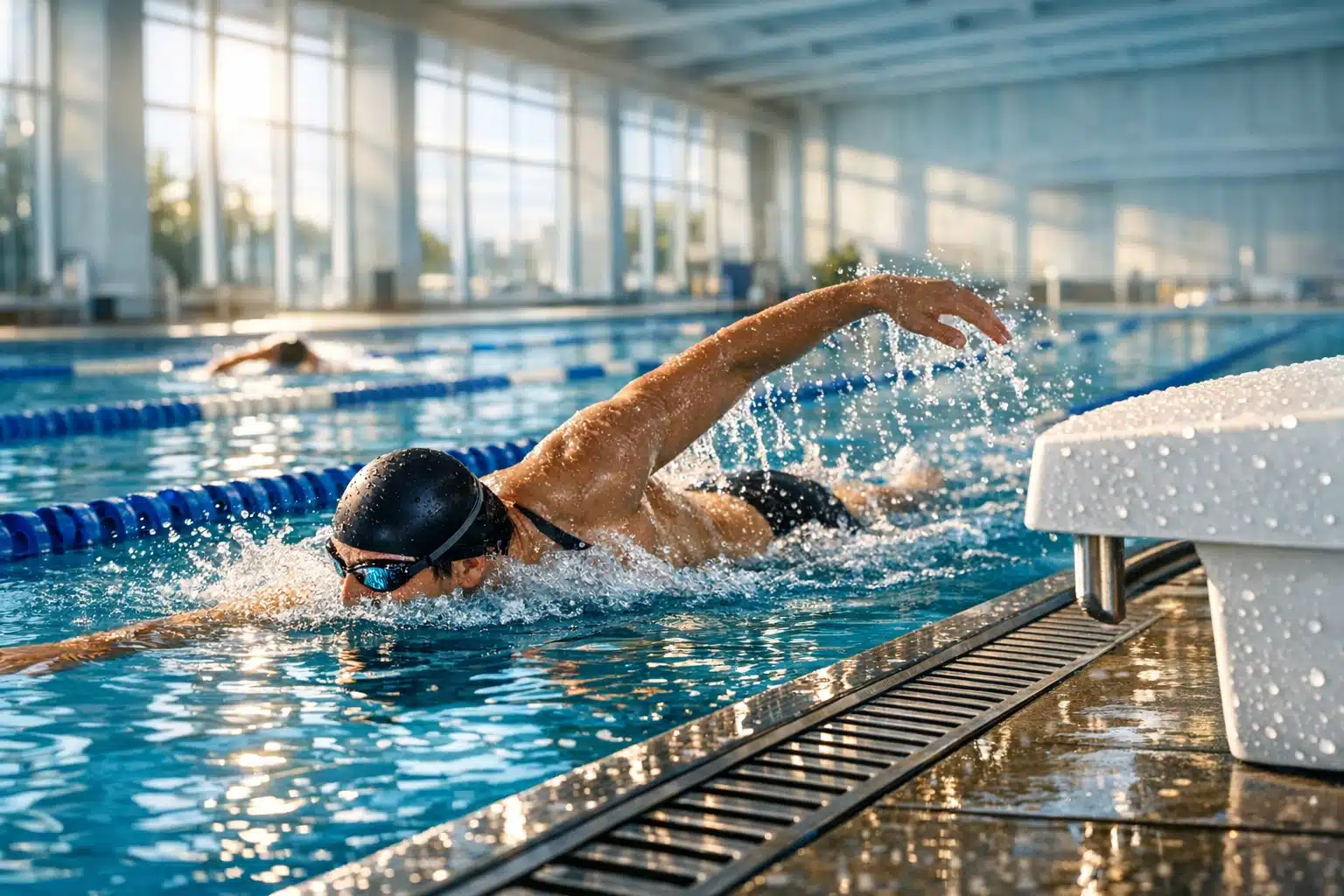
Explore the world of swimming
Swimming offers something rare in modern exercise: a skill that can energize the body, steady the mind, and improve safety at the same time. From casual laps to open-water challenges, it meets beginners and athletes exactly where they are. This article explores how swimming builds fitness, teaches efficient movement, and rewards patience. It also looks at technique, training, and practical ways to start with confidence. Dive in, and the water may begin to feel less like a barrier and more like a partner.
Article Outline
1. Why swimming matters in health, safety, and everyday life. 2. How the main strokes differ and what efficient technique really means. 3. Training methods, equipment choices, and essential safety habits. 4. The many forms swimming can take across ages, goals, and communities. 5. A reader-focused conclusion with practical advice for building a lasting swimming habit.
Why Swimming Matters: Fitness, Safety, and a Skill for Life
Swimming is often introduced as a workout, but that label is too narrow for what it actually offers. It is physical training, certainly, yet it is also a practical life skill, a recreational escape, and for many people a source of confidence around water. Few activities move so easily between these roles. A child learning to float, an office worker doing evening laps, a triathlete practicing endurance, and an older adult preserving joint-friendly mobility are all participating in the same broad discipline, even if their goals look very different.
From a health perspective, swimming stands out because it combines aerobic work with whole-body resistance. The arms pull, the legs kick, the core stabilizes, and breathing becomes part of the effort rather than something that happens automatically in the background. Water resists motion in every direction, so even a gentle session can challenge the body in a balanced way. Public health guidance from organizations such as the World Health Organization recommends regular moderate or vigorous physical activity for adults, and swimming can contribute strongly to those targets. Depending on pace, body size, and technique, lap swimming can also burn a meaningful number of calories while improving cardiovascular fitness.
Another major advantage is reduced impact. On land, repetitive exercise can bother knees, hips, ankles, or the lower back. In water, body weight is partially supported, which is why swimming and water-based exercise are often appealing to people who want a demanding workout without constant pounding. That does not make swimming easy. In fact, the water is an honest teacher. Poor posture, rushed breathing, or tense shoulders immediately make the task harder. The reward for better form is noticeable efficiency, which is one reason swimmers often become deeply interested in technique.
The importance of swimming also reaches beyond exercise. Water competency can make time at pools, beaches, lakes, and rivers safer and less stressful. Basic skills matter: floating calmly, turning to breathe, treading water, and moving toward safety are not glamorous abilities, but they can be invaluable. There is also a mental side that regular swimmers describe with unusual consistency. Once the stroke settles into rhythm, the world narrows to breath, movement, and the cool pressure of water. It can feel like exercise with the noise turned down. That blend of fitness, practical value, and quiet concentration is what gives swimming its lasting relevance.
Understanding the Strokes: Technique, Breathing, and Efficiency
If running is about moving over the ground, swimming is about negotiating with a changing surface that never fully supports sloppy movement. Technique matters enormously because water is far denser than air, and even small inefficiencies create drag. That is why two swimmers can work equally hard while moving at very different speeds. Good swimming is not only about strength; it is about balance, timing, alignment, and breath control.
The four competitive strokes each have distinct demands. Front crawl, often called freestyle in casual conversation, is usually the fastest and most commonly taught for fitness swimming. It relies on a flutter kick, body rotation, and a smooth arm recovery over the surface. Breaststroke is slower for most swimmers, but it offers forward visibility and a more deliberate rhythm, which many beginners find reassuring. Backstroke allows continuous breathing because the face stays above water, yet it requires awareness of lane position and good body alignment to avoid sinking hips. Butterfly is the most technically demanding of the four for many people; it combines a powerful undulating body motion with simultaneous arm recovery and precise timing.
The main strokes offer different advantages:
• Front crawl is typically the best choice for sustained cardio and speed.
• Breaststroke can feel more intuitive for recreational swimmers who want to look ahead.
• Backstroke encourages chest opening and can be useful for balancing shoulder patterns.
• Butterfly builds power and coordination, but it usually belongs later in a swimmer’s technical development.
Across all strokes, several foundations matter. A streamlined body position reduces resistance. A controlled exhale underwater prevents breath-holding and panic. A stable head position helps the hips stay higher. Efficient kicking supports balance rather than creating frantic splashing. Most importantly, the “catch,” or the part of the stroke where the hand and forearm begin pressing water backward, determines how well effort turns into forward motion.
Beginners often assume progress means swimming harder, but improvement usually starts with swimming cleaner. Drills are useful precisely because they slow things down enough to reveal what the body is doing. Side-kick drills teach balance, fingertip drag encourages relaxed recovery, and single-arm work can expose whether rotation is helping or hurting. A skilled coach may look at a swimmer and spot issues that feel almost invisible from inside the body: crossing the midline, lifting the head too much to breathe, or kicking from the knees instead of the hips.
There is something elegant about this learning process. At first, water can seem stubborn, almost offended by clumsy entry. Over time, though, technique turns resistance into conversation. The swimmer stops fighting the pool and begins slicing through it with less waste and more rhythm. That shift is where many people fall in love with the sport.
Training Smart: Endurance, Equipment, and Safety Habits That Matter
A productive swimming routine is rarely built on random laps alone. Like any serious form of exercise, swimming responds best to structure. A good session usually includes a warm-up, some technical work, a main set, and a cooldown. This format serves a practical purpose. The warm-up raises body temperature and prepares the shoulders and lungs. Technique work reinforces efficiency before fatigue starts to distort movement. The main set targets endurance, speed, pacing, or recovery, and the cooldown helps the body settle rather than stop abruptly.
For beginners, the smartest goal is consistency rather than heroics. Many new swimmers make the mistake of going too hard too soon, then leaving the pool exhausted and discouraged. A better approach is to divide swimming into manageable repeats with short rest periods. For example, someone building confidence might start with multiple 25-meter or 25-yard lengths, rest briefly, and focus on smooth breathing. From there, sets can gradually expand to 50s, 100s, and beyond. The principle is simple: repeat quality movement often enough that it becomes familiar.
Useful training priorities include:
• Learn to exhale steadily underwater.
• Keep the body long and relaxed instead of tense and rushed.
• Use intervals to create structure rather than guessing when to rest.
• Increase total distance gradually, not dramatically.
• Let technique guide intensity, especially early on.
Equipment can help, but it works best as support rather than a shortcut. Goggles improve comfort and visibility, and a well-fitted suit reduces distraction. Swim caps are practical for many pools and can reduce drag slightly, though their main value is convenience. Kickboards isolate leg work, pull buoys help emphasize upper-body pulling, and fins can improve body position while adding propulsion. None of these tools replaces sound technique, but each can highlight a specific part of the stroke when used thoughtfully.
Safety deserves equal attention. In pools, that means understanding lane etiquette, checking depth before diving, and respecting fatigue. In open water, safety expands dramatically. Currents, cold temperatures, low visibility, waves, and changing weather all alter the experience. Open-water swimmers should use a buddy system, choose appropriate locations, and understand local conditions before entering. Bright caps, tow floats, and shore support can add visibility and security. Strong swimmers still need humility around natural water, because experience in a pool does not automatically translate to lakes or oceans. Smart swimming is not only about how fast you move; it is also about knowing when to slow down, reassess, and stay within safe limits.
The Many Worlds of Swimming: Recreation, Competition, and Lifelong Participation
One reason swimming endures across generations is that it can be many things without losing its identity. For some, it is a childhood skill learned through lessons and games. For others, it becomes a structured sport measured in splits, turns, and personal bests. Still others use it as cross-training, rehabilitation, social connection, or a quiet ritual that marks the start or end of the day. This range gives swimming unusual cultural reach. It belongs equally to school programs, neighborhood pools, Olympic arenas, therapy centers, and sunlit stretches of open water where the horizon feels almost theatrical.
Competitive swimming has a long history, including a place in the modern Olympic Games from the beginning for men and from 1912 for women. That visibility has helped define public ideas about the sport, but elite competition is only one branch of the swimming world. Recreational lap swimming is more accessible and often more sustainable for everyday adults. Masters swimming programs welcome older teens and adults, including many people who did not compete seriously when they were younger. Adaptive swimming and Paralympic competition also show how the sport can be shaped around different bodies and abilities rather than restricted to one narrow template.
Swimming can serve different goals at different life stages:
• Children often benefit from water confidence, basic stroke development, and safety skills.
• Adults may turn to swimming for fitness, stress relief, weight management, or cross-training.
• Older adults frequently appreciate its low-impact nature and full-body movement.
• Athletes from other sports use it to build aerobic capacity while giving joints a break.
The setting changes the experience too. Pool swimming is controlled, measured, and ideal for drills and pacing. Open-water swimming feels less mechanical and often more adventurous, but it demands greater judgment. Aqua fitness classes emphasize accessibility and social energy. Artistic swimming adds choreography and precision. Water polo brings contact, tactics, and repeated explosive effort. Each format highlights a different face of the same element.
There is also a community dimension worth noting. Swimming can look solitary from the deck, yet it often creates quiet bonds. Teammates share lanes, coaches refine habits, parents watch lessons with anxious pride, and early-morning regulars begin recognizing one another by routine alone. The pool becomes a place where discipline and familiarity meet. In that sense, swimming is not just something people do in water. It is often a small but steady part of how they organize time, health, challenge, and belonging.
Conclusion: How to Make Swimming Part of Your Life
If you are curious about swimming, returning after years away, or trying to choose a form of exercise that feels both practical and rewarding, this is a strong place to begin. Swimming offers cardiovascular training, muscular engagement, technical challenge, and useful water confidence in one activity. It can be demanding without being punishing, structured without feeling rigid, and social without requiring constant conversation. That combination makes it especially appealing for readers who want a habit they can keep rather than a short burst of enthusiasm that fades within weeks.
The simplest way to start is to lower the pressure and raise the consistency. You do not need a perfect stroke, expensive gear, or a dramatic transformation story. You need regular exposure, patience, and a willingness to improve one detail at a time. Many adults progress well by swimming two or three times per week for short, purposeful sessions. A realistic beginner plan might look like this:
• Week 1: focus on comfort, floating, and controlled exhalation.
• Week 2: add short repeats with generous rest and attention to form.
• Week 3: build total distance gradually while keeping technique calm.
• Week 4: introduce simple sets and note how breathing and confidence improve.
If possible, take a lesson or ask for feedback early. Swimming is one of those activities where a small correction can change everything. A better head position may make breathing easier. Improved rotation may reduce effort immediately. A calmer kick may help you travel farther with less fatigue. These gains often feel almost magical, but they are really the result of learning how to cooperate with the water instead of overpowering it.
For fitness-focused readers, swimming can become a reliable weekly anchor. For parents, it is a skill worth encouraging because enjoyment and safety can grow together. For older adults or people managing impact-sensitive joints, it may offer a path back into regular movement. And for anyone overwhelmed by noisy forms of modern exercise, the pool provides something rare: a place where progress is measured not only in speed or distance, but in ease. Start small, stay curious, and let the water teach you what steady practice can do.