A Beginner’s Guide to Tennis
Tennis has stayed relevant for generations because it asks for more than power: it rewards timing, patience, agility, and smart decision-making. A beginner can start with a borrowed racket and a few balls, yet the game opens into a deep world of technique, tactics, and personal growth. Whether you want a new fitness routine, a social hobby, or a sport you can keep playing for decades, tennis offers a practical and enjoyable path forward.
This article follows a simple outline before moving into detail:
- The basic structure of tennis, including the court, equipment, scoring, and match formats.
- The core skills and tactical choices that shape early improvement.
- The training habits, etiquette, and mindset that help new players enjoy the game and keep progressing.
Understanding Tennis Basics: Court, Equipment, Rules, and Scoring
Before a player can rally with confidence, it helps to understand the architecture of the sport. A standard tennis court is 78 feet long. For singles, the width is 27 feet, while doubles uses the wider 36-foot court. The net stands 3 feet high at the center and slightly higher near the posts. These numbers may seem technical at first, yet they shape everything from movement patterns to shot selection. The court can feel enormous on day one, like a painted map with too many destinations, but once you learn its zones, it starts to make sense.
Equipment matters, though not always in the way advertisements suggest. A beginner usually benefits from a racket that is comfortable, forgiving, and easy to swing rather than heavy and advanced. Many starter rackets fall into a head size range of roughly 100 to 105 square inches, which offers a larger sweet spot and can make off-center contact less punishing. Tennis balls also vary. Regular pressurized balls are standard for most players, while lower-compression balls are often used in beginner lessons because they bounce more slowly and allow extra reaction time. Shoes deserve special attention as well. Running shoes are made for forward motion, but tennis involves abrupt stops and side-to-side movement, so court shoes provide better support and reduce slipping risk.
Several court surfaces change the personality of the game:
- Hard courts usually provide a medium-paced bounce and are the most common public-court surface.
- Clay courts tend to slow the ball and create longer rallies, which can reward patience and spin.
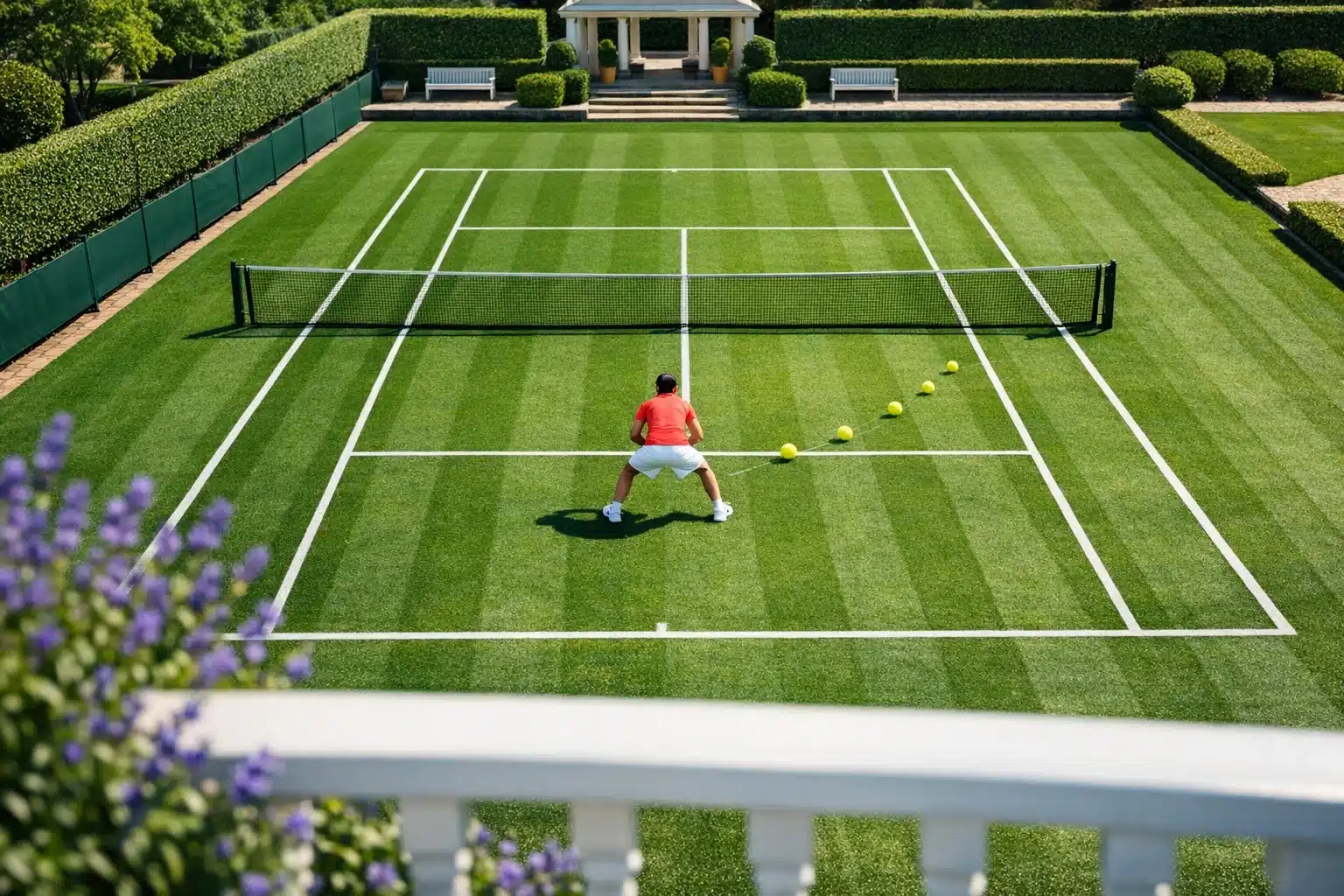
- Grass courts are faster and often produce a lower bounce, encouraging quicker points and more aggressive positioning.
Scoring is the part that confuses many newcomers, but the pattern is easier than it first appears. A game progresses from love to 15, 30, and 40. If both players reach 40, that is called deuce. From deuce, one player must win two consecutive points: the first gives advantage, and the second wins the game. A set is usually won by the first player to reach six games with at least a two-game margin. If the score reaches 6-6, many formats use a tiebreak. Most recreational matches are played as best of three sets, though shorter formats are common in clubs and beginner leagues.
Singles and doubles also create different experiences. Singles demands more court coverage and often tests endurance, while doubles emphasizes teamwork, positioning, and reflexes at the net. For beginners, both formats are valuable. Singles builds movement and consistency; doubles can make the sport feel more social and less physically overwhelming. Once these basic pieces fall into place, tennis becomes far less mysterious and far more inviting.
Learning the Core Skills: Strokes, Footwork, and Smart Early Tactics
If rules are the skeleton of tennis, strokes and footwork are the muscles that make the sport come alive. Most beginners start by learning five essential shots: the forehand, backhand, serve, return, and volley. The forehand is often the first stroke to feel natural because it uses the dominant side in a more open motion. The backhand, whether one-handed or two-handed, usually takes longer to trust, but it quickly becomes a key part of balanced play. Volleys are struck before the ball bounces, typically near the net, while the serve begins every point and combines rhythm, timing, and coordination in one demanding movement.
Good technique does not mean copying professional players frame by frame. It means building repeatable fundamentals. A stable stance, relaxed grip pressure, and clean contact in front of the body matter more for a beginner than flashy racket speed. Coaches often teach players to finish their swing completely and recover quickly after each shot. That recovery step is crucial because tennis is not only about hitting the ball well; it is also about being ready for the next one. The best shot in the world loses value if it leaves you stranded two steps too far from the middle.
Footwork deserves more attention than many new players give it. The split step, a small hop just before the opponent strikes the ball, helps the body react in either direction. Short adjustment steps make it easier to judge spacing. Recovery movement brings a player back toward a smart court position after each shot. Without these habits, even a decent swing can unravel under pressure. A beginner often thinks, “I missed because my forehand is bad,” when the real problem was arriving late or standing too close to the bounce.
Early tactics should stay simple and practical:
- Aim higher over the net to create safety and reduce unforced errors.
- Use crosscourt shots often, because the net is lower in the middle and the court is longer diagonally.
- Prioritize depth and consistency before trying for outright winners.
- Attack shorter balls, but avoid rushing every point.
Comparisons help here. A flat shot can travel quickly, but it gives less margin for error. A topspin shot dips sooner and often bounces higher, which makes it a useful tool for beginners seeking control. Similarly, a down-the-line shot can be effective, yet it offers a smaller target and a lower margin than a crosscourt ball. Recreational tennis frequently turns on patience rather than brilliance. Many points end because one player misses early, not because the other produced a highlight-reel winner.
As skills develop, tennis starts to feel like a moving puzzle. One rally asks for depth, another for angle, another for restraint. That variety is part of the game’s charm. Improvement comes from learning that every stroke is both a technical action and a tactical decision, and the two work best when they are practiced together.
Practice, Etiquette, and a Final Word for New Players
Starting tennis well is not about perfection; it is about building habits that make progress sustainable. A beginner does not need a five-day training block or expensive private coaching to improve. What helps most is regular contact with the game. Two or three sessions per week, even if they are short, usually produce better results than one long session followed by ten idle days. Repetition builds timing, and timing is the quiet engine behind cleaner strokes, better movement, and more confidence under pressure.
A simple weekly structure can be surprisingly effective:
- One session focused on technique, such as serves, forehands, and backhands.
- One session centered on rallying or point play with a partner.
- One short fitness or movement session with agility drills, stretching, and core work.
Physical preparation matters because tennis asks the body to accelerate, stop, rotate, and react repeatedly. A proper warm-up should include light jogging, mobility work for the shoulders and hips, and dynamic movements rather than long static stretching before play. Hydration is also important, especially in warm weather, since matches can extend longer than expected. Even a casual set can become demanding when rallies lengthen and concentration fades. Players who recover well between points often perform better than stronger players who burn out too quickly.
Etiquette is another part of tennis that deserves respect. Unlike some sports, players often manage scoring, line calls, and rhythm themselves, particularly in recreational settings. Calling the score clearly before each point keeps matches orderly. Returning balls to the server politely, waiting until another court’s rally ends before crossing behind it, and acknowledging good shots from an opponent all contribute to a better experience. In doubles, communication matters just as much as strokes. A quick “mine,” “yours,” or “switch” can prevent confusion and keep partners connected.
Beginners should also understand what progress usually looks like. It is rarely a straight climb. One day the serve lands smoothly; the next day it vanishes like it left town without notice. That is normal. Tennis improvement often arrives in layers: first better contact, then longer rallies, then smarter decisions, then more reliable patterns under stress. Keeping a simple journal of practice themes or match lessons can help players notice gains that emotion might overlook in the moment.
For new players, the most useful goal is not to look advanced as quickly as possible. It is to become comfortable enough to enjoy the sport repeatedly. Learn the scoring until it feels natural, choose equipment that supports rather than complicates your game, practice movement as seriously as strokes, and treat every session as information instead of judgment. Tennis can challenge patience, lungs, and ego in the same hour, but it also offers a rare mix of exercise, strategy, and satisfaction. If you stay curious and keep showing up, the court gradually becomes less intimidating and far more rewarding.