Tennis Basics: Rules, Skills, and Benefits
Introduction
Tennis is one of those sports that looks straightforward from the stands but reveals new layers the moment a racket meets the ball. Its rules can be learned quickly, yet its timing, movement, and decision-making reward years of practice. That balance helps explain why the game thrives in public parks, schools, clubs, and packed stadiums across the world. For beginners and returning players alike, knowing the basics turns a confusing scoreline into a sport that is lively, strategic, and deeply enjoyable.
Outline
• What tennis is and why it remains widely relevant
• Basic rules, court layout, scoring, and match structure
• Essential skills, movement patterns, and practical tactics
• Physical, mental, and social benefits, plus smart ways to begin
Understanding Tennis Rules, Court Layout, and Scoring
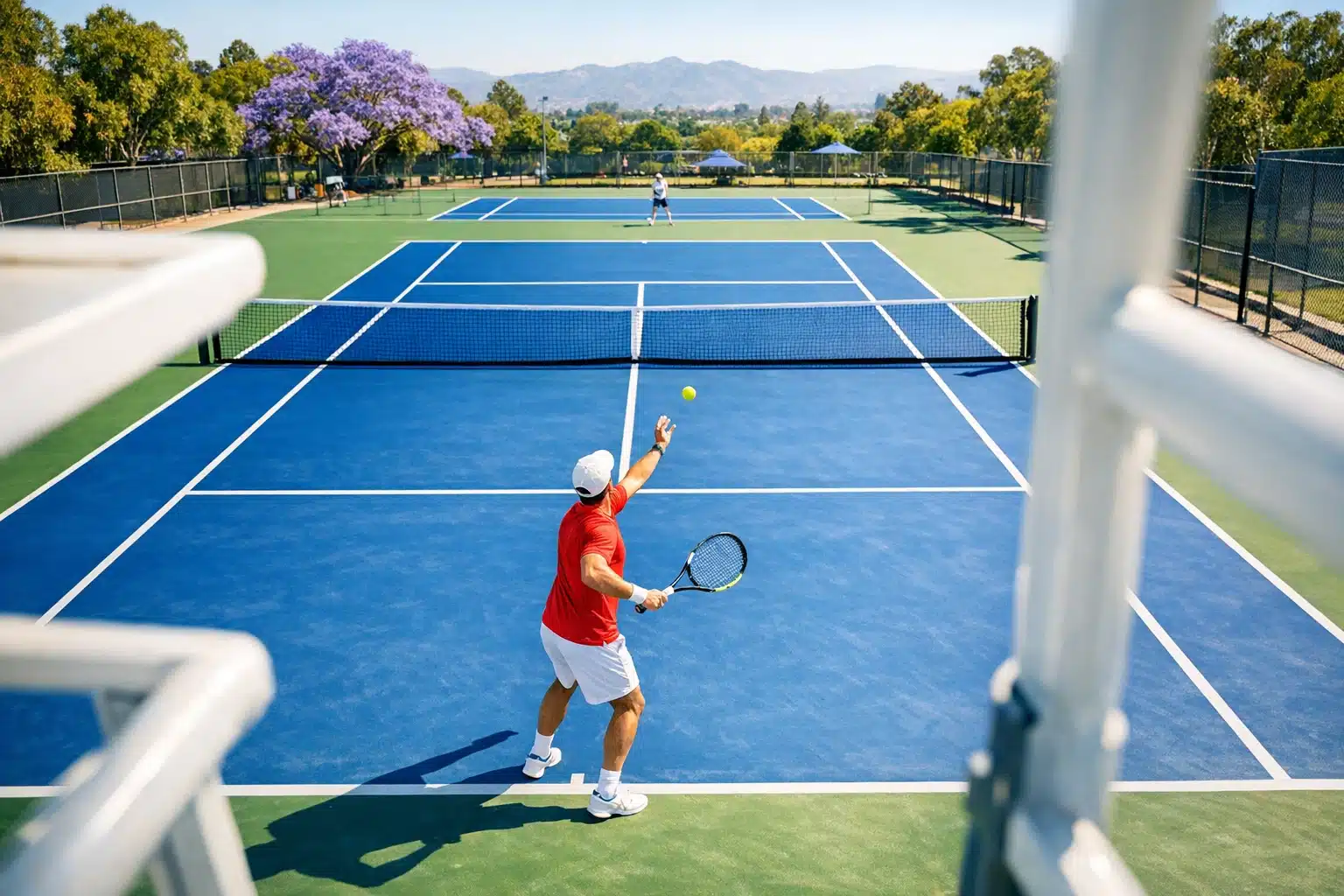
Tennis is played either one against one in singles or two against two in doubles, and that simple setup shapes everything from movement to strategy. A standard court is 78 feet long, while the width changes depending on the format: 27 feet for singles and 36 feet for doubles. The net stands 3 feet high at the center, dividing the court into two equal halves. Those lines are not decoration; they are the grammar of the game. The baseline anchors rallies, the sidelines define width, and the service boxes determine whether a serve begins the point legally. Once you understand that map, tennis stops feeling mysterious and starts feeling logical.
Each point begins with a serve delivered diagonally into the correct service box. Players get two chances to land a legal serve. Missing both results in a double fault, which gives the point away immediately. After the serve is in, the rally continues until one player hits the ball out, into the net, or fails to return it before the second bounce. The scoring system is famous for sounding odd at first: 15, 30, 40, then game. If both players reach 40, the score becomes deuce, and one player must then win two consecutive points to take the game. That “win by two” idea also appears in other parts of tennis, which is one reason momentum can swing so sharply.
Sets are usually won by taking six games with at least a two-game margin. If the score reaches 6-6 in many formats, a tiebreak is played to decide the set. Matches are commonly best-of-three sets in recreational play, while some major men’s singles events use best-of-five. A few terms help new players follow the action more easily:
• Love means zero.
• Break point is a point that could win a game against the server.
• Hold means winning your own service game.
• Unforced error describes a mistake made without heavy pressure from the opponent.
Surface also changes how the rules feel in practice. Hard courts usually offer a balanced bounce, clay slows the ball and rewards patience, and grass tends to stay lower and move faster. So while the rulebook stays the same, the experience does not. On clay, points can feel like long negotiations. On grass, they can end like a snapped thread. That contrast is part of tennis’s charm: one sport, many versions of the same battle.
Core Skills: Serving, Rallying, Footwork, and Match Tactics
If rules are the skeleton of tennis, skill is the muscle that brings the sport to life. Beginners often focus first on the forehand because it usually feels more natural, but strong tennis depends on a set of connected abilities rather than one favorite shot. The basic strokes include the forehand, backhand, serve, return, volley, and overhead. Each one solves a different problem. The forehand helps players attack or build pressure. The backhand keeps the opposite wing from becoming a weakness. The serve starts every point on your terms, while the return prevents the opponent from cruising through service games.
Technique matters, but clean movement matters just as much. Good players do not simply run fast; they move efficiently, recover quickly, and stay balanced through contact. One of the most useful habits is the split step, a small bounce taken as the opponent strikes the ball. It looks minor, almost like a quiet drumbeat before the chase, yet it improves reaction time and direction changes. Footwork also helps players judge spacing. Many mishits happen not because the swing is terrible, but because the player is too close, too far, or leaning away. Tennis punishes awkward body position with honesty.
For new players, consistency should usually come before power. A controlled rally ball that lands deep is far more useful than a wild winner attempt every third shot. At the highest levels, first serves can exceed 125 miles per hour in men’s tennis and often pass 110 miles per hour in women’s tennis, but recreational players gain more from placement, spin, and repeatability than raw pace. A serve into the body or a return hit safely crosscourt often does more damage than a risky blast toward the lines. Smart tennis is not always loud tennis.
Some tactical ideas are especially helpful early on:
• Aim higher over the net for a larger margin of safety.
• Rally crosscourt when under pressure, because the court is longer on the diagonal.
• Recover toward the center after most groundstrokes.
• Approach the net only behind a shot that pushes the opponent back or wide.
As ability grows, shot selection becomes more layered. Players learn when to defend with height, when to flatten the ball for pace, and when to use slice to change rhythm. They also start reading patterns: a short ball invites attack, a weak second serve invites aggression, and a tired opponent often struggles with width more than speed. In that sense, tennis resembles chess played at a sprint. The board is bigger, the clock is faster, and every decision has to travel through the body before it reaches the mind.
Why Tennis Matters: Fitness, Mental Growth, Social Value, and Getting Started
Tennis offers more than competition. It is a full-body activity that combines aerobic effort, short bursts of speed, coordination, and concentration in a way few sports do. Recreational singles can burn roughly 400 to 600 calories per hour depending on body size and intensity, while doubles often demands slightly less constant running but still provides solid exercise. Because rallies involve stopping, starting, rotating, and reaching, tennis trains the legs, core, shoulders, and cardiovascular system at the same time. It also develops hand-eye coordination and balance, two qualities that remain useful well beyond sport.
The mental side is just as important. Tennis asks players to solve problems in real time without a coach stepping in on every point. A match can shift because of nerves, weather, fatigue, or one tactical adjustment. That teaches emotional control in a very practical way. You miss an easy forehand, hear the net cords rattle in your memory, and still have to reset for the next serve. Few games teach that kind of immediate resilience so clearly. Over time, players often become better at focus, routine, and staying composed under pressure because the court keeps offering chances to practice those habits.
There is also a strong social benefit. Tennis works across age groups and skill levels better than many contact sports. Children can learn through modified courts and lower-pressure balls. Adults can play casually, join leagues, or take lessons. Older players often stay active through doubles, which rewards positioning and touch as much as all-out speed. The sport creates a useful mix of independence and community: once the point starts, the responsibility is yours, but the experience is shared with partners, opponents, and a wider club or local scene.
For anyone starting out, the path into tennis does not need to be expensive or intimidating:
• Choose a comfortable racket rather than the heaviest or most advanced model.
• Wear court shoes that support side-to-side movement.
• Begin with short practice sessions focused on contact and control.
• Use group lessons, public courts, or beginner clinics to learn affordably.
• Track simple goals such as rally length, serve accuracy, or number of unforced errors.
That final point matters because progress in tennis is rarely linear. Some days the ball feels magnetized to the strings; on others it seems to have private plans. The key is to value small improvements. Hitting ten solid serves in a row, learning to recover after every shot, or finishing a longer rally than last week are genuine milestones. Tennis rewards patience generously, even if it does not always reward it immediately.
Conclusion for New and Returning Players
If you are curious about tennis, the best approach is to see it as a sport with a low barrier to entry and a very high ceiling for growth. Learn the court, understand the score, build reliable strokes, and let consistency lead before ambition takes over. The game can improve fitness, sharpen concentration, and create a social routine that remains enjoyable for years. Most of all, it gives beginners something rare: a sport that is easy to start, difficult to master, and interesting at every level in between.