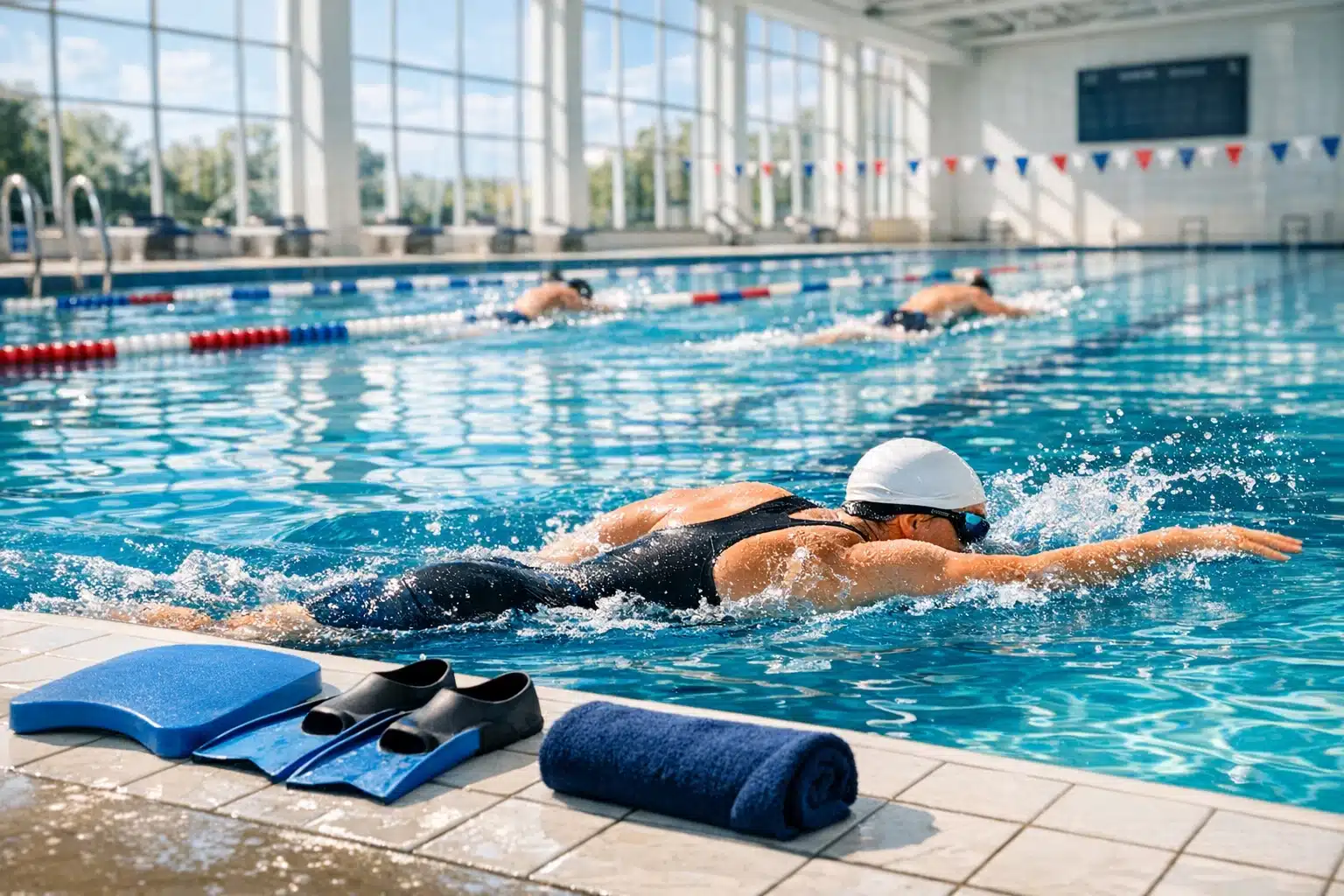
Explore the world of swimming
Swimming is one of those rare activities that feels playful and purposeful at the same time. It can teach survival, build fitness, calm an anxious mind, and open the door to competition or simple weekend fun. Unlike many land-based exercises, it asks the whole body to move through a changing environment, where technique matters as much as effort. That mix of freedom, challenge, and practicality keeps swimming relevant for children, adults, athletes, and older learners alike.
Outline
– Swimming as a human skill, sport, and cultural practice
– Health, fitness, and mental benefits in and out of the pool
– Core strokes, technique, and efficiency
– Learning, training, equipment, and safety
– Why swimming matters today and how readers can make it part of life
Swimming as a Human Skill, Sport, and Cultural Practice
Swimming is much more than a sport measured by stopwatches and lane lines. At its core, it is a human survival skill, a recreational habit, a competitive discipline, and, in many places, a cultural tradition tied to rivers, coasts, lakes, and public pools. Long before organized meets and televised finals, people swam to cross water, fish, travel, train for war, and cool off in hot climates. Historical evidence suggests that humans have practiced swimming for thousands of years, and artwork from ancient civilizations shows that moving through water has always been part of daily life for some societies. The modern version of the sport, with standardized pools and timed races, came later, but its roots are older and broader than many newcomers realize.
What makes swimming especially interesting is its unusual balance between universality and specialization. Nearly anyone can learn the basics with guidance, yet elite swimmers spend years refining a tiny detail such as hand entry or turn timing. Competitive swimming became part of the modern Olympic Games in 1896 for men, while women’s events were added in 1912, which helped formalize the sport on a global stage. Since then, swimming has grown into a large ecosystem that includes school programs, masters clubs, open-water races, triathlons, synchronized disciplines, and rehabilitation settings. In one pool, you may find a child learning to float, a retiree protecting sore knees, and an athlete preparing for national trials. Few activities comfortably hold such different purposes at once.
Swimming also differs from many other sports because the environment changes the rules of movement. Water is far denser than air, so every action meets resistance. That resistance is not simply an obstacle; it is part of the appeal. The water supports the body while also demanding control, rhythm, and patience. A runner can sometimes power through poor technique for a while, but a swimmer quickly discovers that wasted motion has a cost. This is why good swimmers often seem to glide rather than fight. They are not always working less; they are working with better timing.
Swimming appears in several common forms:
– Learn-to-swim and water safety instruction
– Recreational lap swimming for general fitness
– Competitive racing in pools
– Open-water swimming in lakes, rivers, and the sea
– Cross-training and rehabilitation
Seen this way, swimming is not a narrow pastime. It is a practical life skill with athletic depth, social value, and an enduring place in human experience.
Health, Fitness, and Mental Benefits of Swimming
One reason swimming remains widely recommended is that it offers a rare combination of cardiovascular training, muscular engagement, and joint-friendly movement. When people exercise on land, impact forces travel through ankles, knees, hips, and the spine. In water, buoyancy reduces that load, which makes swimming attractive for older adults, people returning from injury, and anyone who wants hard work without constant pounding. That does not mean it is effortless. A steady swim can raise heart rate, challenge the lungs, and recruit muscles across the shoulders, back, core, hips, and legs. In practical terms, swimming allows a person to train the whole body while feeling lighter than they do on land.
From a fitness standpoint, swimming aligns well with common public health advice. Many health authorities, including the CDC and the World Health Organization, encourage adults to get at least 150 minutes of moderate aerobic activity each week. Swimming can clearly contribute to that target. Depending on body size, intensity, and stroke choice, a session may burn substantial energy while improving endurance. Freestyle at an easy pace may feel sustainable and rhythmic, while butterfly or fast interval work can turn the pool into a demanding cardiovascular challenge. Water also adds resistance in every direction, so even simple movements become a form of strength work. That is why swimmers often build endurance and muscle tone at the same time, though the exact effect depends on frequency, nutrition, and training style.
The mental side deserves equal attention. Many swimmers describe the water as a place where outside noise fades. Repeated strokes, steady breathing, and the muffled soundscape of a pool can create a meditative quality that is hard to replicate in a crowded gym. Research on exercise and mental health consistently shows that physical activity can support mood, reduce stress, and improve sleep, and swimming fits well within that pattern. For some, a morning swim sharpens concentration for the rest of the day. For others, an evening session acts like a reset button after work. The emotional benefit may also come from competence itself: learning to breathe comfortably, float calmly, or complete more lengths than last month builds confidence in a very visible way.
There are, however, sensible cautions:
– Poor technique can aggravate shoulders or neck muscles
– Overtraining may lead to fatigue or repetitive strain
– Pool chemicals can bother sensitive skin or eyes
– Open water brings extra hazards such as currents, cold, and limited visibility
Overall, swimming is effective because it blends challenge with support. It can be gentle without being trivial and demanding without being punishing, which is a valuable combination for a long-term fitness habit.
Understanding the Main Strokes and the Role of Technique
To an inexperienced observer, swimmers may seem to be doing the same thing at different speeds. In reality, each stroke has its own mechanics, rhythm, and strategic demands. The four competitive strokes are freestyle, backstroke, breaststroke, and butterfly, and each teaches a different relationship between propulsion, balance, and breathing. Freestyle, usually swum as front crawl, is the fastest and most common. It relies on a long body line, alternating arm recovery, a flutter kick, and efficient side breathing. Because it is relatively economical, freestyle is often the first stroke used for fitness training and distance work. When practiced well, it feels like slicing forward rather than forcing progress.
Backstroke takes the swimmer onto the back, which changes orientation completely. Breathing becomes easier because the face stays above water, but navigation and body alignment become trickier. A dropped hip or wandering hand entry can create drag quickly. Breaststroke is slower, but it demands precise timing. The arms sweep, the legs perform a whip kick, and the body rises and falls in a compact rhythm. It is often the stroke beginners recognize first, yet swimming it efficiently is surprisingly technical. Butterfly is the most physically demanding for many people. Both arms recover together, the body undulates, and the dolphin kick must coordinate with the upper body in a narrow window. Poor timing makes butterfly feel brutal; good timing makes it look almost theatrical.
Technique matters in swimming because water punishes inefficiency immediately. If a cyclist pedals awkwardly, the bike still rolls. If a swimmer lifts the head too high, crosses the arms, kicks from the knees, or forgets to exhale underwater, momentum disappears. Coaches therefore spend significant time on fundamentals before chasing speed. A few core ideas appear across every stroke:
– Maintain a streamlined body position to reduce drag
– Breathe in a controlled pattern rather than in panic
– Use the core to connect the upper and lower body
– Finish each stroke cycle cleanly instead of rushing the next one
– Learn to feel the water, not just slap at it
Comparisons between strokes also reveal different uses. Freestyle is ideal for aerobic conditioning and most lap sessions. Backstroke balances shoulder patterns and helps body awareness. Breaststroke suits swimmers who prefer a visible forward line and a different tempo. Butterfly develops power, timing, and toughness, though it usually enters training in short doses. Even turns and starts add another layer of skill. A strong wall push can save seconds in a race and preserve rhythm in practice. This is one reason swimming stays intellectually interesting: progress is not based only on effort. It depends on learning how to move elegantly inside a medium that rewards precision.
Learning to Swim, Building a Routine, and Choosing Equipment Safely
For beginners, the biggest barrier to swimming is often psychological rather than physical. Water can feel unfamiliar, especially to adults who were never taught early. The good news is that learning to swim does not begin with perfect strokes or deep water bravado. It begins with comfort, breath control, floating, and trust. A sensible progression usually moves from shallow-water confidence to submerging the face, exhaling underwater, gliding, kicking with support, and finally linking these pieces into short distances. Professional instruction speeds this process because a coach can correct posture, explain buoyancy, and prevent bad habits before they settle in. Group lessons also help some learners relax because they realize they are not the only ones figuring things out.
Once the basics are in place, routine matters more than heroics. Two or three consistent sessions per week usually produce better long-term improvement than one exhausting workout followed by ten idle days. Many swimmers organize practice around simple goals: endurance, technique, speed, or recovery. A balanced session often includes a warm-up, a drill set, a main set, and a cool-down. For example, a beginner might swim easy lengths with rests, practice kickboard work, and finish with relaxed floating or backstroke. An intermediate swimmer may alternate faster repeats with recovery lengths. The main point is progression. Distance, pace, and complexity should increase gradually, especially for shoulders and lower back, which can become irritated by abrupt jumps in volume.
Equipment can help, but it should support learning rather than replace it. Useful basics include:
– A comfortable swimsuit that allows full movement
– Goggles that seal well without painful pressure
– A swim cap for hair control and lower drag
– A kickboard for focused leg work
– A pull buoy for upper-body drills
– Fins, used selectively, for body position and ankle mobility
Safety deserves its own paragraph because confidence should never become carelessness. Pool swimmers still need awareness of lane etiquette, depth markers, and fatigue. Open-water swimmers face more variables: weather, waves, currents, cold shock, boats, and changing visibility. Bright caps, tow floats, supervised venues, and a buddy system are wise choices. New swimmers should also respect how deceptive effort can be in water. A pace that feels manageable for five minutes may feel very different after twenty. Good training is not about proving fear wrong in one dramatic afternoon. It is about steadily replacing uncertainty with skill, judgment, and repeatable habits.
Why Swimming Still Matters and How Readers Can Make It Part of Life
Swimming remains relevant because it meets modern needs without demanding a single modern identity. You do not have to be a competitive athlete, a health fanatic, or a lifelong water lover to benefit from it. A parent may value swimming as a basic safety skill for a child. An office worker may use it to offset hours spent sitting. A runner with achy knees may turn to the pool for low-impact conditioning. An older adult may appreciate the freedom of moving with less joint stress. Even for people who never race, swimming offers something increasingly rare: a physical activity that can feel both serious and refreshing. It asks for attention, yet it often leaves the mind clearer than it found it.
There is also a social dimension worth noting. Pools, clubs, community centers, school teams, and masters groups give swimming a built-in network. Some people enjoy the solitude of counting lengths in a quiet lane; others thrive on shared workouts and friendly accountability. That flexibility is part of the sport’s endurance. Swimming can be private or communal, gentle or intense, routine or adventurous. Open-water events, triathlons, and charity swims add another layer for those who want challenge and atmosphere. At the same time, access still matters. Not everyone has a nearby pool, affordable lessons, or safe public facilities. Expanding access is not merely about recreation; it is a public health and safety issue.
For readers wondering where to start, the path does not need to be dramatic:
– Begin with one lesson, one pool visit, or one short session per week
– Choose comfort and consistency before chasing speed
– Learn breathing and floating before judging your talent
– Track small wins, such as smoother laps or better recovery
– Treat technique as a skill, not a talent you either have or lack
In the end, swimming rewards patience. It is not always instantly easy, and that is exactly why it stays meaningful. Every improvement is tangible: a calmer breath, a cleaner turn, a longer glide, a stronger finish. For beginners, the message is simple: the water does not require perfection, only respect and practice. For regular exercisers, swimming adds variety and whole-body conditioning. For athletes, it offers endless room for refinement. If you are curious, hesitant, or ready to return after years away, swimming is still there, waiting with equal parts challenge and invitation.