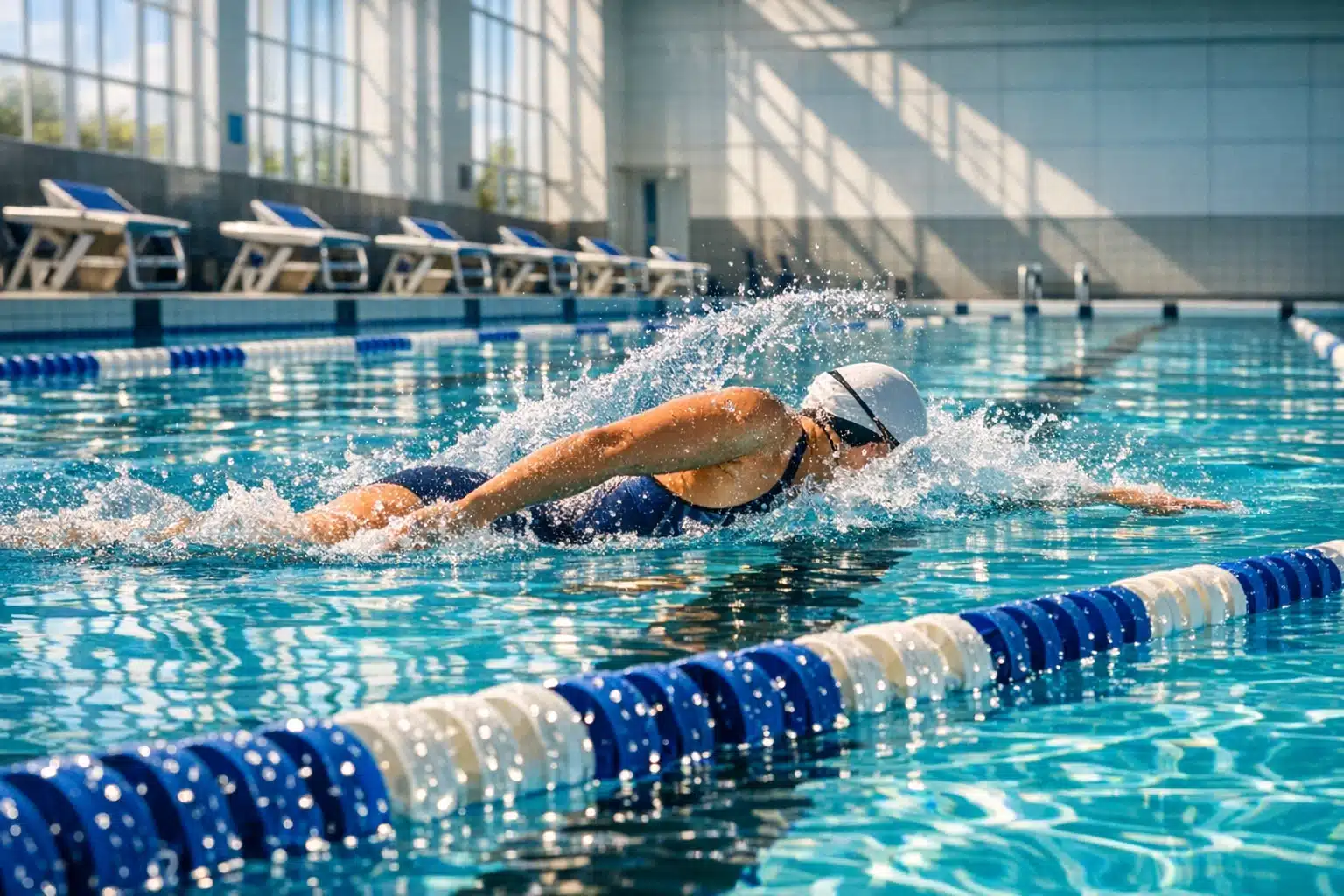
Explore the world of swimming
Swimming is one of those rare activities that can feel playful, disciplined, calming, and demanding all at once. It matters because it combines a survival skill, a full-body workout, a competitive sport, and simple recreation in a way few pursuits can match. From children learning to float to adults chasing fitness or peace of mind, swimming connects health, safety, confidence, and community. Step closer, and the water reveals far more than lanes, timers, and lap counts.
Outline:
• The first section explores why swimming has remained important across history, culture, and daily life.
• The second examines physical and mental benefits, including fitness, recovery, and stress relief.
• The third compares the main strokes and explains the technique behind efficient movement in water.
• The fourth covers safety, learning progression, and the equipment that supports practice.
• The fifth looks at training, competition, community, and concludes with practical guidance for readers who want swimming to become a lasting part of life.
Swimming as a Human Skill, Sport, and Shared Experience
Long before swimming became a timed race or a line on a fitness tracker, it was a practical skill tied to survival, travel, fishing, and military training. Ancient civilizations left visual and written evidence of people moving through water with purpose, and over time that necessity evolved into recreation, ritual, therapy, and formal sport. That wide history helps explain why swimming feels familiar even to people who have never trained seriously. Water has a way of inviting both caution and curiosity. A shoreline, a lake, or a pool can look peaceful from a distance, yet the moment you enter, the body must negotiate breath, balance, temperature, and movement in a completely different environment from land.
That difference is exactly what makes swimming so valuable. Unlike many activities, it teaches a person to manage the body under unusual physical conditions. Gravity still matters, but buoyancy changes how effort is distributed. Momentum feels smoother, resistance is constant, and every small technical error is immediately noticeable. In other words, water is honest. If your head position is off, your hips drop. If your breathing is rushed, your rhythm breaks. If your kick is wasteful, fatigue arrives early. For beginners, that honesty can feel frustrating. For experienced swimmers, it is one of the sport’s great attractions.
Swimming also bridges worlds that often stay separate. It is a leisure activity on hot afternoons, a serious Olympic discipline, a rehabilitation tool, and a life-saving competence. Few hobbies can claim that much range. Consider how it fits different lives:
• A child may meet swimming first through games and floating lessons.
• A triathlete may use it as one leg of an endurance challenge.
• An older adult may choose it because the water feels kinder to the joints than pavement.
• A parent may value it because safety around water is non-negotiable.
There is also a social side that deserves attention. Pools create communities with their own language and habits: early-morning lane regulars, club teams, masters groups, open-water swimmers comparing currents and weather, and families gathering for lessons on weekends. At the same time, swimming can be deeply solitary. The sound of bubbles, the black line on the bottom of the pool, and the repetitive cycle of stroke and breath can turn a busy mind quiet. That dual nature is rare. Swimming can be communal without being loud, competitive without being hostile, and demanding without losing its grace. It is a sport of effort, yes, but also of feel. That balance is a big reason it stays with people for decades.
Health, Fitness, and Mental Benefits of Time in the Water
Swimming earns its reputation as excellent exercise because it asks the whole body to work together. Arms pull, legs kick, the core stabilizes, and the lungs must coordinate with movement. Even at a moderate pace, it challenges the cardiovascular system while building muscular endurance. Public health guidelines commonly recommend at least 150 minutes of moderate aerobic activity per week for adults, and swimming can contribute meaningfully to that target. What makes it especially useful is that intensity can be adjusted across a wide spectrum. A relaxed recovery swim, a technique session, and a hard interval set may all happen in the same pool, but they place very different demands on the body.
One of swimming’s strongest advantages is its low-impact nature. Because buoyancy reduces load on the joints, many people find it more comfortable than high-impact exercise such as running on hard surfaces. That does not mean it is effortless. Water provides resistance in every direction, so even smooth movement requires work. The difference is that the work often feels less jarring. This is one reason swimming is frequently recommended as part of exercise routines for older adults, people returning to activity after time away, and individuals who want variety in training without constant pounding on hips, knees, and ankles.
The benefits go beyond general fitness:
• Cardiovascular conditioning improves as the heart and lungs adapt to repeated effort.
• Muscular endurance develops because water resists motion continuously.
• Mobility may improve through controlled range of motion, especially in well-taught technique work.
• Recovery can be supported by easy swims that promote circulation without heavy impact.
Mental well-being is another major part of the picture. Repetitive lap swimming can be meditative, not because it erases stress, but because it narrows attention. You focus on the next breath, the next wall, the next length. Phones are away. Notifications vanish. Noise becomes muffled. For many swimmers, that change in sensory environment is restorative. Research on physical activity consistently links regular movement with better mood, lower stress, and improved sleep, and swimming fits comfortably within that pattern.
There is also a confidence factor that should not be underestimated. Learning to move capably in water changes how people see themselves. A beginner who once clung to the edge may later complete ten lengths without stopping. Someone who feared deep water may learn to tread calmly and rest on the back. These are not small wins. They are physical achievements that often spill into other parts of life. Swimming teaches patience because progress is technical as much as athletic. It rewards consistency more than drama. There are no shortcuts to relaxed breathing, efficient body position, or sustainable pacing. Yet once those skills begin to click, swimming becomes one of the most practical and satisfying forms of exercise available.
The Main Strokes and the Craft of Efficient Technique
To watch skilled swimmers is to see how technique turns effort into speed. Beginners often assume swimming is mostly about strength, but experienced coaches know efficiency matters just as much, and often more. Water is dense compared with air, so small changes in position create significant differences in drag. A swimmer who stays long, balanced, and controlled may travel farther with less energy than a stronger swimmer who fights the water every stroke. This is why technical learning is central to the sport, whether the goal is casual fitness or competition.
Freestyle, usually swum as the front crawl, is the fastest and most widely used stroke. It relies on a streamlined body position, alternating arm pulls, flutter kick, and rhythmic breathing. Its efficiency makes it the default choice for distance swimming, fitness laps, and triathlon. Good freestyle often looks simple, but that simplicity hides detail: the head remains steady, the hips stay high, the hand enters cleanly, and the pull follows a strong path under the body. Breathing must be timed carefully so it supports the stroke rather than interrupts it.
Backstroke shares the flutter kick and alternating arms of freestyle, yet the body position changes everything. Because the swimmer is face up, breathing is less restricted, but alignment becomes tricky. Many new swimmers snake through the lane unless they learn to rotate the shoulders properly and keep the hips close to the surface. Backstroke can feel wonderfully open, almost like looking at the ceiling while gliding through a moving mirror, but it also exposes flaws in balance very quickly.
Breaststroke is slower but highly technical. Its timing depends on a coordinated sequence of pull, breath, kick, and glide. The kick is distinct, the recovery happens under water, and efficiency comes from patience rather than frantic movement. Recreational swimmers often like breaststroke because the head can rise regularly and the rhythm feels controlled. Competitive breaststroke, however, is a specialized art with precise mechanics and strict rules.
Butterfly is the most demanding of the four competitive strokes. Both arms recover together, the legs use a dolphin kick, and the body undulates in a powerful wave-like motion. When done well, butterfly is breathtaking. When done poorly, it is exhausting within seconds. It demands timing, flexibility, rhythm, and courage.
A useful comparison of the strokes looks like this:
• Freestyle: fastest, versatile, efficient for long distances.
• Backstroke: good for balance and shoulder rhythm, easier breathing pattern.
• Breaststroke: technical and controlled, often approachable for casual swimmers.
• Butterfly: powerful and dramatic, but physically demanding.
Beyond the strokes themselves, swimming technique includes starts, turns, push-offs, pacing, and underwater work. In a pool, many seconds are gained or lost at the walls. A strong push-off can feel like flying through a blue corridor; a weak one can waste the effort of the entire length before it. That is the beauty of swimming technique: every detail matters, and every detail can be improved.
Safety, Learning Progression, and Choosing the Right Equipment
Swimming is enjoyable precisely because water can support and challenge the body, but that same environment demands respect. Safety is not an optional side note; it is part of what it means to be a competent swimmer. Public health authorities around the world continue to stress water safety because drowning remains a major preventable cause of injury and death. Skill reduces risk, yet confidence without judgment can be dangerous. A strong pool swimmer may still struggle in cold water, current, surf, or low visibility. The first lesson, then, is simple: swimming ability exists on a spectrum, and context matters.
For beginners, the learning process should be progressive rather than rushed. Comfort in the water usually develops in stages: blowing bubbles, submerging the face, floating, kicking with support, coordinating arms and legs, and eventually sustaining relaxed movement. Good instruction builds these layers carefully. That matters because fear and tension are inefficient in water. A person who panics often lifts the head, sinks the hips, and spends energy fighting rather than floating. Skilled teachers work on calmness as much as mechanics.
Several safety habits are worth treating as non-negotiable:
• Never overestimate ability in deep or open water.
• Supervise children closely, even if they have taken lessons.
• Learn how to float, tread water, and rest as well as how to swim forward.
• Pay attention to weather, currents, water temperature, and lifeguard guidance.
• Use designated swimming areas whenever possible.
Open water introduces additional variables that pools do not. Lakes may have uneven depth, hidden obstacles, or cold layers below the surface. Rivers add current. The sea adds waves, tides, and rip currents. Even experienced swimmers often use bright caps, tow floats, and buddy systems in open water because visibility and safety support matter. A calm-looking surface can be misleading, and water that feels manageable for ten minutes may feel very different after fatigue sets in.
Equipment also shapes the swimming experience, though it should serve technique rather than replace it. The essentials are modest: a swimsuit that allows movement, goggles that fit well, and a cap if desired or required. Beyond that, training tools can help when used correctly:
• Kickboards isolate kicking and body position.
• Pull buoys support the legs so swimmers can focus on the upper body.
• Fins increase propulsion and can help learners feel alignment and tempo.
• Paddles add resistance and are best introduced with care to protect the shoulders.
Choosing gear is less about chasing gadgets and more about solving real problems. Foggy goggles ruin focus. A poorly fitted suit distracts. Oversized fins distort technique. Beginners do not need a bag full of tools; they need comfort, clarity, and patient practice. Safety and progress grow together. The more a swimmer understands the environment, respects limits, and learns fundamentals well, the more freedom the water begins to offer.
Swimming for Life: Training, Competition, Community, and a Practical Conclusion
One of swimming’s greatest strengths is that it can grow with the person doing it. A child may begin with splashy lessons and simple games. A teenager may join a school team. An adult may return years later for fitness, recovery, or stress relief. Another person may discover masters swimming, open-water events, or triathlon. In many sports, age or changing physical needs sharply narrow participation. Swimming tends to be more adaptable. Intensity, distance, stroke choice, and training frequency can all be adjusted without abandoning the activity itself.
For readers who want to make swimming part of everyday life, structure helps. Random laps are better than nothing, but purposeful sessions usually produce steadier progress. A balanced week might include technique practice, aerobic swimming, and recovery work. Even two or three sessions can make a real difference when done consistently. A simple training format often works well:
• Warm up with easy swimming and drills.
• Do a main set built around distance, time, or pace.
• Finish with a short cooldown to settle breathing and form.
Competition adds another dimension for those who enjoy measurable goals. Pool racing ranges from local age-group meets to university programs, national championships, and the Olympic level. Open-water events test a different skill set, including sighting, drafting, temperature management, and navigation. Yet competition is not the only source of motivation. Many swimmers are drawn instead by routine, friendship, and the satisfying discipline of showing up. The lane line becomes a quiet agreement: everyone here is working on something, even if their goals are different.
That community aspect matters more than it may appear. Joining a club, class, or regular lap schedule can turn a difficult habit into a stable one. Encouragement from coaches and lane partners helps, but so does simple visibility. When people see others of different ages and abilities sharing the pool, swimming stops feeling exclusive. It becomes practical and reachable. That is important because too many potential swimmers assume they are either too late, too slow, too stiff, or too nervous to begin. In reality, progress in swimming is rarely linear and almost never glamorous. It arrives through repetition, small technical breakthroughs, and gradually expanding confidence.
For the target audience of this article, the most useful conclusion is straightforward: swimming is worth learning, worth improving, and worth keeping. It can protect life through safety skills, support health through sustainable exercise, and provide enjoyment that does not vanish with age. You do not need to become a racer to benefit from it. You only need a willingness to begin, a respect for the water, and enough patience to let skill replace hesitation. Once that happens, swimming becomes more than movement through water. It becomes a durable companion for fitness, resilience, and pleasure.