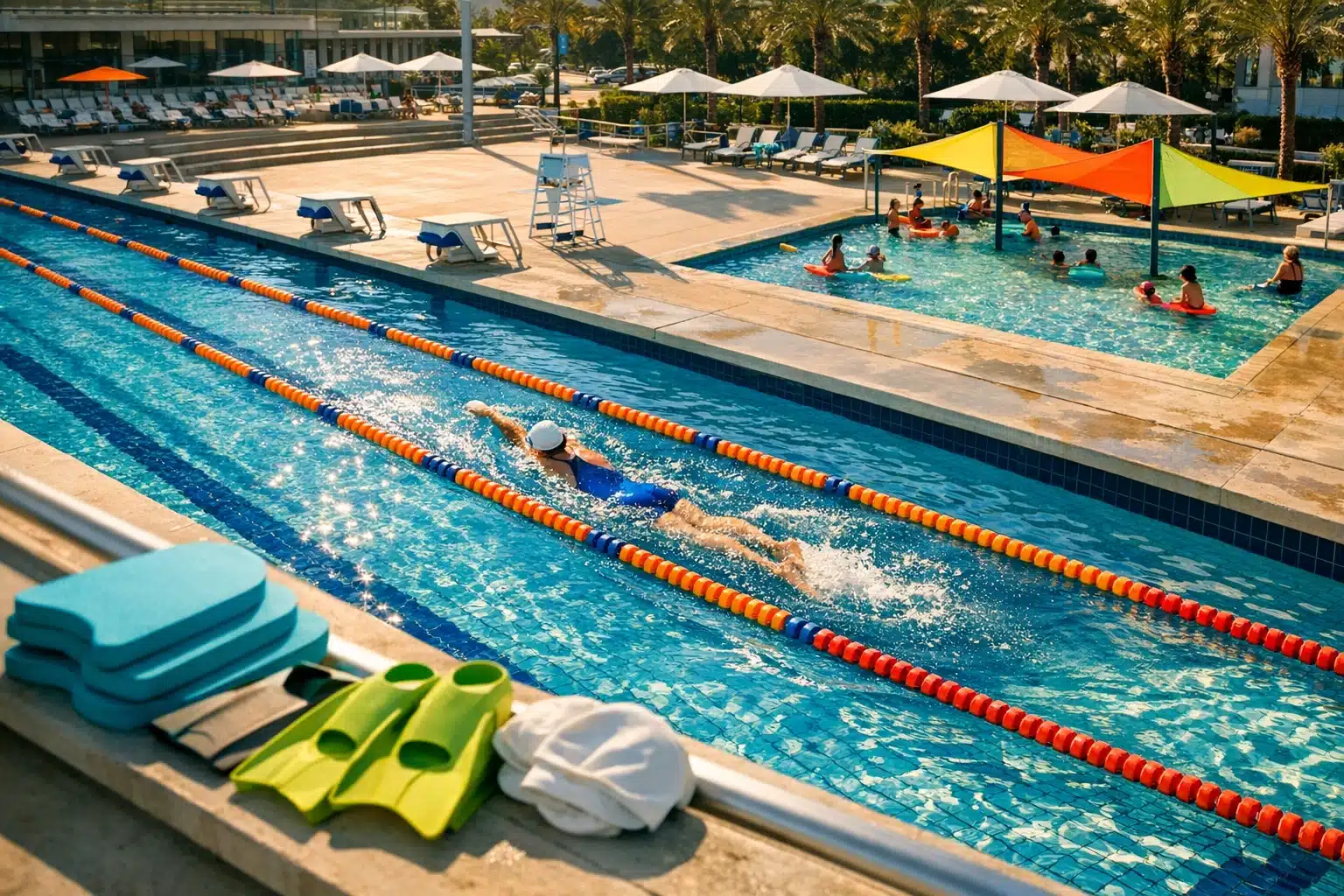
Explore the world of swimming
Swimming as a Skill, Sport, and Everyday Asset
Swimming asks for almost nothing at first glance: water, movement, breath, and a willingness to trust the surface beneath you. Yet this simple act connects fitness, safety, sport, recreation, and even quiet reflection in a way few activities can match. From toddlers learning to float to masters athletes chasing split times, swimming remains relevant because it adapts to nearly every age, goal, and ability level.
At its core, swimming is both a survival skill and a structured discipline. That combination makes it unusually important. A person may first enter the water to cool off on a hot day, but the ability to swim safely can shape vacations, school programs, exercise habits, and confidence around lakes, rivers, and beaches. In many communities, swim lessons are treated not only as enrichment but as a basic form of safety education. Unlike many sports that depend on a specific body type or expensive equipment, swimming can be introduced gradually and practiced in many forms, from leisure laps to synchronized routines and open-water endurance events.
Its cultural reach is just as broad. Swimming has been part of the modern Olympic Games since the late nineteenth century, and it remains one of the most watched international sports. At the same time, competitive swimming is only one corner of the picture. For millions of people, swimming is casual, social, therapeutic, or simply refreshing. A public pool on a summer afternoon tells a very different story from a predawn training lane, yet both belong to the same world.
This article follows a simple outline so readers can move from the big picture to practical details:
- Why swimming matters as a life skill, sport, and lifelong activity
- How swimming supports cardiovascular health, strength, mobility, and mental well-being
- What separates the major strokes, water environments, and common equipment
- How beginners and improving swimmers can build technique and training habits
- Which safety rules and pool customs make swimming more enjoyable and sustainable
Swimming also stands out because it can grow with the swimmer. A child may begin with floating games, a teenager may join a team, an adult may use the pool for low-impact fitness, and an older swimmer may return to the water because it feels kinder to the joints than pavement or gym floors. Few activities offer that kind of continuity. Water changes the experience of movement, and that change is part of the appeal. In the pool, gravity seems to loosen its grip, noise often fades, and effort becomes rhythmic. It is exercise, yes, but it can also feel like learning a new language one breath at a time.
The Physical and Mental Benefits of Swimming
Swimming is often praised as a full-body workout, and that description is accurate without being a cliché. Each stroke asks the arms, shoulders, chest, back, core, hips, and legs to contribute in a coordinated chain of movement. Because the body works against water rather than empty air, even gentle laps can create meaningful resistance. Water is far denser than air, so every pull and kick has a training effect. This does not mean every swim becomes brutally hard; it means resistance is built into the environment.
One of swimming’s greatest advantages is its blend of challenge and reduced impact. On land, activities such as running can be excellent for cardiovascular fitness, but they also place repeated force through the ankles, knees, hips, and lower back. In water, buoyancy supports body weight and lowers the impact on joints. That is why swimming is frequently recommended as part of general fitness routines and is often appealing to older adults, people returning to exercise, or those managing stiffness. It is not effortless, but it feels different: demanding without the same pounding.
Cardiovascular benefits are a major reason many people stay with the sport. Sustained swimming can improve aerobic capacity, and interval sessions can raise intensity further. Depending on pace, stroke, body size, and efficiency, an hour of swimming may burn roughly 400 to 700 calories for many adults. The exact number varies, but the key point is that swimming can support energy expenditure while building endurance. Freestyle often allows long continuous work, while butterfly or fast interval sets can quickly raise heart rate.
Mental benefits deserve equal attention. The repetitive sound of water, the need to manage breathing, and the focus required for technique often create a state that feels both alert and calming. Some swimmers describe the pool as a moving form of meditation. Unlike exercise that competes with screens, traffic, or loud surroundings, swimming narrows attention. You count strokes, time breaths, notice body position, and settle into rhythm. That concentration can be deeply restorative after a busy day.
- Physical gains often include endurance, muscular engagement, mobility, and coordination
- Mental gains may include stress relief, improved focus, and a sense of steady progress
- Practical gains include water confidence and the ability to participate more safely in aquatic settings
Compared with cycling, swimming uses the upper body more evenly. Compared with running, it is typically gentler on joints. Compared with many gym machines, it develops body awareness in a less fixed environment. There is also an honesty to the sport that many people appreciate: water gives immediate feedback. If breathing is rushed, the swimmer feels it. If posture slips, speed drops. If technique improves, the lane suddenly seems shorter. That direct response is one reason swimmers often become students of movement, not just collectors of workouts.
Understanding Strokes, Water Environments, and Equipment
To someone standing on deck, all swimming can look similar: arms moving, legs kicking, water splashing, clocks ticking. In practice, the four main competitive strokes are distinct in rhythm, mechanics, and purpose. Freestyle, usually performed as front crawl, is the fastest and most common stroke for fitness swimming. It relies on alternating arm recovery, flutter kicking, and side breathing. Efficient freestyle rewards streamlining and timing, which is why small technical changes can produce noticeable gains.
Backstroke turns the swimmer face-up and changes the whole sensory experience. Breathing is easier because the mouth is not turning through the water, but body alignment becomes especially important. A dropped hip or wandering arm entry can throw off balance quickly. Breaststroke is slower but highly technical, built around a pull, breath, kick, and glide sequence. Many beginners find its pace approachable, yet strong breaststroke is far more precise than it appears. Butterfly is the most demanding of the four for many swimmers, combining simultaneous arm action with a wave-like body movement and dolphin kick. When done well, it looks dramatic and smooth; when done poorly, it feels like the water is arguing back.
The setting matters almost as much as the stroke. Pool swimming offers lane lines, known distances, marked depths, and predictable conditions. A 25-meter or 25-yard pool suits frequent turns and shorter repeats, while a 50-meter pool allows longer uninterrupted efforts. Open-water swimming, by contrast, adds currents, wind, sighting, temperature shifts, and changing visibility. It can feel expansive and adventurous, but it also demands stronger judgment and safety planning. The calm blue lane and the restless lake are related, though they teach different lessons.
Equipment can help, but it should support skill rather than replace it. A well-fitted pair of goggles is almost essential for comfort. Swim caps may reduce drag, keep hair contained, and make swimmers easier to see. Training tools are useful when used intentionally:
- Kickboards isolate leg work and help swimmers focus on body line and kick patterns
- Pull buoys support the legs so swimmers can emphasize arm mechanics
- Fins can improve body position and allow technique practice at a slightly higher speed
- Paddles increase resistance and should be used carefully to avoid shoulder overload
There is no single “best” stroke or environment for everyone. Freestyle may suit the lap swimmer focused on efficiency. Breaststroke may appeal to someone who prefers visible breathing and a measured pace. Open water may attract the swimmer who wants exploration rather than lane counts. Pool training may better fit those who value structure and measurable progression. The beauty of swimming is that all these versions can belong to one person at different times. A swimmer may race in winter, cruise in summer, drill technique in spring, and float for pleasure in between. That range keeps the sport fresh.
How to Learn, Practice, and Improve in the Pool
Learning to swim is often described as “getting comfortable in the water,” but that phrase only hints at what is really happening. A new swimmer is learning body position, breath control, timing, and trust all at once. The most effective way to begin is usually not by chasing distance but by building a sequence of simple skills. Floating, exhaling underwater, standing up calmly, gliding off the wall, and kicking with support are small steps, yet they create the foundation for everything that follows. Strong swimmers often look natural, but their ease is built from these basics.
For beginners, formal lessons can accelerate progress because an instructor can spot habits the swimmer cannot feel. Adult learners especially benefit from direct feedback on breathing, head position, and tension. Many adults try to muscle through the water, lifting the head too high and stiffening the neck and shoulders. That creates drag and fatigue. Good instruction usually does the opposite: it makes swimming look quieter and feel more organized. The goal is not to fight the water but to move through it with fewer interruptions.
A practical training approach helps swimmers at every stage. Rather than swimming the same easy distance every visit, structure each session with a purpose. A useful workout may include:
- A warm-up to loosen shoulders, settle breathing, and establish rhythm
- Technique drills such as side kicking, catch-up freestyle, or single-arm backstroke
- Main sets focused on endurance, pace control, or speed
- A short cool-down to bring effort down gradually
For example, a returning swimmer might complete 200 meters easy, then 6 x 50 meters with generous rest while focusing on smooth exhalation, followed by 4 x 100 meters at a steady pace, and then 100 meters relaxed. A more advanced swimmer may use interval sets, pacing targets, and stroke-specific work. The principle is the same: train with intention. Random laps can still be enjoyable, but planned practice turns effort into progress.
Technique is where many improvements hide in plain sight. In freestyle, looking slightly downward rather than forward helps align the spine. Exhaling continuously underwater prevents rushed breathing. Reaching too far across the center line can cause snaking through the lane, while entering the hand in line with the shoulder improves balance. In breaststroke, patience in the glide matters; in butterfly, rhythm matters more than brute force; in backstroke, steady rotation keeps the stroke efficient.
Progress in swimming can feel slow at first because water punishes inefficiency so clearly. Still, that same truth makes gains rewarding. A swimmer may not notice change from one day to the next, but over several weeks the signs appear: fewer pauses at the wall, calmer breathing, cleaner turns, or the surprising moment when a distance that once felt impossible becomes ordinary. Improvement in swimming is rarely loud. It arrives as a quiet kind of competence, and that makes it satisfying in a lasting way.
Safety, Etiquette, and a Practical Conclusion for New and Returning Swimmers
Swimming is enjoyable partly because water feels liberating, but that freedom works best when paired with discipline. Safety is not an optional extra tacked onto the sport; it is part of the sport. Pool swimmers should know depth changes, entry rules, and lane patterns before starting. Open-water swimmers need even more caution: weather, temperature, currents, visibility, and boat traffic can alter conditions quickly. A strong pool swimmer may still find a lake or sea far more demanding than expected. Water does not care about confidence alone.
Several habits make a real difference. Swim where lifeguards are present when possible. Avoid open water alone. Use visible gear such as a bright cap or tow float in appropriate settings. If conditions look uncertain, wait or choose a safer option. For beginners and children, close supervision matters more than assumptions about shallow water. Fatigue, cold, and panic can change a manageable situation very fast. These are not dramatic warnings for the sake of drama; they are ordinary realities of an environment that deserves respect.
Etiquette also shapes the experience, especially in shared pools. Good lane behavior makes training smoother for everyone:
- Choose a lane that matches your pace as closely as possible
- Rest at the corner of the wall so others can turn
- Pass only when it is safe and clear
- Rinse before entering if the facility requests it
- Be predictable in your movement, especially during crowded sessions
These customs may seem small, but they reduce friction and help swimmers of different ages and abilities use the same space comfortably. In that sense, swimming is quietly social. Even when each person is focused on a separate workout, everyone depends on a shared rhythm of courtesy.
For the target audience of this article, whether you are curious, rusty, fitness-minded, or considering lessons for the first time, the main takeaway is simple: swimming is worth learning well. It offers practical safety benefits, broad physical value, and a style of movement that many people can sustain for years. You do not need elite speed, expensive gear, or a dramatic goal to begin. Start with comfort, technique, and consistency. If you are returning after a long break, let the first objective be confidence rather than performance. If you are already active in other sports, think of swimming as a complement that builds endurance and body control from a different angle.
In the end, swimming gives back what the swimmer brings to it: patience becomes ease, repetition becomes skill, and attention becomes confidence. Some people chase medals, some chase fitness, and some simply want to cross a pool without fear. All of those reasons are valid. The water welcomes many ambitions, but it rewards steady learning most of all. That is what makes swimming such a compelling world to explore, one lap, one breath, and one calm improvement at a time.