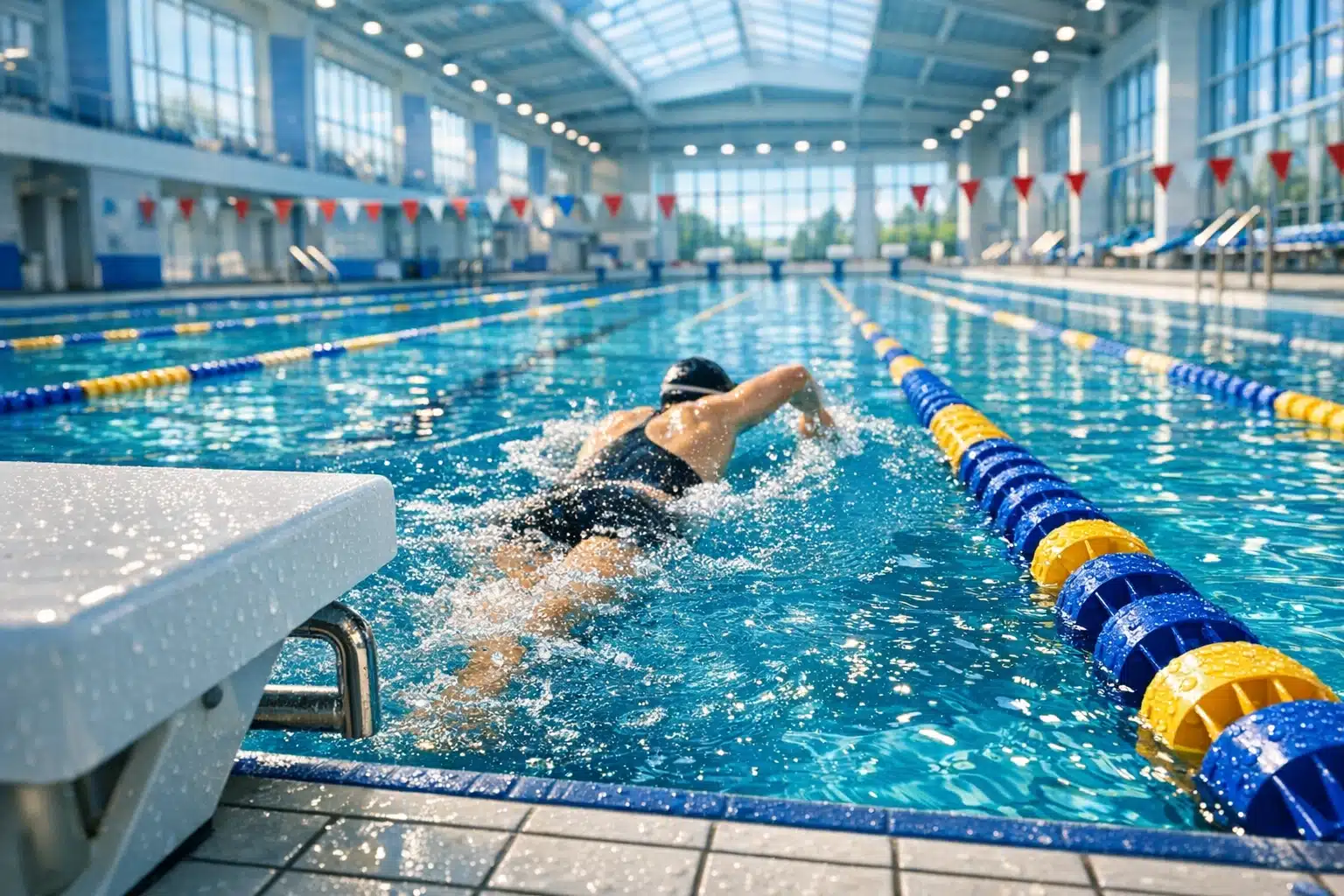
Explore the world of swimming
Swimming has a way of meeting people where they are: as a childhood lesson, a serious sport, a gentle form of exercise, or a quiet escape from noise on land. In water, effort feels different, movement becomes more deliberate, and even small improvements can feel surprisingly rewarding. Because it supports fitness, safety, confidence, and recovery all at once, swimming remains one of the most useful skills a person can build. This article follows that wider story, from basic meaning to technique, health, training, and lifelong relevance.
Outline
This article is organized into five main parts. First, it explains why swimming has remained important across cultures and generations. Second, it compares the major strokes and shows how each one asks something different from the swimmer. Third, it looks at physical and mental benefits with practical context rather than hype. Fourth, it covers learning, training, equipment, and safety habits. Fifth, it explores competition, community, and the lasting role swimming can play in everyday life.
1. Why Swimming Matters: More Than a Sport
Swimming is often introduced as an activity, but that description is too small for what it actually is. It is a sport, certainly, yet it is also a survival skill, a public health tool, a form of rehabilitation, and for many people a source of pleasure that asks for very little more than water, time, and patience. Long before modern pools and stopwatches existed, people swam to cross rivers, fish, travel short distances, and simply adapt to the landscapes around them. Ancient civilizations left evidence that swimming was known and valued thousands of years ago, and the basic reason has not changed: water is both beautiful and demanding, and humans learn something important when they move through it well.
Part of swimming’s lasting appeal comes from its unusual flexibility. Running requires impact, cycling requires equipment, and many team sports depend on space, timing, or a full group. Swimming can be playful or disciplined, social or solitary, competitive or restorative. A child splashing in the shallow end, a triathlete training for endurance, and an older adult using water exercise to stay mobile may all share the same facility without sharing the same goal. That range is rare. It helps explain why swimming is woven into schools, community centers, vacation culture, rehabilitation programs, and elite sport systems around the world.
Another reason swimming matters is that it teaches respect for environment and technique at the same time. On land, people can often power through poor form for a while. In water, inefficient movement is exposed quickly. If the body is tense, breathing is rushed, or timing is off, progress becomes harder than it needs to be. That challenge can frustrate beginners, but it also makes improvement deeply satisfying. A small change in head position or breathing rhythm can transform a lap from a struggle into something smooth and almost musical.
Its importance can be summarized in a few practical ways:
• it improves water safety and confidence
• it offers exercise with relatively low joint impact
• it can be adapted for many ages and abilities
• it supports recreation, recovery, and competition alike
That combination gives swimming an uncommon kind of relevance. It is not just about racing from one wall to another. It is about learning how to move calmly in a place where humans are never fully in control, and that lesson tends to stay useful for life.
2. The Main Strokes: Four Ways to Move Through Water
To an experienced swimmer, the four competitive strokes can feel like four dialects of the same language. To a beginner, they may look as different as walking, dancing, climbing, and flying. Each stroke solves the same basic problem, how to move the body efficiently through water, but it does so with different rhythms, body positions, and demands. Understanding these differences helps swimmers choose the right stroke for their goals, whether the aim is speed, endurance, comfort, or skill development.
Front crawl, often called freestyle in casual conversation, is generally the fastest and most efficient stroke for covering distance. The body stays long and horizontal, the kick is continuous, and the arms alternate in a smooth cycle. Because the swimmer turns the head to breathe to the side, timing matters. When front crawl is done well, it looks almost quiet despite the speed. It is the stroke most fitness swimmers rely on for lap training because it allows a strong cardiovascular workload with a comparatively streamlined shape.
Breaststroke is slower, but it remains one of the most popular strokes for recreational swimmers. The head can stay higher, the breathing pattern feels intuitive to many learners, and the glide phase gives the stroke a distinctive pulse. Still, breaststroke is technically demanding in its own way. The kick requires coordination and flexibility, and poor timing can create large amounts of drag. Compared with front crawl, breaststroke is often easier to understand at first but harder to master efficiently.
Backstroke offers a different experience altogether. Because the swimmer is face-up, breathing is less stressful for people who dislike turning the head or timing inhalations. It can feel liberating, almost like floating with purpose. At the same time, swimming on the back removes visual guidance, so lane awareness and body alignment become important. Many swimmers enjoy backstroke as a relief stroke during training because it opens the chest and changes the muscular pattern.
Butterfly is the most dramatic and, for many adults, the most intimidating. Both arms recover together, the body undulates, and the kick usually comes from a dolphin motion driven by the core and hips. It is powerful, demanding, and beautiful when executed well. It is also highly energy intensive, which is why even skilled swimmers use it carefully in training sets.
A simple comparison helps:
• front crawl: fastest, efficient, common for fitness
• breaststroke: accessible, rhythmic, slower, technically specific
• backstroke: face-up, steady breathing, strong for posture awareness
• butterfly: explosive, technical, physically demanding
No single stroke is “best” for every swimmer. The most useful approach is to see them as tools. Front crawl is the reliable all-rounder, breaststroke is the patient traveler, backstroke is the open-chested counterbalance, and butterfly is the difficult poem that teaches power through precision.
3. Health Benefits: What Swimming Does for Body and Mind
Swimming earns its reputation as a full-body workout for good reason. Water is far denser than air, so every stroke asks the body to push against meaningful resistance in multiple directions. The result is a form of exercise that trains the heart and lungs while also asking for coordination, mobility, and muscular endurance. Shoulders, back, chest, core, hips, and legs all contribute, though the exact emphasis changes with the stroke. A relaxed backstroke set feels different from a powerful butterfly repeat, but both ask the body to organize itself as a connected system rather than a collection of isolated parts.
One of swimming’s biggest advantages is its relatively low impact. Because the body is supported by water, stress on joints can be much lower than in activities such as running or court sports. That does not make swimming effortless, and it does not mean injuries are impossible. Repetitive poor technique can still irritate shoulders, neck, or knees. Yet for many people, especially older adults or those returning from injury, the water provides a way to work hard without the repeated pounding that land exercise can bring. This is one reason aquatic exercise is frequently used in rehabilitation settings and recovery plans.
From a cardiovascular perspective, swimming can be scaled remarkably well. Gentle lengths with rest intervals may suit a beginner, while structured intervals can challenge a trained athlete at a high level. Public health guidance from major health organizations, including the World Health Organization, recommends regular aerobic activity each week, and swimming can help meet that target effectively. Energy use varies widely by body size, stroke, and pace, but many adults can expect a moderate 30-minute swim session to use a meaningful amount of energy, with harder efforts increasing that demand. The point is not to chase one magic number on a watch. The point is that swimming can support endurance, body composition goals, and general fitness in a sustainable way.
The mental side matters just as much. Repetitive laps, controlled breathing, and the muffled acoustics of a pool often create a focused state that feels different from the stimulation of a gym floor. For some people, swimming acts almost like moving meditation. It will not solve every problem, and it should not be sold as a cure-all, but it can reduce stress, sharpen body awareness, and create a reliable ritual in busy weeks.
Common benefits include:
• aerobic conditioning without heavy impact
• improved muscular endurance and posture awareness
• better breath control and rhythm
• a calming routine that can support mood and concentration
In practical terms, swimming is valuable because it works across many seasons of life. It can challenge the young, support the middle years, and remain available when other forms of exercise become less comfortable. Few activities make that claim so honestly.
4. Learning, Training, and Safety: Building Skill With Confidence
Learning to swim can be joyful, awkward, humbling, and empowering, sometimes in the same lesson. Adults often assume they should progress quickly because the movements look simple from the deck. In reality, swimming asks people to breathe in an unusual pattern, maintain balance in an unstable environment, and trust buoyancy before they fully understand it. That is why good instruction matters. The best beginners are not always the strongest or the boldest; they are often the ones willing to slow down and learn the sequence properly.
Most solid learning paths begin with comfort in the water. That means submerging the face, exhaling steadily, floating, and learning how the body responds when it relaxes instead of stiffening. Only after those basics feel manageable does technique start to make sense. Kicking without balance becomes tiring. Pulling without a stable body line wastes energy. Breathing without rhythm creates panic. Good coaches usually build the pieces in order, then combine them gradually through drills and short repeats.
Once the basics are in place, training can become more structured. A useful swim session typically includes a warm-up, a skill component, a main set, and a cool-down. This structure is common from beginner classes to competitive squads because it respects how swimmers improve. They do not get better just by accumulating random laps. They improve by pairing repetition with attention. A short drill set on body position may be more valuable than ten careless lengths swum in a hurry.
A practical starter checklist might include:
• goggles that fit well without leaking
• a comfortable swimsuit that allows easy movement
• a swim cap if the facility requires one or if hair management is helpful
• a kickboard or pull buoy when used for specific drills, not as a permanent crutch
• water and a towel, because pool work is exercise even when people forget that fact
Safety deserves equal emphasis. In pools, that means respecting lane etiquette, understanding depth, and avoiding overconfidence. In open water, the list grows longer: never swim alone, check weather and currents, use visible gear, know the entry and exit points, and respect cold water. A calm lake can turn challenging quickly, and the ocean does not negotiate. Pool swimming is controlled; open water is variable, and that difference matters.
Perhaps the most important training lesson is this: progress in swimming is rarely linear. Some days the water feels like silk, and some days it feels like a long argument. Staying patient, practicing consistently, and treating safety as part of skill rather than a separate topic is what turns occasional swimmers into capable ones.
5. From Lap Lanes to Open Water: Competition, Community, and Lifelong Value
Swimming contains multitudes. At one end, there is the solitary swimmer counting strokes under fluorescent lights, refining technique one lap at a time. At the other, there are packed championship arenas, relay exchanges decided by fractions of a second, and open-water events where athletes race through rivers, lakes, or the sea. Between those extremes lies a broad culture that includes school teams, masters programs, triathlon clubs, adaptive swimming, family lessons, aqua fitness classes, and informal early-morning groups who know each other by lane number before they know each other by surname.
Competitive swimming is built on details. Starts, turns, underwater phases, pacing, and stroke efficiency can separate swimmers more than raw strength alone. Sprint events reward explosive power and sharp technique, while middle-distance and longer races demand control and tactical awareness. The individual medley adds another layer by combining all four strokes, turning versatility into a competitive advantage. Para swimming further expands the sport’s meaning by showing how performance adapts across different physical conditions and classification systems. The common thread is not perfection; it is refinement.
Open-water swimming changes the script. There are no lane lines, walls, or perfectly measured turns. Visibility may be limited, temperature can shift, and navigation becomes part of performance. Some swimmers find that uncertainty thrilling. Others prefer the predictability of a pool. Neither setting is superior in every way. A pool is ideal for controlled training and measurable progress. Open water offers adventure, sensory richness, and a direct encounter with environment that can feel almost literary, as if the swimmer is moving through a chapter written by wind and light.
The community side is easy to underestimate until you experience it. Swimming can look individual from outside, but it often creates durable social bonds. Shared workouts, mutual encouragement, and the simple habit of showing up at the same hour each week build connection quietly. For children, lessons can create confidence around water and healthy respect for risk. For adults, swim groups can restore consistency to fitness routines that once felt impossible to maintain. For older swimmers, the pool may become a place where movement remains available and identity stays active.
Different audiences often find different rewards:
• beginners gain safety, confidence, and a new physical language
• fitness swimmers gain a low-impact training option with real intensity
• competitors gain a technical sport where small gains matter
• lifelong learners gain an activity that can evolve with age rather than expire
That may be swimming’s strongest quality. It does not need to mean the same thing forever. It can begin as necessity, become exercise, turn into obsession for a while, and settle later into ritual. Very few pursuits travel with people so faithfully across time.
Conclusion for Beginners, Fitness Seekers, and Lifelong Learners
If you are new to swimming, the first goal is not speed; it is comfort, safety, and trust in the water. If you already exercise and want a fresh challenge, swimming offers a demanding workout that is gentle on joints while unforgiving of sloppy technique. If you are returning after years away, the pool can be one of the most welcoming places to rebuild endurance step by step. And if you already love the sport, its depth is part of the reward: there is always a cleaner turn, a calmer breath, a better rhythm waiting to be found.
In the end, swimming remains relevant because it is useful, adaptable, and deeply human. It asks for patience, gives back resilience, and meets people at many different points in life. Whether your version of success is one confident length, a peaceful weekly routine, or a race across open water, the journey begins the same way: by entering the water with attention and staying long enough to learn what it can teach.