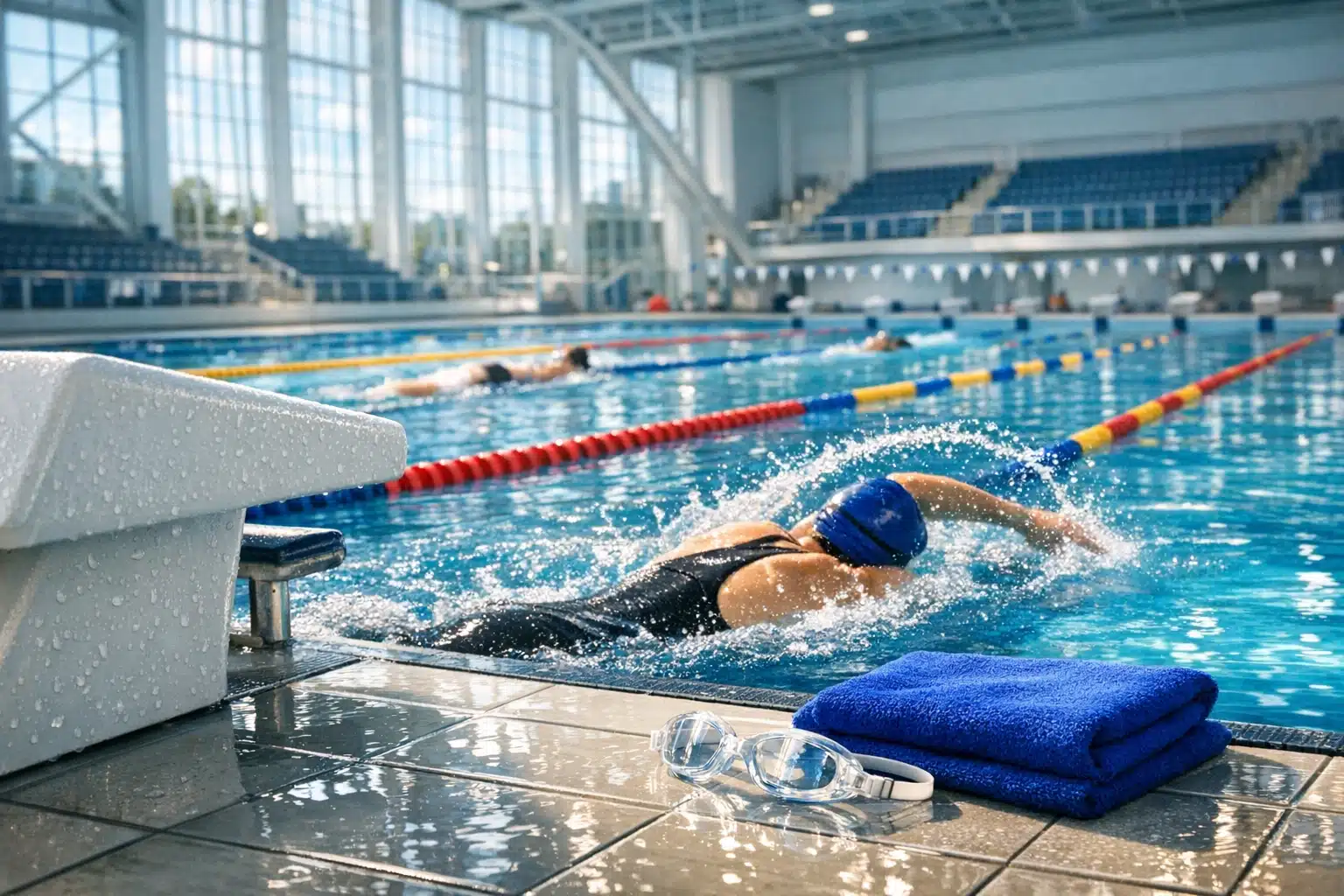
Explore the world of swimming
Swimming is one of those rare activities that feels playful and purposeful at the same time. It teaches survival, builds endurance, challenges the whole body, and offers a calm escape from the noise of daily life. From Olympic lanes to neighborhood pools and open-water shores, it connects recreation, sport, and health in a way few pursuits can match. Understanding how swimming works makes every lap more rewarding, whether you are learning to float or refining a race pace.
Outline
- The place of swimming in history, sport, and everyday life
- The main strokes, breathing patterns, and core technique principles
- Physical and mental health benefits supported by practical examples
- Training habits, equipment choices, and essential safety rules
- A closing guide for beginners, fitness swimmers, parents, and lifelong learners
Swimming in Context: History, Purpose, and Lasting Appeal
Swimming is much more than a sport measured by split times and podium finishes. At its core, it is a life skill, a form of exercise, a recreational pastime, and for many people, a source of confidence. Human beings have swum for thousands of years. Ancient civilizations depicted swimmers in art, and over time swimming evolved from a survival skill into organized competition. By the late nineteenth century, it had become formalized through clubs, national bodies, and eventually Olympic events. That long history matters because it explains why swimming sits in such an unusual place: it belongs equally to public health, education, sport, and leisure.
Its appeal is partly physical and partly emotional. Water changes the rules of movement. Because the body becomes buoyant, exercise feels different than it does on land. Impact on joints is reduced, but resistance is constant. In simple terms, swimming can be gentle on the knees while still demanding strong effort from the heart, lungs, and muscles. This rare combination helps explain why swimming is recommended to such a wide audience, including children learning coordination, adults seeking cardiovascular exercise, and older people looking for lower-impact activity.
Swimming also stands apart because it asks for technical awareness. Running may begin with a pair of shoes and a sidewalk; swimming begins with breathing, balance, and trust in the water. That learning curve can feel humbling, but it is also part of the attraction. Every improvement is tangible. A novice learns to float without panic. A casual lap swimmer discovers how one small change in head position makes the stroke smoother. A competitor trims seconds from a race through better turns or pacing. In swimming, progress often arrives quietly, almost like a secret shared between the body and the water.
Modern swimming spans several worlds at once:
- Recreational swimming in pools, lakes, and beaches
- Competitive swimming in clubs, schools, and elite events
- Fitness swimming for endurance, weight management, and recovery
- Open-water swimming for challenge, adventure, and connection with nature
This range gives swimming unusual social reach. A child splashing in a lesson, a triathlete training before sunrise, and a retiree doing easy laps may all use the same pool for very different reasons. Few activities serve such varied needs so well. That is why swimming continues to matter: it is practical enough to save lives, structured enough to build discipline, and enjoyable enough to become a habit instead of a chore.
Strokes, Breathing, and Technique: How Efficient Swimming Works
To the untrained eye, good swimming can look effortless, almost as if the water is doing half the work. In reality, efficient swimming comes from technique rather than raw force. Water is roughly 800 times denser than air, so mistakes in body position or timing create immediate drag. That is why a strong but uncoordinated swimmer can feel slower than a smaller athlete with cleaner mechanics. Learning the main strokes helps reveal how swimming balances propulsion, rhythm, and control.
The four competitive strokes are freestyle, backstroke, breaststroke, and butterfly. Freestyle, often swum using the front crawl, is generally the fastest because it allows continuous propulsion with a streamlined body position. Backstroke shares some structural similarities but places the swimmer face-up, which changes orientation and breathing. Breaststroke is usually slower, yet highly technical, relying on timing between the pull, breath, kick, and glide. Butterfly is the most physically demanding for many learners, combining simultaneous arm recovery with a dolphin kick and precise body undulation.
Each stroke rewards a different kind of discipline, but several technique principles apply to all of them:
- Keep the body as long and balanced as possible to reduce drag
- Use the core to stabilize rotation and maintain alignment
- Breathe in a controlled pattern instead of lifting the head abruptly
- Focus on feel for the water, not just speed or effort
Breathing deserves special attention because it often determines whether swimming feels smooth or stressful. Beginners frequently hold their breath underwater and then rush to inhale, which disrupts posture and wastes energy. A better pattern is to exhale steadily in the water and inhale quickly when the mouth clears the surface. In freestyle, bilateral breathing, taking a breath every three strokes, can help balance the stroke for some swimmers, though many distance swimmers use a different rhythm depending on pace and comfort. There is no universal breathing count that suits everyone, but there is a universal truth: calm breathing supports calm movement.
Technique also includes starts, turns, and pacing. In lap swimming, the push off the wall can be one of the fastest parts of each length. A well-timed turn preserves momentum and lowers energy cost. Pacing matters because many swimmers start too fast, fill their muscles with fatigue early, and fade badly. Good swimmers often look patient in the first part of a set and stronger at the end. That is not laziness; it is intelligent distribution of effort.
A useful comparison can be made with cycling. In both sports, efficiency matters more than brute power over time. A cyclist who wastes movement burns energy without gaining speed; a swimmer who slips through the water poorly faces the same problem. Once technique improves, every stroke becomes more productive. That is when swimming changes from survival mode into something elegant, almost musical, where breath, pull, kick, and glide fall into rhythm.
Why Swimming Is Good for Body and Mind
Swimming has earned its reputation as a full-body workout for good reason. Few forms of exercise recruit so many major muscle groups while also challenging the cardiovascular system. The shoulders, back, chest, core, hips, and legs all contribute to movement through the water. At the same time, the heart and lungs work steadily to supply oxygen during repeated efforts. For people who want one activity that builds endurance and muscular engagement together, swimming is a strong candidate.
One important advantage is reduced impact. Because buoyancy supports part of the body’s weight, swimming can feel more comfortable than activities that involve pounding on hard surfaces. In chest-deep or neck-deep water, the joints carry far less load than they do on land. That does not make swimming easy, but it does make it accessible for many people recovering from certain injuries, managing joint sensitivity, or returning to exercise after a long break. It is not a replacement for medical advice, of course, yet it is often a practical option in supervised fitness or rehabilitation settings.
Swimming can also help people meet general activity guidelines. The World Health Organization recommends that adults aim for at least 150 to 300 minutes of moderate-intensity aerobic activity per week, or 75 to 150 minutes of vigorous activity. Regular lap swimming can contribute meaningfully to those targets. The exact calorie burn varies with body size, stroke, and speed, so inflated claims should be avoided, but the overall training effect is real. Longer steady sessions build aerobic capacity, while interval work can raise intensity and improve speed.
The mental side is just as compelling. Water has a way of narrowing attention to the next breath, the next wall, the next pull. For many swimmers, that repeated rhythm creates a meditative state. Stress does not disappear, but it quiets down for a while. Structured swim training can also create a healthy sense of progress because improvement is measurable in time, distance, and perceived effort. A swimmer who once struggled through 100 meters may one day complete 1,000 with control. That kind of evidence can rebuild self-belief better than vague motivation slogans ever could.
Common benefits often include:
- Improved cardiovascular endurance
- Better muscular coordination and posture awareness
- Lower-impact conditioning for many bodies and ages
- Stress relief through rhythmic, focused movement
- Greater confidence in aquatic environments
There is also a social dimension. Swim clubs, masters programs, school teams, and community pools offer structure and belonging. Some people chase personal bests; others simply enjoy the familiar echo of the pool and the quiet nod from lane partners. Swimming supports both ambitions. It can be solitary without being lonely, disciplined without feeling rigid, and demanding without needing spectacle. That balance is part of its enduring power.
Training Smart: Safety, Equipment, and Practice Habits
Swimming rewards consistency, but it punishes carelessness. Training smart means balancing ambition with technique, recovery, and safety. Many newcomers assume progress comes from adding more laps as quickly as possible. In practice, that often leads to sloppy form and frustration. A better approach is to combine manageable volume with clear goals. One session might focus on breathing control, another on endurance, another on short, faster repeats with adequate rest. This kind of variety develops skill and fitness together, which is far more useful than grinding through distance with poor mechanics.
A simple training structure can help swimmers at almost any level. Most sessions work well when divided into three parts: a warm-up, a main set, and a cool-down. The warm-up prepares the shoulders, hips, and lungs for harder work. The main set targets a specific aim, such as aerobic endurance, sprint speed, or stroke technique. The cool-down allows heart rate and muscle tension to settle gradually. Even a 30 to 40 minute session can be productive if it has a purpose.
Equipment should support training, not distract from it. Basic gear is often enough:
- A well-fitted swimsuit that allows free movement
- Goggles that seal comfortably without excessive pressure
- A swim cap if desired for hair management or reduced drag
- A kickboard, pull buoy, or fins for selected drills, not constant dependence
There is a temptation to buy speed before earning skill, but expensive gear cannot correct a poor catch or rushed breathing pattern. Tools are most useful when they highlight a specific sensation. Fins can help body position, a pull buoy can isolate upper-body work, and paddles can develop strength when used carefully. Misused tools, however, may reinforce bad habits or overload the shoulders.
Safety deserves equal attention. Pool rules can feel ordinary until someone ignores them. New swimmers should practice in supervised settings whenever possible. Open water adds extra variables such as currents, cold temperatures, low visibility, and changing weather. Even strong pool swimmers can be surprised by waves, chop, or the psychological effect of dark water. For open-water sessions, a buddy system, visible swim buoy, and knowledge of local conditions are not optional extras; they are sensible precautions.
Good safety habits include:
- Never overestimating your ability, especially in unfamiliar water
- Respecting lifeguard instructions and posted pool rules
- Stopping if pain, dizziness, or unusual fatigue appears
- Hydrating, even though the water can mask sweat loss
Perhaps the smartest habit of all is patience. Swimming improvement is famously uneven. One week the stroke feels light and smooth; the next week it feels like dragging a blanket through a bathtub. That fluctuation is normal. Skill sports rarely improve in a straight line. Stay regular, keep sessions intentional, and let technique mature over time. In swimming, small adjustments accumulate quietly until one day the water starts to feel less like resistance and more like partnership.
Conclusion for New and Returning Swimmers
If you are curious about swimming, the best takeaway is simple: this is a sport and life skill worth learning at your own pace. You do not need Olympic ambitions to benefit from it. A beginner may start by becoming comfortable putting the face in the water and exhaling steadily. A busy adult may use two weekly sessions to improve fitness without the joint stress that sometimes comes with land-based workouts. A parent may see swimming as both recreation and an essential safety skill for children. An older adult may value the way it supports mobility and stamina while feeling gentler on the body. The audience is broad because the activity is remarkably adaptable.
For readers who want a practical path forward, start small and stay specific. Choose one goal for the next month rather than ten vague intentions. That goal might be swimming continuously for ten minutes, learning backstroke, attending a lesson, or feeling calm in deep water. Keep track of modest gains. In swimming, confidence often grows before speed does, and that is a meaningful victory. Once confidence improves, technique becomes easier to refine, and fitness begins to rise almost as a side effect of regular practice.
It is also helpful to match your approach to your purpose:
- If your aim is fitness, prioritize consistency and sustainable effort
- If your aim is technique, seek feedback from a coach or experienced instructor
- If your aim is family safety, focus first on water comfort and supervision habits
- If your aim is competition, build a structured plan with pacing and recovery
What makes swimming special is not just the number of muscles it uses or the calories it may burn. Its deeper value lies in what it teaches. It teaches rhythm under pressure, calm in an unfamiliar environment, and respect for a setting that can be both inviting and powerful. It reminds us that progress is not always noisy. Sometimes it arrives in a quieter form: a longer glide, a steadier breath, a lap that ends with energy still left in reserve.
For new swimmers, returning swimmers, fitness seekers, and lifelong learners alike, the message is encouraging. Swimming can begin as a practical lesson and grow into a habit, a discipline, or even a joy. Step into the water with patience, curiosity, and attention. The world of swimming is wide enough for competition, health, recovery, and simple pleasure, and there is room in it for far more people than many imagine.