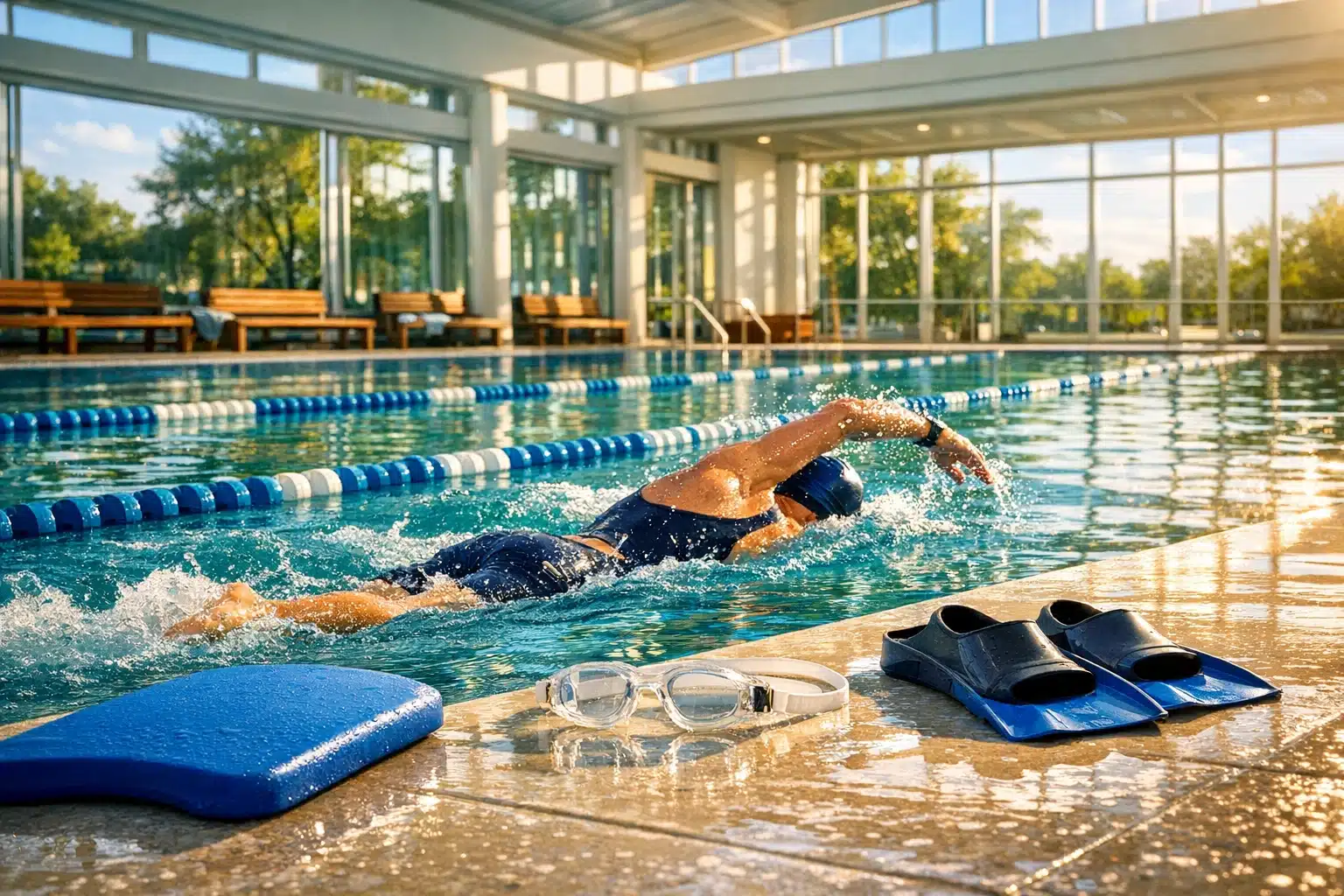
Explore the world of swimming
Swimming sits at the crossroads of sport, survival, and simple pleasure, which is why it matters to children learning confidence, adults chasing fitness, and older people protecting mobility. A pool can be a training ground, a place to recover from stress, or a doorway to competition and adventure. This article maps the essentials of swimming, from strokes and health benefits to safety, gear, and long-term progress. Whether you are curious, cautious, or already committed, there is something here that can sharpen your view of the water.
Outline and Overview: Why Swimming Holds a Unique Place
Before diving into the details, it helps to see the structure of the subject clearly. Swimming is not just one activity with one purpose. It is a broad world that includes water safety, physical fitness, competitive sport, rehabilitation, recreation, and even a certain kind of quiet escape. Unlike many forms of exercise, swimming changes the environment around the body itself. The moment a person steps into the water, gravity feels different, breathing becomes more deliberate, and movement gains both resistance and flow. That combination is rare, and it is part of what makes swimming so compelling.
This article follows a practical path through the topic. It begins with the bigger picture of why swimming matters, then moves into health benefits, technique, safety, equipment, and the habits that support steady improvement. In that sense, the outline mirrors the way many people actually learn to swim: first they gain awareness, then confidence, then skill, and finally purpose. Some swim to stay healthy, some to race the clock, and some simply to feel lighter than life on land usually allows.
- Swimming as a life skill and a form of self-protection
- Swimming as low-impact exercise for many ages and fitness levels
- The four main competitive strokes and their distinct demands
- Differences between pool swimming and open-water swimming
- Equipment, training habits, and long-term progress
Swimming also has a long cultural and sporting history. Humans have swum for thousands of years, and modern competitive swimming has been part of the Olympic program since the first modern Games in 1896, with women’s events added later in 1912. Yet the sport’s formal history tells only part of the story. For millions of people, swimming is woven into everyday life through school lessons, summer routines, beach holidays, military training, rehabilitation programs, and community sports clubs. It can be serious without becoming severe, technical without losing joy, and demanding without always punishing the joints.
That dual nature deserves attention. A runner may feel every footstrike. A cyclist may depend heavily on equipment and terrain. A swimmer, by contrast, must learn how to cooperate with the water rather than overpower it. The water always wins the argument, but it rewards patience, rhythm, and good mechanics. That is why swimming often looks smooth when done well and exhausting when done poorly. In the sections ahead, that contrast will become clearer, showing how swimming works not just as movement, but as a skill that grows richer the more closely it is understood.
Health, Fitness, and the Wide-Ranging Benefits of Swimming
One of the strongest arguments for swimming is how many systems of the body it engages at once. It is an aerobic activity that challenges the heart and lungs, but it also recruits major muscle groups throughout the arms, shoulders, back, core, hips, and legs. Few exercises combine these elements so naturally. When a swimmer moves across the water, every stroke asks for coordination, while every breath asks for timing. That makes swimming both a physical workout and a lesson in efficient movement.
For cardiovascular health, swimming can be highly effective. A steady lap session raises heart rate, improves circulation, and supports endurance in ways similar to brisk cycling or jogging. The difference is impact. Water supports the body, which means the joints generally face less pounding than they would during many land-based activities. This is one reason swimming is often recommended for older adults, people returning from injury, or those managing conditions that make high-impact exercise uncomfortable. Water resistance is also greater than air resistance, so even moderate swimming can create meaningful muscular work without the sensation of lifting heavy loads.
Swimming also compares well with other forms of exercise because it can be adapted so easily. A beginner might do short lengths with frequent rests. A trained athlete may complete interval sets at controlled paces. Someone recovering from stress may simply swim gently for twenty minutes and still feel the benefits. Depending on body size, stroke, and intensity, an adult can burn several hundred calories in an hour of swimming. Freestyle and butterfly generally demand more energy than backstroke or easy breaststroke, although technique affects that picture a great deal.
- Supports heart and lung function through sustained aerobic effort
- Builds muscular endurance across the whole body
- Reduces joint stress compared with many impact-heavy sports
- Can improve flexibility, posture, and body awareness
- Offers a practical option for rehabilitation and active recovery
The mental side matters too. Swimming often creates a rhythm that many people find calming. The sound of water, the repeated stroke cycle, and the narrow focus on breathing can make a session feel almost meditative. That does not mean every workout is peaceful; hard sets can feel brutal in an honest, unforgettable way. Still, even challenging training has structure, and structure itself can reduce mental clutter. For people with busy schedules, swimming can provide a rare block of time in which the body is working hard while the mind becomes simpler.
There is also a practical public-health angle. Swimming ability is not only about recreation. It can contribute to personal safety around pools, lakes, rivers, and coastlines. Learning to float, tread water, control breathing, and move efficiently in water can make a real difference in emergencies. In that sense, swimming offers something many exercises do not: health benefits on one side and survival value on the other. That combination alone makes it worth taking seriously.
Understanding the Main Strokes and the Technique Behind Efficient Movement
Swimming technique is often the dividing line between struggle and satisfaction. Two people can swim the same distance and have completely different experiences depending on body position, timing, and breath control. This is why experienced coaches often say that swimming is less about force than about efficiency. In water, poor mechanics create drag quickly, and drag is expensive. Good technique, on the other hand, makes movement feel smoother, faster, and less tiring. Learning the main strokes reveals how varied that challenge can be.
Freestyle, usually swum as front crawl, is the fastest and most common stroke in both fitness swimming and competition. Its alternating arm action and flutter kick allow for continuous propulsion, which is why it is often the first stroke taught for lap swimming. Good freestyle depends on a long body line, a balanced head position, and controlled body rotation. Breathing to the side should fit naturally into the stroke rather than interrupt it. When beginners lift the head too high, their hips tend to sink, which increases drag and makes each length feel heavier than it should. A well-swum freestyle looks almost economical, as though the swimmer is slipping forward rather than fighting forward.
Backstroke shares some features with freestyle, but the position changes everything. Because the swimmer is face-up, breathing is easier, yet body alignment becomes trickier. Hips must stay close to the surface, and the stroke needs a steady flutter kick to avoid sagging in the water. Many swimmers find backstroke helpful for learning balance and shoulder rhythm, although staying straight in the lane can be a challenge at first. It is a stroke that rewards calm control more than brute effort.
Breaststroke is often seen as the most accessible stroke for casual swimmers because the face comes out of the water regularly and the tempo is slower. However, efficient breaststroke is technically demanding. The arm pull, breathing action, kick, and glide must be timed carefully. A narrow, well-directed movement works better than a rushed one. Poor breaststroke mechanics can strain the knees or waste energy quickly, so instruction matters. Butterfly, by contrast, is the most visibly dramatic stroke. It uses a simultaneous arm recovery and a dolphin kick driven by the core and hips. Butterfly is powerful and graceful when mastered, but it is also physically demanding and unforgiving of poor timing.
- Freestyle: fastest, efficient, widely used for training
- Backstroke: useful for balance, posture, and continuous breathing
- Breaststroke: slower, technical, approachable but easy to mislearn
- Butterfly: powerful, advanced, highly dependent on rhythm
Across all strokes, certain principles stay constant. Streamlining reduces drag. A stable core helps transfer force. Exhaling underwater makes breathing easier and more relaxed. Kicking should support body position, not turn into frantic splashing. Drills are especially useful because they isolate one piece of the puzzle at a time, such as catch position, rotation, or kick timing. In swimming, the body becomes both engine and vessel. The better the parts work together, the more elegant the result.
Safety, Swimming Environments, and the Equipment That Actually Matters
Swimming is rewarding, but the water deserves respect. Safety is not a gloomy extra attached to the activity; it is one of the foundations that makes enjoyment possible. According to global public-health data, drowning remains a serious cause of preventable death worldwide, especially among children and in places where access to lessons or supervision is limited. That reality alone explains why swimming instruction is so valuable. Knowing how to move through water is important, but knowing how to stay calm, float, signal for help, and judge conditions is equally essential.
The setting changes the risk profile significantly. Pools are controlled environments. Depth is marked, lanes are visible, water is treated, and lifeguards are often present. Open water is different. Lakes may have weeds, cold layers, poor visibility, or sudden drop-offs. Rivers can carry hidden currents. Oceans add tides, surf, wind, and changing weather. A swimmer who feels comfortable in a pool may be surprised by how demanding open water feels. The absence of walls, lane lines, and clear visual references can increase anxiety even for competent athletes.
- Never overestimate your ability in unfamiliar water
- Swim with supervision or a partner whenever possible
- Check weather, currents, and water temperature in open settings
- Learn floating, treading water, and basic rescue awareness
- Use designated swimming areas and follow local safety rules
Equipment should support safety and comfort, not distract from them. The essentials are simple: a well-fitting swimsuit, goggles, and in some pools a swim cap. Goggles protect the eyes and make practice far more comfortable, especially for beginners trying to relax underwater. A cap can reduce drag slightly, keep hair contained, and improve hygiene in shared facilities. Beyond that, training tools can help when used wisely. Kickboards isolate the legs, pull buoys reduce kicking to focus on the upper body, fins help swimmers feel body position and propulsion, and paddles can build strength and awareness when technique is already sound.
Still, more gear is not always better. A beginner does not need an arsenal of accessories. What matters most is a sensible approach: lessons from a qualified instructor, regular exposure to the water, and a progression that builds confidence without pushing panic. Even simple routines can help. Enter slowly, get the face wet, practice exhaling, float with support, and add distance only after control improves. Swimming should feel respectful, not reckless.
There is also a human side to safety that often goes overlooked. Shame and fear can keep people away from lessons, especially adults who never learned as children. A good teaching environment removes that stigma. Water does not care when someone starts; it only responds to what they do. That makes swimming unusually democratic. With patience, good instruction, and safe conditions, people of many backgrounds can build real competence and real confidence.
Training for Progress and a Practical Conclusion for New and Returning Swimmers
Once basic comfort in the water is established, progress comes from consistency more than drama. Many people imagine swimming improvement as a matter of pushing harder, but in practice it is often a matter of showing up regularly, refining technique, and increasing challenge in manageable steps. Because swimming is technical, a short thoughtful session can be more useful than a long sloppy one. This is especially true for beginners, who benefit from frequent practice that reinforces body position, breathing, and relaxed movement.
A simple training structure works well for many swimmers. Start with an easy warm-up to settle breathing and loosen the body. Follow with a technical block built around drills, such as side kicking, catch-up freestyle, fingertip drag, or single-arm work. Then include a main set that matches the swimmer’s level. A beginner might swim 8 x 25 meters with rests between efforts. An intermediate swimmer might complete 10 x 100 meters at a controlled pace. More advanced athletes may use interval training to target speed, endurance, or race-specific skills. The cool-down matters too, because it allows the stroke to relax and gives the body a clearer exit from the workload.
- Train two to four times per week if possible
- Prioritize technique before chasing speed
- Use short repeats and clear rest periods to build confidence
- Track effort, distance, and how the stroke feels
- Support swimming with mobility work, sleep, and hydration
Goals make training more meaningful. For one person, success may mean swimming a full length without stopping. For another, it may mean joining a masters club, completing a triathlon, or learning open-water skills for summer travel. Children often gain best from playful repetition and strong instruction. Adults frequently appreciate structure, privacy, and clear explanations. Older swimmers may focus on mobility, joint comfort, and sustainable conditioning. The target changes, but the principle stays the same: progress is easier when it is specific and realistic.
Swimming also teaches patience in a way some sports do not. Improvement can feel invisible for a while, and then suddenly a breathing pattern clicks, a stroke lengthens, and a distance that once felt intimidating becomes ordinary. That delayed reward is part of the charm. In the water, small technical gains often produce large practical results. A better exhale can reduce panic. A steadier kick can save energy. A smarter turn can make a full session feel cleaner and more controlled.
Conclusion for Everyday Swimmers
For readers considering where swimming fits into their lives, the answer depends less on age or talent than on purpose. If you want a joint-friendly workout, swimming offers that. If you want a useful life skill, swimming delivers that too. If you want a sport with depth, discipline, and room to grow for years, it certainly belongs on the list. Start with safety, build technique patiently, choose goals that suit your current level, and let regular practice do the quiet work. In time, the water stops feeling like an obstacle and starts feeling like a place where effort becomes rhythm.