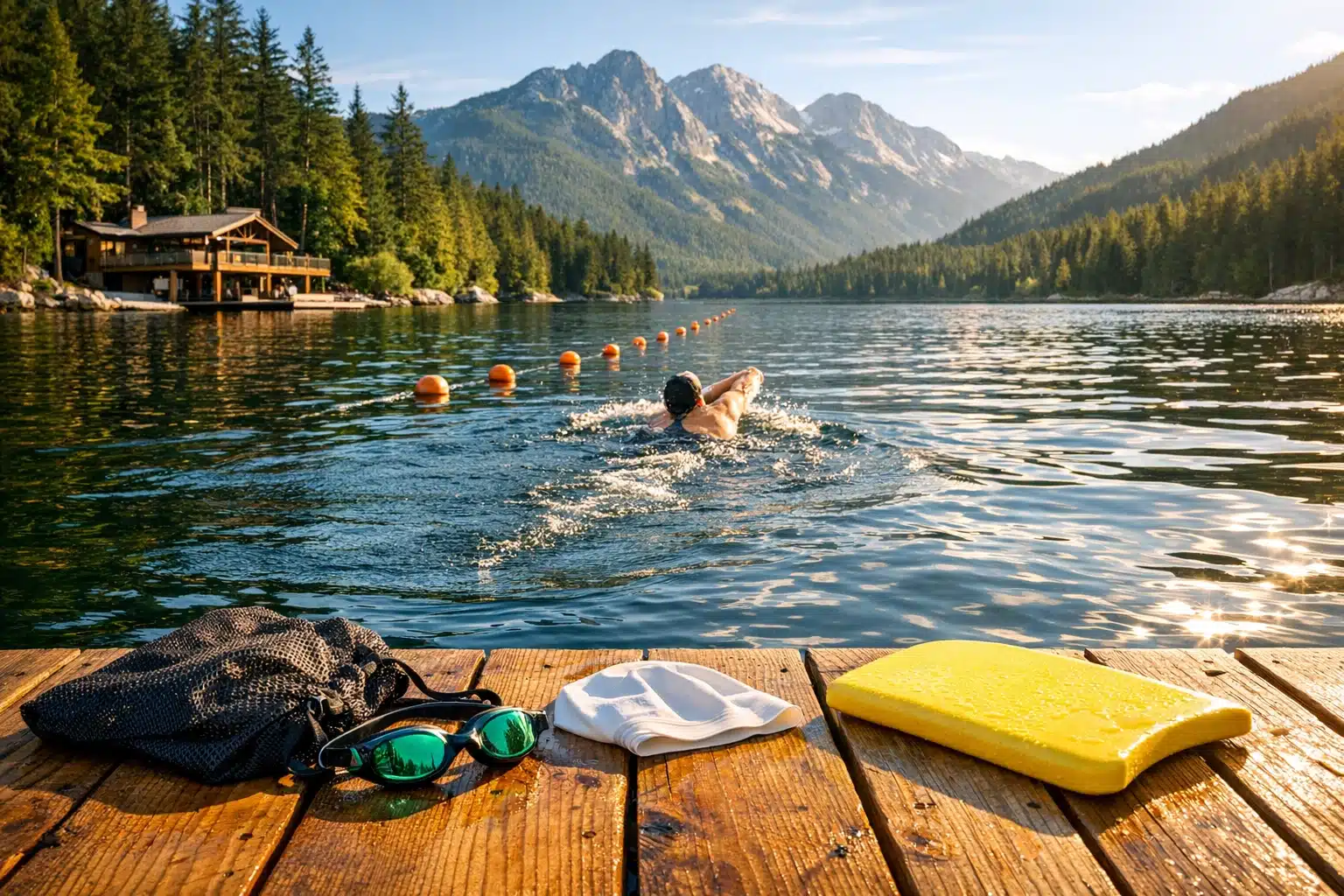
Explore the world of swimming
Swimming is one of those rare activities that feels both timeless and modern: an ancient survival skill, a competitive sport, a therapy tool, and a form of recreation wrapped into one. It strengthens the heart, trains the lungs, and challenges nearly every major muscle group while remaining gentle on the joints. Whether you step into a quiet lane pool or a restless sea, water changes how the body moves and how the mind settles.
Outline: • why swimming matters as a life skill, sport, and cultural practice • how it supports fitness, recovery, and mental balance • what separates freestyle, backstroke, breaststroke, and butterfly • how pools and open water differ in training, gear, and safety • how beginners and lifelong swimmers can build a sustainable routine.
Swimming as a life skill, a sport, and a form of human movement
Swimming sits in a special category because it is not only exercise; it is also a practical skill that can improve safety and open doors to recreation, travel, and competition. Unlike many sports that depend on a field, court, or expensive facility, swimming begins with a basic relationship between the body and water. That relationship has mattered for thousands of years. Ancient civilizations used swimming for survival, fishing, military training, and ritual, while modern societies turned it into structured instruction, public recreation, and elite sport. Today, swimming is taught in community centers, schools, private clubs, and coastal rescue programs because it remains relevant across age groups.
One reason swimming has such wide appeal is its range. A child learning to float, a triathlete working on pace control, and an older adult using water exercise for mobility are all participating in the same broad world, yet with very different goals. That flexibility gives swimming unusual staying power. It can be playful or exacting, social or solitary. A lane pool may feel like a clock with water in it, each length a quiet unit of effort, while a lake or sea introduces currents, temperature shifts, and a greater sense of adventure.
As a sport, swimming is highly technical. The major competitive strokes are freestyle, backstroke, breaststroke, and butterfly, each demanding distinct timing, body position, and energy use. At the same time, even non-competitive swimming asks the body to coordinate breathing, rotation, balance, and propulsion. This is one reason beginners often find swimming humbling at first. A person may be strong on land and still feel clumsy in water until technique improves.
Swimming also compares interestingly with land-based exercise. Running relies heavily on impact tolerance, cycling emphasizes lower-body repetition, and swimming spreads work across the shoulders, back, core, hips, and legs while using water resistance in every direction. That does not make it automatically better than other activities, but it does make it different in valuable ways. For many people, that difference is the point. Swimming offers effort without pounding, challenge without noise, and a chance to develop endurance in an environment that rewards patience as much as power.
The health and fitness benefits of swimming
From a fitness perspective, swimming is remarkably efficient. It combines aerobic training, muscular endurance, coordination, and breath control in a single session. When people ask whether swimming is “good exercise,” the most accurate answer is that it can be excellent exercise when practiced with consistency and suitable intensity. A relaxed swim supports general movement and recovery, while interval training in the pool can raise the heart rate enough to build serious cardiovascular capacity. Public health guidance commonly recommends at least 150 minutes of moderate aerobic activity per week for adults, and swimming can contribute meaningfully to that target.
One of the biggest advantages of swimming is the way water supports the body. Because buoyancy reduces stress on weight-bearing joints, many people with arthritis, previous injuries, or excess body weight find aquatic exercise more tolerable than running or jumping workouts. That is why water-based movement is frequently used in rehabilitation settings. The body still works against resistance, but the impact is softer. This balance makes swimming especially attractive for people who want to exercise regularly without aggravating knees, hips, or lower backs.
The training effect can also be substantial. Depending on stroke choice, intensity, body size, and skill level, an hour of swimming may burn several hundred calories. Freestyle intervals or butterfly sets can be demanding enough to challenge advanced athletes, while steady breaststroke or easy backstroke can offer a gentler session for recovery or general wellness. Water also removes heat from the body more efficiently than air, which can make sustained work feel different from land training. Many swimmers notice that the session feels controlled until they stop and realize how much energy they actually used.
Beyond physical conditioning, swimming is often associated with mental benefits. The rhythm of breathing and the repetitive structure of laps can create a calming effect similar to walking, rowing, or other cyclical movement. Many people use pool time to decompress after work because water narrows attention to a few essentials: inhale, exhale, stretch, pull, kick, turn. That focused pattern can reduce mental clutter. Useful benefits often reported by regular swimmers include:
• improved stamina for everyday activity
• stronger postural muscles in the back and core
• better mobility through repeated, controlled movement
• a sense of routine that supports stress management
None of this means swimming is effortless or universally easy. Poor technique can cause shoulder irritation, and beginners may tire quickly because breathing in water requires skill. Still, once the basics are learned, swimming becomes one of the more adaptable forms of exercise available. It can serve as conditioning, cross-training, recovery, recreation, or lifelong health maintenance, which is a rare combination.
Understanding the main strokes and the technique behind efficient movement
Swimming looks smooth from the deck, but efficient swimming is a technical craft. Small adjustments in head position, timing, or breathing can change speed, comfort, and fatigue levels far more than beginners expect. In simple terms, good swimmers do not merely fight the water; they learn to travel through it with less drag. That is why technique deserves as much attention as fitness.
Freestyle, often called front crawl in instructional settings, is usually the fastest and most economical stroke for distance. The body rotates from side to side, the arms alternate in a continuous pulling pattern, and the flutter kick provides support and propulsion. When performed well, freestyle feels long and narrow, like the swimmer is sliding through a corridor. It is the preferred stroke in most endurance training because it allows steady pacing. New swimmers often struggle with breathing here, especially when they lift the head too high and cause the hips to sink. A simpler cue is to turn the head with the body rather than lifting it forward.
Backstroke shares some structural features with freestyle because it uses alternating arms and a flutter kick, but the face remains out of the water. This makes breathing easier for many learners, though body alignment can be tricky. Because the swimmer cannot see the direction of travel clearly, backstroke requires spatial awareness and trust in rhythm. It is often useful in training because it opens the chest and gives the shoulders a different pattern of movement.
Breaststroke is slower but highly popular, especially among recreational swimmers. Its glide phase, symmetrical arm pull, and whip kick create a distinct rhythm. Many people find it comfortable because the head can rise naturally during the stroke cycle, yet breaststroke can become tiring if the timing is inefficient. It also places unique demands on the knees and hips, so technique matters here as much as anywhere. Butterfly, by contrast, is the most explosive and demanding of the four competitive strokes. It uses simultaneous arm recovery, a dolphin kick, and powerful undulation through the torso. Beautiful butterfly looks almost theatrical, but it is unforgiving when timing breaks down.
Across all strokes, a few principles matter repeatedly:
• keep the body as streamlined as possible
• exhale steadily in the water rather than holding the breath
• use the core to stabilize rotation and balance
• let technique support speed instead of trying to force speed first
Turns, push-offs, and pacing also shape performance. In pool swimming, a strong push from the wall can save energy and maintain momentum, while poor pacing can ruin an otherwise good set. A swimmer who starts too fast often discovers that water keeps score honestly. It rewards patience, precision, and repeatable mechanics more than dramatic bursts of effort.
Where people swim, what they use, and how safety changes the experience
The environment matters enormously in swimming. A pool, a lake, a river, and the open sea all ask different questions of the swimmer. Pools are controlled spaces, which is why they are ideal for learning technique and tracking progress. Lane lines reduce chop, distances are measured, lifeguards are often present, and factors such as temperature and visibility are predictable. That stability allows swimmers to focus on drills, intervals, and form correction. For beginners, the pool is usually the smartest starting point because it removes many variables at once.
Open water swimming offers a different appeal. Lakes and oceans can feel expansive and exhilarating in a way that a 25-meter or 50-meter pool never can. Yet the freedom comes with complications: currents, waves, depth changes, colder temperatures, reduced visibility, and the absence of lane markings. Navigation becomes part of the task. Instead of staring at a black line on the bottom of the pool, swimmers must “sight” by lifting the eyes forward occasionally to stay on course. This interrupts rhythm and adds a strategic layer that pool swimmers may initially find awkward.
Equipment can either simplify the learning process or distract from it if used without purpose. Core gear is fairly basic:
• a comfortable swimsuit that allows full movement
• goggles that seal well without excessive pressure
• a swim cap if needed for hair management, warmth, or competition rules
• a kickboard, pull buoy, or fins for specific drills and training emphasis
More advanced items, such as paddles, tempo trainers, wetsuits, and snorkels, have clear uses but are best introduced thoughtfully. A pull buoy can help isolate the upper body, fins can improve body position and ankle flexibility, and a front-mounted snorkel can allow concentrated technique work without repeated head turns. None of these tools replace skill; they simply highlight parts of it.
Safety deserves serious attention because confidence in water should never be confused with carelessness. Even strong swimmers can underestimate fatigue, temperature, or conditions. Good habits include checking supervision, knowing depth changes, respecting lane etiquette, avoiding solo open-water sessions, and understanding how weather affects the water. In practical terms, safety means preparing before problems appear. A calm plan is better than last-minute bravery. The most experienced swimmers tend to be the least casual about risk, because they understand how quickly small issues can become large ones when water is involved.
Building a sustainable swimming habit: guidance for beginners and a conclusion for long-term readers
For readers who are curious about swimming but unsure how to begin, the good news is that progress usually comes faster through consistency than through intensity. Many new swimmers believe they need long sessions to improve, yet two or three focused swims per week can be enough to build comfort, technique, and endurance. A beginner session might last only 20 to 30 minutes of actual swimming, with rests between lengths and simple drills to reinforce breathing and body position. The first milestone is not speed. It is relaxation.
A practical starting structure often works better than vague ambition. For example, one session could emphasize easy freestyle and breathing drills, another could include backstroke and kicking practice, and a third could focus on short repeats with generous recovery. Adults returning to exercise after a long break may find this approach especially useful because it reduces frustration. Swimming is one of those activities where the body often improves before the ego catches up. Movements become quieter, turns feel less chaotic, and suddenly a distance that once seemed long begins to feel ordinary.
Different groups can benefit in different ways. Children gain water confidence and coordination. Office workers often value swimming as a counterbalance to long hours of sitting. Endurance athletes use it for cross-training. Older adults may appreciate its lower-impact nature and the way it supports steady, joint-friendly movement. Competitive swimming, masters programs, and casual lane sessions all serve legitimate purposes. The best version of swimming is the one that fits real life closely enough to be repeated.
If you are choosing whether swimming deserves a place in your routine, it helps to ask what you want from exercise. Do you want cardiovascular fitness, skill development, stress relief, recovery-friendly movement, or a sport you can continue for many years? Swimming can answer all of those needs, though not instantly and not without patience. It rewards gradual learning. In that sense, it resembles the water itself: responsive, demanding, and honest.
For the general reader, the lasting value of swimming is simple. It offers a rare blend of usefulness and enjoyment. It can make you safer, fitter, calmer, and more adaptable at the same time. Start with instruction if needed, progress in manageable steps, and let technique grow before chasing speed. If you keep showing up, the water usually meets effort with progress, and that is a worthwhile exchange.