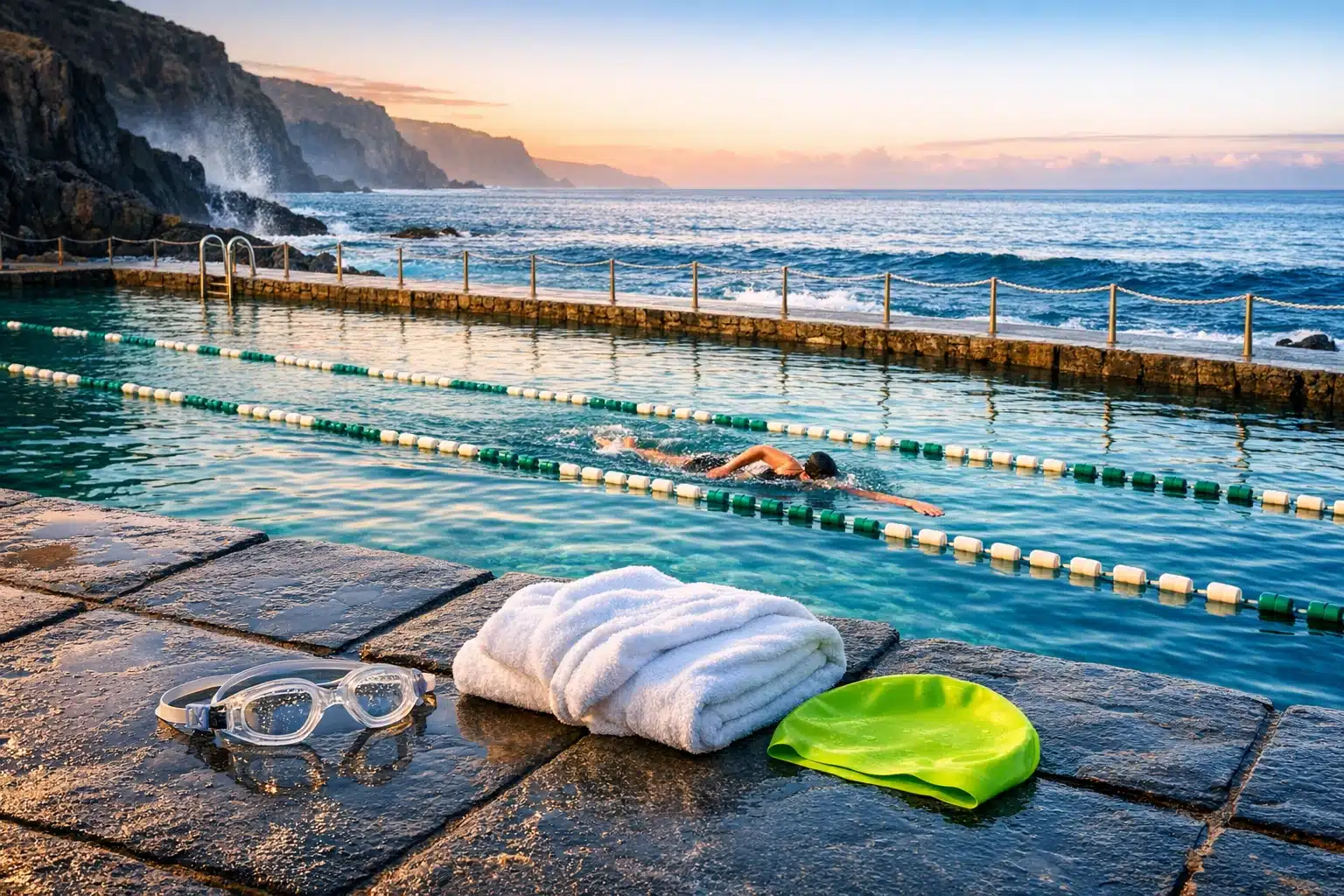
Explore the world of swimming
Swimming is one of the few activities that can feel playful, meditative, and demanding all at once. It matters because it blends cardiovascular training, full-body movement, and practical safety skills in a single habit that can last for decades. From children learning to float to adults rebuilding fitness with low-impact exercise, the water makes room for nearly every age and ability. This article explains why swimming stays relevant, how it works, and how to approach it with confidence.
Outline: this article begins with the broader value of swimming as a physical and practical life skill, then moves into the main strokes and how they differ. It continues with training methods, technique development, and the contrast between pool and open-water environments before closing with a reader-focused conclusion on making swimming part of everyday life.
Why Swimming Matters: Fitness, Function, and Mental Reset
Swimming stands apart from many forms of exercise because it combines conditioning with utility. A person can run without ever needing to use running for safety, but swimming carries an added layer of real-world relevance. Knowing how to stay calm in deep water, float efficiently, and move with control is not just athletic knowledge; it is practical knowledge. That alone gives swimming a special place in physical education, family life, and public health. It is both a sport and a survival skill, which is a rare combination.
From a fitness perspective, swimming offers a full-body challenge. The arms pull, the legs kick, the core stabilizes, and the lungs work rhythmically against the pressure of the water. Because water is denser than air, even simple movements require steady effort. At the same time, buoyancy reduces impact on joints, which is one reason swimming is often recommended as a gentler exercise option for people who want cardiovascular training without repeated pounding on knees, hips, or ankles. That does not mean it is easy. A relaxed-looking lap swimmer may still be working hard, especially over longer distances.
Swimming also supports the general activity targets often cited in public health guidance, such as 150 minutes of moderate exercise per week for adults. Depending on body size, stroke choice, and intensity, an hour of swimming can use several hundred calories, with vigorous sessions commonly burning more than a comfortable walk. Freestyle and butterfly typically demand more energy than an easy breaststroke. Yet the value of swimming goes beyond calorie estimates. It can improve endurance, coordination, posture awareness, and breath control, all while teaching patience. Water has a way of exposing rushed movements. If technique is careless, the swimmer feels it immediately through drag and fatigue.
The mental side matters too. Many swimmers describe the pool as a place where noise fades and thoughts settle into a simple pattern: reach, rotate, breathe, repeat. That rhythm can be restorative after a day filled with screens, traffic, and fragmented attention. For some, swimming is social and communal. For others, it is a private lane of calm. Either way, it offers a rare blend of effort and quiet, like a conversation between the body and the water where both insist on honesty.
Understanding the Main Strokes and How They Compare
When people imagine swimming, they often picture freestyle first, but the sport includes several distinct strokes, each with its own rhythm, strengths, and learning curve. The four competitive strokes are freestyle, backstroke, breaststroke, and butterfly. Outside competition, many swimmers also use sidestroke, elementary backstroke, or simple treading patterns for comfort and safety. Learning the differences between these styles is useful because each stroke develops the body in a slightly different way and suits different goals.
Freestyle, usually swum as front crawl, is the fastest and most common stroke for fitness training. It relies on body rotation, a streamlined position, and alternating arm recovery. Efficient freestyle rewards timing more than brute force. A swimmer who keeps the hips high and the head steady often travels farther with less energy than someone who fights the water. Backstroke uses a similar alternating pattern while the swimmer remains on the back. It encourages body alignment and can feel more open because breathing is unrestricted, though some beginners find it disorienting to move without looking forward. Breaststroke is slower but highly technical, built around a precise sequence of pull, breathe, kick, and glide. Many new swimmers find its pace approachable, yet competitive breaststroke is deceptively demanding. Butterfly is the most dramatic of the four, driven by a wave-like body motion and powerful simultaneous arm action. It is often the most exhausting stroke, but also the most expressive when performed well.
A simple comparison helps:
- Freestyle: fastest for most swimmers, efficient for distance, excellent for conditioning.
- Backstroke: good for posture awareness and steady breathing, but requires spatial awareness.
- Breaststroke: easier pace for some learners, strong emphasis on timing and glide.
- Butterfly: highest power demand, advanced coordination, impressive but energy intensive.
Each stroke teaches something valuable. Freestyle teaches efficiency. Backstroke teaches balance. Breaststroke teaches patience and timing. Butterfly teaches rhythm under pressure. For recreational swimmers, the best approach is not to choose one forever, but to understand what each stroke offers. Mixing strokes can reduce boredom, challenge different muscle groups, and lower overuse risk from repeating the same pattern every session. In that sense, swimming resembles learning a language: once you know more than one form of expression, the water becomes a bigger and more interesting place.
Technique and Training: How Swimmers Actually Improve
Improvement in swimming rarely comes from effort alone. Many beginners assume they simply need to kick harder or swim longer, but progress usually begins with reducing drag and refining timing. Water punishes inefficient movement in a way land sports often do not. A runner can still move forward with sloppy mechanics; a swimmer with poor alignment feels as if invisible hands are pulling them backward. That is why coaches spend so much time on body position, breathing patterns, and stroke mechanics before piling on heavy training volume.
The basics are simple in theory and challenging in practice. A swimmer wants a long, balanced body line, controlled breathing, and a catch that moves water backward rather than downward. Head position affects hips, hips affect leg drag, and leg drag affects everything. Small adjustments can produce surprising gains. Lifting the head too high, crossing the hands over the center line, or holding the breath underwater can turn an easy length into a struggle. Improvement often comes through short, focused repeats and drills that isolate one skill at a time. For example, side-kick drills can teach balance, fingertip-drag drills can encourage a cleaner recovery, and pull-buoy sets can highlight what the upper body is doing.
A practical beginner session might look like this:
- Easy warm-up with relaxed lengths and breathing focus.
- Technique drills for 10 to 15 minutes, working on one stroke detail.
- Short main set such as 8 x 25 or 6 x 50 with rest between repeats.
- Cool-down at an easy pace to restore control and form.
As swimmers become more experienced, training becomes more structured. They may track pace per 100 meters, count strokes per length, or use interval sets to build aerobic endurance and speed. Competitive swimmers often organize sessions around goals such as threshold work, sprint power, race turns, or recovery. Recreational swimmers can borrow the same logic on a smaller scale. Instead of endlessly swimming at one comfortable speed, they can alternate faster and easier lengths, mix strokes, or set simple targets like fewer strokes per lap. That makes practice more engaging and more effective.
There is also a mental shift involved. Good swimmers learn to be curious rather than merely tired. They ask why a length felt smooth, why breathing broke down on the next one, and what changed. In that sense, training becomes less like grinding through exercise and more like problem-solving in motion. The water gives immediate feedback, and the swimmer learns to listen.
Safety, Equipment, and the Difference Between Pool and Open Water
Swimming is enjoyable precisely because water can support and challenge the body at the same time, but that same environment demands respect. Safety is not a side note; it is part of competent swimming. In a pool, risks may feel controlled, yet even familiar settings require attention to depth, fatigue, lane awareness, and basic rules. In open water, the variables multiply. Temperature, currents, waves, visibility, boat traffic, and changing weather can turn an easy outing into a serious situation. A confident swimmer treats preparation as part of the activity, not as an optional extra.
Pool swimming is predictable. The lines are marked, distances are known, lifeguards may be present, and walls offer frequent chances to rest. That makes pools ideal for learning technique, tracking pace, and building structured workouts. Lane etiquette matters here: choose a lane that matches your speed, communicate before joining, and stay aware of others during turns or overtaking. Open-water swimming is different in both feeling and strategy. Without lane ropes and black lines beneath you, pacing can feel less precise and more intuitive. Sighting becomes necessary so you can stay on course. Cold water can affect breathing and muscle function, while waves can disrupt rhythm even for capable swimmers.
Basic equipment also changes by context. For pool swimmers, the essentials are simple:
- Well-fitting swimsuit or jammers.
- Goggles that seal comfortably.
- Swim cap if required or preferred.
- Towel and water bottle.
Training tools such as kickboards, fins, pull buoys, hand paddles, and center-mount snorkels can be useful when used with purpose, though they are optional for beginners. Open-water swimmers may add a wetsuit for warmth and buoyancy, a bright cap for visibility, anti-chafing balm, and a tow float where appropriate. Sun protection becomes important in outdoor settings, as does checking local guidance on water quality and conditions.
The most important safety habits remain straightforward:
- Do not overestimate your ability.
- Avoid swimming alone in unfamiliar or open-water environments.
- Enter cold water gradually and understand local hazards.
- Stop if technique collapses, cramps develop, or breathing feels unsettled.
A good swimmer is not the one who ignores risk; it is the one who notices it early and responds calmly. Water rewards skill, but it also rewards humility. That balance is what keeps the sport enjoyable over the long term.
Conclusion: Making Swimming Part of Your Life
For readers who are curious about swimming, returning after a long break, or looking for a sport they can sustain over time, the best takeaway is simple: start where you are, not where you think a swimmer should be. You do not need a racing background, elite speed, or perfect technique to benefit from time in the water. What matters most at the beginning is consistency, access, and a willingness to learn patiently. A person who swims twice a week with attention will usually gain more than someone who charges into a punishing routine and quits after ten days.
Swimming is unusually adaptable. Children can learn water confidence and basic safety. Adults with desk-bound routines can use it to move the whole body without heavy joint impact. Older swimmers often appreciate the combination of resistance and support that water provides. Athletes from other sports use it for active recovery and endurance. People under stress may discover that the rhythmic structure of a swim session clears the mind better than another hour with a screen. Few activities travel across life stages so easily.
If you want a realistic entry point, keep it modest. Choose a nearby pool, schedule short sessions, and set goals that are easy to measure. Those goals might include swimming continuously for ten minutes, taking a beginners’ lesson, learning bilateral breathing, or feeling comfortable in deeper water. You can also build variety into the week:
- One easy technique-focused session.
- One slightly longer endurance session.
- Optional drills or mixed strokes for interest.
Over time, the rewards accumulate. Stroke mechanics become smoother. Breathing settles. Distances that once felt enormous begin to feel manageable. More importantly, the relationship with water changes. It stops feeling like an obstacle and starts feeling like a place you understand. That shift is powerful for beginners and surprisingly satisfying for experienced swimmers as well.
Swimming does not promise instant transformation, and that is part of its charm. It offers something steadier: durable fitness, practical skill, and a form of movement that can remain meaningful for years. If you have been wondering whether it is worth exploring, the answer for most readers is yes. Step in carefully, learn well, and let the water teach you one length at a time.