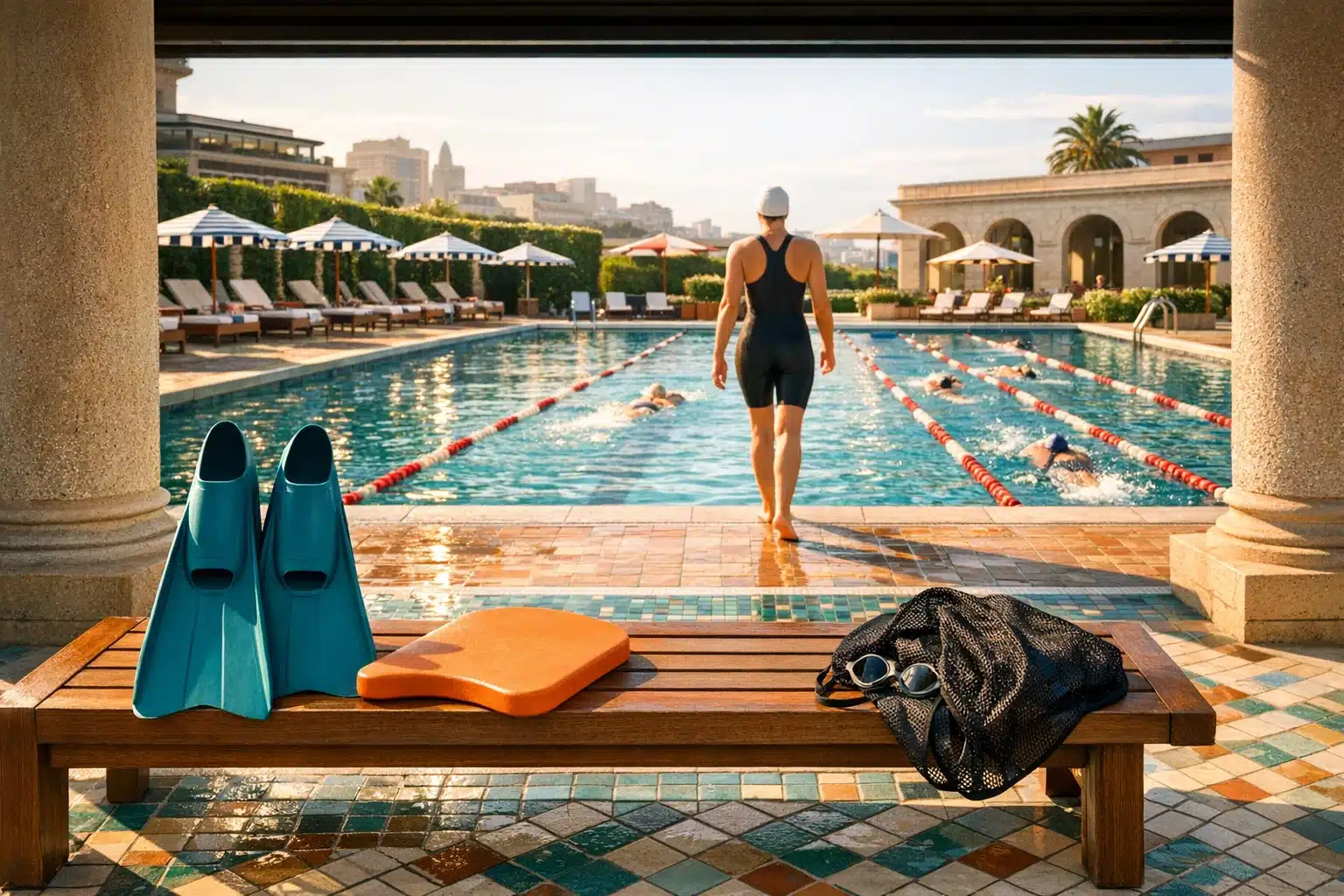
Explore the world of swimming
Introduction
Swimming is one of those rare activities that feels playful on the surface while demanding genuine skill underneath. It matters because it combines fitness, safety, competition, and leisure in a single practice that suits many ages and abilities. From lap pools to open water, it teaches people how to move with confidence while supporting cardiovascular health, mobility, and stress relief. This article starts with a practical outline and then explores technique, training, safety, equipment, and the wider culture of the sport.
Outline of the article:
- Why swimming matters as both a sport and a lifelong practical skill
- How the main strokes work and what makes efficient movement possible
- How swimmers train for fitness, endurance, speed, and recovery
- What safety habits are essential in pools, lakes, rivers, and the sea
- Which equipment is useful and how swimming becomes a lasting habit
1. Why Swimming Matters: A Sport, a Skill, and a Lifelong Companion
Swimming occupies an unusual place in human life because it is both deeply practical and deeply expressive. On one hand, it is a safety skill that can reduce fear around water and make beaches, pools, and boating activities far less intimidating. On the other, it is a sport with precision, rhythm, tactics, and a surprising amount of personality. A swimmer can chase medals, improve health, recover from injury, or simply enjoy the quiet sensation of moving through water. Few activities span such a wide emotional and physical range.
Its broad appeal is partly explained by the nature of water itself. Water is much denser than air, which means every stroke meets steady resistance. That resistance helps turn swimming into a full-body exercise without the impact that comes from pounding pavement or landing on a court. For many people, that makes it gentler on joints than high-impact activities such as running. It is often recommended as part of a balanced exercise routine because it can build endurance, challenge the lungs, and improve muscular coordination at the same time.
Swimming also rewards patience in a special way. Progress is often less dramatic than in sports where speed comes quickly, yet even small technical improvements can change everything. A better breath, a cleaner kick, or a calmer head position can make the water feel less like resistance and more like a moving track. That learning curve is one reason swimmers often stay with the activity for years.
The four competitive strokes show how varied the sport can be:
- Freestyle is typically the fastest and most energy-efficient over distance.
- Backstroke trains alignment and rhythm while allowing the face to stay above water.
- Breaststroke is slower but highly technical, with clear timing between pull, breath, kick, and glide.
- Butterfly is powerful, demanding, and visually dramatic, relying on timing more than brute force alone.
Beyond racing, swimming matters because it meets people where they are. A child learning to float, an adult returning to exercise, and an experienced athlete training for open water may all share the same pool for entirely different reasons. That range gives swimming a special relevance in modern life: it is useful, adaptable, and difficult to outgrow.
2. Technique and Efficiency: How Swimmers Move Well Instead of Merely Moving Hard
One of the first surprises in swimming is that effort alone does not guarantee speed. In fact, too much tension often makes a swimmer slower. Good technique is about reducing unnecessary drag, maintaining a stable body line, and applying force in a way that actually moves the body forward. The water is honest in this sense; it exposes rushed breathing, poor balance, and wasted motion almost immediately.
Body position is the foundation. Swimmers who keep their hips high and their head steady usually move more efficiently than those who look forward too much or let the legs sink. A straight, balanced line through the water reduces drag, which is the invisible tax paid on every length. Freestyle and backstroke especially reward this streamlined shape. In breaststroke and butterfly, timing becomes equally important, because the body naturally rises and falls more during each cycle.
Breathing is another technical turning point. Beginners often lift the head too high to inhale, which causes the hips to drop and disrupts momentum. Skilled swimmers try to breathe with less disruption. In freestyle, this often means turning the head to the side rather than lifting it forward. In breaststroke, the breath is built into the stroke cycle, while in butterfly it is carefully timed so the body can continue traveling forward rather than bouncing up and down.
Each stroke has a distinct character:
- Freestyle emphasizes rotation, a steady flutter kick, and a smooth catch under the water.
- Backstroke relies on shoulder rotation, straight alignment, and spatial awareness without direct forward sight.
- Breaststroke depends on timing and a compact kick that finishes cleanly.
- Butterfly uses a wave-like body action, a strong pull, and a coordinated dolphin kick.
Common mistakes appear across all levels. Swimmers may cross their hands over the center line, kick too widely, rush the stroke rate, or hold too much tension in the neck and shoulders. Drills help because they isolate one problem at a time. A kickboard can highlight leg action, side-kick drills can improve balance, and fingertip-drag drills can refine recovery in freestyle. Technique work may feel less glamorous than hard intervals, yet it often produces the biggest long-term gains.
In practical terms, efficient swimming means using energy wisely. Two swimmers with similar fitness can produce very different results if one glides with control while the other fights the water on every stroke. That is why swimmers and coaches often talk about “feel for the water.” It sounds poetic, but it is really a technical skill: sensing pressure, direction, timing, and balance until movement becomes cleaner, calmer, and faster.
3. Training, Conditioning, and Recovery: Building Fitness One Length at a Time
Swimming training can look simple from the deck, but under the surface it is remarkably structured. A well-designed session may target endurance, speed, technique, pacing, or recovery, and strong programs usually rotate these goals rather than chasing all of them at once. This is one reason swimmers can train for very different outcomes using the same pool. A recreational swimmer may want better stamina and lower stress, while a competitive swimmer may be refining turns, stroke count, and race tempo.
For general health, swimming fits comfortably within established exercise guidance. Public health recommendations often advise adults to accumulate at least 150 minutes of moderate aerobic activity per week, and lap swimming can contribute meaningfully to that total. Because the activity engages large muscle groups and challenges breathing control, even moderate sessions can feel substantial. The heart and lungs adapt over time, and many swimmers notice that steady lengths become easier as technique and conditioning improve together.
Training usually falls into a few broad categories:
- Endurance sets build aerobic capacity through longer repeats and controlled pacing.
- Sprint sets develop speed, power, and the ability to tolerate high effort.
- Technique sets focus on drills, stroke balance, and efficiency.
- Recovery swimming keeps the body moving while reducing intensity.
A simple week for a non-elite swimmer might include one technique-oriented session, one endurance swim, one interval workout, and one easier recovery swim. That variety matters because swimming taxes the body in subtle ways. Shoulders work repeatedly, the core stabilizes almost constantly, and even relaxed sessions demand coordination. Without recovery, form tends to fade, and faded form often becomes inefficient form.
Dryland training can make a real difference too. Mobility work for the shoulders and ankles, strength training for the back and core, and light cardiovascular cross-training can support better swimming mechanics. However, balance is crucial. More training is not always better. Swimmers who ignore sleep, hydration, and rest may find that times stall and motivation dips. The water can be forgiving on joints, but repetitive motion still asks for respect.
There is also a mental side to training. Swimming laps can feel meditative, almost like stitching together breath and rhythm into a moving routine. Yet it can also become mentally demanding, especially when working through longer sets. Progress often comes from learning how to stay attentive: counting strokes, holding pace, and noticing small improvements that would be invisible to an impatient eye. In that sense, training is not only about conditioning the body; it is also about sharpening discipline, awareness, and consistency.
4. Safety, Learning Progression, and the Difference Between Pool Water and Open Water
Swimming is enjoyable, but its enjoyment depends on respect for the environment. Water can be calm, beautiful, and inviting while still presenting real risk. That is why swimming safety should never be treated as an optional extra or a lesson only for beginners. Strong swimmers need it, casual swimmers need it, and anyone stepping beyond the predictable lines of a pool needs it even more.
In a pool, safety starts with the basics: understanding depth markers, knowing lane etiquette, recognizing personal limits, and avoiding solo swimming when supervision is absent. Beginners benefit greatly from formal instruction because skills such as floating, treading water, controlled breathing, and safe entries build confidence quickly. Lessons are not just about learning a stroke; they teach a sequence of trust. First the swimmer learns that the water can support the body, then that the body can respond calmly, and finally that movement can become purposeful rather than reactive.
Open water changes the equation. A lake, river, or ocean does not offer lane ropes, walls every 25 meters, or water with a consistent temperature. Visibility may be poor, currents may shift, and waves can turn easy breathing into a challenge. Even experienced pool swimmers are sometimes surprised by how different open water feels. The horizon replaces the black line on the pool floor, and pacing becomes harder to judge.
Important open-water precautions include:
- Never swim alone; go with a group or under organized supervision.
- Check weather, water temperature, currents, and local warnings before entering.
- Use bright caps or visibility aids when appropriate.
- Enter gradually if the water is cold, since sudden temperature changes affect breathing.
- Learn how to sight ahead without ruining stroke rhythm.
There is also a learning progression worth respecting. A swimmer should not jump from short pool sessions directly into long sea swims simply because both involve water. Endurance, navigation, temperature tolerance, and confidence all need time to develop. This is especially true for children, nervous adults, and people returning to swimming after many years away.
Safety and enjoyment are not rivals; they are partners. The more prepared a swimmer is, the more freedom the experience offers. A safe swimmer notices surroundings, makes calmer decisions, and knows when to stop. That kind of judgment is part of swimming literacy, and it may be the most important lesson the sport teaches.
5. Equipment, Swimming Culture, and How the Sport Becomes Part of Everyday Life
Swimming does not require a huge amount of equipment, which is part of its charm, but the right gear can make learning and training much smoother. For most people, the essentials are simple: a comfortable swimsuit, well-fitted goggles, and access to safe water. From there, equipment choices depend on goals. Competitive swimmers may care about race suits, drag reduction, and precise pacing tools, while recreational swimmers often value comfort, visibility, and durability above everything else.
Some common pieces of gear serve very practical purposes:
- Goggles protect the eyes and improve comfort, especially during longer sessions.
- Swim caps can reduce drag slightly and help keep hair controlled.
- Kickboards isolate leg work and support technique drills.
- Pull buoys reduce leg contribution so swimmers can focus on the upper body and alignment.
- Fins can improve body position awareness and add variety to training when used thoughtfully.
Yet gear alone does not define a swimmer. Culture matters just as much. Swimming culture includes early-morning lap swimmers moving through steam above a quiet pool, school teams practicing turns until they become automatic, masters groups sharing interval sets, and open-water swimmers reading tides like weathered storytellers. It can be intensely competitive, but it can also be welcoming and communal. In many places, the local pool is less a sports venue than a social ecosystem where retirees, teenagers, triathletes, parents, and first-time learners quietly overlap.
What keeps people attached to swimming over time is often a blend of ritual and reward. The ritual might be the smell of chlorine on a weekday morning, the click of the pace clock, or the calm that arrives after the first two lengths. The reward might be better health, improved confidence, relief from stress, or the simple satisfaction of doing something technical a little better than last month.
Swimming also adapts well across life stages. Young children can begin with water familiarity and safety. Adults can return to the pool after years away and still progress meaningfully. Older swimmers often appreciate the lower-impact nature of the sport and the way it supports mobility and endurance without the pounding associated with some land-based exercise. That flexibility is rare.
In the end, swimming becomes sustainable when it is approached not as punishment or performance alone, but as a practice. Some days the water feels silky and cooperative. Other days it feels heavy, almost argumentative. Showing up anyway, adjusting, and learning from both experiences is part of the sport’s quiet appeal. It offers challenge without shouting about it, and that is exactly why many people stay.
Conclusion for Curious, New, and Returning Swimmers
Swimming deserves its reputation as one of the most versatile activities available because it combines skill, fitness, safety, and enjoyment in a single discipline. For beginners, the key is to start with comfort, breathing, and basic water confidence before worrying about speed. For regular exercisers, the biggest gains often come from technique, structured training, and smart recovery rather than pure effort. And for anyone thinking long term, swimming offers a rare path that can remain useful and rewarding across decades, whether the goal is health, competition, confidence in open water, or simply the pleasure of moving well through a different element.