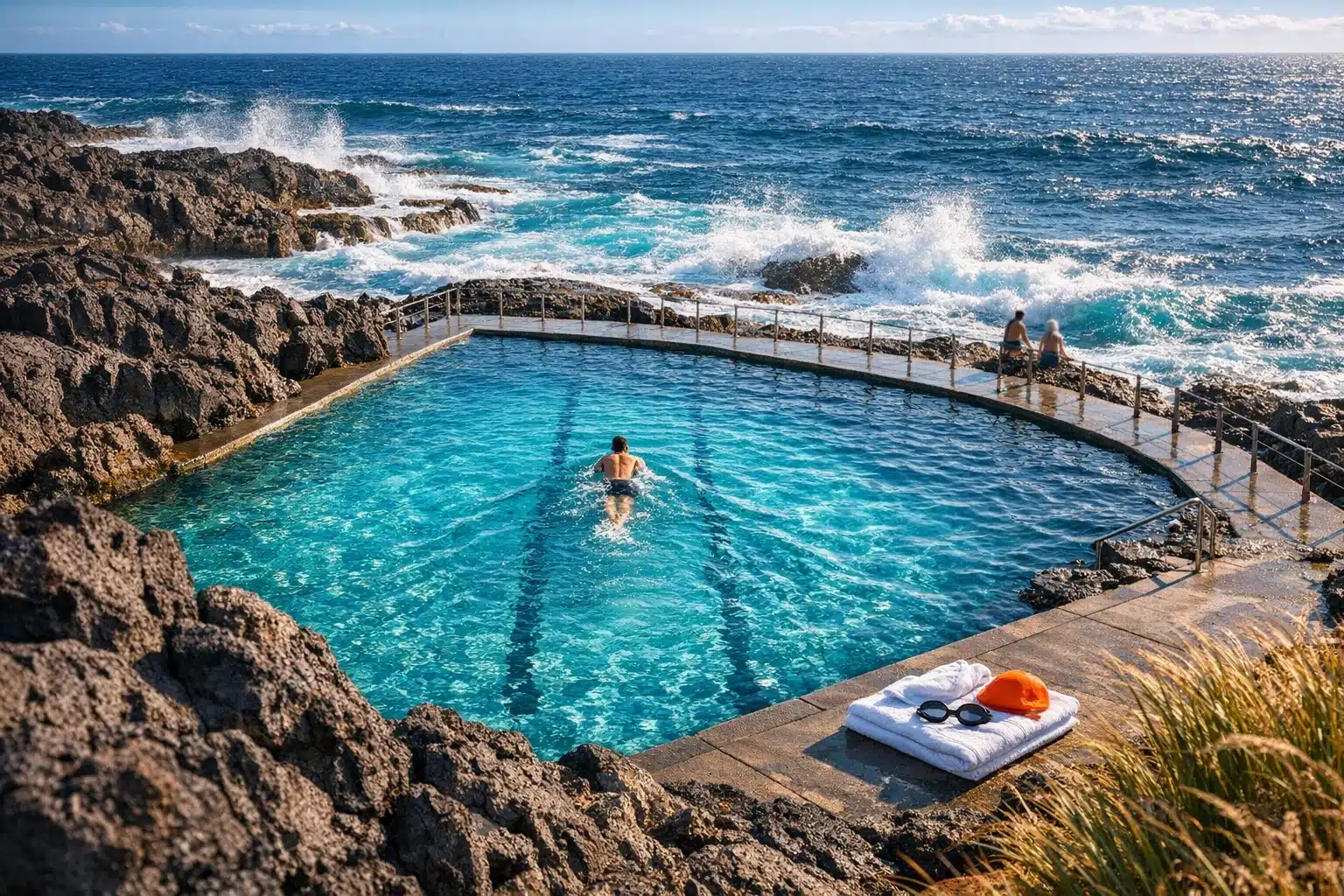
Explore the world of swimming
Swimming asks the body to move through resistance while the mind learns rhythm, control, and calm. It matters because it builds fitness without the pounding common in many land-based sports, and it remains useful from childhood to older age. Whether someone wants better health, safer water skills, or a new competitive challenge, swimming offers a path that is both demanding and accessible. The sections below map out its foundations, techniques, benefits, safety principles, and wider cultural meaning.
1. Article Outline and Why Swimming Holds a Special Place in Sport
Before diving into details, it helps to sketch a clear outline of the journey ahead. Swimming can look simple from the pool deck: a person enters the water, takes a few strokes, turns, and repeats. Yet beneath that smooth surface lies a discipline that combines physics, physiology, psychology, and technique. This section introduces the article structure while also explaining why swimming deserves close attention as both a sport and a life skill.
The article follows five broad parts:
– the big picture and core importance of swimming
– the main strokes and how technique shapes efficiency
– the physical and mental benefits across different ages
– safety, training habits, and equipment choices
– swimming as a lifelong practice, competitive pursuit, and cultural experience
One reason swimming remains globally relevant is access. Not everyone has the same opportunity to use a pool or safe open water, but where facilities exist, swimming often serves many communities at once. Children learn basic water confidence, adults use it for fitness, athletes train for racing, and people recovering from injury turn to it for low-impact movement. A football pitch usually serves football. A pool can serve beginners, older adults, rehabilitation patients, triathletes, and elite competitors in the same day.
Swimming is also unusual because it blends recreation with necessity. Knowing how to swim can reduce drowning risk, which gives the activity public health importance beyond exercise. According to international safety organizations, drowning remains a significant cause of accidental death in many parts of the world, especially where supervision, lessons, or safe swimming environments are limited. That turns swimming from a hobby into a practical form of preparedness.
There is also the sensory appeal. Water changes how effort feels. A hard set in the pool can leave lungs working and muscles burning, yet the surrounding environment often feels quiet, cool, and controlled. That contrast is part of swimming’s charm. It can be punishing and peaceful in the same hour.
Compared with many gym-based activities, swimming demands coordination across the whole body. Arms pull, legs kick, the core stabilizes, and breathing must match timing. Compared with running, it places less impact stress on joints. Compared with cycling, it generally requires greater breath control and upper-body contribution. These comparisons help explain why swimming is often recommended as a complementary activity even for athletes from other sports.
In short, swimming matters because it sits at the crossroads of health, safety, discipline, and enjoyment. It is technical enough to study for years, yet welcoming enough that a beginner can feel progress after only a few lessons. That rare combination keeps pools busy and keeps the sport relevant generation after generation.
2. Understanding the Main Strokes: Technique, Efficiency, and Style
If swimming were only about effort, the strongest person would always win. In reality, technique often matters just as much as power, sometimes more. Water is far denser than air, so small flaws in body position or timing can waste a surprising amount of energy. That is why coaches speak so often about streamlining, balance, and feel for the water. Good swimmers do not simply fight the water; they learn to travel through it with less resistance.
The four competitive strokes are freestyle, backstroke, breaststroke, and butterfly. Each has its own rhythm, strengths, and challenges:
– Freestyle, often swum as front crawl, is generally the fastest and most efficient for long distances.
– Backstroke uses a similar alternating arm pattern but is performed on the back, which changes breathing and orientation.
– Breaststroke is slower for most swimmers but highly technical, relying on timing between pull, breath, kick, and glide.
– Butterfly is the most physically demanding for many people, requiring coordinated dolphin kicks and simultaneous arm recovery.
Freestyle is usually the first stroke taught for fitness swimming because it rewards a long body line and continuous motion. A swimmer who keeps the hips high and rotates the body smoothly tends to conserve energy. Beginners often make the mistake of lifting the head forward to breathe, which drops the hips and increases drag. Turning the head to the side while maintaining alignment is more efficient. The lesson is simple: posture in the water is performance.
Backstroke can feel liberating because the face remains above water, but it introduces a different challenge: swimming straight without seeing where you are going. Strong backstrokers combine shoulder rotation with a steady flutter kick and a controlled hand entry. In a way, it resembles freestyle seen through a mirror, yet the breathing freedom and body awareness required make it distinct.
Breaststroke looks gentle from outside the lane, but it is a masterclass in timing. A mistimed kick can act like a brake. When done well, the stroke follows a neat sequence: pull, breathe, kick, glide. Compared with freestyle, breaststroke often suits swimmers who prefer a measured pace and visible forward sight, though it can stress knees if technique is poor.
Butterfly is the dramatic one, all wave motion and strength, but its beauty depends on efficiency. Swimmers who muscle through it often tire quickly. The best butterfly resembles a chain reaction, with movement rippling from chest to hips to legs.
Across all strokes, one principle stays constant: the cleanest movement is usually the fastest and most sustainable. That is why technique drills, video review, and patient repetition are central to improvement. In swimming, style is not decoration. It is function wearing elegance.
3. Health, Fitness, and Mental Benefits of Regular Swimming
Swimming is frequently praised as a full-body workout, and that description is accurate, but it still undersells the activity. Few forms of exercise ask the cardiovascular system, major muscle groups, breathing pattern, and coordination skills to work together in such a balanced way. Whether someone swims gentle laps for wellness or follows structured interval training, the body responds on several levels at once.
From a fitness perspective, swimming improves aerobic endurance by challenging the heart and lungs over sustained periods. A steady swim set can raise heart rate and build stamina much like running or cycling, yet the surrounding buoyancy reduces impact on ankles, knees, and hips. That matters for older adults, people carrying extra body weight, or those returning to exercise after injury. Water supports the body while still resisting movement, which creates a rare mix of protection and challenge.
Muscularly, swimming recruits more than one obvious area at a time. Freestyle and butterfly emphasize shoulders, chest, back, and core. Kicking develops the hips and legs. Even strokes that appear relaxed require postural control to keep the body aligned. Unlike some gym routines that isolate a single region, swimming teaches the body to coordinate many parts into one action. Over time, that can improve general movement quality, not just swimming speed.
Mental benefits are equally compelling. Many swimmers describe a session as a reset button. The repeated strokes, controlled breathing, and muffled pool acoustics can create a rhythm that feels almost meditative. This does not mean every workout is calm; sprint sets can be fierce. But even hard training often leaves behind a clear-headed, settled feeling. Exercise science has long linked regular physical activity with better mood and lower stress, and swimming fits well within that pattern.
Some practical benefits stand out:
– it can support cardiovascular health when practiced consistently
– it offers a low-impact option for people who struggle with joint-heavy exercise
– it develops breath control and body awareness
– it can be adapted for leisure, rehabilitation, or performance training
Swimming is also socially flexible. It can be solitary, with nothing but lane lines and counted laps, or highly social through clubs, masters groups, school teams, and family sessions. That flexibility helps people stick with it. Adherence matters because the best exercise is often the one a person will continue doing month after month.
Compared with walking, swimming may demand more technical learning at the start. Compared with strength training, it may build less maximal muscle mass. Yet as a broad health practice, it offers one of the most complete packages available. It trains endurance, movement control, and confidence, while giving the mind a quiet place to focus. For many people, that combination is exactly what makes it sustainable.
4. Safety, Training Basics, and Choosing the Right Gear
Swimming can be deeply enjoyable, but water has no patience for carelessness. Safety is therefore not a side note to the sport; it is part of the foundation. A confident swimmer respects conditions, knows personal limits, and understands that pools, lakes, rivers, and oceans each demand different forms of judgment. Learning to move well in water is important. Learning to make wise decisions around water is just as important.
For beginners, the safest path is structured instruction. Lessons teach floating, breathing, kicking, treading water, and basic strokes, but they also teach recovery skills such as rolling onto the back or reaching the pool edge calmly. These actions may look simple in a lesson, yet they become critical when panic appears. Fear changes movement, and water punishes rushed decisions. Training therefore aims to replace panic with practiced response.
Open water adds another layer of complexity. Unlike a lane pool, a lake or sea can include currents, waves, changing temperatures, uneven visibility, and boat traffic. A swimmer who can comfortably complete many pool lengths may still struggle outside the controlled environment of a facility. That is why experienced coaches recommend gradual exposure, bright safety buoys, buddy systems, and clear knowledge of entry and exit points. In the sea, confidence without caution is a fragile thing.
Training itself works best when built on progression. A sensible plan usually includes:
– warm-up and mobility before harder efforts
– technique drills to improve efficiency
– endurance sets for aerobic development
– speed or interval work for performance gains
– recovery sessions and rest days
Many new swimmers make the same mistake seen in other sports: they try to go hard before they can go well. But in swimming, poor form under fatigue often reinforces bad habits. Short, focused practice is usually more valuable than long, sloppy struggle. A coach, even for a brief period, can save months of frustration by correcting breathing, body position, and kick timing early.
Equipment should serve the swimmer, not distract from skill development. A well-fitting swimsuit and goggles are essentials. Swim caps can reduce drag and keep hair managed. Kickboards, pull buoys, fins, and paddles are useful tools when used with intention. For example, fins can help beginners feel body alignment and maintain momentum, while paddles can build strength and highlight flaws in the catch. However, gear should support technique, not mask weaknesses.
Nutrition and recovery matter too. Hard swim sessions use energy, and chlorinated pools can leave people feeling unexpectedly tired. Hydration is often overlooked because swimmers do not notice sweat the way runners do. Yet fluid loss still occurs. Add sleep, recovery, and gradual loading to the equation, and progress becomes far more reliable.
In essence, smart swimming balances ambition with respect. The water can become a place of freedom, but that freedom grows strongest when skill, preparation, and caution move together.
5. Swimming as a Lifelong Practice: Competition, Community, and Personal Meaning
One of swimming’s greatest strengths is that it can keep changing with a person’s life. A child may begin with splashing lessons and simple games. A teenager may discover racing, team identity, and training goals. An adult may return to the pool for fitness, stress relief, or triathlon preparation. Later still, swimming may become a gentle but effective way to stay active and mobile. Few activities adapt so easily across decades.
Competitive swimming gives the sport a clear dramatic edge. Race distances range from short sprints to punishing endurance events, and success is measured in tiny fractions of a second. At higher levels, starts, turns, underwater phases, and stroke count can matter as much as raw conditioning. An elite 100-meter race may be over in less than a minute, but it represents years of disciplined practice. The stopwatch is brutally honest, and that honesty attracts many athletes. There is no debating a touchpad.
Yet competition is only one chapter of the story. Recreational swimming often carries a different kind of value: consistency, pleasure, and community. Masters clubs bring together adults of widely different ages and speeds. Public pools become neighborhood meeting points. Open water groups gather before sunrise, walking toward cold waves with a mix of bravery and cheerful disbelief. These scenes reveal that swimming is not just about performance charts; it is also about belonging.
Culturally, swimming has many faces. In some places it is tied to beach life and national identity. In others it is associated with school programs, military readiness, or public health campaigns. Access remains an important issue, because communities without affordable facilities or safe water environments may miss out on these benefits. Expanding swimming education is therefore not only about sport development but also about equity and safety.
There is also a quiet personal meaning to swimming that statistics cannot fully measure. Water changes perception. The world sounds different. Time feels less cluttered. A swimmer counting laps may be training hard, but they may also be thinking through a problem, marking recovery from a difficult period, or simply enjoying the rare feeling of moving without impact. Sometimes the lane becomes a narrow blue corridor where effort turns into clarity.
For the target audience of this topic, the key message is practical and encouraging: swimming does not require Olympic ambition to be worthwhile. It can be pursued for health, skill, confidence, friendship, or challenge. Start small if needed. Learn sound technique, respect safety, and let experience build gradually. In return, swimming offers a rare blend of usefulness and satisfaction. It is exercise with purpose, sport with depth, and recreation that can stay meaningful for an entire lifetime.