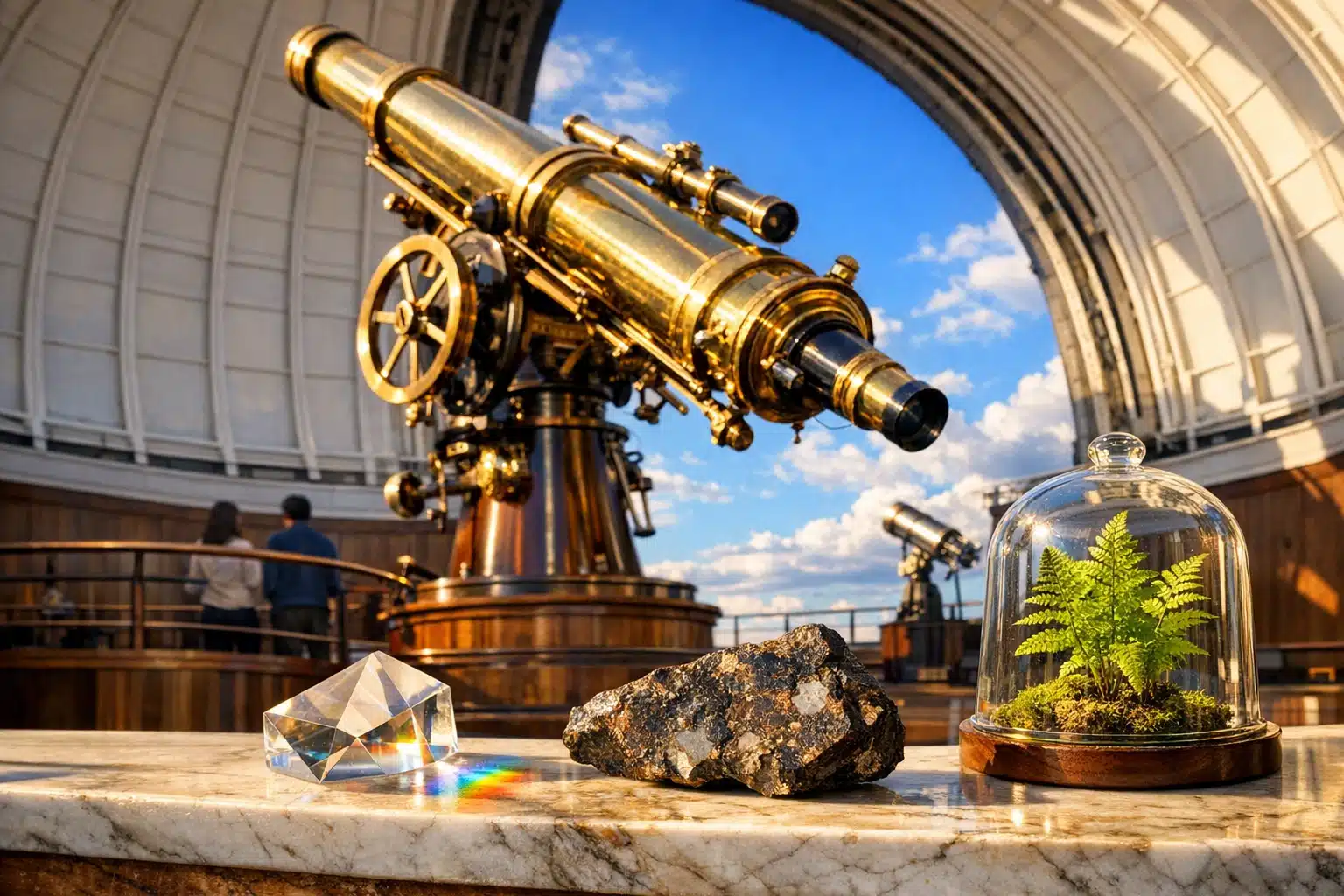
Exploring the World of Science
Introduction
Science is more than a school subject or a shelf of formulas; it is the disciplined habit of asking why the sky glows blue, how cells repair damage, and what hidden rules shape matter, life, and energy. In a world shaped by climate shifts, medical breakthroughs, and fast-moving technology, scientific literacy helps people weigh evidence instead of noise. This article maps the landscape of science so curious readers can see how discovery connects daily life to the wider universe.
Outline
- The foundations of science and the logic behind the scientific method
- The major branches of science and the ways they overlap
- The tools, measurements, and data systems that make modern discovery possible
- The influence of science on health, technology, energy, and public decision-making
- A concluding guide for readers who want to think more scientifically in everyday life
1. What Science Is and Why the Scientific Method Matters
Science begins with curiosity, but it becomes science only when curiosity is trained by method. Human beings have always wondered about eclipses, disease, motion, storms, and the origin of life. What changed over time was not the existence of questions, but the discipline used to answer them. Science relies on observation, measurement, testing, and revision. It does not ask people to accept an idea because it is old, famous, elegant, or comforting. Instead, it asks a harder question: what does the evidence show, and would the result hold up if someone else checked it?
This is where the scientific method enters the scene. In simple form, it often moves through observation, question, hypothesis, experiment, analysis, and conclusion. Real research is usually messier than that neat sequence found in textbooks, yet the basic logic remains powerful. A scientist might notice that a plant grows faster in one type of soil than another, propose an explanation, design controlled tests, compare outcomes, and then refine the original idea. If the evidence does not support the hypothesis, that is not failure. It is progress. A wrong guess removed by evidence clears the path for a better explanation.
Several features make science especially trustworthy:
- It is testable, meaning claims should be open to examination.
- It is reproducible, meaning other researchers should be able to repeat a study and get similar results.
- It is self-correcting, because new evidence can revise earlier conclusions.
- It is public, since findings are usually shared through journals, conferences, and data archives.
One of the most valuable lessons science offers is that uncertainty is not weakness. In everyday conversation, uncertainty can sound like confusion. In science, it is often a sign of honesty. Researchers describe confidence levels, margins of error, and limitations because reality is complex. Weather forecasts, for example, improve when models include uncertainty instead of pretending the atmosphere behaves like a clock. Medical trials also depend on careful statistical reasoning because the human body is full of variation.
History gives many vivid examples of science at work. The transition from the geocentric view of the cosmos to heliocentrism did not happen because people suddenly liked the Sun more than Earth. It happened because observations of planetary motion fit better with a new model. Germ theory replaced older ideas about disease because experiments and clinical evidence explained infection more accurately. In each case, science moved forward not by preserving comfort, but by following evidence into unfamiliar territory. That is its real power: it invites doubt, rewards rigor, and turns wonder into knowledge that can be tested in the light.
2. The Major Branches of Science and the Web That Connects Them
Science is often divided into branches for convenience, yet the natural world does not respect classroom borders. Physics studies matter, energy, forces, and motion. Chemistry focuses on substances, atoms, molecules, and reactions. Biology examines living systems, from microscopic cells to forests and coral reefs. Earth science explores the planet’s structure, climate, oceans, and geological history. Astronomy looks outward to stars, planets, galaxies, and the wider universe. Each branch has its own methods and vocabulary, but in practice they constantly overlap, like rivers that separate on a map and meet again downstream.
Consider a single apple. Physics can describe how gravity pulls it downward and how light reflects from its skin. Chemistry explains the sugars, acids, pigments, and aromatic compounds that give it flavor and color. Biology studies the tree that produced it, the genes that shaped it, and the insects that pollinated the blossom. Earth science looks at the soil, rainfall, and seasonal conditions required for growth. If the apple is photographed by a satellite for agricultural monitoring, astronomy and engineering quietly enter the picture through orbital technology. One object, many scientific lenses.
Some foundational comparisons help make the branches clearer:
- Physics asks about the rules of nature at the most fundamental level.
- Chemistry asks how substances combine, transform, and behave.
- Biology asks how living systems function, adapt, and evolve.
- Earth science asks how planetary systems change over time.
- Astronomy asks how cosmic structures form and interact across vast distances.
Modern research increasingly thrives in the spaces between these categories. Biochemistry studies the chemical processes that sustain life. Geophysics applies physical principles to earthquakes, magnetic fields, and the structure of the Earth. Astrobiology asks how life might arise beyond our planet. Materials science brings together physics, chemistry, and engineering to create semiconductors, batteries, medical implants, and lightweight alloys. Climate science draws on atmospheric physics, oceanography, chemistry, ecology, and computing because climate is not one problem but a network of linked systems.
Numbers also reveal the scale of scientific knowledge. The periodic table currently includes 118 confirmed chemical elements. The human genome contains roughly 3 billion base pairs. The observable universe is so vast that light, traveling about 300,000 kilometers per second, still takes billions of years to cross only part of it. These figures are not just trivia; they remind us that science operates across extraordinary ranges of size and time. It can examine a protein folding inside a cell and a galaxy rotating millions of light-years away.
If science has a poetic side, it lives here. The same laws of electromagnetism help explain a lightning storm, a neuron firing in the brain, and the signal arriving on a mobile phone. The calcium in bones was forged in ancient stars. The carbon in leaves cycles through air, soil, oceans, and living bodies. The branches of science may have different names, but they study one connected reality. Understanding that unity is one of the most satisfying rewards of scientific learning.
3. Tools, Evidence, and the Machinery of Discovery
If ideas are the engine of science, tools are the gears that let the engine move. Human senses are remarkable, but they are limited. We cannot see atoms, hear radio waves, or watch continents drift without assistance. Scientific instruments extend perception and sharpen measurement. A microscope opens the hidden architecture of cells. A telescope reveals stars, nebulae, and planets. A seismometer detects vibrations traveling through Earth. A spectrometer identifies chemical signatures in distant objects by analyzing light. The modern laboratory is, in a sense, a workshop for seeing what the naked eye cannot.
Many breakthroughs became possible only when instruments improved. The microscope transformed biology by revealing microorganisms, which helped support germ theory. Telescopes changed astronomy by showing moons orbiting Jupiter and later galaxies beyond the Milky Way. Electron microscopes pushed observation far below the limits of visible light. DNA sequencing opened a new era in genetics, medicine, and evolutionary biology. Today, advanced imaging technologies can map brain activity, while satellite networks track sea ice, wildfire smoke, crop health, and changing coastlines across the globe.
Modern science also depends on scale. Some tools are handheld; others are monumental. The Large Hadron Collider, for example, is a particle accelerator about 27 kilometers in circumference. Space telescopes observe without much of the atmospheric distortion that blurs ground-based views. Supercomputers process climate models, molecular simulations, and astronomical surveys containing enormous quantities of data. In many fields, data science has become as important as the physical instrument itself because collecting information is only the first step. Scientists must also clean, analyze, compare, and interpret it carefully.
Several kinds of scientific tools work together:
- Observational tools, such as microscopes, telescopes, and remote sensors
- Experimental tools, such as lasers, centrifuges, reactors, and testing chambers
- Analytical tools, including statistics software, imaging systems, and spectrometers
- Computational tools, such as simulations, machine learning systems, and modeling platforms
Yet instruments alone do not guarantee truth. Data can be noisy, biased, incomplete, or misread. A sensor may drift out of calibration. A small sample size may distort a result. A striking graph may hide weak assumptions. That is why good science builds in safeguards: control groups, blind studies, peer review, statistical checks, replication, and transparent methods. The romance of discovery often focuses on the dramatic moment, but the quieter habits matter just as much. Calibration, record-keeping, error analysis, and patience are not glamorous, though they are essential.
There is also a subtle difference between observing directly and inferring indirectly. Nobody has seen the center of Earth with their own eyes, yet scientists infer its structure from seismic waves. Nobody watches an exoplanet’s atmosphere from arm’s length, yet spectroscopic analysis can detect likely gases from many light-years away. Good science often works by assembling a reliable picture from multiple lines of evidence. Like a detective reconstructing an event from footprints, fingerprints, and timing, scientists combine signals until the explanation becomes robust. Discovery, then, is not magic. It is careful interpretation guided by instruments, data, and disciplined skepticism.
4. Science in Everyday Life: Health, Technology, Energy, and Public Choices
Science can feel abstract when reduced to equations on a board, yet its effects shape ordinary life from morning to midnight. The alarm on a smartphone depends on materials science, semiconductor physics, software engineering, and satellite timing systems. The clean water flowing from a tap reflects chemistry, microbiology, and civil engineering. Vaccines, antibiotics, imaging scans, and surgical techniques grew from decades of biological and medical research. Even the weather forecast that influences a commute is built on atmospheric science, satellites, sensors, and mathematical modeling. Science is not standing outside society; it is woven into the texture of daily routines.
Health offers one of the clearest examples of scientific impact. Over generations, advances in sanitation, nutrition, vaccines, antibiotics, and public health systems have helped raise life expectancy in many parts of the world. That progress did not come from guesswork. It came from controlled studies, careful observation, and long-term evidence. At the same time, science also teaches caution. A promising treatment must survive rigorous trials before it deserves trust. Side effects, dosage, and interactions matter. Good medicine is not built from wishful thinking, and the same standard applies to health claims found online.
Technology tells a similar story. Electricity grids, aircraft, medical devices, the internet, GPS navigation, and renewable energy systems all depend on scientific knowledge translated into practical tools. Scientific research is often slow at the start and transformative later. A discovery in quantum physics may seem distant from ordinary life until it becomes part of a sensor, chip, or communication system years afterward. Basic science and applied science are not rivals; they are stages of one larger process. Curiosity-driven research often becomes tomorrow’s infrastructure.
Science also informs large public choices. Climate science, for example, draws on measurements of greenhouse gases, temperature records, ocean heat content, ice loss, and ecosystem changes. It does not rely on one graph or one season, but on converging evidence from many sources. Energy planning depends on physics, economics, engineering, and environmental assessment. Agricultural decisions rely on soil science, ecology, genetics, and meteorology. When policymakers ignore strong evidence, costs often rise later in the form of damaged health, wasted money, or weakened resilience.
Practical benefits of science appear in many familiar areas:
- More accurate diagnosis and safer medical treatments
- Improved crop yields and smarter water use
- Cleaner energy technologies and better storage systems
- Safer buildings, transportation networks, and warning systems for disasters
- Better tools for communication, learning, and accessibility
Still, science does not make decisions by itself. It can describe likely outcomes, estimate risks, and test alternatives, but societies must still weigh values, fairness, cost, and ethics. Gene editing, artificial intelligence, nuclear technology, and data surveillance all show that technical ability and wise use are not the same thing. Science gives humanity a powerful lamp. Where we aim that light remains a moral and civic question.
5. Conclusion for Curious Readers: How to Think Scientifically in a Complicated World
For students, professionals, parents, voters, and lifelong learners, science matters not because everyone needs to become a researcher, but because everyone lives in a world shaped by evidence-based decisions. Understanding science helps people read headlines more carefully, assess dramatic claims more calmly, and recognize the difference between confidence and proof. It builds intellectual habits that are useful far beyond laboratories: asking clear questions, checking sources, noticing assumptions, and changing one’s mind when better information appears. In that sense, scientific literacy is not only academic knowledge; it is a practical life skill.
This article has moved from the foundations of the scientific method to the branches of science, the tools of investigation, and the influence of research on daily life. Together, these themes show that science is both humble and ambitious. It is humble because it accepts correction, measures uncertainty, and tests its own claims. It is ambitious because it attempts to explain phenomena ranging from subatomic particles to planetary climate systems. Few human projects are so willing to say, “We do not know yet,” and so determined to keep working until the answer becomes clearer.
For readers who want to engage more confidently with science, a few habits can make a real difference:
- Look for evidence rather than slogans.
- Prefer sources that explain method, not just conclusions.
- Notice whether a claim has been tested, replicated, or reviewed by experts.
- Be cautious with stories that promise certainty on complex issues.
- Treat revision as a strength, because better data should improve understanding.
There is also room for delight. Science is serious work, but it is not joyless. A chemistry demonstration can feel like choreography with atoms. A night sky can turn an ordinary evening into a lesson in cosmic history. A fossil, a tide chart, a forest walk, or a medical image can remind us that the world is richer than first glance suggests. Scientific thinking does not drain mystery from life; it often deepens it by replacing vague astonishment with informed wonder.
If you are the target reader for this topic, the invitation is simple: stay curious, but pair curiosity with discipline. Ask how we know, not only what we believe. Follow explanations that earn trust through evidence. Whether you are choosing a health source, reading climate news, helping a child with homework, or simply trying to understand the universe a little better, science offers a sturdy compass. It may not answer every question immediately, yet it remains one of humanity’s most reliable ways to move from confusion toward clarity.