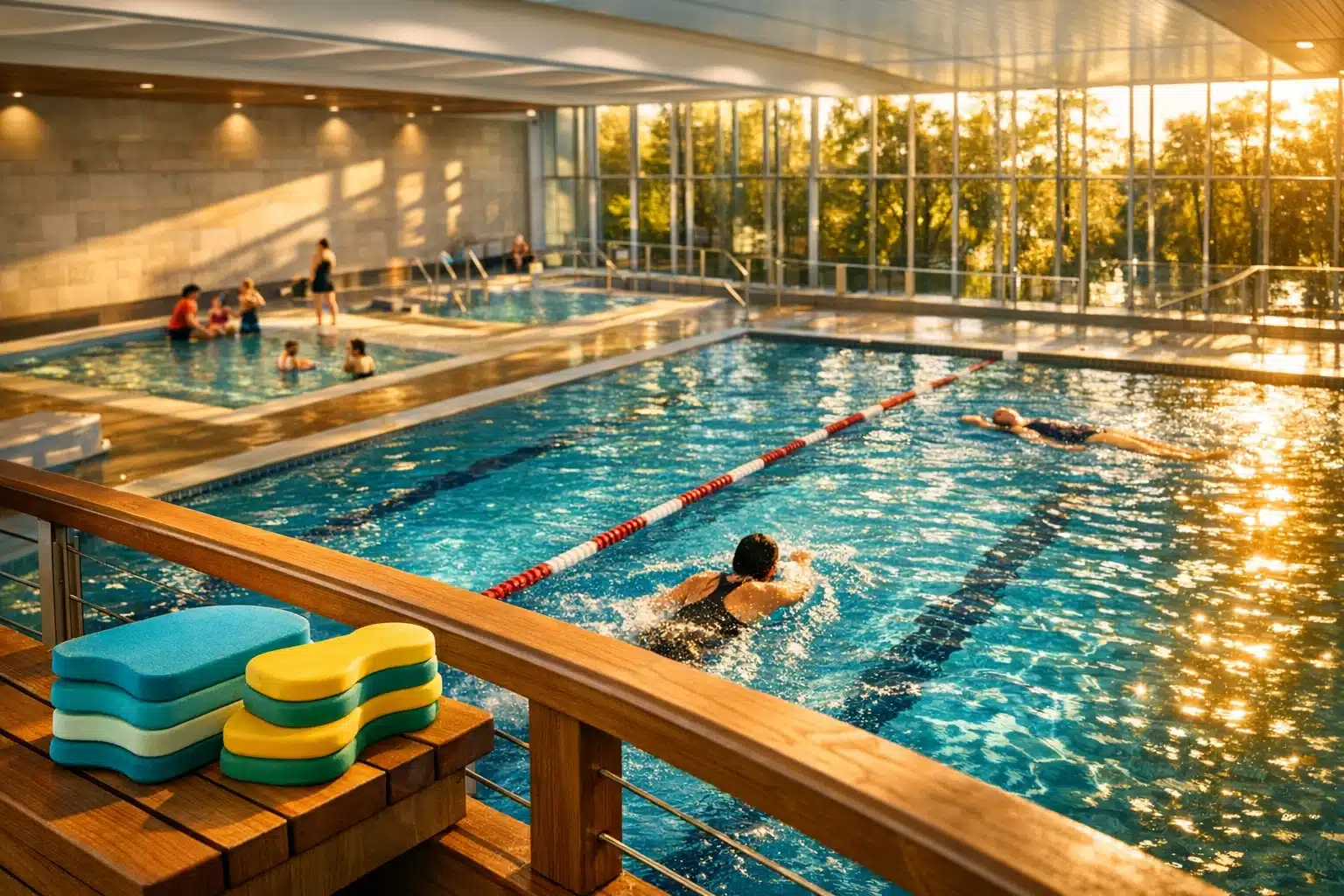
Explore the world of swimming
Swimming is one of those rare activities that feels playful, practical, and demanding all at once. It can be a lifesaving skill, a competitive sport, a low-impact workout, and a quiet way to reset after a long day. From busy indoor pools to calm lakes and rolling coastlines, it connects fitness with confidence in a way few exercises can match. Understanding how swimming works makes every lesson, lap, and dive more meaningful.
Outline:
- What swimming is, where it came from, and why it matters across cultures and age groups.
- How swimming supports cardiovascular health, muscle endurance, mobility, and mental well-being.
- The major strokes and the technical details that separate efficient movement from exhausting struggle.
- How to learn safely, train consistently, and avoid common mistakes in pools and open water.
- How different people can use swimming for recreation, performance, rehabilitation, and lifelong health.
The Many Faces of Swimming: Skill, Sport, and Everyday Life
Swimming is often introduced as a sport, but that description is too narrow to capture its full role in human life. At its core, swimming is a movement skill that allows people to stay afloat, travel through water, and respond to aquatic environments with control rather than panic. That practical dimension matters enormously. In many parts of the world, swimming is taught not only for recreation but also for safety, because water is present in daily life through pools, rivers, beaches, lakes, and even seasonal flooding. A person who can swim confidently carries more than athletic ability; they carry a form of self-reliance.
At the same time, swimming has a rich sporting identity. It is one of the most recognized competitive disciplines in the world, featured from school meets to elite international events. The sport rewards precision, endurance, technique, and rhythm. Unlike land-based activities where effort is often loud and obvious, swimming hides its struggle beneath the surface. A fast swimmer may look smooth and almost effortless, yet every stroke depends on timing, breathing control, and efficient use of the body against constant resistance.
Water changes the rules of movement. Because it is far denser than air, every motion meets resistance. That resistance is why swimming can build strength and stamina without the pounding impact of running on pavement. Buoyancy also reduces stress on joints, making water friendlier to many people recovering from injury or managing chronic discomfort. This dual nature, resistance plus support, makes swimming unusually versatile.
Swimming also exists in several distinct forms:
- Recreational swimming for relaxation and fun
- Lap swimming for fitness and conditioning
- Competitive swimming focused on speed and technique
- Open-water swimming in lakes, rivers, or oceans
- Aquatic therapy and rehabilitation work
Its history stretches back thousands of years, with evidence of swimming in ancient civilizations and formal competition developing much later. Today, the activity bridges generations. Children discover freedom in the shallow end, adults use it to train or decompress, and older swimmers value its gentle but effective demands. Few activities travel so easily between play, health, and performance. That broad usefulness is part of swimming’s appeal: it meets people where they are, then quietly invites them to go farther.
Why Swimming Benefits the Body and Mind So Effectively
Swimming is often praised as a full-body workout, and that label is well earned. Nearly every major muscle group contributes during a swim session. The shoulders guide the pull, the back stabilizes the torso, the core keeps the body aligned, and the legs drive movement through kicking. Even when the pace feels easy, the body is working in coordinated patterns. Because water resists movement in every direction, the effort is spread across the entire body rather than isolated in one area.
Its cardiovascular benefits are equally important. Continuous lap swimming challenges the heart and lungs in a way that can improve aerobic endurance over time. A steady session of moderate swimming can raise the heart rate, increase oxygen use, and train the body to sustain effort more efficiently. Depending on stroke choice, pace, and body size, swimming can burn roughly 400 to 700 calories per hour, while harder training sets may go higher. Butterfly and fast freestyle usually demand more energy than gentle breaststroke or relaxed backstroke, which makes swimming flexible for different fitness levels.
One reason many people stick with swimming is its low-impact character. Running, jumping, and some court sports can place repeated force on knees, hips, ankles, and the lower back. In water, buoyancy reduces the load placed on those joints. That makes swimming attractive for older adults, people with excess body weight, and those returning to exercise after injury. It is not effortless, but it is often more forgiving.
There is also a mental side that deserves attention. The soundscape of swimming is strangely calming: a breath, a splash, a turn, a few seconds of silence under the surface. Many swimmers describe the pool as a place where mental clutter starts to settle. Rhythmic breathing and repetitive movement can help reduce stress, sharpen focus, and create a meditative effect. For some, a swim session feels like exercise; for others, it feels like a reset button.
Key advantages often include:
- Improved heart and lung endurance
- Better muscle tone and overall coordination
- Reduced joint stress compared with many land sports
- Useful support for mobility and recovery work
- Mental relaxation through rhythmic movement
Compared with cycling, swimming engages the upper body more directly. Compared with walking, it usually demands greater breath control and resistance management. Compared with weight training, it develops muscular endurance in a continuous, flowing format. That combination helps explain why swimming serves beginners, athletes, and people rebuilding fitness after time away. It is both demanding and adaptable, a rare balance in exercise.
The Main Strokes and the Technique Behind Efficient Movement
To an observer, swimming may look like a simple matter of arms and legs moving together. In practice, technique determines almost everything. A beginner can spend huge amounts of energy and barely move forward, while a skilled swimmer glides across the lane with controlled breathing and minimal drag. The difference is not magic. It is body position, timing, and an understanding of how water responds to movement.
Freestyle, often called front crawl, is generally the fastest and most efficient stroke for distance swimming. The swimmer stays face down, rotates the body from side to side, alternates arm recovery, and uses a flutter kick. Good freestyle depends on a long body line and relaxed breathing. If the head lifts too high, the hips sink and drag increases. When the rhythm is right, freestyle feels like slicing through the water rather than fighting it.
Backstroke uses a similar alternating arm action, but the swimmer remains on the back. Because the face stays above the surface, breathing is simpler for many learners. Still, backstroke demands spatial awareness and steady body alignment. If the hips drop or the kick becomes erratic, the stroke loses speed quickly. For some swimmers, backstroke offers a welcome contrast to freestyle because it opens the chest and changes the pattern of effort.
Breaststroke is slower but highly distinctive. The arms pull outward and recover forward while the legs perform a whip kick. Timing matters more here than raw power. A rushed breaststroke becomes tiring and ineffective. Done well, it has a compact, almost mechanical elegance. Many casual swimmers like breaststroke because the head can rise regularly for orientation, yet mastering legal, efficient breaststroke is more technical than it first appears.
Butterfly is the most demanding of the four main competitive strokes. Both arms recover together, the body undulates, and the legs perform a dolphin kick. Butterfly punishes poor timing immediately. When executed well, however, it is one of the most visually dramatic movements in sport, like a burst of controlled force rolling across the surface.
A useful comparison looks like this:
- Freestyle: fastest, versatile, efficient for fitness and racing
- Backstroke: good for posture variation and easier breathing
- Breaststroke: slower, technical, popular for recreational swimming
- Butterfly: powerful, advanced, highly demanding on timing and endurance
Technique extends beyond strokes. Starts, turns, streamlining, and pacing can transform performance. Even small changes, such as exhaling steadily underwater or pressing the chest slightly downward to lift the hips, can produce noticeable improvement. Swimming rewards detail. In the water, efficiency is not a bonus feature; it is the engine.
Learning Safely, Training Wisely, and Building Confidence in the Water
Swimming is enjoyable partly because it offers freedom, yet that freedom should always be paired with respect for water. Safety is the foundation of progress. A new swimmer does not begin with speed; they begin with comfort, breath control, floating, and basic orientation. Learning how to exhale underwater, recover to a standing position, and move to the pool wall matters just as much as learning a stroke. Confidence grows from competence, not bravado.
Formal instruction can accelerate that process dramatically. A skilled instructor breaks swimming into manageable parts: blowing bubbles, floating on the back, kicking with support, coordinated arm movements, then whole-stroke practice. This step-by-step method reduces fear and prevents the habit of tense, frantic movement. Adults who are new to swimming often assume lessons are mainly for children, but structured coaching helps all ages because water exposure can trigger anxiety regardless of fitness level on land.
Safe swimming also depends on environment. Pool swimming offers lane lines, known depths, lifeguards, and predictable conditions. Open water is different. Temperature may shift suddenly, currents can pull harder than expected, visibility may be poor, and distances can feel deceptive without walls or lane markings. A calm lake can become a confusing space once fatigue sets in. That is why open-water swimming calls for extra precautions, especially for less experienced swimmers.
Good practice habits include:
- Never swimming alone in unfamiliar settings
- Using bright swim caps in open water for visibility
- Respecting weather, currents, and posted safety rules
- Building distance gradually instead of chasing dramatic jumps
- Stopping early when technique starts to fall apart
Training wisely means balancing frequency, intensity, and recovery. Two or three sessions a week can produce solid improvements for most recreational swimmers. A simple workout might include a warm-up, drills, a main set, and an easy cooldown. Drills are especially valuable because they target specific weaknesses, such as body rotation in freestyle or timing in breaststroke. Without drills, swimmers often reinforce bad habits by repeating them faster.
Equipment can help, though it should not become a crutch. Kickboards isolate leg work, pull buoys emphasize upper-body mechanics, fins can improve feel for body position, and goggles make regular practice much more comfortable. Still, no tool replaces attention to technique. The water is an honest teacher. If the body is tense, misaligned, or rushed, it reveals those mistakes immediately.
Confidence in swimming does not arrive all at once. It is built one successful breath, one relaxed float, and one cleaner lap at a time. Progress can be subtle, almost sneaky, until one day the pool no longer feels intimidating. It feels familiar.
Swimming for Life: Different Goals, Long-Term Value, and a Practical Conclusion
One of swimming’s greatest strengths is that it adapts to the person rather than demanding that everyone pursue the same outcome. A child may need water confidence and safety skills. A teenager may want faster race times. A busy adult may simply need an efficient workout that does not punish sore joints. An older swimmer might value mobility, circulation, and a sense of freedom that is harder to find in high-impact exercise. The lane is the same, yet the reasons for entering it can be completely different.
For competitive athletes, swimming teaches discipline in a very measurable way. Times, splits, stroke counts, and pacing all create clear feedback. Improvement is rarely random. It comes from technical refinement, consistent training, and patience. For recreational swimmers, the rewards are often less numerical but equally meaningful: steadier energy, lower stress, easier movement, and the satisfying feeling of leaving the water refreshed rather than depleted.
Swimming also has social and community value. Local pools, school programs, masters clubs, and learn-to-swim classes create spaces where people of different ages and backgrounds share a skill. In that sense, swimming is not just an individual pursuit. It can be a community resource, a public health tool, and a bridge between generations. Someone may begin with private goals and end up discovering friendship, routine, and belonging along the way.
If you are deciding how swimming fits into your life, it helps to start with a clear purpose:
- If you want general fitness, aim for consistent, moderate sessions.
- If you want better technique, prioritize lessons and drills.
- If you want stress relief, choose a sustainable pace and quiet routine.
- If you want competition, track times and build structured training blocks.
- If you want confidence in natural water, focus on safety before distance.
For most readers, the smartest approach is simple: start where you are, not where you think a “real swimmer” should be. Swimming does not require immediate speed, perfect form, or endless endurance. It asks for attention, repetition, and respect for the environment. Over time, the rewards stack up. The body becomes stronger, breathing grows calmer, and the water changes from an obstacle into a medium you can understand.
Conclusion for readers: swimming is worth exploring because it offers more than exercise alone. It can protect, challenge, restore, and inspire at different stages of life. Whether you enter the pool for health, skill, competition, or peace of mind, the important step is getting started with intention. In a noisy world, there is something powerful about a practice that teaches effort through rhythm and confidence through calm.