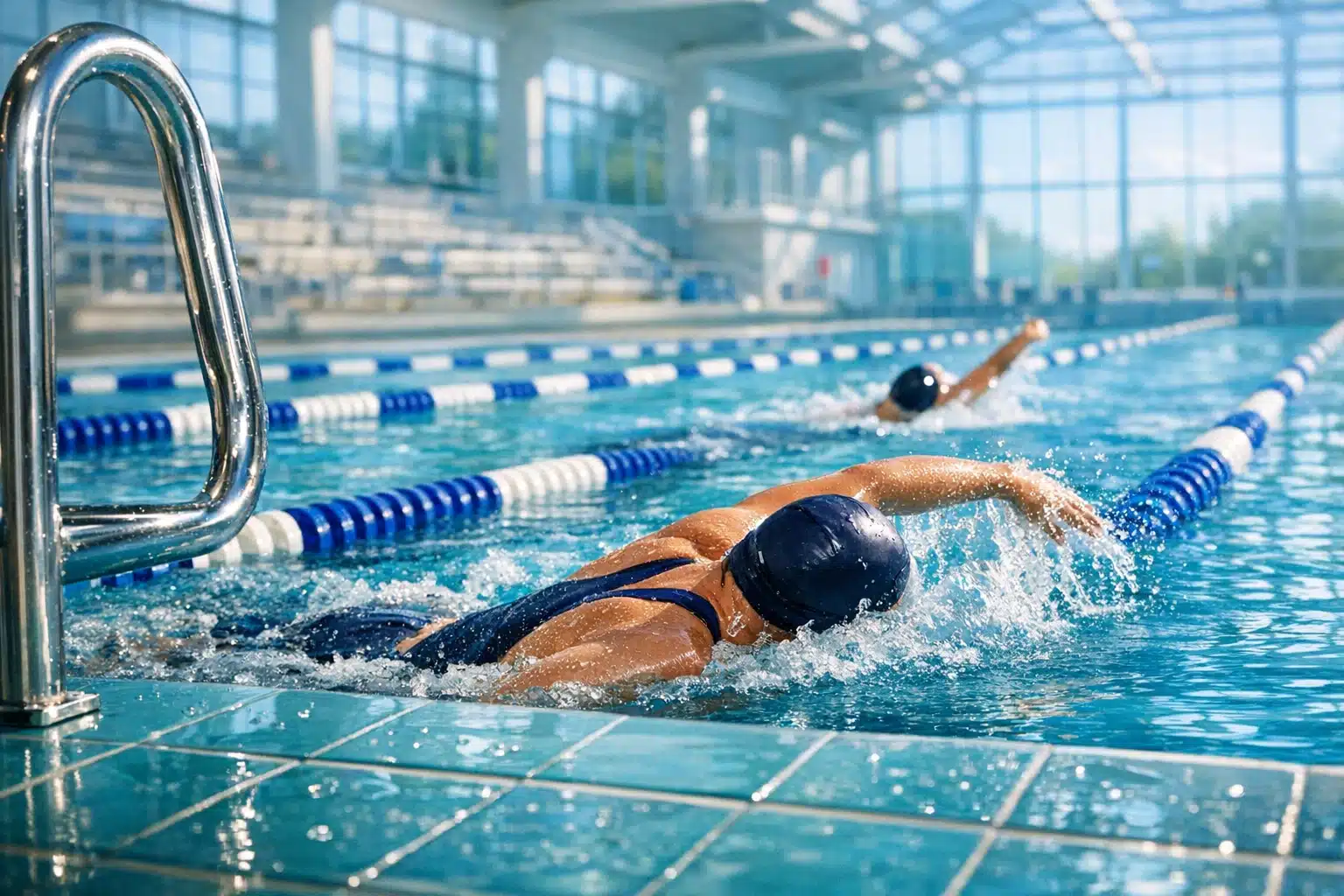
Explore the world of swimming
Swimming matters because it sits at the rare crossroads of survival skill, sport, therapy-friendly movement, and pure recreation. In one lane, a child learns confidence and breath control; in another, an athlete chases fractions of a second; a few meters away, an older adult finds exercise that feels gentler on the joints than running. Water changes the rules of motion, asking the body to work against resistance while giving it support, and that unusual balance is what makes swimming so enduringly relevant.
Outline: this article explores why swimming is important, how the major strokes compare, what smart training looks like, which safety habits deserve attention, and how readers can turn occasional visits to the pool into a lasting part of life.
Why Swimming Matters: Health, Movement, and Everyday Relevance
Swimming has a special place in human life because it is both deeply practical and surprisingly versatile. At its most basic level, it is a safety skill. Knowing how to float, breathe, and move through water can reduce risk in pools, lakes, and coastal settings. Beyond that, swimming grows into something larger: a form of exercise, a competitive sport, a social activity, a rehabilitation option, and, for many people, a form of quiet escape. Few activities cover that much ground.
Part of swimming’s value comes from the physical nature of water itself. Water is far denser than air, which means even simple motions create resistance. That resistance helps engage the shoulders, back, chest, core, and legs at the same time. Yet buoyancy supports body weight, which can reduce impact on joints compared with activities such as running or court sports. For people managing knee discomfort, recovering from certain injuries, or simply wanting a lower-impact routine, that combination can be especially appealing. It is not effortless, but it often feels kinder on the body.
Swimming also supports cardiovascular health. Public health guidance often encourages adults to complete at least 150 minutes of moderate aerobic activity each week, and swimming can clearly contribute to that goal. A steady session raises heart rate, challenges the lungs, and can improve endurance over time. Energy use varies by stroke, pace, body size, and fitness level, but a moderately intense 30-minute swim can expend a meaningful number of calories while also building coordination. Unlike some workouts that isolate muscle groups, swimming tends to train the body as an integrated system.
Mental benefits deserve equal attention. Many swimmers describe the pool as a place where noise falls away. The rhythm of breathing, the repetition of strokes, and the muffled sound of water can create a focused, almost meditative state. For others, swimming is not calming so much as clarifying: after a hard set, worries feel smaller because attention has been pulled into the present moment.
Its relevance stretches across age groups and goals:
• children can develop water confidence and motor skills
• adults can use it for fitness, stress management, or cross-training
• older swimmers may appreciate the reduced impact and steady range of motion
• athletes in other sports often use it to build aerobic capacity without repeated pounding on the joints
That broad usefulness explains why swimming remains important in schools, community centers, clubs, and elite sport programs alike. It is not reserved for a single type of person. It meets readers where they are, whether they want safer summers, stronger lungs, better recovery, or a dependable way to move.
The Main Strokes and the Craft of Good Technique
If swimming is the stage, technique is the lighting that reveals everything. Two people can work equally hard in the water and get very different results depending on how they move. Good technique helps a swimmer travel farther with less wasted effort, while poor technique turns each length into a small argument with the pool. Water is an honest teacher in that way: it immediately exposes inefficiency.
The four competitive strokes each have distinct mechanics, demands, and personalities. Freestyle, usually swum as front crawl, is the fastest and most commonly used stroke for fitness. It relies on a streamlined body position, flutter kick, alternating arm recovery, and rhythmic breathing to the side. For beginners, freestyle often becomes the foundation because it teaches balance in the water and efficient forward movement. Backstroke uses a similar alternating arm action but is performed face-up, which changes breathing and orientation. Many people find it freeing because the airway remains open, though staying straight without visual reference can take practice.
Breaststroke is different. Its timing is more deliberate, with a pull, breath, kick, and glide sequence. Because the head can rise more naturally, new swimmers sometimes feel more comfortable with it, but efficient breaststroke is technically demanding. Small errors in timing can create major drag. Butterfly is the most explosive of the four, driven by a wave-like body motion, symmetrical arm pull, and dolphin kick. It is beautiful when done well and exhausting when rushed.
A useful comparison looks like this:
• freestyle: fastest, efficient for fitness and distance, strongly dependent on body rotation and breathing rhythm
• backstroke: good for posture awareness and shoulder coordination, but easy to veer off line
• breaststroke: slower and more recoverable for many casual swimmers, yet precise timing matters greatly
• butterfly: powerful and athletic, but highly taxing and usually learned after other strokes
Several technical principles apply across nearly all forms of swimming. Body position should remain as long and level as possible, because hips that sink create drag. The kick should support balance rather than replace sound alignment. The hands should enter cleanly, and the pull should press water backward rather than downward. Breathing must be calm and timely; lifting the head too high often drops the hips and interrupts momentum.
For readers trying to improve, drills can be transformative. Catch-up drill can refine freestyle timing. Single-arm work can reveal imbalances. Kick sets help body line and ankle flexibility. Video feedback, even from a phone at poolside, often shows details a swimmer cannot feel while moving. Technique may seem less exciting than speed, but it is usually the shorter road to improvement. In swimming, smooth is not just elegant; it is practical.
Training in the Pool: Endurance, Speed, Strength, and Smart Progress
Swimming workouts are often misunderstood by non-swimmers. From the deck, a session can look repetitive, just lap after lap under bright ceiling lights. From inside the water, however, a well-designed practice is highly structured. It may train endurance, pace control, sprint power, technique, turns, breathing discipline, or recovery. The pool becomes a measured environment where distance and rest can be manipulated with unusual precision.
Most useful sessions follow a basic shape. A warm-up gradually raises heart rate and loosens the shoulders, hips, and ankles. Drill work then sharpens technique before fatigue grows. The main set targets the day’s goal, whether that is longer aerobic swimming, threshold effort, or short fast repeats. A cool-down closes the session and helps the body settle. This structure is one reason swimming suits methodical learners: progress can be tracked not only by speed, but also by stroke count, rest intervals, and how sustainable a pace feels.
A balanced week might include:
• one aerobic session with longer repeats, such as steady 100s or 200s
• one technique-focused workout with drills and moderate swimming
• one speed-oriented day with short intervals and full attention to form
• one easy recovery swim or mixed session using different strokes
Beginners should not feel pressured to imitate advanced programs. Early gains usually come from consistency and efficiency, not brutal volume. A new swimmer might start with 20 to 30 minutes, alternating easy lengths with short rests. Over time, those breaks can shrink and distances can grow. Intermediate swimmers often begin using pace clocks, counting strokes, and organizing sets by target effort. More advanced athletes may add dryland strength work, mobility training, and race-specific sets.
Equipment can help when used thoughtfully. Kickboards isolate kicking but may encourage poor head position if overused. Pull buoys reduce the role of the legs and can highlight upper-body mechanics. Fins assist body alignment and let swimmers feel speed, though they should not become a permanent crutch. Hand paddles increase resistance and can build strength, but they also amplify technical errors and should be introduced carefully. The best gear is not the most expensive item in the bag; it is the tool that matches the purpose of the set.
Training load matters as much as ambition. Shoulder fatigue, declining technique, or unusual exhaustion can signal the need for recovery. Because water can cool the body, swimmers do not always notice how hard they are working until the session ends. Hydration still matters. Nutrition still matters. Sleep still matters. The old image of swimming as endless mileage is giving way to a smarter approach: train with intent, respect form, and build steadily enough that progress lasts.
Safety, Learning, and Access: Building Confidence in Water
Swimming is enjoyable, but water deserves respect. That is not a dramatic warning; it is a practical truth. Confidence in the water should be built on skill rather than guesswork. Learning how to float, roll to breathe, tread water, and reach the side of a pool may sound basic, yet these are foundational abilities that support both recreation and safety. Formal lessons can accelerate this learning because instructors break movement into manageable pieces and correct habits before they become deeply ingrained.
Safety begins long before anyone pushes off the wall. In pools, swimmers should know the depth, lane direction, and rules about diving. In open water, the checklist expands quickly: temperature, currents, visibility, weather, boat traffic, and exit points all matter. A calm-looking lake can hide weeds, drop-offs, or cold layers that sap energy faster than expected. The sea adds tides and surf. Even strong pool swimmers can be surprised by how different open water feels when there is no black line on the bottom and no wall every 25 or 50 meters.
Several habits make a major difference:
• never assume skill removes risk; conditions can change faster than confidence
• supervise children closely and keep attention active rather than casual
• use lifeguarded areas when available
• in open water, swim with a partner or group and wear visible gear such as a bright cap
• stop early if breathing, cramping, or disorientation starts to feel unusual
Water safety also has public-health importance. The World Health Organization has identified drowning as a major global issue, with hundreds of thousands of deaths occurring each year. That is one reason swimming education matters beyond sport. Teaching children and adults how to behave around water can save lives, not just improve fitness.
Access is another part of the conversation. Not everyone enters swimming from the same starting point. Some people grow up around pools and lessons; others reach adulthood having had little safe access to water. Cost, transportation, cultural comfort, disability access, and body image can all shape whether a person feels welcome at a pool. Good facilities reduce these barriers through clear beginner programming, family sessions, adaptive equipment, trained staff, and respectful communication.
Adaptive swimming deserves particular attention. People with physical disabilities, sensory differences, or neurological conditions may benefit greatly from the support and feedback water provides. Buoyancy can increase freedom of movement, while structured aquatic exercise can support confidence and conditioning. Inclusion is not an extra feature; it is part of making swimming what it already has the potential to be: a skill and activity for a very wide range of people. When safety, teaching, and access work together, the water becomes less intimidating and far more inviting.
Making Swimming a Lifelong Habit: Culture, Motivation, and a Conclusion for Readers
Swimming survives trends because it adapts to different seasons of life. For one person, it begins as a childhood lesson filled with foam kickboards and nervous laughter at the shallow end. For another, it starts after years of running, when the body asks for a lower-impact form of training. Some people meet swimming through competition, memorizing splits and counting strokes; others come to it through travel, rehabilitation, triathlon, family time, or the simple wish to move without noise and crowds. The path in does not need to be dramatic for the practice to become meaningful.
Culturally, swimming occupies an unusual space. It can be solitary without feeling lonely and social without requiring constant conversation. Masters clubs, school teams, community lessons, and open-water groups all create different versions of belonging. At the same time, swimming offers privacy inside effort. You can share a lane and still experience your own thoughts, your own breathing, and your own tiny negotiations with fatigue. That balance helps explain why so many people keep returning even when progress is slow.
Building a sustainable relationship with swimming usually depends on realism more than inspiration. The most durable plans are simple:
• choose a schedule you can actually keep, even if it starts with one or two sessions per week
• set one technical goal and one fitness goal rather than chasing everything at once
• track small wins, such as smoother breathing, longer continuous swims, or better comfort in deeper water
• vary sessions enough to stay interested, but not so much that you lose continuity
For readers considering where to begin, the answer is refreshingly modest. Start with the environment available to you: a local pool, a beginner lesson, a slow lane, a short session, a single drill practiced well. If you already swim, look for quality before quantity. Better body position, calmer breathing, and more thoughtful pacing often create larger gains than simply adding volume. If you are a parent, a recreational exerciser, an older adult, or someone returning after years away, swimming can be shaped to fit your reality rather than forcing you into a narrow athletic model.
In conclusion, swimming is worth exploring because it offers more than exercise. It teaches respect for water, rewards patience, supports health, and can remain relevant from childhood through later life. You do not need to become a racer to benefit from it, and you do not need a perfect stroke to begin. For the reader standing at the edge, wondering whether this world is for them, the answer is yes: enter carefully, learn steadily, and let the water become a place where effort and ease meet.