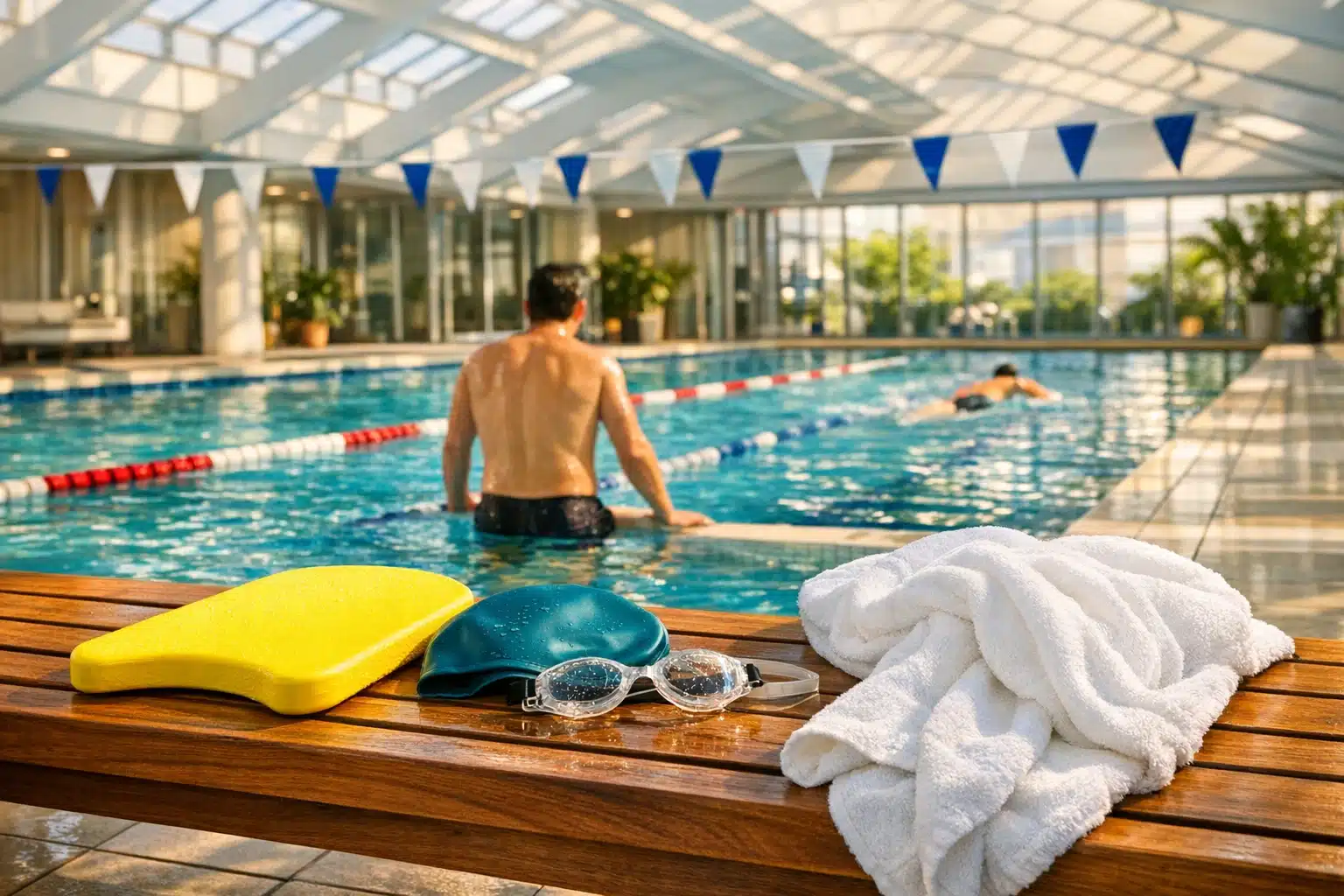
Explore the world of swimming
Swimming stands at a fascinating meeting point between survival skill, athletic challenge, therapy, and pure enjoyment. One lane can host a serious workout, another a cautious beginner learning to float, while open water offers a completely different conversation with wind, distance, and nerve. Few activities welcome such a wide range of ages and goals without demanding hard impact from the body. That broad usefulness is exactly what keeps swimming relevant in everyday life and elite sport alike.
1. Article Outline: What This Guide Covers and Why It Matters
Before moving stroke by stroke and benefit by benefit, it helps to map the route. Swimming is a broad subject. It includes technique, health, safety, training, psychology, accessibility, and even culture. Some people enter the water to compete. Others want joint-friendly exercise, family recreation, stress relief, or the confidence that comes from knowing what to do around deep water. This article is designed to speak to all of those readers without losing clarity.
The discussion unfolds in five major parts. Each one answers a different question that swimmers, parents, curious beginners, and returning athletes often ask:
- Why does swimming matter beyond being “just another sport”?
- How do the main strokes differ in mechanics, rhythm, and difficulty?
- What does swimming do for the heart, muscles, lungs, and mind?
- How can someone begin safely and build a routine that lasts?
- What practical lessons should readers carry away from the water?
The first detailed section after this outline looks at swimming as a life skill, a sport, and a social activity. That matters because understanding its role makes technique feel less abstract. The next section compares the major strokes, explaining why freestyle often feels efficient, why breaststroke can be more intuitive for beginners, why backstroke tests body alignment, and why butterfly earns its fearsome reputation. Then the article turns to health, where swimming stands out for its low-impact nature, full-body muscle recruitment, and ability to support cardiovascular fitness across different age groups.
Finally, the article moves into the most practical territory: getting started, staying safe, and choosing a path that matches personal goals. That includes lessons, equipment, pool etiquette, open-water caution, and ways to structure early sessions without frustration. In other words, this is not only a celebration of swimming but also a usable guide. Think of it as stepping onto the pool deck before sunrise: the air is cool, the water looks still, and you know there is more below the surface than first appears. The sections ahead are meant to make that deeper world easier to understand.
2. Why Swimming Matters: A Life Skill, a Sport, and a Form of Freedom
Swimming matters for reasons that go well beyond medals, toned shoulders, or summer leisure. At its most basic level, it is a safety skill. Global public health organizations, including the World Health Organization, have repeatedly identified drowning as a major cause of preventable death, especially among children in many regions. That reality gives swimming a seriousness that sports like tennis or golf do not carry in quite the same way. Learning to float, tread water, and move calmly through a pool can increase confidence and reduce risk in everyday life around beaches, rivers, lakes, and boats.
At the same time, swimming is also a genuine sport with extraordinary technical depth. Competitive swimming rewards precision, pacing, strength, flexibility, and discipline. A casual observer may see only repetition: lap after lap, turn after turn. Yet beneath that surface lies a fine mechanical puzzle. Tiny changes in hand entry, hip position, timing, or breathing can alter efficiency dramatically. That blend of power and nuance is one reason swimming has remained central to school programs, community clubs, and international competition for generations.
Its appeal is also social and cultural. Pools are unusual public spaces because they bring together very different people for very different reasons. Early-morning lap swimmers, rehabilitation patients, nervous first-timers, children in lessons, and masters athletes may all share the same facility within a few hours. In that sense, swimming is less like a single activity and more like a small ecosystem. There is room for ambition, recovery, play, and routine.
Another reason swimming endures is accessibility across the lifespan. A teenager may train for speed. A middle-aged adult may use swimming to maintain fitness without the pounding of road running. An older adult may appreciate the support that water provides to joints and the controlled challenge it offers to balance and breathing. While not every body feels equally comfortable in water at first, swimming can often be adapted more easily than high-impact land sports.
There is also something quietly liberating about moving through water well. On land, gravity constantly announces itself. In the pool, the body behaves differently. Weight softens. Motion becomes smoother. Breath becomes deliberate. For many swimmers, that sensation is more than exercise; it feels like a temporary rewrite of physical rules. That is why people return to it even when progress is slow. Swimming teaches skill, but it also offers a rare kind of freedom.
3. Understanding the Main Strokes: Technique, Comparisons, and Common Challenges
To understand swimming properly, it helps to compare the main strokes rather than treat them as a blur of splashing arms. The four competitive strokes are freestyle, backstroke, breaststroke, and butterfly. Each one asks the body to solve a different problem in the water: how to stay streamlined, how to generate propulsion, how to breathe without breaking rhythm, and how to keep drag from stealing hard-earned effort.
Freestyle, usually performed as front crawl, is generally the fastest and most efficient stroke for covering distance. The body stays long, the kick remains narrow, and the alternating arm action supports continuous propulsion. Breathing is the skill that most beginners find hardest because the face returns to the water so quickly. When freestyle works well, it looks almost effortless, like the swimmer is sliding through a corridor of liquid glass. When it works poorly, the head lifts, the hips sink, and every length feels more expensive than it should.
Backstroke shares some structural similarities with freestyle, but it changes orientation and timing enough to feel like a separate language. Because the swimmer faces upward, breathing is easier, yet navigation becomes harder. Straight-line alignment matters, and many new swimmers drift across the lane without realizing it. Backstroke also exposes flaws in posture; an unstable core or dropped hips quickly increase resistance.
Breaststroke is often more intuitive for recreational swimmers because the face can stay out of the water longer and the rhythm feels more deliberate. However, it is not a “simple” stroke in technical terms. Efficient breaststroke depends on precise timing between pull, breath, kick, and glide. A rushed cycle wastes energy. A well-timed one feels like a series of short accelerations followed by quiet glide phases.
Butterfly is the most demanding of the four for many swimmers. It requires coordinated undulation, symmetrical arm recovery, strong timing, and a kick pattern driven from the hips. It can look dramatic and even punishing, but efficient butterfly is less about brute force than about rhythm.
- Freestyle: best for speed and endurance training
- Backstroke: useful for posture, coordination, and shoulder control
- Breaststroke: popular for recreational swimming and controlled pacing
- Butterfly: powerful, technical, and physically demanding
Beyond these strokes, every swimmer benefits from non-racing skills such as floating, sculling, treading water, and safe breathing patterns. These are not glamorous, but they are foundational. Technique improves fastest when swimmers focus on body position before force. In water, efficiency is not a luxury. It is the difference between fighting the pool and learning to work with it.
4. The Benefits of Swimming: Fitness, Health, Recovery, and Mental Clarity
Swimming earns its reputation as a full-body activity because it combines resistance, rhythm, and breath control in one environment. Water is denser than air, so even simple movements meet continuous resistance. That means the arms, shoulders, back, core, hips, and legs all contribute to forward motion. At the same time, buoyancy reduces the jarring impact associated with many land-based activities. This combination makes swimming especially attractive to people who want demanding exercise without constant pounding on knees, ankles, or hips.
From a cardiovascular perspective, swimming can support the same broad public-health goals associated with other aerobic exercise. Health authorities commonly recommend at least 150 minutes of moderate-intensity activity per week for adults, and swimming can contribute meaningfully to that target. Depending on stroke choice, pace, and body size, lap swimming can also burn a substantial number of calories per hour. Freestyle and butterfly tend to raise intensity quickly, while backstroke and breaststroke may allow steadier pacing for many recreational swimmers.
The respiratory element is just as interesting. Unlike walking or cycling, swimming forces breath to follow a controlled pattern. Exhale underwater, rotate or lift to inhale, then return the face to the water. Over time, this can sharpen breath awareness and improve comfort with sustained aerobic effort. That does not mean swimming is easy on the lungs; in fact, it often reveals inefficient breathing habits very quickly. But once those habits improve, swimmers often notice better pacing and less panic during exertion.
Swimming can also support rehabilitation and long-term mobility when used appropriately. People recovering from certain injuries, or managing stiffness and joint discomfort, may find that water allows movement that feels difficult on land. Of course, individual medical guidance matters. Water is helpful, but it is not magic. Still, this adaptable quality explains why swimming appears in so many wellness, therapy, and active-aging conversations.
Mental benefits deserve equal attention. The repetitive nature of laps can be meditative, especially once basic technique becomes automatic. The sound of bubbles, the regularity of turns, and the narrow focus on timing often create a break from digital overload and mental clutter. Many swimmers describe a session not as exciting in the flashy sense, but as clarifying. They leave calmer, more alert, and mentally reset.
- It develops cardiovascular endurance
- It trains multiple muscle groups at once
- It reduces impact stress compared with many land sports
- It can improve confidence in and around water
- It often supports stress management through rhythm and focus
That range of benefits is one of swimming’s strongest arguments. It is not only exercise for athletes. It is useful movement for people trying to feel stronger, breathe better, age actively, and build a more sustainable relationship with fitness.
5. Getting Started Safely and Finding Your Own Lane: A Practical Conclusion for New and Returning Swimmers
For someone standing at the edge of the pool, the biggest barrier is often not physical weakness but uncertainty. What should I bring? How far should I swim? What if I am slow? The reassuring answer is that swimming does not require a dramatic beginning. It rewards consistency far more than bravado. A well-fitted swimsuit, goggles that seal comfortably, and a simple cap for longer hair are enough for most beginners. Kickboards, pull buoys, fins, and paddles can help later, but they are tools, not prerequisites.
Lessons are worth serious consideration for beginners and for adults who learned informally years ago. A coach or qualified instructor can correct habits that would otherwise drain energy for months. Small adjustments in floating position, kick direction, or breathing timing can change the entire experience. Without guidance, beginners often mistake struggle for effort and believe they simply lack fitness. In reality, they may be trying to overpower poor mechanics.
A sensible starting routine is usually short and structured. Instead of aiming for a long uninterrupted swim, many new swimmers do better with intervals and rest. For example, a session might include easy warm-up lengths, short technique drills, several repeats with comfortable recovery, and a relaxed finish. Progress comes from repeating manageable sessions often enough for the water to stop feeling foreign.
Safety should stay at the center of any swimming plan. In pools, that means respecting lane direction, resting at the wall without blocking others, and understanding one’s own limits. In open water, the stakes rise. Conditions can change quickly, visibility can drop, and distance is easy to misjudge. Swimmers should choose supervised areas when possible, use visible gear such as tow floats where appropriate, and avoid swimming alone. Confidence is valuable; overconfidence is dangerous.
- Start with technique before chasing distance
- Build routine through short, repeatable sessions
- Learn basic water safety alongside stroke skills
- Choose the environment that matches your experience level
- Measure progress by comfort and control, not only speed
If you are the target reader for this article, you may fall into one of three groups: curious beginner, rusty former swimmer, or active swimmer looking for sharper understanding. The encouraging news is that all three can benefit from the same core lesson. Swimming is not reserved for elite athletes or fearless people. It is a teachable skill, a practical health habit, and a deeply adaptable form of movement. Start patiently, respect the water, and let technique grow alongside confidence. In time, the pool stops feeling like a test and starts feeling like a place where effort, calm, and progress finally move in the same direction.