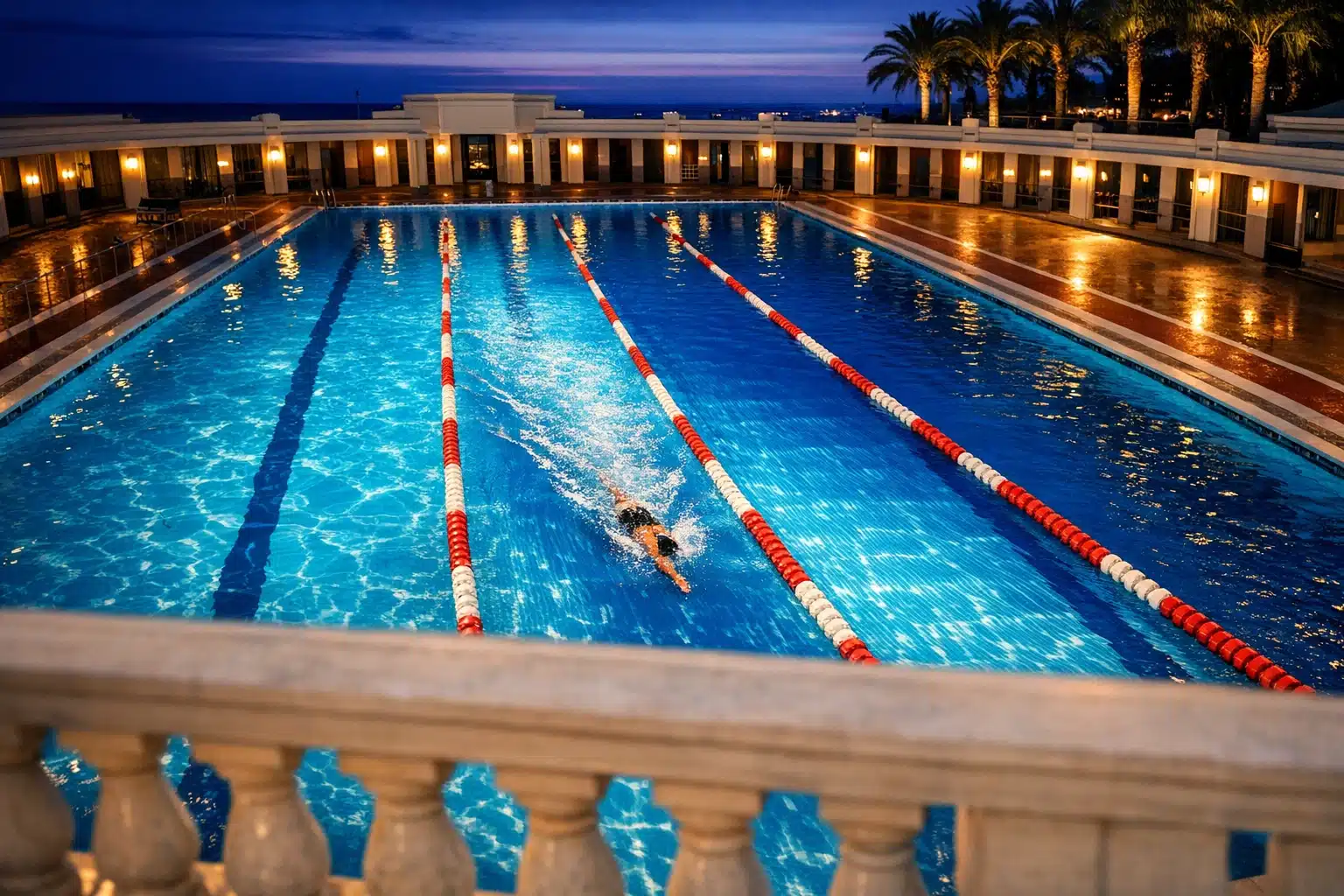
Explore the world of swimming
Swimming has a special place in human life because it blends survival, exercise, competition, and recreation into one remarkably adaptable activity. A calm pool lane, a choppy lake, or a crowded beach can each turn the simple act of moving through water into a new challenge. For beginners, it offers confidence and control; for athletes, it offers precision and endurance. That range is exactly why swimming remains relevant across ages, goals, and lifestyles.
Article Outline
This article explores swimming in five main parts. First, it looks at what makes swimming unique and why it matters culturally and practically. Second, it explains major strokes, core techniques, and how swimmers become more efficient in the water. Third, it examines physical and mental health benefits with realistic context. Fourth, it focuses on water safety, common risks, and good habits for pools and open water. Fifth, it covers training, equipment, and ways different people can build a sustainable swimming routine.
1. Why Swimming Matters: More Than a Sport
Swimming is often introduced as a sport, but that description is too narrow. It is also a basic life skill, a form of therapy, a social activity, and for many people, a lifelong source of enjoyment. Unlike activities tied to a single setting, swimming stretches across environments. A child learning to float in a shallow pool, an adult swimming laps before work, a senior joining a water exercise class, and an elite athlete racing in a championship all share the same medium: water. That common ground gives swimming an unusual reach.
Its practical value is easy to understand. Knowing how to move safely in water can reduce panic and improve survival in unexpected situations. This is one reason swimming lessons are encouraged in many communities. Public health organizations have often emphasized that water competence, not just casual exposure to water, is a meaningful safety advantage. Water competence includes floating, breathing control, basic propulsion, and the ability to recognize and respond calmly to aquatic conditions.
Swimming also stands apart because it can fit many bodies and life stages. High-impact sports may be difficult for people with joint pain, injuries, or certain mobility limitations. Swimming, by contrast, uses buoyancy to reduce stress on the body while still providing resistance in every direction. Water does not simply support movement; it shapes it. Every pull, kick, and breath becomes a conversation with an environment that is always pushing back.
Its cultural and emotional importance should not be overlooked either. Pools and beaches are social spaces where confidence, fear, discipline, and joy often appear together. Many people remember the first time they let go of the pool wall or completed a full length without stopping. Those moments matter because they signal more than technical progress. They reveal a shift from hesitation to trust.
Swimming matters for several clear reasons:
- It teaches a lifesaving skill.
- It offers exercise with relatively low joint impact.
- It suits recreational, therapeutic, and competitive goals.
- It can be practiced across a wide age range.
- It develops discipline, rhythm, and body awareness.
In that sense, swimming is not just about moving from one end of the pool to the other. It is about learning how to stay calm, efficient, and capable in an element where humans are not naturally at home. That challenge is exactly what makes it so compelling.
2. Understanding the Main Strokes and Core Technique
At first glance, swimming may seem simple: jump in, move your arms, kick your legs, and keep breathing. Yet anyone who has tried to swim efficiently knows the truth is more technical. Good swimming is built on timing, balance, body position, and controlled effort. The four competitive strokes, freestyle, backstroke, breaststroke, and butterfly, each solve the same problem in a different way: how to move through water with speed and control while managing drag and maintaining rhythm.
Freestyle, often called front crawl, is generally the fastest and most widely used stroke. It relies on a streamlined body position, alternating arm recovery, and a flutter kick. The key challenge is breathing without disrupting alignment. New swimmers often lift the head too high, which causes the hips and legs to sink. Skilled swimmers rotate the body, turn the head briefly to inhale, and return quickly to a stable line. That small adjustment can make a dramatic difference in efficiency.
Backstroke is unique because it is performed face-up. This can make breathing easier, but it creates other challenges, especially maintaining direction and coordinating rotation. A good backstroke feels smooth rather than rushed. The swimmer rolls from side to side while the arms alternate and the legs keep a steady flutter kick. Because the face stays above water, many beginners find it less stressful than freestyle, though some struggle with orientation.
Breaststroke uses a very different rhythm. The arms sweep outward and inward while the legs perform a whip kick. Timing is essential. If the pull, breath, kick, and glide do not connect properly, the swimmer loses momentum. Breaststroke is often considered easier to learn recreationally because the head can rise more naturally, but efficient breaststroke is highly technical.
Butterfly is the most demanding of the four. It combines simultaneous arm recovery with a dolphin kick and requires strength, mobility, and timing. When done well, it looks almost theatrical, as if the swimmer is rising and falling with the water rather than fighting it. When done poorly, it quickly becomes exhausting.
Across all strokes, several technical principles matter:
- Body alignment reduces unnecessary drag.
- Breathing should support rhythm, not interrupt it.
- Propulsion comes from coordinated whole-body movement.
- Relaxation is often more efficient than force.
- Consistent practice improves feel for the water.
Technique matters because water punishes wasteful motion. On land, a rough movement may still get the job done. In the pool, small inefficiencies multiply. That is why swimming rewards patience. Progress often comes not from trying harder, but from learning to move smarter.
3. Health Benefits of Swimming for Body and Mind
Swimming is widely respected as a full-body workout, and that reputation is deserved. It engages major muscle groups, challenges the cardiovascular system, and builds endurance without the repeated pounding found in activities like running. Because water provides constant resistance, even steady, moderate swimming can demand significant energy. At the same time, buoyancy helps support the body, making swimming accessible to many people who need a gentler option.
From a physical standpoint, swimming can improve heart and lung function, muscular endurance, flexibility, and coordination. The exact effect depends on intensity, stroke choice, and frequency. A casual swimmer doing relaxed breaststroke will train differently from a lap swimmer completing structured intervals, but both can benefit. Research in exercise science has frequently shown that regular aerobic activity supports cardiovascular health, and swimming is one way to achieve that. It also recruits the upper and lower body together, which creates a broad training effect.
Another strength of swimming is adaptability. Someone returning from injury may begin with short sessions and easy kicking drills. An older adult might use swimming to stay active while minimizing joint strain. A young athlete could use it to build stamina and improve recovery. Water has a way of meeting people where they are. It does not remove effort, but it changes how effort is experienced. Hard work in the pool often feels smooth, almost quiet, as if exertion has been wrapped in a cooler, calmer setting.
The mental benefits are equally important. Many swimmers describe the repetitive nature of laps as soothing. Controlled breathing, steady rhythm, and reduced external noise can create a focused, almost meditative state. This does not mean swimming replaces professional treatment for mental health conditions, but it can be a meaningful part of a healthy routine. Exercise in general is associated with improved mood and stress reduction, and swimming adds the sensory effect of water, which many people find calming.
Potential benefits include:
- Improved cardiovascular endurance.
- Increased muscle engagement across the whole body.
- Lower joint stress compared with many land-based sports.
- Support for balance, coordination, and posture.
- A structured outlet for stress relief and mental reset.
Still, swimming is not magic. Benefits come from consistency, sound technique, and appropriate progression. Overtraining, poor mechanics, or ignoring shoulder discomfort can create problems. The healthiest approach is a realistic one: swim regularly, recover properly, and treat improvement as a long-term process rather than a quick fix. That is where swimming quietly shines. It rewards habits, not hype.
4. Water Safety, Confidence, and Risk Awareness
Any serious discussion of swimming must include safety. Water can be inviting, beautiful, and fun, but it is also an environment where mistakes can escalate quickly. Confidence in the water is valuable only when it is built on skill and judgment. Overconfidence, especially in open water, is one of the most common problems among recreational swimmers. A pool lane may feel predictable; a lake or ocean rarely is.
Basic water safety starts with supervision, preparation, and situational awareness. Children should be closely supervised near any body of water, even when flotation devices are present. Adults also need caution. Fatigue, cold water, poor visibility, currents, and panic can affect strong swimmers as well as beginners. Swimming ability exists on a spectrum, and being able to complete laps indoors does not automatically prepare someone for waves, changing depths, or murky conditions.
Learning to float, tread water, control breathing, and rest in place can be just as important as learning stroke technique. In many emergency situations, endurance and calm decision-making matter more than speed. Formal lessons often teach these foundational skills, along with safe entries, exits, and rescue awareness. That kind of training builds practical confidence rather than false security.
Open-water swimming adds another layer of complexity. Conditions can change rapidly due to wind, temperature, current, and weather. Visibility may be limited, and distance can be deceptive. A shoreline that seems close may feel much farther once a swimmer is tired. This is where planning becomes essential. Swimming with a partner, checking conditions, using visible safety gear, and knowing local rules are all sensible precautions.
Key safety habits include:
- Never assuming shallow water is safe for diving.
- Respecting weather alerts and water conditions.
- Using lifeguarded areas when available.
- Stopping when cold, cramps, or unusual fatigue set in.
- Understanding that flotation aids do not replace supervision or skill.
Safety is also emotional. Many people carry fear from a bad experience, lack of instruction, or simple unfamiliarity with water. That fear should not be mocked. It should be addressed gradually, with patient teaching and realistic goals. A person who learns to exhale calmly underwater, float on the back, and move a few meters independently has made meaningful progress. In swimming, confidence should grow like a careful sunrise, not explode like fireworks. The goal is not bravado. It is capability paired with respect.
5. Training, Equipment, and Building a Sustainable Swimming Routine
One reason swimming appeals to such a wide audience is that it can be shaped around very different goals. Some people want to learn the basics, some want a reliable fitness habit, and some want to train competitively. A sustainable routine begins by deciding what success actually means. For a beginner, success might be swimming two lengths without stopping. For a triathlete, it could mean improving pace over long distances. For a busy adult, it may simply mean showing up twice a week and leaving the pool feeling better than when they arrived.
Training structure matters. Random laps can still provide exercise, but purposeful sessions usually produce better results. A balanced swim workout often includes a warm-up, drill work, a main set, and a cool-down. Drills help reinforce technique, which is especially important because poor mechanics can waste energy and increase shoulder strain. Even short sessions become more valuable when they include intention.
Equipment can support progress, though it does not replace skill. A well-fitted swimsuit, goggles, and a cap are the basic essentials for most pool swimmers. Beyond that, common tools include kickboards, pull buoys, fins, paddles, and pace clocks or waterproof watches. Each has a role. Fins can help body position and kick awareness. Pull buoys isolate upper-body work. Paddles increase resistance, though they should be used carefully to avoid overload.
Beginners often improve fastest by focusing on consistency rather than intensity. Two or three manageable sessions per week can build comfort and aerobic capacity without creating dread. More experienced swimmers may add interval sets, stroke-specific work, and pacing strategies. Recovery also matters. Sleep, hydration, mobility work, and rest days support adaptation just as much as time in the water.
A practical routine often includes:
- A clear weekly schedule.
- Technique practice before hard effort.
- Gradual increases in distance or intensity.
- Attention to shoulder comfort and fatigue signals.
- Occasional feedback from a coach, instructor, or video review.
The most durable swimming habit is one that feels challenging but livable. If every session becomes a test, motivation often fades. If every session is too easy, progress stalls. The sweet spot lies in regular, thoughtful practice. Over time, the pool stops feeling like a place of uncertainty and starts feeling like a familiar workshop where strength, skill, and calm are built one length at a time.
Conclusion for Readers Interested in Swimming
Swimming offers a rare mix of usefulness, challenge, and enjoyment. It can help people stay active, learn a vital safety skill, improve technique, manage stress, and build confidence in an environment that demands respect. For beginners, the best starting point is simple, patient practice with attention to safety and fundamentals. For experienced swimmers, long-term improvement comes from better efficiency, smarter training, and consistent habits. No matter where you begin, swimming rewards steady effort with skills that reach far beyond the edge of the pool.