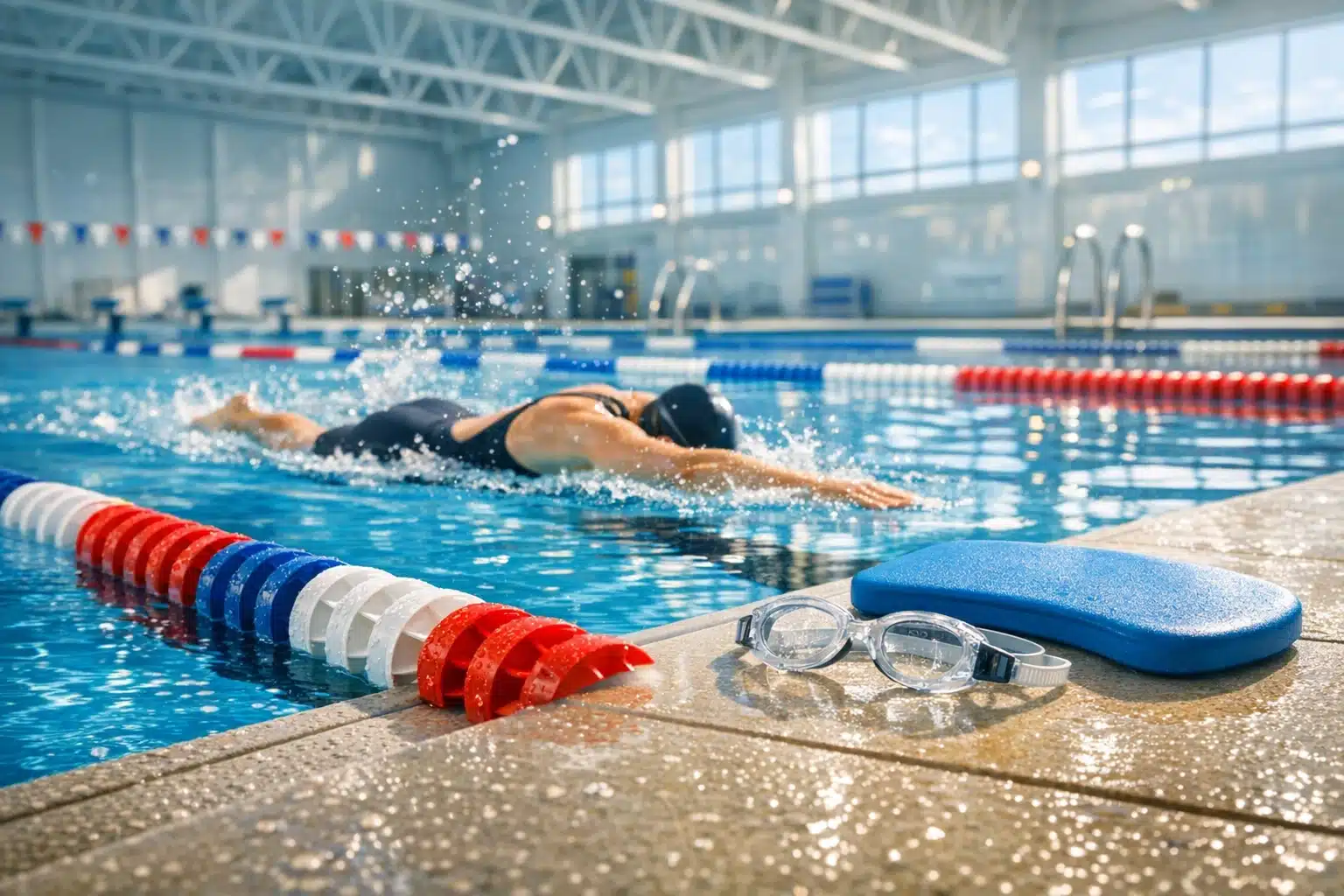
Explore the world of swimming
Swimming sits at the crossroads of sport, survival, leisure, and lifelong health, which is why it matters far beyond the edge of the pool. It welcomes beginners who want gentle exercise, challenges athletes chasing split times, and gives families a skill that can one day save a life. From calm laps at dawn to open-water races shaped by wind and tide, it offers a rare mix of freedom, discipline, and practical value. This article explores how swimming works, why it helps, and how readers can enjoy it with more confidence.
Before diving into the details, here is a clear outline of the journey ahead. Each part expands on a different side of swimming, moving from the broad picture to practical advice.
- The foundations of swimming and the reasons it remains so widely valued.
- The physical and mental benefits that make it useful for many lifestyles.
- The major strokes, how they differ, and what each one teaches the swimmer.
- Training methods, safety habits, and equipment choices for steady progress.
- Swimming as a lifelong activity, from recreation to competition and personal growth.
The Foundations of Swimming and Why It Matters
Swimming is often introduced as a sport, but that description only tells part of the story. It is also a life skill, a form of movement therapy, a recreational pastime, and for many people a quiet ritual that turns a noisy day into something manageable. Unlike activities tied to a single setting or age group, swimming adapts. A child learning to float, an office worker easing back pain, a competitive sprinter, and a retiree attending aqua sessions are all taking part in the same broad world, even if their goals are completely different.
One reason swimming holds such a strong place in public life is that water changes how the body moves. Buoyancy reduces the load on joints, which makes motion feel lighter than it does on land. At the same time, water provides resistance in every direction, so even smooth, controlled movement asks muscles to work. This combination is unusual. A runner may feel pounding impact, and a cyclist may overwork certain patterns, but a swimmer often experiences support and resistance at once. That dual quality is a large part of swimming’s appeal.
Swimming also matters because it links pleasure with practicality. Learning to control breathing, float, tread water, and move efficiently can increase safety around pools, lakes, rivers, and beaches. In many families, the first swimming lessons are not about medals or fitness goals at all; they are about confidence and protection. That practical value gives swimming a relevance that goes well beyond recreation.
There is also a cultural dimension. Pools are places of school lessons, rehabilitation sessions, club training, and community gatherings. Open water adds another layer: lakes at sunrise, sea swims along a marked buoy line, and rivers that demand respect for current and temperature. The setting changes the mood, yet the central challenge remains the same: how to work with the water rather than fight it.
In simple terms, swimming matters because it blends several strengths at once:
- It teaches a potentially life-saving skill.
- It offers exercise with relatively low impact on joints.
- It can be playful, social, meditative, or highly competitive.
- It remains relevant across different ages and fitness levels.
That range explains why swimming never seems to belong to only one kind of person. It belongs to anyone willing to learn how water reshapes movement and rewards patience.
Health Benefits: Strength, Endurance, and Mental Clarity
Swimming is frequently praised as a full-body workout, and that reputation is well earned. A swimmer recruits the shoulders, back, chest, core, hips, and legs while coordinating breathing with rhythmic movement. Because the body must stay streamlined to travel efficiently, even a relaxed swim becomes an exercise in posture and control. The cardiovascular system benefits as well. Steady lap swimming can help improve aerobic capacity, and harder interval sets challenge the heart and lungs in ways comparable to many land-based endurance activities.
One of swimming’s most practical advantages is that it can help adults work toward the commonly recommended 150 minutes of moderate-intensity aerobic activity per week. The water supports body weight, which is why swimming is often recommended for people who want exercise without the repeated impact of pavement or court surfaces. Chest-deep water can significantly reduce weight-bearing forces, and deeper water reduces them even more. For people managing joint pain, recovering from certain injuries, or returning to activity after a long break, that can make regular movement feel possible again.
The benefits are not only physical. Water has a way of narrowing attention. A swimmer listens to breaths, notices body rotation, counts strokes, and follows the black line on the pool floor. The outside world becomes quieter for a while. Many swimmers describe this as one of the sport’s greatest gifts. It can feel meditative without being passive. The mind stays busy enough to let go of clutter, yet calm enough to settle.
There are also several specific groups who often find swimming especially useful:
- People seeking low-impact conditioning for knees, hips, or ankles.
- Older adults who want to maintain mobility and endurance.
- Athletes using the pool for cross-training and active recovery.
- Beginners who feel intimidated by gyms but enjoy structured lessons.
Hydrostatic pressure, the pressure water exerts on the body, may also influence circulation and can make exercise in water feel different from exercise on land. Many swimmers notice that heart rate in the pool is often lower at a similar effort level than it would be during a run. Temperature plays a role too: water conducts heat away from the body more efficiently than air, which can make longer workouts feel manageable, though it also means cold water requires caution and adaptation.
Of course, swimming is not magical. Progress still depends on consistency, technique, recovery, and realistic goals. But it remains one of the rare activities that can build fitness, protect joints, reduce stress, and stay enjoyable enough to become a habit. That last point matters most. The best exercise is the one a person can keep returning to, and swimming gives many people a reason to come back.
Understanding the Strokes: Technique, Pace, and Purpose
To someone standing poolside, swimming strokes can look like variations on the same idea. In practice, each stroke teaches different mechanics, asks different things of the body, and serves a distinct purpose. Learning the differences helps swimmers train more intelligently and appreciate why one style feels effortless while another feels like wrestling a wave.
Freestyle, usually swum with a front crawl, is the fastest and most commonly used stroke. Its efficiency comes from a streamlined body position, alternating arm recovery, a flutter kick, and rotational movement through the torso. Good freestyle is less about splashing harder and more about reducing drag. A swimmer who keeps the head steady, the hips high, and the catch firm often moves faster with less strain. Freestyle is the stroke most people use for lap training, triathlon, and general fitness because it balances speed and endurance so well.
Breaststroke is almost the opposite in feeling. It is slower, more symmetrical, and often easier for beginners because the breath can be timed in a more predictable pattern. However, that does not mean it is technically simple. Efficient breaststroke requires precise timing between the arm sweep, the kick, and the glide. When timing slips, the stroke becomes tiring quickly. It is popular in lessons because it allows swimmers to lift the face more naturally, but advanced breaststroke is a highly technical skill.
Backstroke gives the swimmer a chance to breathe freely because the face stays above water. That makes it useful for balancing training and building body awareness. The challenge comes from staying aligned without seeing where one is going. Strong backstroke depends on rotation, rhythm, and a stable core. For some swimmers, it feels liberating. For others, it feels like trying to write neatly while lying on a moving bed.
Butterfly is the most dramatic stroke and often the most demanding. Both arms recover together, the body undulates, and the kick usually comes from a dolphin motion. When done well, butterfly looks almost theatrical, but its efficiency depends on timing rather than brute force. New swimmers often assume it is all power; experienced swimmers know it is really about flow.
A useful comparison looks like this:
- Freestyle: fastest, versatile, ideal for endurance and speed work.
- Breaststroke: slower, technical, often approachable for learners.
- Backstroke: good for posture awareness and easier breathing.
- Butterfly: powerful, demanding, best introduced progressively.
No stroke is automatically “best.” The right choice depends on the swimmer’s goal, body mechanics, and confidence in the water. Learning several strokes also prevents overreliance on one movement pattern and keeps training more engaging. Variety is not decoration in swimming; it is part of long-term development.
Learning, Training, Safety, and Equipment for Steady Progress
Swimming rewards patience more than impatience. Many beginners enter the pool expecting fitness to come first, only to discover that technique is the real gatekeeper. A person with strong lungs and strong legs may still tire quickly if breathing is rushed, the head lifts too high, or the kick creates drag instead of propulsion. That is why a sensible learning path starts with comfort in the water: floating, exhaling underwater, gliding, and building rhythm before chasing distance.
For new swimmers, professional instruction can save months of frustration. Small corrections make a remarkable difference. Looking slightly downward instead of forward, relaxing the neck, finishing the underwater pull, or rotating the hips more naturally can transform effort. Once the basics settle, training can become more structured. A balanced swim session often includes a warm-up, technique drills, a main set, and an easy finish. This format keeps the body prepared and gives the swimmer a clear purpose.
Common training approaches include:
- Technique drills, such as single-arm freestyle or kick-focused lengths.
- Steady aerobic swimming for endurance and pacing awareness.
- Interval sets that alternate work and rest for speed development.
- Recovery swims that emphasize ease, looseness, and breathing control.
Equipment should support learning rather than replace it. The essentials are simple: a comfortable swimsuit and well-fitting goggles. A swim cap is useful for many people, especially in lane sessions. Beyond that, tools can help when used thoughtfully. Kickboards isolate the legs, pull buoys reduce the kick so the upper body can be emphasized, and fins can improve body position and ankle flexibility. Yet none of these should become a crutch. A swimmer still needs to understand balance, timing, and propulsion without artificial help.
Safety deserves equal attention. In pools, that means respecting lane direction, being aware of other swimmers, and not overestimating ability. In open water, the checklist becomes more serious. Conditions change with wind, current, visibility, and temperature. Even skilled pool swimmers can be surprised by waves, cold shock, or navigation problems outdoors. Good open-water habits include swimming with others, choosing supervised areas where possible, wearing visible gear, and understanding entry and exit points before starting.
A few practical safety reminders matter for almost everyone:
- Never assume fitness on land equals readiness in deep water.
- Build distance gradually rather than in dramatic jumps.
- Rest when technique falls apart, because fatigue invites mistakes.
- Teach children water respect, not fear and not carelessness.
Progress in swimming often arrives quietly. One day the breathing feels less frantic. Another day the lane seems shorter. Then, almost without announcement, the water stops feeling like an obstacle and starts feeling like a place where the body knows what to do.
Swimming for Everyday Life, Competition, and Long-Term Enjoyment
One of swimming’s finest qualities is that it can remain meaningful for decades without needing to look the same from one stage of life to the next. In childhood, it may begin as lessons and games. In adolescence, it can become team training, early mornings, and an introduction to discipline. In adulthood, it often shifts again, serving as fitness, recovery, stress relief, or a way to stay connected with a community. Later in life, it may become a cornerstone of mobility and routine. Few activities travel so well through changing schedules, bodies, and priorities.
Competitive swimming adds another layer for those who enjoy structure and measurable progress. Races are decided by time, technique, pacing, starts, turns, and the ability to stay composed under pressure. Sprint events demand explosive speed and refined mechanics, while longer races test efficiency and focus. Beyond the pool, swimming also plays a major role in triathlon, open-water events, lifesaving sports, and masters competitions for adults. These pathways matter because they show that competition is not reserved for prodigies or school-age athletes. There is room for late starters, returners, and people who simply want a reason to train with purpose.
Yet not every meaningful swim involves a stopwatch. For many readers, the real value of swimming lies in how it fits ordinary life. A 30-minute session before work can sharpen concentration. A gentle weekend swim can ease stiffness after a sedentary week. Family time at the pool can build trust and familiarity around water. Even the routines surrounding swimming can be grounding: packing a bag, stepping onto the deck, feeling the first cool shock, and then settling into rhythm as the rest of the world fades for a while.
That is why swimming continues to attract such a wide audience:
- It offers measurable goals for competitive personalities.
- It provides low-impact movement for health-focused adults.
- It supports confidence and safety for families.
- It creates moments of calm for people who need mental space.
For new and returning swimmers, the most useful conclusion is simple: start where you are, not where you think a “real swimmer” should be. A few lengths with good breathing matter more than a chaotic session driven by ego. Lessons are not a sign of weakness; they are one of the smartest shortcuts to enjoyment. Consistency matters more than drama, and confidence is built through repetition, not rush.
If you are curious about swimming, the invitation is refreshingly practical. Learn the basics well, respect the environment, give yourself time to improve, and keep the experience enjoyable enough to repeat. Whether you want fitness, skill, competition, recovery, or peace of mind, swimming offers a path that can grow with you. The water does not ask for perfection. It asks for attention, patience, and a willingness to keep moving forward.