Explore the world of swimming
Introduction
Swimming is one of those rare activities that feels playful and serious at the same time. It teaches survival, builds endurance, and offers a low-impact way to move almost every major muscle group. From young children learning to float to older adults staying active with gentle laps, its value reaches far beyond the pool wall. That blend of safety, sport, and everyday wellbeing makes swimming a topic worth exploring closely.
Outline
1. Why swimming matters in daily life, public safety, and sport. 2. The four main strokes and the technical differences between them. 3. Physical and mental benefits, including how water changes exercise. 4. Safe learning, practical training, and useful equipment for beginners and regular swimmers. 5. Swimming as a lifelong activity shaped by community, competition, accessibility, and habit.
Why Swimming Matters: Safety, Culture, and Everyday Relevance
Swimming matters for a simple reason before any discussion of medals, lap times, or fitness plans: water is part of ordinary life. People encounter pools, beaches, lakes, rivers, and boats during travel, recreation, work, and family outings. Knowing how to move calmly and competently in water is therefore not just a hobby but a practical life skill. In many countries, swimming lessons are viewed almost like a second language of safety. A child who can float, tread water, and reach the pool edge has gained something more valuable than a pastime. An adult who learns later in life often discovers that the lesson is not only physical but emotional, replacing panic with control.
Public health experts frequently discuss drowning prevention when explaining the importance of swimming education. Drowning remains a serious risk worldwide, especially for children and for people who spend time near natural bodies of water without adequate supervision or training. Learning to swim does not remove all danger, but it can reduce vulnerability and improve decision-making in stressful situations. Water safety also includes understanding currents, depth changes, cold shock, and the limits of one’s own endurance. In that sense, swimming is not merely about motion through water; it is about judgment. The best swimmers are not always the fastest. Often, they are the people who read conditions well, respect the environment, and avoid unnecessary risk.
Swimming also has a long and layered cultural history. Human beings have swum for survival, labor, ritual, and recreation for thousands of years. In modern sport, competitive swimming has been part of the Olympic program since 1896, with women’s events added in 1912. That long arc, from ancient necessity to timed races under bright arena lights, gives swimming a special place in society. It can be quiet and personal, like an early morning lane session when the water looks like glass. It can also be communal and dramatic, with relay races, public pools, and summer programs bringing whole neighborhoods together.
Part of swimming’s relevance comes from the number of roles it can play at once:
• a survival skill
• a family recreation activity
• a competitive sport
• a low-impact form of exercise
• a social routine that can last for decades
Very few activities travel so easily across age groups and goals. A teenager may swim to improve race times, a parent may swim for joint-friendly exercise, and an older adult may use the pool to stay active without the impact of running. The same lane can host ambition, therapy, discipline, and play. That flexibility is one reason swimming continues to matter in schools, sports clubs, rehabilitation settings, and everyday leisure culture.
The Four Main Strokes and the Mechanics Behind Efficient Movement
To an experienced observer, swimming looks smooth, almost effortless, but that surface calm hides a technical puzzle. Water rewards efficiency and punishes waste. A small lift of the head can drop the hips, a rushed breath can break rhythm, and a mistimed kick can create drag instead of propulsion. This is why learning the main strokes is not just a matter of copying arm movements. Good swimming comes from understanding body position, breathing, timing, and balance. The four competitive strokes, freestyle, backstroke, breaststroke, and butterfly, each ask the body a different question.
Freestyle, usually swum as front crawl, is the fastest and most commonly taught stroke for fitness. Swimmers alternate arm recovery over the water while maintaining a flutter kick and rotating through the torso. Its efficiency comes from a long body line, steady breathing, and strong catch under the surface. Beginners often make two common mistakes: lifting the head forward to breathe and overkicking. Both increase drag and tire the body quickly. Compared with the other strokes, freestyle offers the best mix of speed and energy economy, which is why it dominates lap swimming and distance events.
Backstroke uses a similar alternating arm action, but the swimmer remains face-up. For many learners, it feels safer because breathing is not interrupted by turning the head into the air. At the same time, its challenge is directional control and body alignment. Without a stable core and consistent kick, the body snakes through the water and loses efficiency. Breaststroke is slower but often feels more intuitive because the face returns clearly above the surface during each cycle. Its frog-like kick and simultaneous arm pull make it popular with recreational swimmers. However, technically sound breaststroke is harder than it looks. Timing matters immensely: pull, breathe, kick, glide. If that sequence becomes rushed, the stroke turns choppy and exhausting.
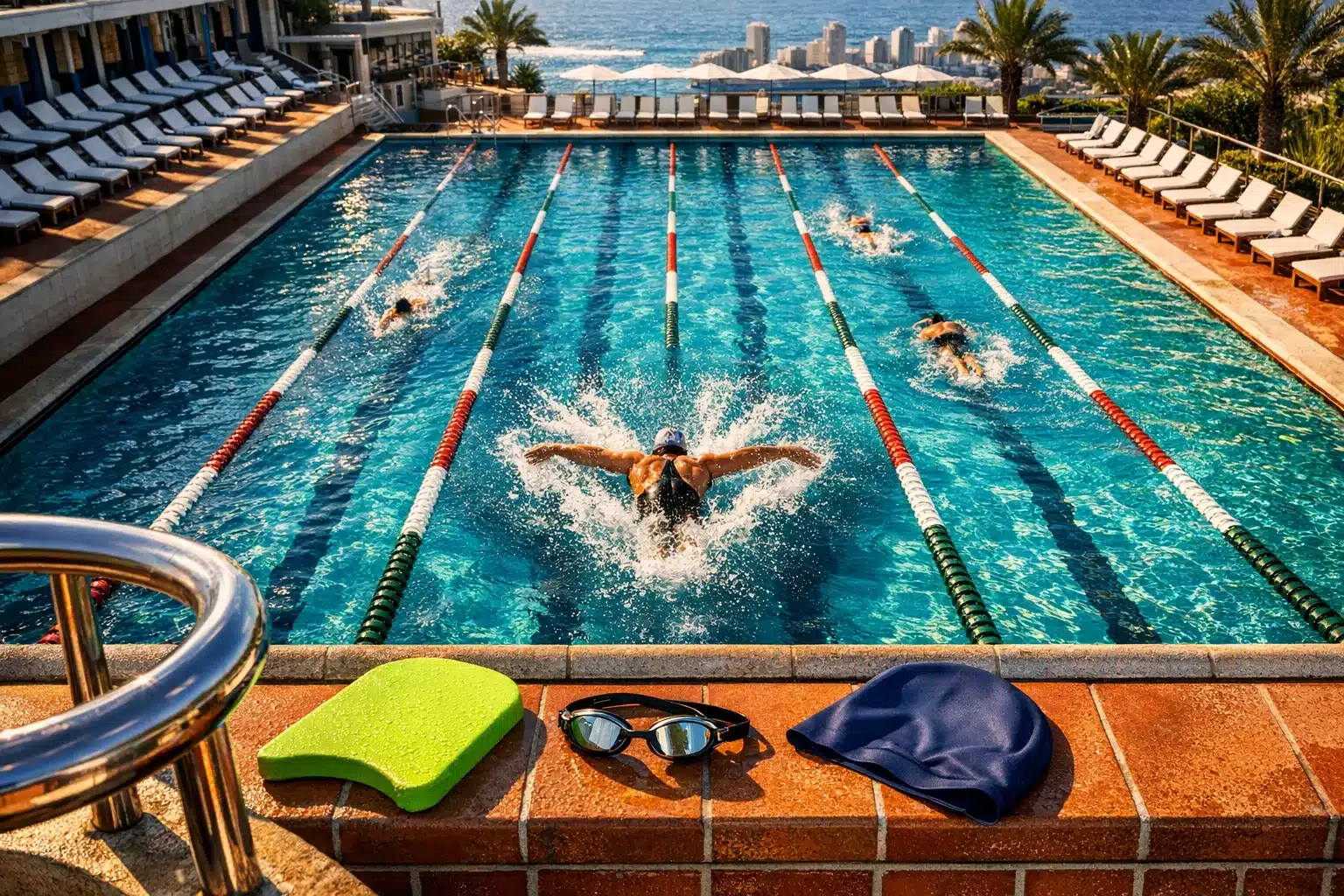
Butterfly is the most demanding of the four. Both arms recover together, the legs deliver a dolphin kick, and the body moves in a wave-like pattern through the water. When performed well, butterfly looks like power shaped into rhythm. When performed poorly, it feels like trying to wrestle the pool. It requires shoulder strength, body coordination, and precise timing, so coaches usually teach it after a swimmer has developed confidence in the other strokes.
A helpful way to compare the strokes is this:
• Freestyle: fastest, efficient, ideal for fitness and distance
• Backstroke: useful for posture, breathing comfort, and shoulder coordination
• Breaststroke: slower, often approachable for beginners, highly technical in timing
• Butterfly: powerful, demanding, and best built gradually with coaching
In races such as the individual medley, swimmers complete all four strokes in sequence, which shows that no single stroke tells the whole story of swimming ability. Real skill lies in adaptability. A strong swimmer learns not only how each stroke works, but why it works, and that understanding can transform awkward splashing into purposeful movement.
Physical and Mental Benefits: What the Water Does Differently
Swimming is often praised as a full-body workout, and that description is deserved, but it still undersells the experience. Water changes exercise in ways that land-based training cannot fully copy. Because water is far denser than air, every stroke meets steady resistance. That means the arms, shoulders, back, core, and legs all contribute as the body moves forward. At the same time, buoyancy reduces impact on joints, which is one reason swimming is widely recommended as a useful option for many people who want aerobic exercise without repeated pounding on knees, hips, or ankles. The result is a rare combination: resistance and relief in the same session.
From a cardiovascular perspective, swimming can help improve endurance, heart efficiency, and breathing control. It can contribute toward the general physical activity recommendations often cited by health organizations, such as 150 minutes of moderate aerobic activity per week for adults. The intensity of swimming can also be adjusted easily. Gentle lane swimming may feel sustainable and rhythmic, while interval training with faster repeats can become highly demanding. Calorie use varies by body size, stroke, and speed, but moderate to vigorous swimming can burn a substantial amount of energy, often in ranges comparable to other common aerobic activities. Freestyle and butterfly usually demand more energy than breaststroke at an easy pace, while drills and kick sets can shift the workload toward particular muscle groups.
The benefits are not only physical. Many swimmers describe the water as mentally clarifying. There is a reason early-morning pools and open-water sessions inspire almost poetic language: the environment narrows attention. Breathing follows a pattern. Noise is muted. The body receives immediate feedback from every action. For some people, that creates a meditative quality. For others, it offers a structured break from screens, traffic, and the constant fragmentation of modern attention. Research on exercise and mental wellbeing consistently suggests that regular physical activity can help support mood and reduce stress, and swimming often fits this pattern well.
Still, balanced discussion matters. Swimming is not perfect for every person in every setting. Some people dislike chlorinated pools, struggle with access to facilities, or feel anxious in deep water. Technique can also be a barrier; inefficient movement makes swimming feel harder than it needs to be. That is why guidance and gradual practice matter so much.
A realistic summary of swimming’s benefits looks like this:
• cardiovascular training with adjustable intensity
• strength and endurance developed through water resistance
• reduced impact compared with many land-based exercises
• coordination, posture, and breathing control
• mental refreshment, routine, and stress relief
In short, swimming stands out because it asks the whole body to cooperate. It is not simply exercise performed in water. It is a different conversation between effort, gravity, resistance, and rhythm, and that conversation can support both health and enjoyment over the long term.
Learning Safely: Training Plans, Pool Etiquette, and Useful Gear
Learning to swim well begins with safety, not speed. Many beginners assume that lessons start with strokes, but the real foundation is comfort in the water: breathing out underwater, floating, rolling from front to back, and understanding how to recover when balance is lost. These skills matter because confidence in water should be built, not imagined. A learner who can float calmly and reach a wall is in a far better position than someone who can imitate a fast arm action for a few seconds and then tire abruptly. Good instruction usually moves in stages, layering security, coordination, and endurance in a logical order.
Pool safety includes more than personal skill. Swimmers should pay attention to depth markings, lane directions, posted rules, and the presence of lifeguards. Running on wet decks, diving into shallow water, or entering a lane without checking traffic can turn a routine session into an avoidable accident. Open-water swimming requires even more caution. Lakes, rivers, and oceans add current, temperature shifts, waves, limited visibility, and distance judgment that pools do not. Even strong pool swimmers can be surprised by cold water or changing conditions outdoors. For that reason, open-water sessions are best approached with preparation, visible gear, local knowledge, and ideally a partner or organized group.
Training wisely also means avoiding the classic beginner mistake of doing too much too soon. Swimming can feel easy on the joints, but the shoulders and lower back still need time to adapt to repeated movement. A sensible starter plan might include:
• two or three short sessions per week
• a mix of drills, easy swimming, and rest intervals
• focus on breathing rhythm and body position before speed
• gradual increases in total distance rather than sudden jumps
Equipment can support learning when used thoughtfully. Goggles improve visibility and help new swimmers relax by removing the sting of pool water from the eyes. A comfortable swimsuit and, when needed, a cap reduce distraction. Kickboards can isolate leg work, while pull buoys help swimmers feel body alignment and upper-body pulling. Fins can make drills more manageable by adding propulsion, though relying on them too heavily may hide technique problems. A center-mounted swim snorkel can be excellent for practicing head position because it removes the need to turn for air during drills.
Pool etiquette deserves attention as well, especially in shared lanes. Faster swimmers generally pass at the wall, circle swimming keeps traffic predictable, and resting at the corners leaves space for turns. These small habits keep sessions orderly and make public facilities more pleasant for everyone.
The smartest training mind-set is patient and observant. In swimming, gains often come from tiny corrections rather than dramatic effort. A cleaner catch, calmer exhale, or steadier kick may save more energy than trying to force speed. The water is honest in that way. It rewards precision, and over time that precision becomes confidence.
Swimming Across a Lifetime: Competition, Community, and Long-Term Enjoyment
One of swimming’s strongest qualities is that it can remain meaningful through nearly every stage of life. A child may begin with splashy lessons and games that quietly teach floating, kicking, and confidence. A teenager might join a school team and learn discipline through sets, pacing, and relay responsibility. An adult may return to the pool after years away, sometimes for fitness, sometimes after injury, and sometimes simply because water offers a kind of calm that crowded gyms do not. Older adults often find that regular swimming helps them stay active with less impact than many other forms of exercise. The same activity changes shape as life changes shape, and that is not a small advantage.
Competitive pathways also vary widely. Some swimmers pursue club racing from a young age, focusing on starts, turns, stroke efficiency, and progressively demanding training volumes. Others enter the sport later through masters swimming, which provides structured practice and community for adults of different abilities. Triathletes use swimming as one part of a larger endurance system, often valuing efficiency and open-water confidence as much as pure speed. There are also recreational swimmers who never enter a race yet still approach the pool with consistency and purpose. Comparing these groups reveals something useful: success in swimming is not a single destination. For one person it may mean a podium finish, for another it may mean completing twenty relaxed laps without stopping.
Swimming can also be inclusive when programs are designed well. Adaptive swimming and para swimming demonstrate how technique, equipment, coaching, and facility planning can open the water to more people. Access, however, remains a real issue in many communities. Pools cost money to build and maintain, lessons may be limited, and not every neighborhood has safe, affordable facilities. When schools, municipalities, and community centers invest in swimming access, the benefits extend beyond sport. They support public safety, physical activity, and social connection.
The social dimension should not be underestimated. For many people, the pool becomes a small but steady community. Familiar faces gather in the early lane slots. Coaches repeat cues that slowly become internal habits. Children cheer at the wall during relays. Open-water groups swap tide reports and weather notes before sunrise. These rituals matter because long-term exercise adherence is often easier when routine is linked to belonging.
If someone wants to keep swimming part of life, a few habits help:
• choose a schedule that fits real life rather than an ideal week
• alternate hard and easy sessions
• keep technique learning ongoing
• use community, lessons, or clubs for accountability
• let goals evolve with age, work, and health
Swimming lasts when it is flexible. Some seasons call for ambition, others for recovery, and others for simple enjoyment. The water does not ask for the same identity forever. It only asks for attention, respect, and the willingness to return.
Conclusion for Beginners, Parents, and Fitness-Focused Readers
Swimming deserves attention from anyone who wants an activity that is practical, adaptable, and genuinely useful beyond exercise alone. For beginners, it offers a skill that can grow from basic water confidence into reliable fitness and lasting enjoyment. For parents, it combines recreation with an important layer of safety education that may matter in unpredictable moments. For adults focused on health, it provides a way to build endurance, coordination, and routine while reducing impact on the body. The best approach is not to chase perfection from the start, but to learn steadily, practice safely, and let technique improve with time. Whether your goal is to feel comfortable in deep water, swim stronger laps, or make the pool part of weekly life, swimming rewards patience with progress that is both visible and deeply felt.