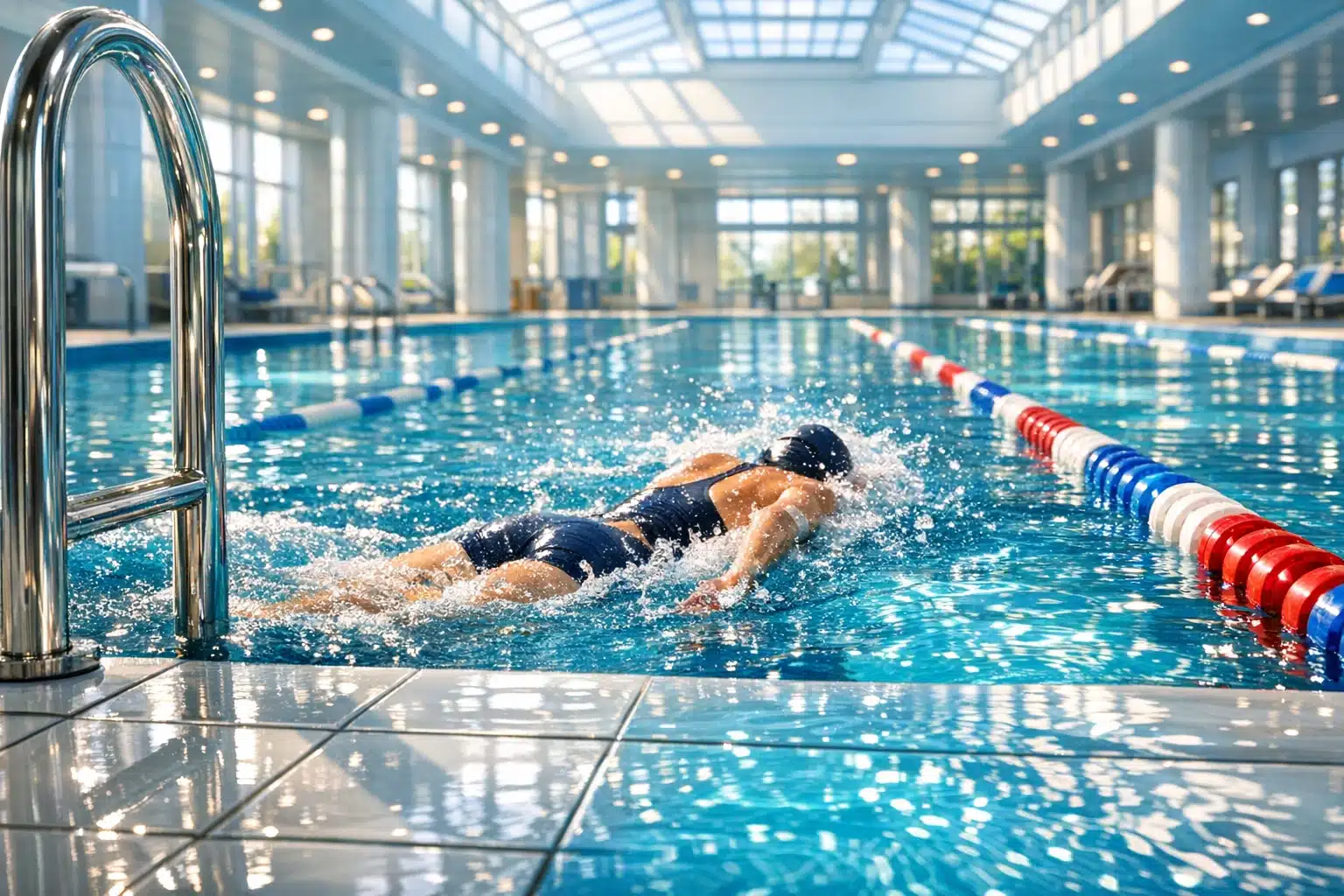
Explore the world of swimming
Swimming is one of those rare activities that feels playful and demanding at the same time, inviting children, adults, athletes, and cautious beginners into the same blue space. It supports fitness, coordination, recovery, and confidence while placing less stress on joints than many land-based exercises. From calm lap lanes to open-water adventures, swimming stays relevant because it combines skill, safety, health, and simple enjoyment in a way few sports can equal.
Outline: This article moves through five connected topics: why swimming matters, how the main strokes work, how training develops speed and endurance, what safety and etiquette require, and how swimming can fit into different stages of life. Think of it as a map before the dive, helping each section build naturally on the one before it.
Why Swimming Matters: Health, History, and Lasting Appeal
Swimming has a timeless quality that few activities can match. Long before it became an organized sport, it was a practical life skill linked to survival, travel, work, and recreation. Over time it evolved into something far richer: a competitive discipline, a fitness tool, a therapy option, and a leisure activity enjoyed across cultures. That wide reach helps explain why swimming still matters today. A child splashing in a lesson, a triathlete chasing efficiency, and an older adult exercising for joint comfort may all share the same pool, yet each person is using the water in a different and meaningful way.
One major reason for swimming’s popularity is the way water changes movement. Buoyancy supports the body, which can make exercise feel more accessible for people who struggle with impact-heavy activities such as running. At the same time, water provides resistance in every direction, so even simple motions demand effort. That combination is unusual: support and challenge arrive together. Public health guidance from organizations such as the World Health Organization encourages adults to accumulate regular moderate or vigorous activity each week, and swimming can contribute effectively to that goal. Depending on pace, body size, and technique, a swim session can improve cardiovascular endurance, muscular stamina, breathing control, and overall energy expenditure.
The benefits are not only physical. Many swimmers describe a distinct mental reset that comes from rhythmic breathing and repeated movement. In a noisy day, the pool can feel like a quieter world where distractions soften and focus sharpens. The mind begins counting laps, noticing timing, and listening to the sound of water folding around the shoulders. That experience can reduce stress for some people and create a sense of progress that is easy to measure.
Swimming also deserves attention as a life skill. Comfort in the water can improve safety, especially in places where beaches, lakes, rivers, or pools are part of everyday life. Learning to float, tread water, and move efficiently is not only about sport; it can be deeply practical. In that sense, swimming is both graceful and grounded, equal parts recreation and resilience.
Understanding the Main Strokes and the Technique Behind Efficient Movement
To an outside observer, swimming may look simple: enter the water, move the arms, kick the legs, and head forward. In practice, technique is everything. Small changes in body position, breathing rhythm, or hand entry can alter speed, comfort, and endurance more than many beginners expect. Efficient swimmers do not fight the water; they learn to travel through it with reduced drag and smarter timing. That is why coaching, drills, and repetition matter so much. Before speed comes shape, and before power comes control.
The four competitive strokes each have a distinct character. Front crawl is usually the fastest and most common for fitness swimming because its alternating arm action and flutter kick create continuous propulsion. Backstroke shares a similar alternating pattern, but body orientation changes everything: swimmers must stay aligned while looking upward, relying on balance and feel rather than a forward gaze. Breaststroke is slower for many people, yet it is often more approachable because the breathing pattern feels intuitive and the stroke can be swum at a comfortable pace. Butterfly is the most physically demanding of the four, requiring timing, coordination, and upper-body strength, but when performed well it looks almost orchestral, with body wave and arm recovery working as one motion.
Several technical themes apply across all strokes:
• Body position matters because hips that drop too low create extra resistance.
• Breathing should support rhythm rather than interrupt it.
• Kicking helps balance and propulsion, but excessive splashing often wastes energy.
• The catch, pull, and finish of each arm movement need control, not just force.
• Streamlining after starts, turns, or wall push-offs can save significant effort over many lengths.
Beginners often improve most by focusing on a few fundamentals instead of trying to master every detail at once. A coach may ask a new swimmer to lengthen the body line, relax the neck, or exhale steadily underwater before addressing more advanced mechanics. Drills such as kickboard work, single-arm swimming, sculling, and catch-up variations isolate one skill at a time. That process can feel slow, but it builds genuine efficiency. In swimming, raw effort without technique is like rowing with one oar: exhausting, uneven, and frustrating. Sound mechanics turn the same energy into smoother progress.
Training for Endurance, Speed, and Steady Improvement
Swimming improvement rarely arrives all at once. It builds through consistency, technical attention, and training that matches a swimmer’s goals. Someone preparing for a local open-water event will train differently from a parent using lap sessions for general fitness, and both will approach the pool differently from a competitive sprinter. Still, strong swim training usually rests on a few shared principles: gradual progression, variety in intensity, feedback on form, and enough recovery to absorb the work.
A balanced swim program often includes aerobic sets, technique drills, faster intervals, and recovery lengths. Aerobic work builds the engine, helping the body sustain effort over time. Faster repeats train pacing, power, and efficiency under pressure. Drill sets sharpen mechanics when fatigue might otherwise hide flaws. Recovery swimming, though less dramatic, is valuable because it reinforces relaxed movement and lets the nervous system reset. Many swimmers also benefit from dryland work outside the pool, especially exercises that support shoulder stability, core strength, mobility, and posture.
Useful training elements often include:
• A warm-up that gradually raises heart rate and loosens the shoulders.
• Technique-focused repetitions early in the session, when concentration is fresh.
• Main sets with clear goals, such as pace control, sprint power, or aerobic endurance.
• Rest intervals that are planned rather than random.
• A cool-down that encourages relaxed movement and breathing control.
Data can help, but it does not need to be intimidating. Swimmers commonly track lap times, stroke count, perceived effort, and rest periods. A beginner may simply note how many lengths feel comfortable without stopping. An experienced swimmer might monitor pace per 100 meters, turn quality, and stroke efficiency. Both approaches are useful because each creates a baseline. Improvement becomes visible when the same distance feels easier, when technique holds together longer, or when rest time shortens without a drop in form.
There is also an emotional side to training. Progress in swimming can be humbling. Some days the water feels slippery and generous; on others it seems to resist every movement. That unevenness is normal. Fatigue, stress, sleep, and confidence all show up in the lane. The key is to treat training as a long conversation rather than a single test. Good swimmers learn patience. They respect small gains, protect their shoulders from overload, and understand that steady practice usually beats dramatic bursts of effort. In a sport measured by seconds, long-term consistency remains one of the strongest advantages.
Safety, Pool Etiquette, and the Different Demands of Open Water
Swimming is enjoyable, challenging, and deeply rewarding, but it should never be separated from safety. Water can be calming, yet it always deserves respect. Basic swimming ability is important, though it is not the only factor that keeps people safe. Supervision, environment, judgment, and preparation all matter. In pools, that may mean understanding lane etiquette and recognizing personal limits. In lakes, rivers, or the sea, it expands to weather, currents, visibility, temperature, and navigation. The same sport changes character dramatically when the bottom disappears and the shoreline feels farther away than expected.
Pool safety begins with habits that seem simple because they are simple. Walk instead of running on wet decks. Pay attention to posted depth markers. Follow lifeguard instructions. Avoid diving where diving is not allowed. Children should be closely supervised near water even if they have had lessons, because familiarity is not the same as full safety. New swimmers are wise to practice floating, treading water, and controlled breathing before chasing speed or distance. Good pools also operate on shared courtesy, and etiquette makes the space smoother for everyone.
Helpful pool and lane habits include:
• Choose a lane that matches your pace rather than your ambition.
• Let faster swimmers pass at the wall.
• Start intervals with awareness so you do not collide with the person ahead.
• Keep equipment organized and out of others’ way.
• Signal politely if you need to share space or change the order of swimmers.
Open water adds another layer of complexity. Temperature can affect breathing and muscle control, especially during cold-water entry. Waves can break rhythm, currents can alter direction, and limited visibility can challenge confidence. Even strong pool swimmers sometimes feel unsettled outdoors because there are fewer visual cues and more variables. That is why open-water swimming should be approached gradually. Swim with others when possible, use visible safety equipment where appropriate, check local conditions, and learn how to sight so you can stay on course. In coastal areas, knowledge of rip currents and local warnings is especially important.
There is a quiet maturity in safe swimming. It means knowing when to push and when to pause, when to finish a set and when to climb out, when excitement is carrying you forward and when caution should take over. Confidence in the water is valuable, but overconfidence is not. The smartest swimmers are often the ones who respect the environment most.
Conclusion: Finding Your Own Lane in Swimming
Swimming meets people where they are, and that may be its most remarkable quality. For some, it begins as a practical lesson in water confidence. For others, it becomes a structured sport shaped by timing clocks, technique sessions, and early-morning discipline. Many simply discover it as a sustainable way to stay active without the repeated impact that can make other forms of exercise difficult. This flexibility is why swimming appeals to such a broad audience. It can be social or solitary, competitive or meditative, technical or playful, intense or restorative.
If you are a beginner, the smartest starting point is not speed but familiarity. Learn to breathe calmly, float comfortably, and move with basic control before worrying about lap counts. If you already swim for fitness, consider refining your stroke mechanics, because efficiency often improves endurance more than pushing harder does. If you are returning after years away, take encouragement from the fact that swimming is often welcoming to gradual progress. The water does not care how long your break was; it responds to what you bring today.
Different readers may take different goals from this article:
• New swimmers may focus on safety, comfort, and simple technique.
• Fitness-minded adults may use swimming to support heart health and joint-friendly exercise.
• Competitive athletes may think more about stroke efficiency, pacing, and structured sets.
• Older adults may appreciate the combination of movement, mobility, and lower impact.
• Families may see swimming as both recreation and an essential life skill.
What ties all of these paths together is the idea that swimming rewards attention. It asks you to notice posture, breath, rhythm, and environment. In return, it offers a form of movement that can stay relevant for decades. That is rare. Not every sport follows you comfortably through so many stages of life.
For the reader standing at the edge, curious but not yet committed, the best advice is wonderfully modest: begin. Take a lesson, visit a local pool, practice one stroke, or spend time learning how to feel at ease in the water. Progress in swimming often starts quietly, then grows into confidence almost without announcement. One length becomes two. A careful session becomes a habit. Before long, the pool that once looked intimidating starts to feel like a place you understand. And that is when swimming becomes more than an activity; it becomes part of how you move through the world.