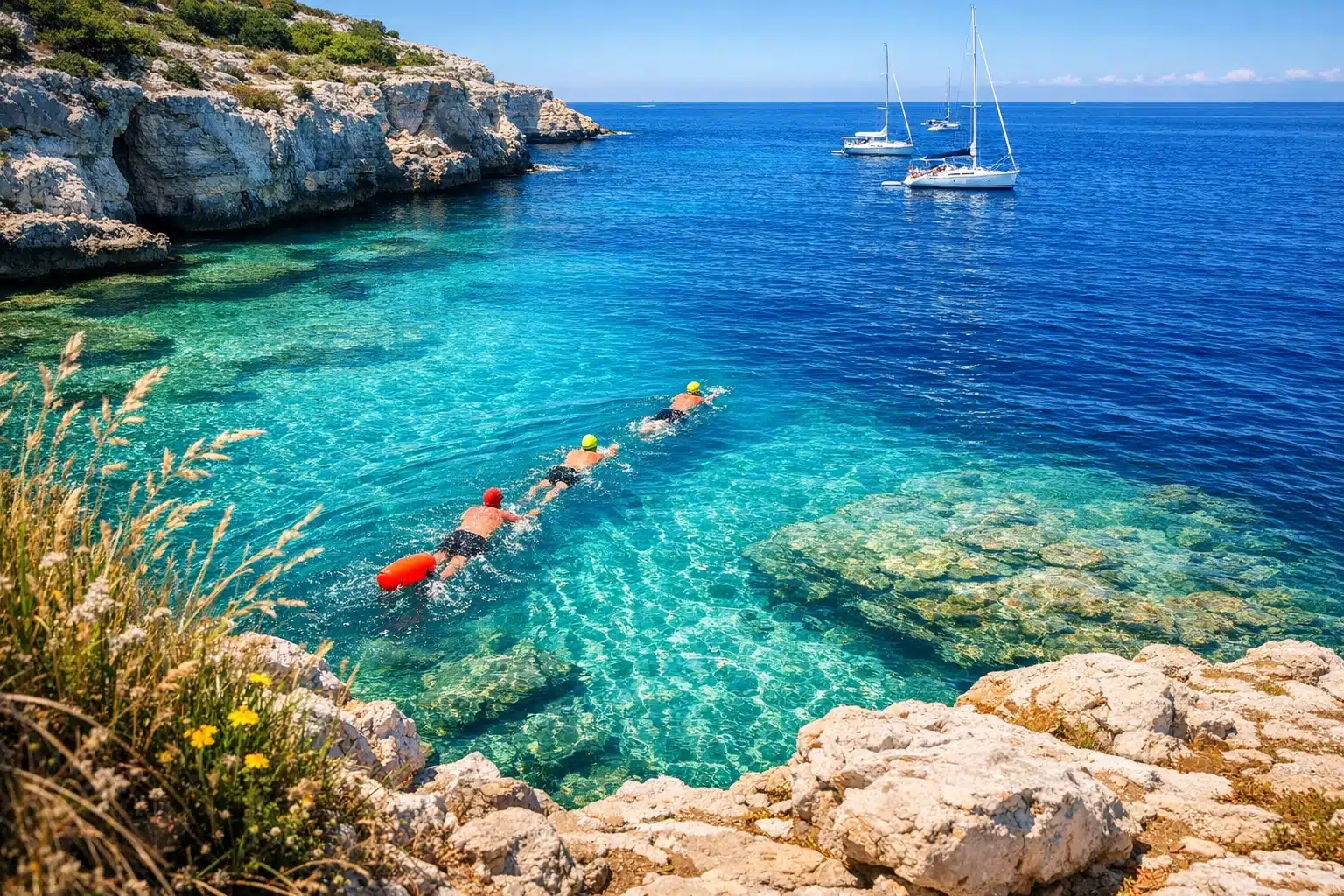
Explore the world of swimming
Swimming is one of those rare activities that looks simple from the deck yet reveals new depth the moment you enter the water. It can be a survival skill, a serious sport, a low-impact workout, and a quiet reset after a noisy day. From children learning to float to adults rebuilding fitness without punishing their joints, its usefulness stretches across ages and goals. That wide relevance makes swimming more than a pastime; it is a practical ability with lasting value.
Outline
• What swimming is, where it fits in daily life, and why water competence matters
• The physical and mental benefits that make it valuable for fitness, recovery, and stress relief
• A comparison of the main strokes, with notes on technique, speed, and effort
• Training, safety habits, and beginner progressions for pools and open water
• The role of swimming in modern culture, competition, recreation, and lifelong well-being
Swimming as a Life Skill, Sport, and Everyday Practice
Swimming is often introduced as a sport, but that description is only the surface ripple. At its core, swimming is a practical form of movement through water, and that makes it different from many other activities people learn for exercise alone. A person may swim to compete, to relax, to recover from injury, or simply to feel safe near water. That range matters. According to the World Health Organization, drowning remains a major public health issue worldwide, which means basic water competence is not just useful; in many settings, it can be life-protecting.
Historically, swimming has traveled through cultures in very different ways. Ancient art from civilizations such as Egypt shows people moving through water, while organized competitive swimming grew more formal in the nineteenth century, especially in Europe. Today, swimming appears in schools, public health programs, military training, rehabilitation clinics, and elite international sport. That broad footprint explains why it feels familiar almost everywhere, even though access and confidence levels vary sharply from one community to another.
A helpful way to understand swimming is to compare its three common roles:
• As a life skill, it teaches floating, breathing control, and safe movement in water
• As exercise, it develops endurance, coordination, and strength with relatively low joint impact
• As sport, it rewards technique, pacing, discipline, and tactical racing decisions
Swimming also changes character depending on the setting. A pool is controlled, measured, and structured. Lanes create order, distances are clear, and training data is easy to track. Standard competitive pools are typically 25 or 50 meters long, which allows swimmers to plan sets with precision. Open water, by contrast, is less predictable. Lakes, rivers, and oceans introduce currents, temperature shifts, visibility issues, and navigation demands. One environment is like practicing music in a studio; the other is performing outdoors with the weather adding its own instrument.
For many people, the appeal of swimming comes from that blend of utility and feeling. You are not just exercising; you are learning how to cooperate with a different physical world. Water resists every movement, supports body weight, and punishes tension while rewarding rhythm. Even a short swim teaches something about posture, breathing, and patience. That is why swimming belongs not only in sports conversations, but also in discussions about education, safety, public health, and quality of life.
The Physical and Mental Benefits of Swimming
Swimming is widely praised as a full-body workout, and that reputation is deserved. Unlike activities that load one area more heavily than others, swimming asks the arms, shoulders, back, core, hips, and legs to cooperate continuously. Water is far denser than air, so every stroke creates resistance. The result is a form of exercise that combines cardiovascular effort with muscular work at the same time. A moderate lap session can raise heart rate, challenge the lungs, and build endurance, while harder intervals can push athletic conditioning much further.
One reason swimming stands out is buoyancy. In water, the body is partially supported, which reduces impact on joints compared with many land-based workouts. That makes swimming especially attractive for older adults, people returning from injury, individuals with higher body weight, or anyone who wants demanding exercise without the pounding that often comes with running. This does not mean swimming is easy. It simply means the stress is distributed differently. Muscles still work, fatigue still arrives, and technique still matters, but the body often tolerates the training load more comfortably.
Compared with cycling or jogging, swimming introduces another challenge: breathing cannot happen whenever you want. The swimmer has to coordinate inhaling and exhaling with body position and stroke timing. That rhythmic breathing turns each length into a mild lesson in self-control. Many swimmers find this mentally calming. The mind narrows its focus to bubbles, turns, arm recovery, and the sound of water sliding past the ears. For some, that feeling is almost meditative; for others, it is the rare kind of exercise that quiets mental clutter without requiring stillness.
Health benefits often associated with regular swimming include:
• Improved cardiovascular endurance
• Better muscular endurance and posture
• Greater shoulder, ankle, and hip mobility when technique is sound
• Support for weight management, since sessions can burn several hundred calories depending on pace, stroke, and body size
• Reduced stress and a stronger sense of well-being through repetitive movement and steady breathing
There are practical nuances worth noting. Chlorinated pools can irritate some swimmers, especially those sensitive to chemicals, and poor technique can overload the shoulders or neck. Swimming is helpful, but it is not magical. It works best when paired with good instruction, recovery, and realistic expectations. Still, the combination is hard to ignore: challenge without heavy impact, fitness without monotony, and effort wrapped inside the strangely soothing feel of water. That is a rare package, and it helps explain why people keep returning to the pool long after novelty fades.
Understanding the Main Strokes and How They Compare
If swimming were a language, the main strokes would be its dialects. Each one solves the same basic problem, moving efficiently through water, but each does so with a different rhythm, body position, and energy cost. Learning the differences helps beginners choose where to start and gives more experienced swimmers a clearer view of why one stroke feels smooth while another feels like wrestling a wave.
Freestyle, usually swum as the front crawl, is the fastest and most common stroke in fitness and competition. The body stays long and mostly horizontal, the legs use a flutter kick, and the arms alternate in a continuous pulling motion. Because the stroke is efficient at speed, it dominates racing events and lap training. Its downside for beginners is breathing. Turning the head at the wrong time can disrupt balance, and many new swimmers discover that freestyle feels less like gliding and more like trying to organize chaos. Once timing improves, though, it often becomes the most economical stroke over distance.
Backstroke flips the body onto the back and allows the face to stay above water. That feature makes breathing easier for many learners, although keeping a straight line can be tricky because the swimmer cannot see where they are going. Backstroke encourages body rotation, shoulder mobility, and balance, and it offers a useful contrast to the face-down position of freestyle. In training programs, it often serves as both a technical challenge and a partial reset.
Breaststroke is sometimes seen as the most approachable stroke because swimmers can lift the head forward more naturally. In reality, it is technically detailed. The kick has a whip-like pattern, the pull is shorter than many people expect, and timing is everything. A mistimed breaststroke can feel slow and tiring, but a well-timed one is economical and controlled. It is often favored in recreational settings because the pace can be moderate and sighting is easy.
Butterfly is the most physically demanding of the four competitive strokes. Both arms recover together, the body moves in a wave-like undulation, and the kick comes from a coordinated dolphin motion. It is beautiful when done well and punishing when done poorly. Even trained swimmers respect butterfly because it exposes flaws in timing, core control, and endurance very quickly.
A simple comparison looks like this:
• Freestyle: fastest, efficient, excellent for fitness and racing
• Backstroke: strong for balance and breathing comfort, but harder to steer
• Breaststroke: controlled and popular recreationally, though highly technical
• Butterfly: powerful and dramatic, with the greatest energy demand
Good swimmers do not just choose a favorite stroke; they understand what each one teaches. Freestyle sharpens efficiency, backstroke improves alignment, breaststroke develops timing, and butterfly demands coordination and strength. Together, they turn swimming from simple movement into a craft. The clock may measure speed, but the water always notices technique first.
How to Learn, Train, and Stay Safe in the Water
Swimming rewards patience more than bravado. People often expect quick results because the movements look smooth when experts perform them, but learning to swim well usually happens in layers. First comes comfort in the water. Then breathing control. Then floating, kicking, body position, and finally stroke mechanics that can hold together for more than a few meters. The smartest path is not glamorous, but it works: master the basics, add distance slowly, and let confidence grow from repetition rather than guesswork.
For beginners, lessons are usually the best starting point. A good instructor does more than demonstrate arm motions. They help swimmers understand why the body sinks, how exhalation works underwater, and what relaxed movement actually feels like. Many adults skip instruction because they do not want to look inexperienced. That is understandable, but it often slows progress. In swimming, small technical adjustments can change everything. A calmer exhale, a slightly better head position, or a gentler kick can turn panic into rhythm.
A practical beginner session might include:
• 5 to 10 minutes of easy warm-up and water comfort drills
• Floating practice on front and back
• Short kicking sets with or without a kickboard
• Breathing drills, such as exhaling bubbles steadily underwater
• Brief stroke repeats with long rest intervals
• A cool-down to leave the water feeling better, not defeated
As training advances, structure becomes more important. Many swimmers organize sessions around technique, endurance, speed, and recovery. Distance swimmers often focus on pacing and efficiency, while sprinters train explosive power, starts, and turns. Triathletes may use pool sessions to improve economy before taking skills into open water. Masters swimmers, recreational athletes, and club swimmers all adapt the same principle: have a purpose for each session. Endless, mindless lengths can build fatigue without building skill.
Safety deserves equal attention. In pools, common rules such as lane awareness, no diving in shallow areas, and following lifeguard instructions are basic but important. Open water requires another level of care. Conditions can change quickly, and confidence in a pool does not automatically translate to a lake or sea. Smart open-water habits include:
• Swimming with a partner or organized group
• Checking currents, weather, and water temperature
• Wearing a bright cap for visibility
• Using a tow float where appropriate
• Entering gradually and respecting local warnings
Equipment can help, but it should not replace skill. Goggles improve visibility, caps reduce drag and keep hair contained, and training tools like pull buoys or fins can isolate parts of technique. Yet the real foundation remains simple: breathing, balance, awareness, and sound decision-making. Swimming is joyful partly because it feels freeing, but freedom in water is built on preparation. The more respect a swimmer brings to the environment, the more confidently they can enjoy it.
Swimming in Modern Life: Recreation, Competition, and Lifelong Value
Swimming occupies an unusual place in modern life because it can be intensely personal and deeply social at the same time. One person may swim alone before sunrise for mental clarity, counting strokes while the building is still half asleep. Another may join a noisy club session where teammates chase split times and trade tips at the wall. A third may only swim on holidays, drifting through a hotel pool with no stopwatch in sight. All three are participating in the same broad world, which is part of what makes swimming so durable.
At the competitive end, swimming is a highly technical sport shaped by fractions of a second. Starts, turns, underwater phases, pacing strategy, and stroke efficiency all matter. Race analysis can be remarkably detailed, especially at elite levels where a cleaner breakout or better final 15 meters may decide the outcome. Yet swimming is not reserved for prodigies. Age-group programs, school teams, university competition, masters clubs, para swimming, and community meets create entry points for many kinds of athletes. The sport has room for ambition, but it also has room for gradual improvement and late beginnings.
Outside competition, swimming plays a strong role in recreation and health. It supports rehabilitation, family leisure, vacation culture, and year-round fitness. Aqua exercise classes, therapy pools, and gentle lap sessions all show how adaptable the activity can be. For some people, swimming is the exercise they can continue when other forms become uncomfortable. For others, it is the first movement practice that feels welcoming rather than punishing. Water has a way of making effort feel less confrontational.
Modern conversations about swimming also include access and inclusion. Not every community has safe pools, affordable lessons, or nearby open-water spaces. Historical inequality, cost, transport barriers, and lack of representation can all shape who feels at home in aquatic environments. Expanding swim education, maintaining public facilities, and supporting inclusive coaching are not side issues; they are central to making swimming a truly shared skill.
There is also an environmental dimension. Pools require water, energy, and maintenance, while open-water swimming depends on clean, protected natural environments. Water quality, pollution, and sustainable facility design matter more than ever. Enjoying swimming responsibly means recognizing that access to safe water is both a personal privilege and a public responsibility.
In the end, swimming remains valuable because it changes with the swimmer. It can begin as a lesson in floating, become a weekly fitness habit, grow into a competitive pursuit, and later return as a gentle lifelong practice. Few activities travel so well across decades. The same lane can welcome a nervous beginner, a seasoned racer, and a retired athlete rediscovering movement. That quiet inclusiveness is one of swimming’s finest strengths.
Conclusion for New and Returning Swimmers
If you are curious about swimming, the best takeaway is simple: it is worth learning well, not just trying once. It offers a rare mix of safety, fitness, discipline, and enjoyment, and it can meet you at almost any starting point. You do not need elite speed, expensive gear, or perfect technique to benefit from it. Begin with comfort in the water, build skill step by step, and let consistency do the heavy lifting. Over time, swimming can become more than exercise; it can become a dependable part of how you stay healthy, capable, and calm.