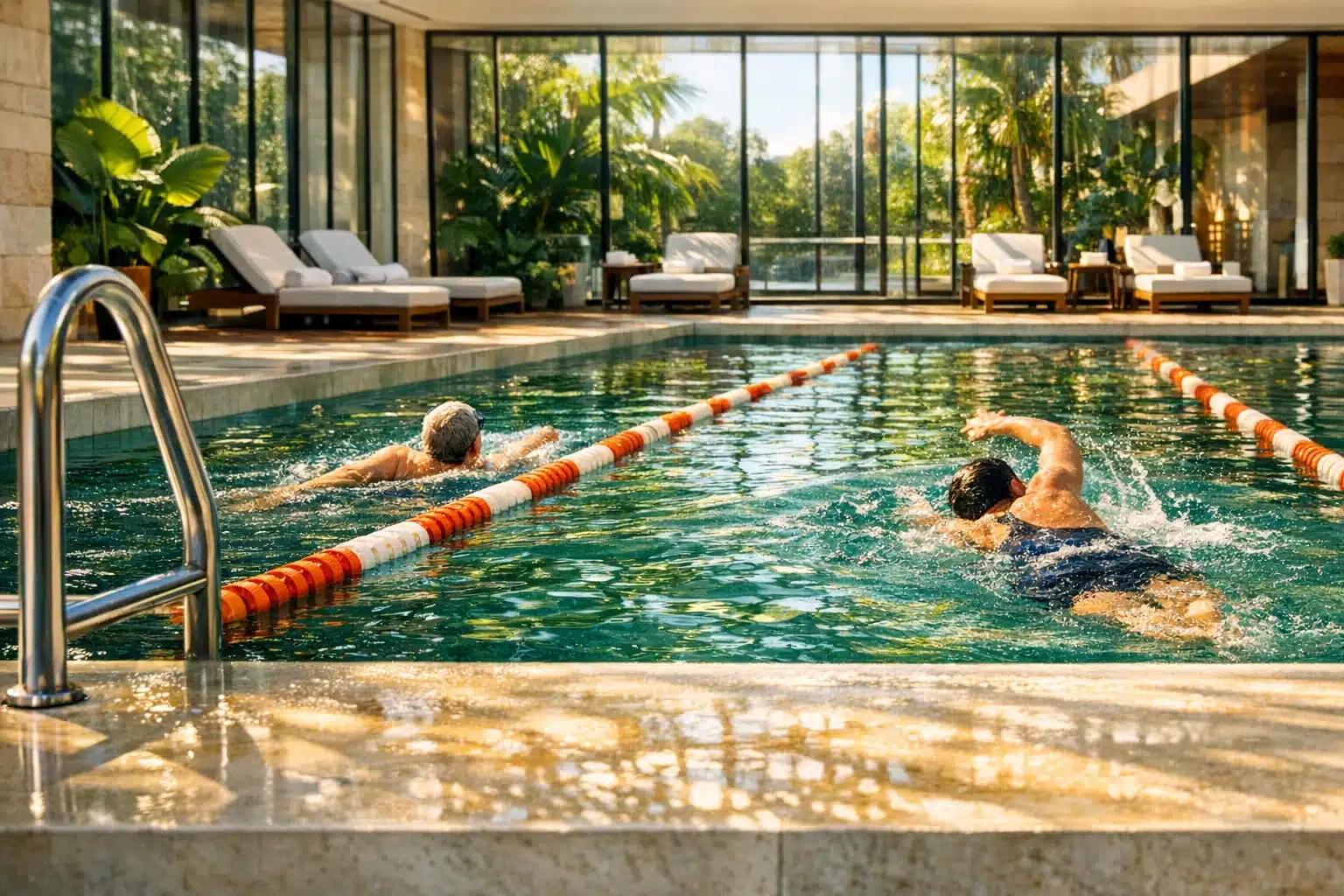
Explore the world of swimming
Swimming is one of those rare activities that feels playful and serious at the same time, offering exercise, skill, and a direct relationship with water. It matters because it supports fitness, teaches safety, opens the door to competition, and gives people of many ages a form of movement that is gentle on the joints. From quiet lap lanes to open-water adventures, the subject reaches far beyond sport. This article maps the basics, benefits, techniques, risks, and lifelong appeal of swimming.
This article follows a simple outline before diving into the details.
- The role of swimming in sport, culture, and everyday life
- The physical and mental benefits that make it uniquely valuable
- The core techniques behind the main strokes and better efficiency
- Safety, training environments, and useful equipment choices
- Practical ways different readers can build swimming into their lives
Swimming as a Life Skill, Sport, and Cultural Practice
Swimming is often introduced as a sport, yet it is more accurately described as a life skill wrapped in athletic clothing. Unlike activities that take place only on a field or in a gym, swimming sits at the intersection of recreation, health, survival, and competition. A person may learn it to stay safe on holiday, to train for a triathlon, to recover after injury, or simply to enjoy the calming rhythm of moving through water. That wide relevance helps explain why swimming has held a strong place in schools, community programs, military training, and global sport for generations.
Historically, swimming has appeared in practical and ceremonial forms across many societies. Over time, it evolved from a useful survival ability into organized competition with standardized strokes, timed races, and formal coaching methods. Modern swimming now spans several worlds at once. In one lane, an elite athlete may be counting splits down to fractions of a second. In another, a beginner may be learning how to float without fear. Both experiences matter, and both belong to the same discipline.
What makes swimming especially relevant today is its broad accessibility in purpose, even if access to facilities can vary by region. A pool can support school lessons, rehabilitation sessions, family recreation, and competitive training in the same week. Open water adds another dimension, inviting swimmers into lakes, rivers, and the sea, where nature becomes part of the challenge. The water can feel welcoming one minute and demanding the next, which is exactly why knowledge and respect are so important.
Swimming also crosses age boundaries with unusual ease. Children often begin with basic water confidence. Teenagers may discover competition or lifesaving training. Adults use it for fitness, stress relief, or cross-training. Older swimmers frequently appreciate its lower-impact nature compared with land-based exercise. Few activities remain so useful across such different stages of life.
Several features explain this lasting appeal:
- It teaches a practical safety skill that may one day prove critical.
- It can be recreational, competitive, therapeutic, or social.
- It offers structured progression, from floating and kicking to advanced endurance and speed work.
- It is adaptable for people with different fitness levels and movement needs.
In short, swimming is not just about moving from one end of the pool to the other. It is about confidence, coordination, discipline, and comfort in an environment that behaves differently from land. The moment a swimmer learns to trust the water, the subject becomes larger than exercise. It becomes a way of inhabiting a space that once seemed unfamiliar, and that shift is powerful.
Health and Fitness Benefits: Why Swimming Feels Different from Other Exercise
Swimming has long been valued for its health benefits, but what makes it distinctive is how many systems of the body it engages at once. It challenges the heart and lungs, recruits major muscle groups, develops coordination, and does so while the body is supported by water. That support reduces impact forces on the joints, which is one reason swimming is often recommended as an option for people who want demanding exercise without the repeated pounding associated with some land-based activities.
From a cardiovascular perspective, swimming can improve endurance when practiced regularly and progressively. A steady set of laps asks the body to transport oxygen efficiently while maintaining rhythm over time. Unlike a casual walk, even moderate swimming requires the arms, legs, and core to work together under resistance. Water is denser than air, so every stroke pushes against a substantial medium. That resistance helps build muscular endurance, especially in the shoulders, back, chest, hips, and legs.
There is also an important comparison to make with other common exercises. Running often delivers strong cardiovascular gains, but it may be uncomfortable for some people with knee or hip issues. Cycling can be excellent for endurance, yet it does not involve the upper body to the same extent. Swimming occupies a useful middle ground. It offers whole-body work while reducing impact. That does not mean it is automatically easy. In fact, beginners are often surprised by how quickly poor breathing or inefficient technique can raise fatigue. Water has no patience for wasted movement.
Mental benefits deserve equal attention. Many swimmers describe the pool as a place where noise drops away. Repetitive strokes, controlled breathing, and the muffled acoustics of water can create a focused, meditative state. For some, an early morning swim clears the mind better than coffee. For others, it acts as a reset after work, replacing mental clutter with a simple pattern: reach, pull, kick, breathe. This routine can support stress management, mood, and concentration, especially when paired with consistent practice.
Swimming can also support rehabilitation and lifelong movement. Because buoyancy reduces weight-bearing stress, many people recovering from injury use aquatic exercise as part of a broader plan under professional guidance. Older adults may find that swimming lets them stay active with less discomfort. Children benefit from coordination and body awareness. Competitive athletes in other sports use it for cross-training and recovery.
Its benefits can be summarized in several clear areas:
- Cardiovascular conditioning through sustained rhythmic effort
- Strength and muscular endurance from moving against water resistance
- Lower impact on joints compared with many land-based activities
- Breathing control and body coordination developed through technique
- Stress relief and mental focus supported by repetitive movement and immersion
If exercise on land sometimes feels like negotiation with gravity, swimming changes the conversation. The body still works hard, but the water distributes that effort differently. The result is a form of training that can be demanding, restorative, and surprisingly elegant all at once.
Technique and the Four Main Strokes: Learning to Move Efficiently
Good swimming technique is not just about looking polished. It is the difference between gliding through the water with control and fighting the pool one splash at a time. Beginners often assume strength is the main ingredient, yet experienced coaches usually point to position, balance, timing, and breathing first. In swimming, efficiency matters because water quickly punishes extra drag. A dropped elbow, a rushed inhale, or a poorly timed kick can make a short distance feel oddly exhausting.
The foundation of technique begins with body position. Swimmers aim to stay long in the water, keeping the body relatively horizontal and streamlined. When the hips sink or the head lifts too high, resistance increases. Breathing must fit into that line rather than disrupt it. This is one reason new swimmers often improve dramatically once they stop trying to muscle their way forward and start learning how to align the body.
Freestyle, also called front crawl, is the fastest and most commonly used stroke in fitness swimming and racing. It relies on alternating arm recovery, a flutter kick, and side breathing. Efficient freestyle depends on rotation through the torso, not just windmilling the arms. Backstroke shares some structural similarities with freestyle but is performed on the back, making breathing easier for many learners. However, because the face points upward, backstroke demands strong body awareness and straight-line control.
Breaststroke is often seen as approachable because the head can rise more naturally for air, but it has its own technical complexity. The timing of the pull, breath, kick, and glide must work together. A rushed breaststroke wastes energy and loses momentum. Butterfly, the most physically demanding of the four competitive strokes, combines simultaneous arm action with a dolphin kick and wave-like body motion. It looks powerful when done well, yet it can feel punishing when timing is off. For many swimmers, butterfly is less about brute force than about rhythm and coordination.
Improvement usually comes from drills and focused repetition rather than endless untargeted laps. Common training ideas include:
- Kick sets to build leg engagement and streamline awareness
- Pull sets to isolate arm mechanics and body rotation
- Breathing drills to reduce panic and improve timing
- Single-arm work to expose imbalances in stroke pattern
- Sculling drills to improve feel for the water
Technique errors are normal and highly individual. Some swimmers overkick and tire early. Others cross the center line with the hands, which disrupts balance. Many hold tension in the neck and shoulders. Video analysis, coaching feedback, and patient repetition can help correct these habits over time.
The beauty of stroke learning is that it rewards attention. A swimmer may feel stuck for weeks, then suddenly one change clicks and the water feels different, smoother, almost cooperative. That moment is memorable because it reveals a core truth: swimming is not just about effort. It is about learning how to convert effort into clean, economical motion.
Safety, Training Environments, and Equipment That Actually Matters
Because swimming takes place in water, safety is never a side topic. It belongs at the center of the conversation, whether the setting is a shallow teaching pool, a crowded beach, or a cold open-water course. Competence in the water reduces risk, but confidence without judgment can create trouble. A strong swimmer in a pool may still struggle in waves, currents, or low-visibility conditions. For that reason, safety education should grow alongside technique and fitness rather than wait until later.
Pools offer the most controlled environment for learning and training. Distances are marked, water quality is managed, lifeguards are often present, and temperature is usually regulated. Many standard lap pools are 25 meters or yards long, while competition pools are often 50 meters. That consistency makes pools ideal for structured workouts and skill development. They also allow swimmers to track progress with more precision, whether measuring intervals, stroke counts, or split times.
Open water introduces freedom and unpredictability in equal measure. Lakes, rivers, and oceans can feel exhilarating because there is no lane rope, black line, or tiled wall to follow. At the same time, variables multiply. Weather changes, visibility shifts, currents pull, and water temperature can affect performance and safety. Open-water swimmers often need sighting skills to stay on course, along with knowledge of local conditions and emergency planning. Swimming with a partner or organized group is a wise standard rather than an optional extra.
Key safety habits include:
- Learning basic floating, treading water, and controlled breathing
- Respecting depth markers, local rules, and weather conditions
- Never overestimating ability, especially in unfamiliar water
- Using supervision and lifeguarded areas when available
- Knowing that fatigue, cold, and panic can change a situation quickly
Equipment matters too, although far less than marketing sometimes suggests. A well-fitting swimsuit and comfortable pair of goggles are the essentials for most pool swimmers. A swim cap can keep hair contained and reduce drag slightly. Kickboards, pull buoys, fins, paddles, and snorkels are training tools rather than necessities; each has a purpose when used correctly. For open water, visibility becomes important, so brightly colored caps and tow floats are common safety choices. In colder conditions, wetsuits may help with warmth and buoyancy where rules permit.
Hygiene and etiquette deserve a brief mention as well. Showering before entering the pool, following lane directions, and allowing faster swimmers to pass help create a better environment for everyone. Swimming may feel solitary once your face is in the water, but the space is shared.
At its best, good safety practice is not fearful. It is calm, informed, and routine. The strongest swimmers are rarely the most careless. They are usually the ones who understand that water is enjoyable precisely because it is treated with respect.
Conclusion: How Different Readers Can Make Swimming Part of Everyday Life
For readers wondering where swimming fits into their own lives, the encouraging answer is that it can fit in many ways. A beginner does not need a racer’s mindset. A parent does not need expert knowledge to recognize the value of swim lessons. An adult returning to exercise does not need fast times to benefit from steady laps. Swimming adapts well because its entry points are varied. One person may start with water confidence, another with gentle rehabilitation, and another with interval training after years away from sport.
If you are completely new, start small and start correctly. A short session focused on breathing, floating, and basic movement is more valuable than forcing a long workout with poor form. Lessons can accelerate progress because early feedback prevents stubborn habits from taking hold. If you already know the basics, structure helps. Rather than swimming aimlessly, set a simple purpose for each session. You might choose endurance, technique, recovery, or speed. Even a modest plan makes improvement easier to notice.
Useful approaches for different readers include:
- Beginners: prioritize comfort in the water, breath control, and simple drills
- Fitness swimmers: combine easy laps with intervals and technique sets
- Parents: treat swim education as both a confidence builder and a safety investment
- Older adults: use swimming or water exercise as a lower-impact way to stay active
- Competitive athletes: track pace, turns, stroke efficiency, and recovery carefully
Motivation also becomes easier when swimming is connected to a realistic goal. That goal might be completing ten relaxed lengths without stopping, joining a local masters group, or feeling confident during a beach holiday. Progress in swimming can be subtle at first. You may notice less breathlessness, cleaner turns, steadier pacing, or a calmer mind before you notice major speed gains. Those changes count. In many cases, they matter more than the stopwatch.
What makes swimming worth exploring is not only the list of benefits, but the experience itself. Water changes movement, sound, and effort. It asks for patience, rewards precision, and offers a kind of quiet that many forms of exercise cannot match. For some readers, that will mean serious training. For others, it will mean a healthier weekly routine or the relief of finally feeling at ease in deep water.
The world of swimming is broad enough to welcome all of those reasons. If you approach it with curiosity, respect, and consistency, it can become more than a workout. It can become a practical skill, a reliable form of exercise, and a lasting source of confidence that follows you far beyond the pool deck.