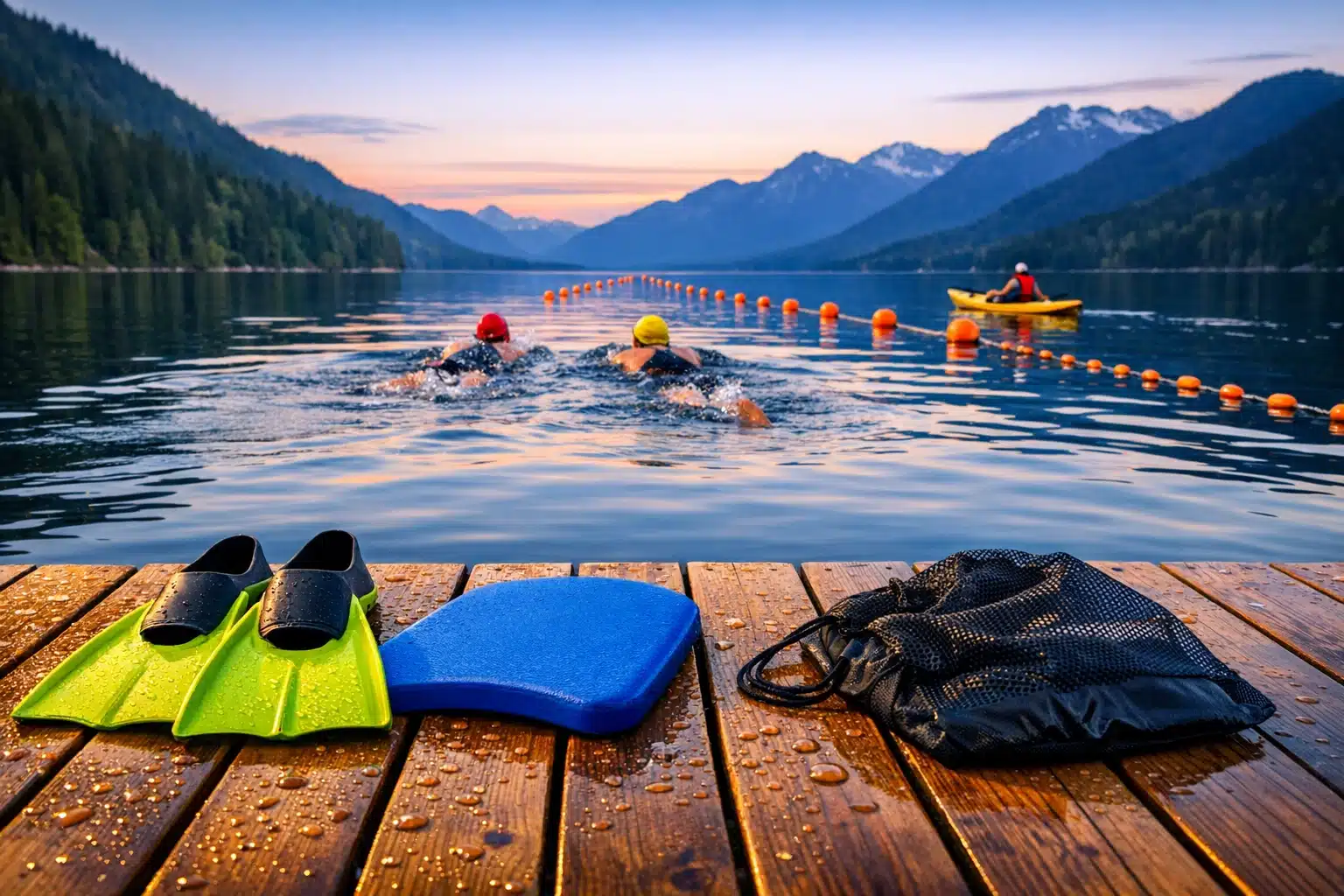
Explore the world of swimming
Step beside a calm pool and the surface seems almost quiet enough to hide its challenge. The moment you slip in, swimming asks for coordination, breath control, patience, and trust in your own body. That mix is exactly why it matters: it can improve fitness, build confidence, and teach practical safety in a setting that feels both demanding and restorative. Before diving into training tips and stroke mechanics, it helps to see the bigger map of what swimming offers.
Article Outline
- The importance of swimming as both a sport and a life skill
- The main strokes, their mechanics, and how they compare
- How swimmers train, improve endurance, and build efficient habits
- Safety, equipment, and the differences between pools and open water
- Why swimming remains valuable for different ages, goals, and lifestyles
Swimming as a Life Skill and a Full-Body Form of Exercise
Swimming occupies a rare place in human activity because it is useful, physically demanding, and widely accessible at the same time. Many sports are excellent for fitness, but few double as a direct safety skill. Learning to move through water with control can reduce fear, increase confidence, and help people respond more calmly around pools, lakes, rivers, and coastlines. Public health organizations regularly promote water competency for this reason: being comfortable in water is not only recreational, it is practical.
From a fitness perspective, swimming is often praised because it challenges the body without the repeated impact associated with activities such as road running. Water supports body weight through buoyancy, which means the joints usually experience less pounding while the muscles still have to work. At the same time, water creates constant resistance. It is far denser than air, so every stroke, kick, and change in position requires effort. That combination makes swimming unusual: it can feel gentle on the body while still being seriously demanding on the heart, lungs, and muscles.
Another reason swimming remains relevant is that it engages the entire body in a coordinated way. The shoulders pull, the core stabilizes, the hips rotate, the legs drive rhythm, and breathing must fit the motion rather than interrupt it. A beginner may notice this immediately after only a few lengths: swimming punishes wasted movement and rewards control. In that sense, the pool acts like an honest teacher. If technique is inefficient, fatigue arrives early. If technique improves, the water begins to feel less like resistance and more like partnership.
- It supports cardiovascular fitness through sustained rhythmic effort.
- It develops muscular endurance in the upper body, core, and legs.
- It can suit many age groups, including older adults and people returning to exercise.
- It teaches breath timing, body awareness, and movement efficiency.
Swimming also compares well with other common exercise options. Cycling is low impact but depends on equipment and road or studio access. Walking is easy to start but may not challenge the whole body as much. Strength training builds power effectively, yet it does not automatically improve breath control or water safety. Swimming, by contrast, blends conditioning, coordination, and skill development in one session. For adults trying to meet general exercise recommendations such as 150 minutes of moderate activity per week, swimming can be a practical and varied way to contribute toward that goal.
Perhaps most importantly, swimming offers a form of effort that feels different from land-based exercise. Sound softens, movement smooths out, and even hard work arrives with a strange calm. That is part of its enduring appeal. In water, exertion and quiet can exist side by side.
The Four Main Strokes and What They Teach a Swimmer
To understand swimming more deeply, it helps to look at the main strokes not as isolated techniques but as different answers to the same question: how can a human body move efficiently through water? The four competitive strokes, freestyle, backstroke, breaststroke, and butterfly, each solve that question in distinct ways. Together they reveal how body position, timing, breathing, and propulsion shape performance.
Freestyle, often swum using the front crawl, is the fastest and most commonly learned stroke. It relies on a streamlined body line, alternating arm recovery, steady kicking, and rotational movement through the hips and shoulders. One of its defining features is side breathing. New swimmers often try to lift the head forward for air, but that choice causes the hips and legs to drop, which creates drag. Efficient freestyle teaches a useful principle that applies across swimming: balance in the water matters as much as strength. A strong pull helps, but a stable body position helps first.
Backstroke uses a similar alternating arm pattern but changes the swimmer’s orientation entirely. Because the face stays above water, breathing is less restrictive, which makes backstroke appealing to people who struggle with breath timing. However, it introduces different challenges. Swimmers must maintain alignment without the visual cues available in freestyle, and the shoulder rotation must remain controlled to avoid a flat, sinking position. Backstroke often reveals how well a swimmer understands posture and core stability.
Breaststroke is slower but more technical than many beginners expect. Its timing is very specific: pull, breathe, kick, and glide. When done well, it has a smooth, almost ceremonial rhythm. When done poorly, it becomes tiring and inefficient. Because the kick is unique and propulsion happens in short surges rather than a continuous churn, breaststroke rewards patience. It is often compared with freestyle as a “resting” stroke, but that can be misleading. For many swimmers, a proper breaststroke set is demanding because the mechanics are precise and the kick requires flexibility and coordination.
Butterfly is usually seen as the most difficult stroke, and that reputation is well earned. It requires simultaneous arm action, a dolphin kick, strong core engagement, and carefully timed breathing. Yet butterfly is not simply freestyle made harder. It is a rhythm stroke. Swimmers who fight the timing exhaust themselves quickly, while swimmers who learn the wave-like flow can make it look unexpectedly smooth. Watching a skilled butterfly swimmer is like watching someone turn effort into timing.
- Freestyle emphasizes speed, rotation, and efficient breathing.
- Backstroke highlights alignment, shoulder control, and balance.
- Breaststroke teaches timing, glide, and technical precision.
- Butterfly develops rhythm, power, and full-body coordination.
Across all strokes, the same fundamentals keep returning: streamline the body, reduce drag, breathe with purpose, and move with intention. That is why learning multiple strokes improves overall swimming, even for people who mostly train one. Each stroke exposes a different weakness and strengthens a different skill.
How Swimmers Train: Technique, Endurance, and Steady Improvement
Good swimming rarely comes from simply doing more laps without structure. Unlike some forms of exercise where extra volume can still produce obvious gains, swimming responds strongly to technique. A swimmer with efficient mechanics may travel farther with less energy than a stronger but less coordinated athlete. That is why training usually combines skill work with conditioning rather than treating them as separate worlds.
For beginners, the first stage of improvement often has less to do with speed and more to do with comfort. Can you exhale underwater without tension? Can you float, kick, and rotate without panicking? Can you complete short lengths while staying relaxed? These questions matter because anxiety wastes energy. Early drills often look simple from the deck, but they are building the foundations of later performance. Kicking with a board, side-balance drills, catch-up freestyle, and controlled breathing patterns are not glamorous, yet they teach body position and timing.
As swimmers progress, workouts become more structured. A typical session may include a warm-up, drill work, a main set, and a cool-down. The main set might target endurance, threshold pace, sprint speed, or stroke-specific skills. Interval training is common because it develops both fitness and pacing awareness. For example, swimming repeated 100-meter efforts on a set rest period teaches swimmers to control output rather than starting too fast and fading badly. That pacing lesson is valuable in nearly every distance.
Training also benefits from variety. Endless moderate swimming can build a base, but it is not the only ingredient. Short fast efforts improve power and neuromuscular sharpness. Pull work can focus attention on the upper body. Kick sets strengthen the legs and reinforce body alignment. Dryland training such as mobility work, core exercises, and light strength training can support better position in the water. Recovery matters too. Because swimming feels low impact, some people underestimate fatigue, especially in the shoulders. Smart progress comes from balancing workload with rest.
One of the most useful habits for swimmers is tracking small markers instead of chasing dramatic breakthroughs. Progress may show up as fewer strokes per length, smoother turns, calmer breathing, or holding the same pace with less effort. Those gains are real, even if the stopwatch moves slowly. In fact, swimming often teaches patience better than many sports. Improvement can be steady but subtle.
- Prioritize technique before adding heavy volume.
- Use drills to correct specific weaknesses rather than filling time.
- Mix easy, moderate, and fast efforts across the week.
- Respect shoulder fatigue and include recovery days.
For recreational swimmers, a practical goal is consistency. Two or three well-planned sessions a week can produce noticeable gains. For competitive swimmers, the demands are higher, but the principle is unchanged: better movement usually comes before better times. In the pool, efficiency is not decoration. It is performance.
Safety, Equipment, and the Difference Between Pool Swimming and Open Water
Swimming becomes much more rewarding when safety and environment are treated as part of the skill, not as afterthoughts. The pool is often the first classroom because it offers predictable depth markings, lane lines, controlled temperatures, and lifeguard supervision in many facilities. Those features create a setting where technique can be practiced with fewer unknowns. But even pools require awareness. Slippery decks, crowded lanes, poor pacing judgment, and weak rest habits can all turn a simple session into a frustrating or risky one.
Pool etiquette matters more than many newcomers expect. Sharing a lane works best when swimmers choose a pace-compatible group, circle swim in the correct direction when required, and leave enough space at the wall. A fast swimmer sprinting through a relaxed lane creates tension immediately, while a slow swimmer blocking mid-lane turns can disrupt everyone behind them. These are small habits, but they shape whether a pool feels welcoming or chaotic. Good etiquette is a quiet sign of experience.
Equipment can help, though it is easy to overestimate what gear can do. A comfortable swimsuit, a reliable pair of goggles, and sometimes a swim cap are enough for many people. Beyond that, tools should serve a purpose rather than act as decoration. Kickboards help isolate leg work, pull buoys reduce kicking and highlight arm mechanics, fins can improve body position and ankle flexibility, and paddles can build strength if used carefully. None of these tools replaces technique. They simply magnify what the swimmer is already doing.
Open water introduces a completely different relationship with swimming. Lakes, seas, and rivers replace black lane lines with shifting light, current, temperature changes, and reduced visibility. That can feel liberating, but it also raises the safety standard. A strong pool swimmer is not automatically a safe open-water swimmer. Sighting, navigation, wave handling, wetsuit use, and calm decision-making become crucial. Cold water alone can change breathing and muscle response within moments.
- Never assume open water behaves like a pool.
- Check weather, current, and entry-exit points before swimming.
- Use visible gear such as bright caps or tow floats where appropriate.
- Swim with others whenever possible and know local safety guidance.
The comparison between pool and open-water swimming is fascinating because each teaches something different. Pools reward precision, repeatability, and measurable training. Open water rewards adaptability, awareness, and confidence under changing conditions. Many swimmers enjoy both for exactly that reason. One sharpens control; the other tests it in the real world.
Ultimately, safe swimming depends less on bravado than on judgment. Water is enjoyable, but it does not negotiate. Respect for conditions, equipment, and personal limits is what allows enjoyment to last.
Conclusion: Why Swimming Still Matters for Modern Readers
For today’s readers, swimming deserves attention not because it is trendy, but because it stays useful across different stages of life. A child may begin with simple floating and playful kicking, learning confidence one splash at a time. A busy adult may return to the pool for low-impact exercise after years away from sport. An older swimmer may value the combination of movement, mobility, and manageable joint stress. A competitive athlete may chase fractions of a second. The water makes room for all of them, though it asks each person to learn its language.
One of swimming’s strongest qualities is that it can meet different needs without becoming a completely different activity. The same lane can host technique practice, recovery work, focused conditioning, or quiet mental reset. Many swimmers speak about the meditative side of the sport, and that description makes sense. Repeated strokes, controlled breathing, and the muffled sound of water can create a rare kind of concentration. The mind narrows. Daily noise fades. Even a demanding set can leave a swimmer feeling clearer afterward.
If you are part of the audience still wondering whether swimming is worth the effort, the honest answer is yes, but not because it is easy. It is worth learning because it combines health, skill, and safety in a way few activities do. It asks for humility at first. Most people are not graceful in the beginning. Breathing feels awkward, timing slips, and progress may seem slow. Then, one day, a length feels smoother. A turn becomes cleaner. The body stops fighting the water and begins working with it. That moment hooks many people for good.
The most practical way to begin is simple. Start with realistic sessions, get proper instruction if needed, and focus on comfort before speed. Build consistency rather than chasing heroic workouts. Let technique guide effort. If you already swim, consider broadening your knowledge with better drills, safer habits, or a new environment such as open water under proper supervision.
Swimming will not solve every fitness problem or suit every personality, and it does not need to. Its value is already substantial. It strengthens the body, sharpens awareness, builds resilience, and teaches a skill that can remain useful for decades. For readers looking for an activity that is challenging, practical, and quietly rewarding, the lane ahead is open.