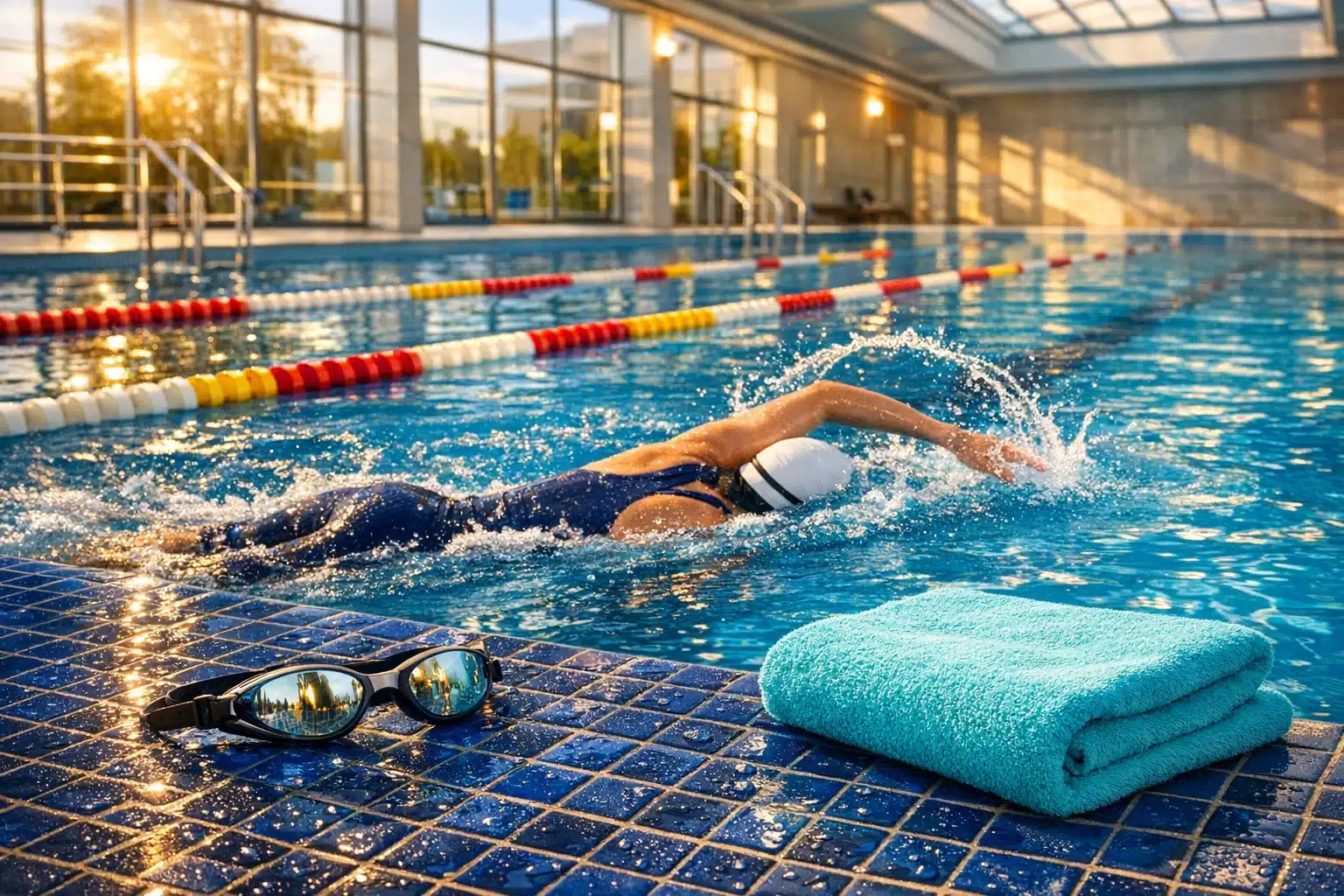
Explore the world of swimming
Swimming belongs to that rare group of activities that can challenge elite athletes while still welcoming nervous beginners. It develops endurance, strength, coordination, and water confidence without the repeated pounding that many land-based sports place on joints. At a time when people want exercise that is effective, enjoyable, and realistic for the long term, swimming stands out as both a practical skill and a deeply rewarding habit.
Outline
This article is organized into five parts so readers can move from the big picture to useful details. It begins with the value of swimming as exercise and as a lifelong skill. It then compares the main strokes, explains how training works, explores safety in pools and open water, and finishes with practical guidance for different ages and goals.
- Why swimming remains one of the most versatile physical activities
- How freestyle, backstroke, breaststroke, and butterfly differ in technique and purpose
- How beginners and regular swimmers can train with structure
- What safety habits matter most in pools, lakes, rivers, and the sea
- How to fit swimming into real life, from childhood lessons to healthy aging
Swimming as a full-body skill and a lifelong form of exercise
Swimming is often praised as a complete workout, and that description is not just motivational language. In the water, the body has to coordinate breathing, posture, kicking, pulling, and timing all at once. That combination recruits many major muscle groups across the shoulders, back, core, hips, and legs. Because water is far denser than air, even simple movements create resistance, which means the body is working every time it travels through the pool. Yet the same water also supports body weight, reducing impact on the knees, ankles, and hips. That makes swimming especially attractive to people recovering from injury, older adults, and anyone who wants demanding exercise without harsh pounding.
Its cardiovascular value is equally important. Like brisk walking, cycling, or jogging, swimming can help improve heart and lung function when done regularly. Health guidelines commonly recommend at least 150 minutes of moderate aerobic activity each week, and swimming fits comfortably into that framework. A person who swims several times a week can build stamina, improve circulation, and support metabolic health. Calorie use varies by stroke, pace, body size, and skill level, but even a moderate session can be a substantial energy expenditure. Leisurely laps may burn a few hundred calories in half an hour, while vigorous interval work can push much higher.
There is also a mental side to swimming that many dedicated swimmers describe with almost poetic affection. The steady sound of water, the rhythm of breathing, and the clear focus required for each lap can create a calming, almost meditative effect. Unlike some gym workouts, where distraction is easy, swimming asks for presence. You feel the angle of the hand, the length of the stroke, the timing of each breath. For people with busy schedules, that concentration can feel like a reset button.
Swimming also matters because it is not only exercise; it is a safety skill. Knowing how to float, tread water, and move efficiently through water can raise confidence around pools, beaches, and boats. That practical value sets swimming apart from many other sports. Its benefits can be summarized in a few key points:
- It develops aerobic fitness and muscular endurance together.
- It places less stress on joints than many land-based activities.
- It supports balance, coordination, and body awareness.
- It offers a valuable life skill that extends beyond recreation.
In short, swimming earns its reputation because it asks much from the body while often feeling gentle on it. Few activities combine fitness, function, and quiet satisfaction quite so well.
Understanding the main strokes: technique, purpose, and practical differences
To outsiders, swimming can look simple: enter water, move arms, kick legs, repeat. In practice, each stroke has its own mechanics, strengths, and learning curve. Understanding these differences helps swimmers choose the right approach for fitness, comfort, competition, or skill development. The four standard competitive strokes are freestyle, backstroke, breaststroke, and butterfly. They share the same environment, yet each creates a very different conversation between body and water.
Freestyle, usually performed as front crawl, is the fastest and most commonly used stroke. The body stays relatively long and streamlined, the arms alternate in a continuous pulling pattern, and the legs perform a flutter kick. Efficient freestyle depends heavily on body rotation and breathing timing. Beginners often think power matters most, but experienced coaches usually emphasize alignment and economy. A swimmer who keeps the head still, rotates through the torso, and enters the hand cleanly will often move faster with less effort than someone thrashing with urgency. Freestyle is ideal for general fitness, lap swimming, and endurance work because it balances speed with sustainability.
Backstroke uses a similar alternating arm pattern but turns the swimmer face-up. That changes breathing completely, since the mouth is free from the challenge of timed inhalation above the surface. For some learners, this feels liberating. For others, the lack of visual reference can be unsettling. Backstroke encourages strong hip position and shoulder mobility, and it can be a useful choice for people who enjoy a more open breathing pattern. It also exposes flaws in posture, because dropping the hips creates drag almost immediately.
Breaststroke is often seen as the most approachable stroke for casual swimmers, partly because the head can come up regularly and the pace feels more controlled. Its arm action sweeps outward and inward, while the legs perform a frog-like kick. Although it appears gentle, good breaststroke is technically demanding. Timing is everything: pull, breathe, kick, glide. When the sequence clicks, the stroke feels smooth and almost elegant. When it does not, the swimmer works hard for surprisingly little forward progress.
Butterfly is the most dramatic stroke, and for good reason. Both arms recover together over the water while the body undulates through a dolphin kick. It demands strength, rhythm, and excellent timing. For newcomers, butterfly often feels like trying to argue with the laws of physics. For trained swimmers, it can be powerful and beautiful. It is not usually the first stroke people master, but practicing butterfly drills can improve body awareness and overall power.
A simple comparison makes the differences clearer:
-
Freestyle: fastest, efficient, excellent for endurance and fitness.
-
Backstroke: easier breathing, strong for posture and shoulder control.
-
Breaststroke: approachable pace, useful for relaxed swimming, highly technical timing.
-
Butterfly: demanding, explosive, best suited to skilled swimmers and focused drills.
No stroke is universally superior. The best choice depends on the swimmer’s goal, comfort level, and technique. Learning all four adds variety, reduces monotony, and builds a more complete relationship with the water.
How to train for swimming: building endurance, technique, and confidence
Swimming rewards consistency more than heroic single efforts. Many beginners imagine progress will come from simply doing more laps, but effective training is usually built on structure. A good session has purpose. It may target endurance, stroke efficiency, speed, recovery, or breathing control. Without that framework, swimmers often plateau, repeating comfortable patterns that feel active but deliver only modest improvement.
A useful training session commonly has four parts: a warm-up, drills, a main set, and a cooldown. The warm-up prepares muscles and gradually raises heart rate. The drill segment focuses on technique, which is crucial because swimming is highly sensitive to small errors. If a runner has slightly clumsy form, the ground still supports forward motion. In water, poor alignment immediately creates drag. That is why a lesson or coach can make such a large difference. One simple correction in head position or hand entry can save energy across every length of the pool.
For new swimmers, shorter repeats with rest are often better than one long struggle. Instead of attempting a nonstop 1,000-meter session, a beginner may improve faster with sets such as 8 x 25 meters or 6 x 50 meters, resting briefly between efforts. This allows technique to stay cleaner. As conditioning improves, swimmers can extend distance, reduce rest, or add pace changes. Intermediate swimmers often benefit from interval work, such as alternating easy and moderate efforts, because it improves aerobic capacity without making every session feel punishing.
Equipment can help, but it should support learning rather than replace it. Common tools include:
-
Kickboards for isolating leg work and body position
-
Pull buoys for focusing on upper-body mechanics
-
Fins for reinforcing propulsion and helping with ankle flexibility
-
Paddles for advanced feel of the water and strength development
-
Goggles and swim caps for comfort, visibility, and reduced distraction
Still, tools are only as useful as the swimmer’s awareness. Wearing fins while keeping poor posture simply lets bad habits move faster. That is why technique remains the backbone of real progress.
Another important element is pacing. Many people start the first few lengths too quickly, then fade badly. A better approach is controlled effort: swim the opening part of a set at a pace you can maintain, then finish stronger if energy allows. This teaches efficiency and confidence. Over time, swimmers can track improvement through pace per 100 meters, stroke count, distance completed, or how rested they feel after a standard workout.
Progress in swimming is rarely loud. It often arrives quietly: fewer breaths per length, smoother turns, less panic in deeper water, better rhythm, and the pleasant surprise of finishing a set that once seemed impossible. The pool is honest in that way. It does not care about excuses, but it rewards patient work with remarkable fairness.
Safety, water confidence, and the difference between pool and open-water swimming
Swimming is enjoyable, healthy, and practical, but it always deserves respect. Water is inviting on the surface and unforgiving when people ignore basic precautions. That is why water confidence should never be confused with carelessness. Strong swimmers can still make poor decisions, and beginners often underestimate how quickly fatigue, cold, or panic can change a situation. A responsible approach to swimming combines skill, awareness, and environment-specific judgment.
In pools, many risks are manageable because conditions are controlled. Depth is marked, lanes are organized, and lifeguards may be present. Even then, basic rules matter. Running on wet surfaces can lead to falls. Diving into shallow water can cause severe injury. Crowded lanes require etiquette, such as circle swimming in the correct direction, passing carefully, and resting at the wall without blocking others. Hygiene matters too, not only for courtesy but for public health and water quality. A well-run pool creates a predictable environment, which is one reason lessons usually begin there.
Open water is different. Lakes, rivers, and the sea remove many of the predictable markers that pool swimmers rely on. There may be currents, waves, tides, boats, changing visibility, sudden depth changes, and cold water shock. In a pool, the black line on the bottom quietly guides you home. In open water, there may be only a distant buoy, a shifting shoreline, and the small voice in your head asking whether that last breath was calm enough. That difference is thrilling, but it demands preparation.
Several safety practices are especially important:
-
Never swim alone in open water; use a buddy system or supervised group.
-
Check weather, currents, and local advisories before entering.
-
Wear bright gear or a tow float so others can see you.
-
Enter gradually if the water is cold, and understand the risk of cold shock.
-
Learn how to float, tread water, and roll onto your back to recover.
-
Do not overestimate your distance ability when conditions are unfamiliar.
Formal swim instruction is one of the best investments a person can make, especially for children. Global public health agencies have repeatedly highlighted drowning as a major preventable cause of death. That reality gives swim education a seriousness far beyond recreation. Learning to breathe calmly, float, orient the body, and exit the water safely can be life-changing.
For families, supervision deserves special emphasis. No inflatable toy replaces close adult attention. For adults, ego is often the bigger issue. People may keep swimming when tired because they do not want to appear weak. Water does not negotiate with pride. The smartest swimmers are often the ones who turn back early, rest when needed, and treat safety as a mark of skill rather than fear.
Swimming for every age and goal: a practical conclusion for readers ready to begin
One of swimming’s greatest strengths is its flexibility. It can be taught as a basic survival skill, practiced as a competitive sport, used as rehabilitation, or enjoyed simply as a way to feel lighter for an hour. That range makes it relevant to an unusually broad audience. A child learning to float, a triathlete refining freestyle, an office worker seeking low-impact fitness, and an older adult trying to stay active may all share the same pool, even if their goals are completely different. Few activities bridge those worlds so naturally.
For children, swimming can build confidence, coordination, and comfort around water at an early age. It also teaches listening, patience, and incremental progress. For teenagers, it offers structured training and a demanding sport that rewards discipline. For adults, it can become a practical answer to busy schedules because sessions can be scaled up or down. Twenty focused minutes in the pool may deliver more whole-body engagement than a casual hour spent drifting through a gym routine. For older adults, swimming often remains accessible even when joints complain about running or court sports.
If you are wondering how to start, the most effective path is usually simple rather than dramatic:
-
Begin with a realistic schedule, such as two sessions each week.
-
Prioritize lessons or technique feedback early on.
-
Choose manageable distances so form stays controlled.
-
Track one or two measures of progress, such as consistency or comfort.
-
Let skill improve before chasing speed.
Readers who already swim can refresh their routine by adding stroke variety, interval sets, open-water practice with proper supervision, or mobility work for shoulders and ankles. Those who feel intimidated should remember that nearly every competent swimmer once swallowed water, misjudged breathing, or clung to the wall wondering how anyone made laps look graceful. Skill in the pool is not magic. It is learned repetition, guided correction, and the quiet accumulation of confidence.
The lasting appeal of swimming lies in its blend of usefulness and pleasure. It can sharpen performance, protect long-term health, and offer a rare kind of moving stillness. You are working hard, yet the water absorbs noise, weight, and hurry. For the curious beginner, the hesitant returner, or the experienced swimmer looking for renewed purpose, the message is straightforward: start where you are, learn patiently, respect the water, and keep going. Lap by lap, swimming turns effort into fluency, and fluency into freedom.