Explore the world of swimming
Introduction
Swimming is one of those rare pursuits that feels playful on the surface and deeply demanding underneath. It builds endurance, challenges the heart and lungs, and recruits nearly every major muscle group while staying gentle on the joints. It is also a practical life skill, giving people confidence around water in pools, lakes, and coastal settings. This article maps out swimming from health benefits to technique, safety, training, and culture.
Outline
1. Why swimming matters for health, fitness, and safety. 2. The main strokes and the technical ideas that make movement efficient. 3. How to train wisely, choose useful equipment, and stay safe in different environments. 4. Why swimming suits different ages, abilities, and personal goals. 5. How competition, community, and innovation continue to shape the sport.
Why Swimming Matters: Health, Fitness, and Water Confidence
Swimming sits at the intersection of sport, survival skill, and accessible exercise. Unlike many land-based activities, it trains the body against resistance from every direction. Water is roughly 800 times denser than air, so even a relaxed session asks the muscles to work in a steady, controlled way. The arms pull, the back stabilizes, the core keeps the body aligned, and the legs kick to maintain balance and propulsion. That full-body demand helps explain why regular swimmers often build endurance and coordination together instead of treating them as separate goals.
From a health perspective, swimming checks several important boxes at once. It can improve cardiovascular fitness, support lung function, and help people work toward the widely recommended target of at least 150 minutes of moderate physical activity each week. Depending on pace, stroke, and body size, lap swimming may burn roughly 400 to 700 calories per hour, with demanding sessions pushing higher. Compared with activities such as running, the impact on knees, hips, and ankles is usually much lower because the body is partly supported by water. For people dealing with joint sensitivity, excess body weight, or a return to exercise after a long break, that can make movement feel possible rather than punishing.
The mental side of swimming deserves equal attention. Many swimmers describe the pool as a place where noise fades and rhythm takes over. The repeated cycle of pull, kick, and breath can feel almost meditative, while completing sets provides clear markers of progress. A swimmer does not need a stadium or a stopwatch to feel achievement; sometimes touching the wall after one extra length is enough. Key advantages often include: • low joint stress for many participants • full-body muscular engagement • aerobic conditioning that can be gentle or intense • improved comfort and competence in the water.
Swimming also has a public safety dimension that sets it apart from many other sports. The World Health Organization has reported that drowning causes hundreds of thousands of deaths worldwide each year, making water competence more than a recreational bonus. Learning to float, tread water, breathe calmly, and move efficiently can reduce risk in real-life situations. In that sense, swimming is unusually practical. The same skill can support health, unlock leisure, build confidence, and potentially save a life. Few activities offer such a broad return on the time invested.
The Language of the Water: Strokes, Breathing, and Efficient Technique
To a newcomer, swimming can look simple: move the arms, kick the legs, and stay afloat. In practice, it is a technical sport where small changes produce big differences. Water rewards precision more than brute force. A swimmer who is streamlined and relaxed often travels farther with less effort than someone who fights the water on every stroke. That is why coaches spend so much time on body position, head alignment, breathing patterns, and timing. Good technique is not decoration; it is the engine that makes swimming sustainable.
The four main competitive strokes each have a distinct personality. Freestyle, usually swum as front crawl, is the fastest and most efficient for covering distance. It relies on body rotation, alternating arm recovery, and a flutter kick that stays compact rather than splashy. Backstroke uses similar principles on the back, with continuous arm motion and steady hip-driven kicking. Many beginners enjoy it because the face remains above water, though swimming straight can be harder when the ceiling is your only guide. Breaststroke is slower but highly technical, built around timing between the pull, breath, kick, and glide. Butterfly is the most demanding of the four, combining a powerful double-arm recovery with a wave-like body action and dolphin kick. It can look almost theatrical when done well, but it punishes poor timing quickly.
A simple comparison helps explain how swimmers choose strokes: • freestyle is usually best for speed and general conditioning • backstroke promotes posture awareness and offers easier breathing • breaststroke suits swimmers who prefer a clear rhythm and forward visibility • butterfly develops power but requires strong technique and conditioning. None of these strokes is automatically easy. Each asks for balance between propulsion and drag reduction.
Breathing is the place where many learners struggle most. On land, breathing is automatic; in the water, it becomes part of the skill itself. Efficient swimmers exhale into the water and inhale briefly when the body rotates or lifts at the right moment. Holding the breath too long often creates tension, and tension makes the body sink. Another common mistake is trying to kick harder to solve every problem. In reality, better alignment usually matters more than bigger effort. A level body, a relaxed neck, and a clean hand entry can save more energy than a frantic kick ever will. When technique improves, swimming starts to feel less like a fight and more like a conversation with the water.
Training Smart and Staying Safe in Pools and Open Water
Many people imagine swim training as endless laps, but effective practice is usually more structured than that. A well-designed session often includes four parts: a warm-up to raise body temperature and settle breathing, drills to sharpen technique, a main set that targets endurance or speed, and a cool-down to bring the body back to an easier effort. This structure matters because swimming can hide fatigue. The water feels refreshing, so swimmers sometimes miss the signs that form is breaking down. Once technique slips, extra distance may simply reinforce bad habits. Thoughtful training is not about doing more at any cost; it is about doing the right work at the right time.
Equipment can help, though it should support skill rather than replace it. Goggles improve visibility and comfort, making it easier to focus on alignment instead of blinking through chlorine. A well-fitted cap reduces drag and keeps hair manageable. Kickboards isolate leg work, pull buoys shift attention to the upper body, and fins can help swimmers feel better body position and ankle movement. Hand paddles add resistance, but they should be used carefully because poor mechanics under load can stress the shoulders. Useful training tools include: • goggles for clear vision and confidence • a kickboard for dedicated kicking sets • a pull buoy for arm-focused work • fins for controlled assistance with technique.
Safety, however, is the non-negotiable part of swimming. In pools, that means understanding depth markers, following lane etiquette, showering before entry where required, and never assuming another person is watching closely enough to notice trouble. In open water, the stakes rise sharply. Lakes, rivers, and the sea add variables that pools do not have: currents, waves, low visibility, sudden drop-offs, cold temperatures, and boat traffic. Even strong pool swimmers can be surprised by how different open water feels. There is no black line beneath you, no wall every 25 or 50 meters, and sometimes no easy place to stand.
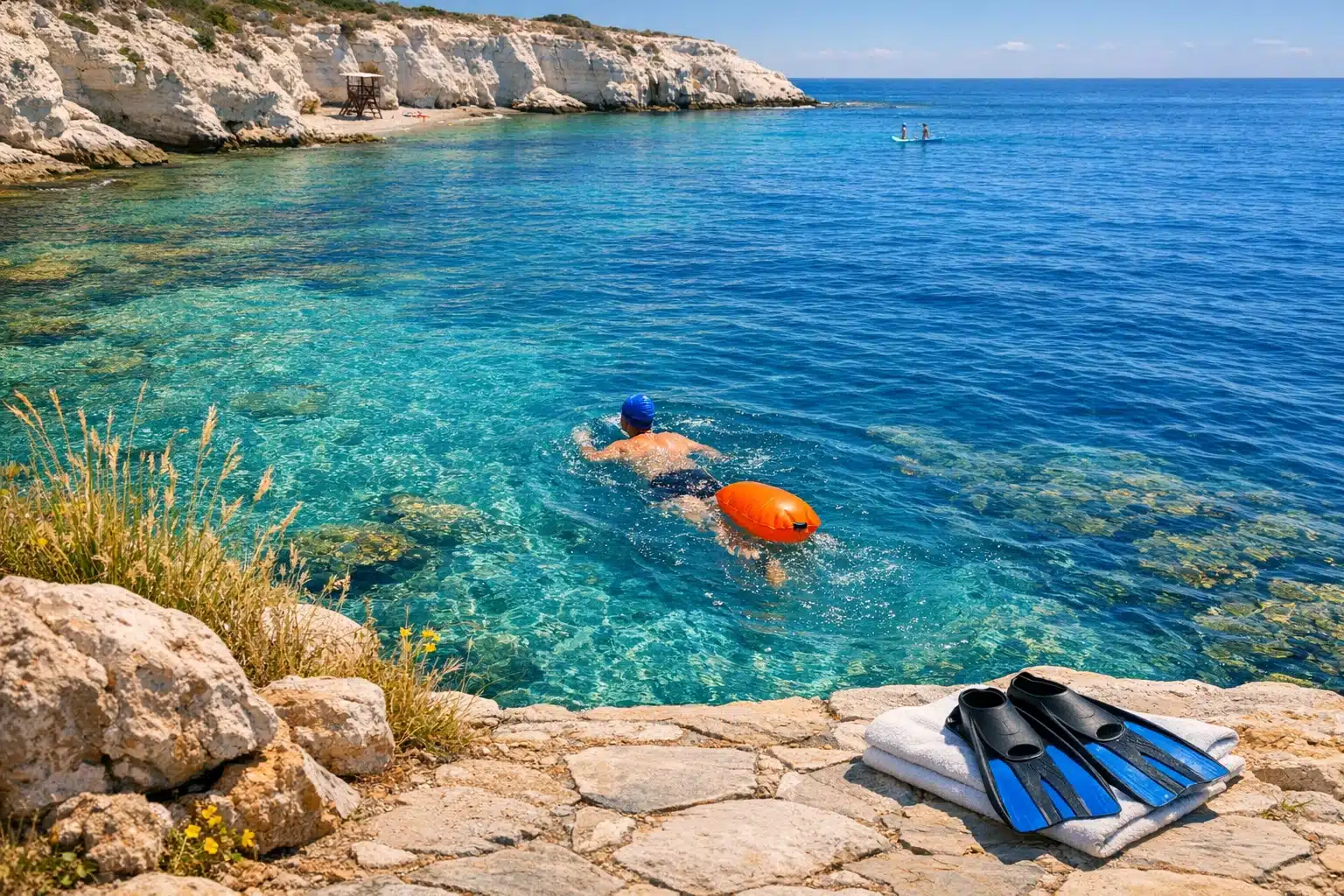
For that reason, common safety rules stay timeless: never swim alone, check weather and water conditions, use bright swim gear in open water, enter gradually if the water is cold, and respect lifeguard instructions. Open-water swimmers often use tow floats for visibility and emergency support, while beginners should start under organized supervision. Confidence in water is valuable, but overconfidence is dangerous. The best swimmers are not the ones who ignore risk; they are the ones who understand it, prepare for it, and still move through the water with calm purpose.
Swimming for Different Ages, Bodies, and Goals
One reason swimming has such broad appeal is that it adapts well to different stages of life. For children, it can begin with water familiarization, floating, and playful skill-building rather than formal training. Learning to be comfortable in the water often comes before learning to swim efficiently, and that order makes sense. A child who trusts the environment is more likely to develop good habits than one who is rushed into technique. Parents often value swimming lessons because they combine physical development with an essential safety skill. Coordination, breath control, and confidence all grow together, often through games that feel more like fun than instruction.
Adults come to swimming for many reasons. Some return after years away from sport and discover that the pool offers a manageable way back into exercise. Others use swimming to complement running, cycling, or strength training because it develops aerobic fitness without repeated impact. For office workers who spend long hours sitting, the horizontal body position and repeated shoulder and hip movement can feel like a reset button. For people pursuing weight management, swimming can contribute meaningfully to energy expenditure, though appetite, recovery, and total lifestyle still matter. The water does not perform miracles, but it offers a strong, sustainable tool.
Older adults also benefit from swimming and related aquatic exercise. Buoyancy can make movement feel less intimidating, while the resistance of water still provides muscular challenge. Group classes, gentle lap sessions, and water walking can help maintain mobility and routine. With medical guidance, swimming is also used by some people during rehabilitation or during periods when high-impact exercise is not practical. A few groups often find particular value in aquatic activity: • beginners who want a lower-impact start • older adults aiming to stay active • athletes needing recovery-friendly conditioning • people rebuilding confidence after injury or inactivity.
Swimming is also notable for its flexibility across ambition levels. One person may want only enough skill to enjoy holidays near water; another may train for masters competition, triathlon, or long-distance open-water events. Para swimming further shows how adaptable the sport can be, with coaching and competition structures designed for athletes with a wide range of impairments. The same pool can serve a nervous beginner in one lane and a seasoned racer in another. That range is part of the sport’s quiet brilliance. Swimming does not insist on a single kind of body or a single reason for showing up. It simply asks each person to meet the water honestly and learn from it.
Competition, Community, and the Future of Swimming
Swimming is older than modern sport, yet it still feels surprisingly current. Humans have moved through water for survival, travel, ritual, and recreation for thousands of years. In the modern era, swimming became one of the foundational Olympic sports and grew into a global competitive system with age-group clubs, school teams, university programs, masters leagues, and elite international championships. Races can be decided by hundredths of a second, which gives the sport a special kind of drama. To casual viewers, it may look like a blur of splashes and caps. To trained eyes, it is a chess match played at full speed, where the start, underwater phase, turn, and finish can matter as much as the stroke itself.
Yet swimming is far more than medals and record boards. Local pools often function as community spaces where very different people share the same water for different reasons. One lane may hold a teenager training for competition, another a parent learning late in life, another a retired swimmer keeping a lifelong habit alive. Swim clubs, public lessons, and masters groups create social ties that can be surprisingly durable. The sport also crosses into other worlds: lifeguarding, synchronized swimming, diving, water polo, triathlon, and open-water adventure all overlap with swimming culture in different ways.
The future of swimming will depend not only on performance but also on access. Pools are expensive to build and maintain, and many communities still lack safe, affordable facilities or qualified instructors. That creates unequal opportunities in a sport that can literally be life-protective. Water quality, environmental sustainability, and energy use are becoming more important topics as cities think about how to keep aquatic centers open and efficient. At the same time, innovation continues. Better teaching methods, underwater video analysis, performance tracking, and improved facility design have changed how swimmers learn and train. Equipment rules have also evolved, especially after highly buoyant full-body suits reshaped elite results in the late 2000s and prompted tighter regulation.
In the end, swimming remains compelling because it offers many entry points. It can be competitive without excluding casual participants, technical without becoming inaccessible, and deeply individual while still fostering community. There is something quietly democratic about a lane line: once the session begins, effort, patience, and skill matter more than appearance or status. The water has a way of reducing excuses and rewarding attention. That is one reason swimming keeps renewing itself, generation after generation.
Conclusion for Beginners, Fitness Seekers, and Lifelong Swimmers
If you are new to swimming, the best starting point is not speed but comfort, consistency, and safe practice. If you already swim for exercise, refining technique can make every length more efficient and enjoyable. Parents can see swimming as both a healthy activity and a practical life skill for children, while older adults and returning exercisers may appreciate its lower-impact nature. Competitive athletes, meanwhile, know that the sport never stops teaching patience and precision. Whatever your level, swimming offers a rare mix of utility, challenge, and calm. That is why it remains relevant not just as a sport, but as a lifelong relationship with movement in water.