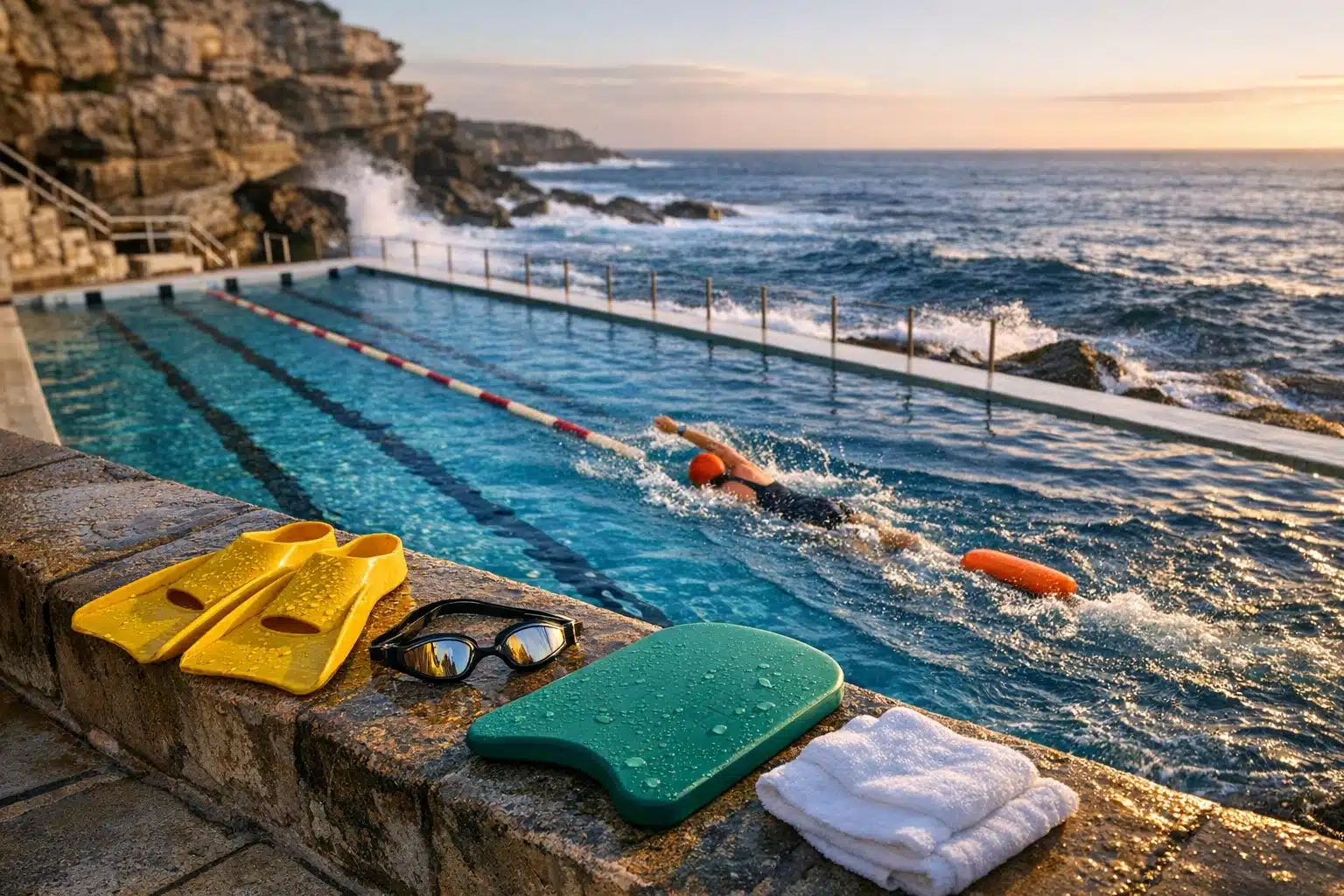
Explore the world of swimming
Swimming is one of those rare activities that feels playful and serious at the same time, inviting children, athletes, and late starters into the same blue space. It builds fitness without the pounding that often comes with land-based exercise, teaches a real-life safety skill, and creates room for competition, therapy, and pure enjoyment. From neighborhood pools to cold open water, its relevance reaches far beyond a workout.
Outline
This article is organized in five main parts so the topic unfolds in a clear and practical way. First, it looks at why swimming matters as both a survival skill and a global sport with deep cultural roots. Second, it breaks down the main strokes and compares their rhythm, difficulty, and common uses. Third, it examines physical and mental benefits, including why water-based exercise is often easier on the joints while still demanding real effort. Fourth, it covers safety, equipment, and training habits that help swimmers improve without ignoring risk. Fifth, it closes with a broader view of how swimming can become a lifelong activity for children, adults, competitors, and casual swimmers alike.
If water has ever felt equal parts inviting and mysterious, that is part of the appeal. A pool lane can be a classroom, a test, a refuge, or a racecourse depending on who enters it and why. The sections below move from big-picture context to hands-on guidance, so readers can understand not only how swimming works, but why it continues to matter across ages and lifestyles.
1. Why Swimming Matters: Skill, Sport, and Cultural Presence
Few activities sit at the crossroads of recreation, fitness, safety, and competition as naturally as swimming. It is a practical skill first: knowing how to float, tread water, and move through water can reduce risk during accidents, storms, boating mishaps, or even ordinary summer outings. Public health experts have long treated swimming ability as more than a hobby for this reason. The World Health Organization has estimated that drowning causes hundreds of thousands of deaths globally each year, which makes basic water competence a meaningful life skill, not a luxury. In that sense, a child learning to exhale underwater is doing something bigger than playing a game; they are building familiarity in an environment that can be both joyful and unforgiving.
At the same time, swimming is deeply woven into sport and culture. It has been part of the modern Olympic program since 1896, and its events continue to draw enormous attention because they are easy to grasp yet hard to master. A race may last less than a minute, but it reflects years of technique work, conditioning, pacing, and mental control. Beyond elite competition, community pools, beaches, lakes, and swim clubs make the activity accessible in many forms. One person trains for triathlons, another takes gentle laps for recovery, and someone else only wants to splash around with family on a hot afternoon. The same medium supports all of them.
Compared with many land-based sports, swimming also changes how the body experiences effort. Gravity still exists, of course, but buoyancy softens impact. That is one reason swimming appeals to people recovering from injury, older adults, and those who find high-impact exercise uncomfortable. Yet “low impact” should not be confused with “easy.” Water resists movement from every direction, which means even simple drills can demand coordination and stamina. In a gym, you push against a machine; in the pool, the entire surface around you pushes back.
Its reach is broad for another reason as well:
• It can be taught early in life.
• It can remain useful into older age.
• It works as recreation, skill training, rehabilitation, and sport.
• It creates a shared space where beginners and experts often train in the same facility.
That combination is unusual. Many sports peak early or appeal to a narrow group. Swimming, by contrast, keeps opening doors. It can begin with fear, turn into confidence, and sometimes become a lifelong rhythm marked by lane lines, steady breathing, and the bright echo of water against tile.
2. Understanding the Main Strokes and What They Demand
Watching skilled swimmers can make every stroke look effortless, but each one asks the body to solve a different puzzle. Freestyle, usually referring to the front crawl in practice and racing, is the fastest and most widely used stroke. Its alternating arm action, flutter kick, and side breathing pattern make it efficient for covering distance once technique is in place. For many beginners, though, freestyle feels awkward at first because breathing must be timed while the body remains long and aligned. The challenge is not simply strength; it is learning to stay calm while the face returns to the water between breaths.
Backstroke offers a different experience. Because the face stays above the surface, it removes some of the anxiety that comes with underwater exhalation. That makes it attractive for some newer swimmers, although the stroke creates its own problems: body position matters greatly, and swimming in a straight line without seeing where you are going can be surprisingly difficult. Good backstroke feels open and rhythmic, almost like moving across a ceiling of light, while poor backstroke often collapses at the hips and wastes energy.
Breaststroke is often seen as beginner-friendly because the head can rise regularly and the pace is more deliberate. Still, the stroke is technical in a very specific way. Timing matters. The pull, breath, kick, and glide must connect cleanly, otherwise progress slows dramatically. Recreational swimmers often enjoy breaststroke because it allows a more measured pace, but competitive breaststroke is highly specialized and places large demands on coordination and lower-body power.
Butterfly sits at the other end of the spectrum. It is powerful, visually striking, and notoriously demanding. Both arms recover over the water at once, the body undulates, and two dolphin kicks support each arm cycle. Done well, butterfly looks like controlled force. Done poorly, it feels like wrestling the pool. It is rarely the first stroke people learn, yet it teaches valuable lessons about timing, body line, and momentum.
A quick comparison helps clarify the differences:
• Freestyle: fastest overall, efficient for fitness and racing, breathing can be the main hurdle.
• Backstroke: open breathing, useful for posture awareness, navigation is the trick.
• Breaststroke: slower but steady, popular recreationally, timing is everything.
• Butterfly: explosive and exhausting, best approached gradually, highly technical.
There are also practical strokes outside standard racing, such as sidestroke and elementary backstroke, which are often useful in safety training because they conserve energy. This matters because swimming is not only about winning a race. Sometimes the best stroke is simply the one that lets a tired swimmer stay calm, stay afloat, and keep moving with control.
3. Fitness, Health, and the Quiet Mental Reset of Water
One reason swimming attracts such a wide audience is that it trains multiple systems at once. A solid session can challenge the heart, lungs, shoulders, back, hips, and core without the repeated impact associated with activities like running on pavement. Water creates constant resistance, so even moderate movement asks muscles to engage throughout the stroke. That does not mean swimming automatically builds maximal strength in the way heavy lifting can, but it does develop muscular endurance, coordination, and aerobic capacity in a distinctive package. The body is not just moving forward; it is stabilizing, rotating, kicking, reaching, and regulating breath at the same time.
This makes swimming especially attractive for people who want a full-body workout with less joint stress. Buoyancy can reduce the load placed on knees, ankles, and the lower back, which is one reason aquatic exercise often appears in rehabilitation settings. Someone returning from injury may not be ready for intense jumping or hard running, yet they may tolerate controlled pool work earlier. Older adults frequently value this feature as well, since staying active matters, but comfort and recovery matter too. In the water, exercise can feel both demanding and kind, which is a rare combination.
The mental side deserves equal attention. There is something unusually regulating about the repeated sequence of stroke, breath, turn, and push-off. Pools are noisy spaces, yet the moment your face slips under the surface, sound changes and the world narrows. For many swimmers, that shift creates a form of focused calm. It is not magic and it is not a cure for life’s bigger struggles, but it can be a reliable reset. Lap after lap, the mind has less room for scattered thought because rhythm asks to be followed.
Swimming can support wellbeing in several ways:
• It encourages cardiovascular work without requiring high-impact movement.
• It develops body awareness through timing and alignment.
• It can break up screen-heavy routines with sensory, physical engagement.
• It often produces a noticeable drop in stress after even a short session.
Compared with some gym workouts, swimming also changes the emotional tone of exercise. There are no clanking plates or mirrors dominating the space. Instead, there is temperature, resistance, breath control, and the very immediate feedback of the water itself. If your hand enters poorly, you feel it. If your kick is wasteful, the lane tells you. The environment rewards attention rather than brute force alone.
That is why people return to it for different reasons over time. A teenager may swim to get fitter for another sport. An office worker may use it to undo a day of sitting. A retired person may choose it because it feels sustainable. Different lives, same pool, different goals, same quiet truth: moving through water can leave a person stronger and steadier than when they arrived.
4. Safety, Technique, Gear, and Smarter Training Habits
For all its benefits, swimming demands respect. Water does not forgive carelessness in the way a missed gym session might. That is why good habits matter from the beginning, whether someone is learning in a shallow community pool or venturing into open water. The first principle is simple: never confuse confidence with invulnerability. Strong swimmers can panic, conditions can change, and fatigue can arrive faster than expected. Supervision for children is essential, and adults should avoid swimming alone in risky environments whenever possible. Open water adds current, cold shock, waves, reduced visibility, and navigation issues that do not exist in a marked lane pool.
Technique plays a safety role as well as a performance role. Efficient swimmers waste less energy, maintain calmer breathing, and recover better when conditions are challenging. Small corrections matter: a balanced body position reduces drag, a relaxed exhale makes breathing easier, and a controlled kick prevents unnecessary exhaustion. Many beginners try to “fight” the water, slapping at it with tension in the shoulders and neck. Progress usually begins when they stop trying to overpower the pool and start learning how to cooperate with it. Water rewards precision far more than panic.
Equipment helps, but only when it fits the purpose. A good pair of goggles can transform a session by improving comfort and visibility. Swim caps reduce drag slightly and help keep hair out of the face. Kickboards isolate lower-body work, while pull buoys shift emphasis toward the upper body and body position. Fins can help swimmers feel a stronger line through the water, though overuse may hide technique problems. For open water, brightly colored caps and safety buoys improve visibility, which is not glamorous advice, but very practical.
Useful training reminders include:
• Warm up before harder efforts instead of sprinting from the first length.
• Build volume gradually so shoulders and knees are not overloaded.
• Mix drills, easy swimming, and focused sets rather than repeating mindless laps.
• Rest enough between hard repeats to preserve quality.
• Learn basic water safety, floating, and treading skills alongside stroke technique.
Smarter training is not always harder training. A short session with clear intent often beats a long, sloppy one. One day may focus on breathing and body line, another on aerobic endurance, and another on speed or turns. The best routines leave room for patience. In swimming, improvement can feel subtle at first. Then one day the water holds you a little differently, the breath comes easier, and the lane that once felt endless suddenly feels manageable.
5. Making Swimming a Lifelong Practice: A Conclusion for Beginners, Parents, and Curious Athletes
The most encouraging thing about swimming is that it does not belong to one age group or one personality type. A child may enter the pool full of nerves and leave with a grin that says the water has become less strange. A busy adult may return to lessons after years away, discovering that progress is slower than in childhood but more satisfying because it is chosen. A competitive athlete may use swimming for conditioning, while another person values it simply because it offers movement without punishment. That range is part of the topic’s real power: there is no single correct reason to begin.
For beginners, the most useful goal is not speed but comfort. Learn to float, breathe out underwater, and move short distances without urgency. For parents, the priority is steady exposure to water safety and skill development in supervised settings, not pressuring children into performance. For experienced athletes, swimming can sharpen discipline, recovery, and body awareness in ways that transfer beyond the pool. For older adults, it can become a sustainable routine that supports mobility and cardiovascular health while still feeling manageable. The entry points differ, but the long-term value keeps showing up.
It also helps to think of swimming as a practice rather than a test. Some days the stroke clicks and the body feels sleek, almost borrowed from a seal or a dolphin. Other days every lap feels oddly mechanical. That fluctuation is normal. Progress in water is rarely linear because confidence, fitness, technique, and environment all interact. The better approach is consistency with curiosity.
If you want to make swimming part of life, keep it simple:
• Start with realistic sessions instead of heroic plans.
• Take lessons if breathing, floating, or stroke timing still feel uncertain.
• Choose safe environments and build skill before adding challenge.
• Let enjoyment matter, because people repeat what they genuinely like.
In the end, swimming offers more than exercise. It teaches respect for an element humans cannot fully control, while also proving that skill can make the unfamiliar feel navigable. For the reader standing at the edge of the pool, wondering whether this is worth the effort, the answer is practical and hopeful. Yes, because swimming can make you fitter. Yes, because it can make you safer. And yes, because few activities blend usefulness, discipline, freedom, and simple delight quite so well.