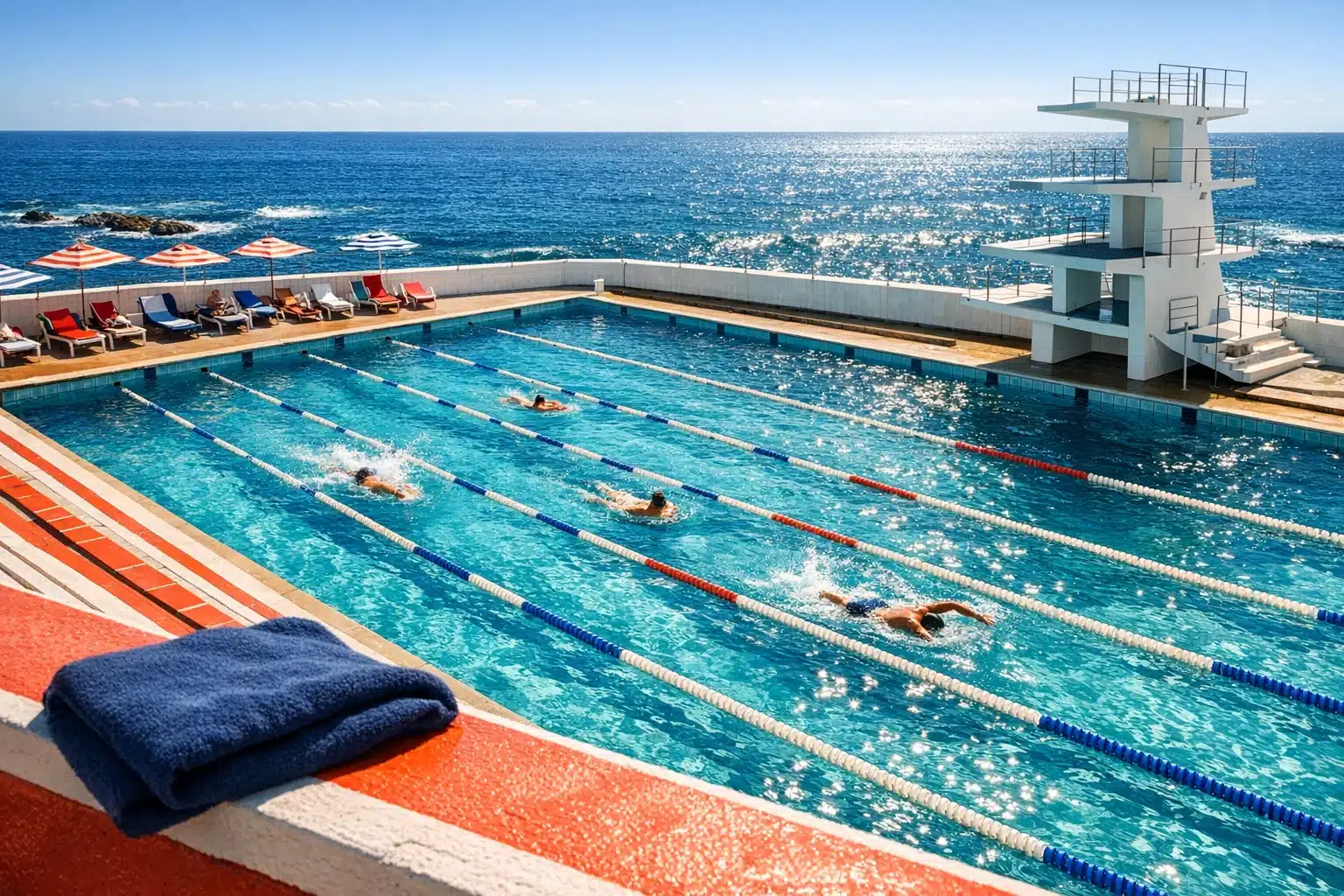
Explore the world of swimming
Swimming invites people of nearly every age into a sport that feels both playful and demanding. A calm pool lane can become a classroom for technique, a training ground for endurance, and a place to switch off the noise of the day. Because it builds fitness while reducing impact on joints, it matters to beginners, athletes, parents, and older adults alike. This guide maps the essentials, from strokes and safety to training and lifelong benefits. Dive in, and the water starts to make more sense.
Outline:
• The first section explains what swimming is beyond the obvious, showing how it functions as recreation, survival skill, and organized sport.
• The second section breaks down technique, comparing the main strokes and showing why efficiency matters more than brute force.
• The third section explores physical and mental benefits, including cardiovascular fitness, strength, and stress relief.
• The fourth section focuses on learning safely, choosing gear, and understanding the differences between pools and open water.
• The fifth section brings everything together with practical training guidance and a concluding perspective for readers who want swimming to become part of everyday life.
Swimming as a Skill, a Sport, and a Lifelong Companion
At first glance, swimming can seem wonderfully simple: get in the water and move. Yet that simplicity is a bit like saying music is just organized sound. Beneath the surface lies a rich blend of physics, coordination, confidence, and culture. Swimming matters because it sits at the intersection of safety, health, and human achievement. It is one of the few activities that can be taught to a child, refined by an Olympian, and still enjoyed by someone seeking gentle exercise later in life.
Humans have swum for thousands of years, first for survival and travel, then for training, competition, and leisure. Today, swimming takes place in backyard pools, school programs, fitness centers, lakes, rivers, and oceans. That range gives it unusual relevance. For some people, it is a basic life skill that reduces risk around water. For others, it is a precision sport measured in tenths of a second. And for many, it is simply the most sustainable way to stay active without punishing knees, hips, or backs.
Competitive swimming is built around four recognized strokes:
• Freestyle, usually performed as front crawl, is the fastest and most common in fitness training.
• Backstroke is swum on the back and emphasizes body rotation and steady kicking.
• Breaststroke uses a distinct pull-and-kick pattern and often feels approachable to beginners.
• Butterfly is the most technically demanding, combining power, timing, and wave-like movement.
Races are commonly held in 25-meter, 25-yard, or 50-meter pools, while open-water events unfold in natural settings over much longer distances. The sport can look quiet from the stands, but inside the lane it is full of small decisions: how to breathe, when to kick, how to pace, when to attack the wall, and how to stay calm when fatigue turns the water heavy.
What makes swimming especially compelling is its ability to grow with the swimmer. A child may begin by learning to float. A teenager may chase personal bests. An adult may return to the pool for fitness or recovery after injury. In each case, the water asks for respect, then rewards practice. That is a rare bargain in sport: the same activity can teach survival, sharpen discipline, and still feel, on the right day, like freedom.
Technique and Efficiency: Why Good Form Changes Everything
Swimming is often described as a full-body workout, but that phrase does not capture the real challenge. In the water, effort alone is not enough. Water is roughly 800 times denser than air, so poor alignment creates resistance almost immediately. That is why beginners can feel exhausted after one length while experienced swimmers appear to glide with controlled ease. The difference is not magic. It is technique.
The foundation of good swimming is body position. In freestyle and backstroke, the goal is to stay long and balanced, with the head stable and the hips near the surface. When the head lifts too much, the legs tend to sink, and the swimmer begins to push water instead of slicing through it. Breathing, another common stumbling block, works best when it fits into the stroke rather than interrupting it. A rushed breath can twist the body out of line. A well-timed breath feels almost invisible, like opening a window for a second and then shutting it again.
Each stroke asks the body to solve propulsion in a different way. Freestyle rewards rhythm and rotation. Backstroke depends on body alignment and a clean hand entry. Breaststroke is slower but highly technical, using a whip kick and a glide phase that can either save energy or waste momentum. Butterfly is powerful but unforgiving; timing matters so much that even strong athletes can struggle if the movement breaks apart.
Several technical habits improve performance across all strokes:
• Keep movements purposeful rather than splashy.
• Exhale in the water so breathing feels controlled instead of rushed.
• Use the core to stabilize rotation and balance.
• Think about holding the water with the hands and forearms, not just windmilling the arms.
• Finish each length with focus, because bad form often appears when concentration fades.
Good technique also shapes comparisons between swimmers. A stronger athlete is not always faster than a more efficient one. In middle and long distances especially, a smooth swimmer can outperform someone who attacks every length too hard. Coaches often say that speed is built on efficiency, and the point holds up in practice. Stroke count, pacing, turns, and streamlining after the wall all matter. Even recreational swimmers notice the difference: when form improves, the lane feels shorter, breathing settles, and the workout becomes less of a fight.
There is a quiet satisfaction in technical progress. One day the water feels resistant, almost argumentative. A few weeks later, after drills and repetition, it begins to cooperate. That shift is part of swimming’s appeal. Improvement is not only measured by a clock. Sometimes it arrives as a smoother pull, a calmer breath, or the sudden realization that a length once dreaded now passes almost gracefully.
Health, Fitness, and the Mental Pull of the Water
Swimming has earned a strong reputation in health and fitness circles because it combines cardiovascular work, muscular engagement, and low-impact movement in a single activity. For many adults, that combination is hard to beat. Public health guidance commonly recommends at least 150 minutes of moderate aerobic activity per week, and swimming can contribute directly to that goal. Depending on pace and stroke choice, a session can range from gentle recovery work to an intense interval set that leaves no doubt about its training value.
From a physical standpoint, swimming challenges the heart and lungs while recruiting the shoulders, back, chest, core, glutes, and legs. Unlike land-based exercise, it does this in an environment where buoyancy supports body weight. That can make swimming especially appealing for people managing joint discomfort, recovering from certain injuries, or returning to exercise after a long break. It is not impact-free in every sense, since shoulders can become overworked with poor mechanics or excessive volume, but it is often far kinder to the body than repetitive pounding on hard surfaces.
The benefits extend beyond fitness metrics. Many swimmers describe a session as mentally clarifying. The repetitive nature of the strokes, the sound of bubbles, and the narrow focus of the lane can create a meditative effect. Even structured training has a strange calm to it. Between lengths, the world becomes simpler: breathe, kick, turn, repeat. In an age of constant notifications, that stripped-down attention can feel refreshing.
Swimming can support different goals:
• General fitness and weight management through steady aerobic work.
• Athletic conditioning by improving endurance and breathing efficiency.
• Mobility and recovery through controlled movement in supported water.
• Confidence and independence, especially for children learning water skills.
• Social connection through clubs, masters groups, and lessons.
There is also a long-term argument in swimming’s favor. It can remain part of life across decades. A teenager might use it to train hard, while a retiree may choose it for comfort and consistency. Parents often value it because it blends exercise with an essential safety skill. People with busy schedules appreciate that even a short session can feel productive. Twenty or thirty minutes in the pool can challenge the whole body without requiring elaborate equipment.
None of this means swimming is effortless. In fact, newcomers are often surprised by how demanding it feels. But that is part of the bargain: the sport gives back what the swimmer invests. Over time, improved endurance, easier breathing, better posture in the water, and greater confidence begin to stack up. The result is not only a stronger body, but often a steadier mind.
Learning to Swim Safely: Lessons, Environments, and Smart Habits
If swimming is rewarding, it is also a subject that demands respect. Water can be welcoming and risky at the same time, which is why instruction and safety habits matter so much. Learning to swim is not only about moving forward; it begins with floating, breathing, orientation, and knowing how to respond calmly if something goes wrong. Organizations around the world treat drowning prevention as a major public health priority, and that alone should remind readers that confidence in the water must be built on skill, not assumption.
Formal lessons are often the fastest route to solid foundations. A good instructor can correct body position, breathing patterns, and fear-based habits before they become deeply ingrained. Children benefit from gradual exposure and repetition, but adults do too. Many adult beginners arrive carrying embarrassment that has little to do with their actual ability. In practice, progress often comes once they accept that swimming is learned step by step, not all at once.
Different environments change the demands considerably. A pool is controlled: clear lanes, known depth, visible walls, and, in most facilities, trained staff. Open water is another story. Lakes, rivers, and oceans introduce currents, temperature shifts, waves, limited visibility, and orientation challenges. A capable pool swimmer can still feel unsettled outside the pool, which is why experience in one setting should not be mistaken for mastery in another.
Safe preparation usually includes a few sensible basics:
• Never overestimate your ability, especially in deep or unfamiliar water.
• Use supervision and lifeguarded facilities whenever possible.
• For open water, swim with others, wear visible gear, and understand local conditions.
• Warm up before harder efforts and stop if dizziness or pain appears.
• Learn lane etiquette in pools so sessions remain safe and smooth for everyone.
Equipment matters, though less than many people think. A well-fitted swimsuit, goggles, and sometimes a swim cap are enough for most beginners. Training aids such as kickboards, pull buoys, fins, and paddles can be helpful, but they should support learning rather than replace it. A pull buoy may highlight body position. Fins may help a swimmer feel speed and timing. Used carelessly, though, these tools can disguise weaknesses.
One of the most practical safety principles is simple: stay humble. Water does not reward ego. Conditions change, fatigue builds quietly, and panic can make small problems much worse. The swimmers who stay safest are often not the flashiest ones, but the people who understand their limits, prepare well, and listen to what the environment is telling them. In that sense, safe swimming is not separate from good swimming. It is good swimming, just seen from a wiser angle.
Training, Progress, and Conclusion: Finding a Place for Swimming in Your Life
For readers wondering how to turn interest into action, the good news is that swimming adapts well to different goals. You do not need to train like a competitive athlete to benefit from it, and you do not need perfect technique before you begin. What matters most is choosing a realistic purpose. Some people want basic water confidence. Others want a reliable cardio option, a new hobby, or a return to structured sport. Once the goal is clear, the path becomes easier to design.
A beginner-friendly routine often works best when it combines skill practice with modest conditioning. Instead of trying to swim nonstop for a long period, many new swimmers improve faster by breaking a session into manageable pieces. A sample structure might include a gentle warm-up, a few short drills focused on breathing or body position, several repeat lengths with rest, and an easy cooldown. That format keeps technique from collapsing under fatigue. It also makes progress easier to track, because the swimmer can notice whether the same set feels smoother, faster, or less stressful after a few weeks.
More experienced swimmers may organize training around specific elements:
• Endurance sets to build aerobic capacity.
• Sprint work to sharpen speed and power.
• Drill sets to refine technique.
• Kick and pull work to isolate parts of the stroke.
• Recovery sessions that prioritize feel for the water over intensity.
Consistency usually beats drama. Two or three steady sessions per week can produce meaningful improvement, especially when combined with attention to sleep, mobility, and overall health. Swimmers chasing performance often discover that gains come from details: a cleaner turn, a calmer first 100 meters, a better catch, or smarter pacing. Recreational swimmers see a different but equally satisfying picture. Everyday tasks feel easier, fitness improves quietly, and the pool becomes a reliable place to reset.
For the target audience of this article, whether you are curious, cautious, or already enthusiastic, swimming offers an unusual mix of practicality and pleasure. It can teach children to respect water, give adults a sustainable form of exercise, and provide athletes with a demanding technical challenge. It can also be social or solitary, competitive or reflective. Few activities cover that much ground without asking for expensive gear or extreme specialization.
The lasting lesson is simple. Swimming rewards patience more than bravado. Start where you are, learn carefully, and let the skill develop length by length. If you keep showing up, the water that once felt unfamiliar can become one of the most useful and satisfying spaces in your week. That is the real invitation behind swimming: not just to move through water, but to discover a form of movement you may be able to keep for life.