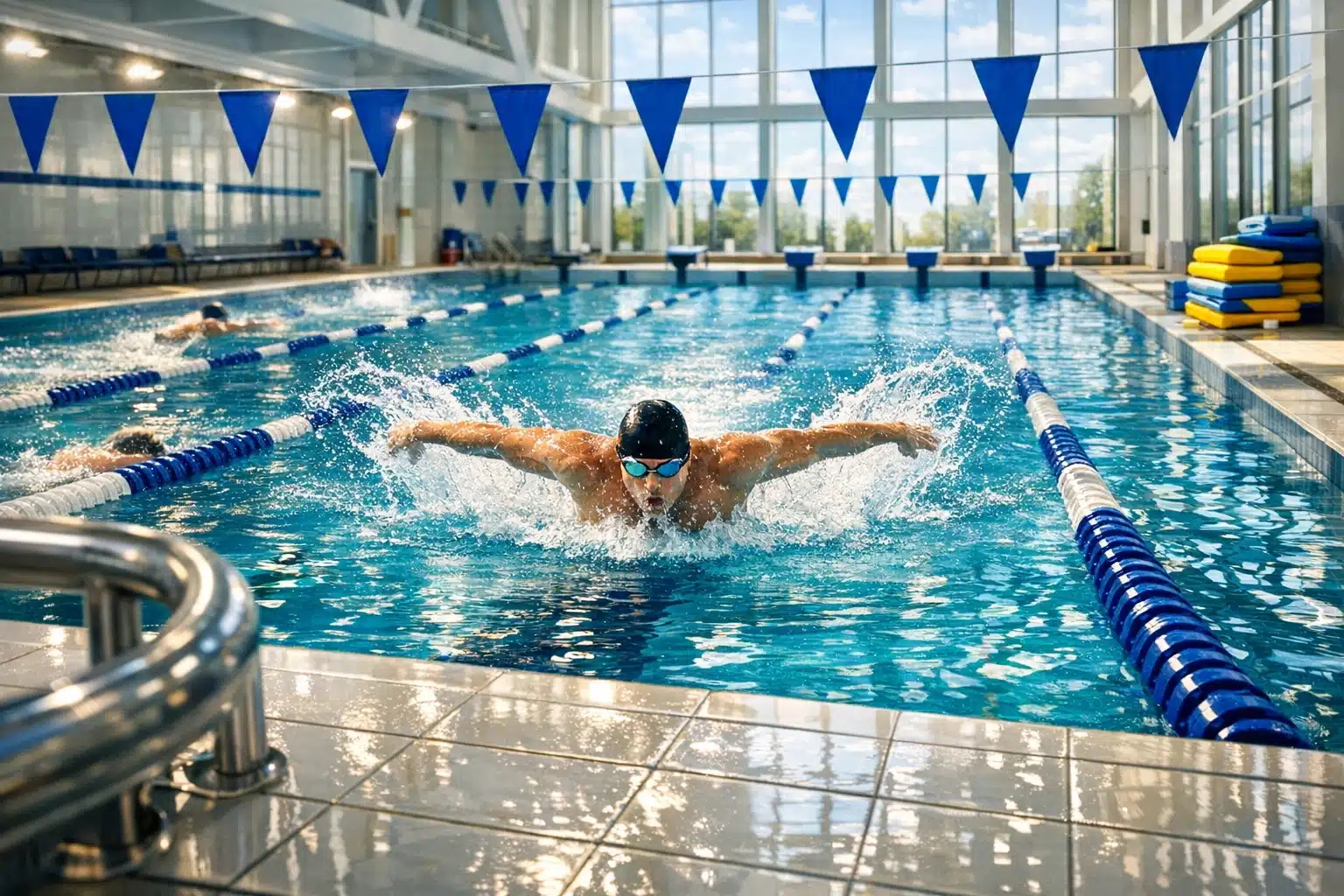
Explore the world of swimming
Swimming is one of those rare activities that feels playful and serious at the same time. It can teach a child confidence, help an adult build endurance, and give older swimmers a joint-friendly way to stay active. Because water changes how the body moves, breathes, and balances, every session becomes exercise and skill practice at once. This article explores how swimming works, why it matters, and how different people can make it part of everyday life.
Outline and Why Swimming Deserves Attention
Before diving into details, it helps to see the shape of the journey ahead. This article follows a simple outline so readers can move from the big picture to practical understanding. We begin with the importance of swimming as a life skill and a form of exercise. Then we compare the major strokes and how each one changes speed, effort, and body position. After that, we examine health benefits, training methods, and safety habits. Finally, we look at how swimming fits different lifestyles, from quiet recreational laps to the demanding world of competition.
- Why swimming matters for health, safety, and daily life
- How the main strokes differ in technique and purpose
- What physical and mental benefits regular practice can offer
- How beginners and experienced swimmers can train wisely
- Why swimming remains valuable across every stage of life
Swimming matters because it sits at an unusual intersection: sport, survival skill, recreation, therapy, and discipline. Unlike activities tied to a single setting or age group, swimming can begin in childhood and continue well into later life. Many people first meet it as a summer pastime, but the pool soon reveals deeper lessons. The water rewards patience more than force, timing more than tension, and efficiency more than drama. A strong swimmer often looks calm rather than explosive, which is part of the sport’s quiet appeal.
Its relevance is also practical. Drowning prevention remains a major public health issue in many parts of the world, which makes basic swimming ability more than a hobby. Learning to float, tread water, and move efficiently can increase safety around pools, lakes, rivers, and beaches. At the same time, swimming gives people a way to meet exercise guidelines in a lower-impact environment. Health authorities commonly recommend at least 150 minutes of moderate aerobic activity per week for adults, and swimming can contribute meaningfully to that goal.
Water changes the workout in helpful ways. Because the body is supported by buoyancy, the stress on joints is lower than in many running or jumping activities. Because water is far denser than air, even simple movements create resistance. That combination makes swimming accessible yet demanding. It can feel gentle on the knees while still challenging the lungs and muscles. For beginners, that is encouraging. For experienced athletes, it means there is always another layer of refinement to chase.
In short, swimming deserves attention not only because it is healthy or enjoyable, but because it teaches a useful kind of intelligence. It asks the body to cooperate with an element that does not forgive panic. When movement and breathing finally line up, the experience can feel almost musical, as if the water has decided to let you pass.
Understanding the Four Main Strokes
Swimming becomes easier to appreciate when the four main competitive strokes are viewed side by side: freestyle, backstroke, breaststroke, and butterfly. Each stroke uses a different body position, kick pattern, breathing style, and rhythm. To an observer, they may simply look like four ways to cross a pool. To a swimmer, they feel like four separate languages, each with its own grammar and personality.
Freestyle, usually referring to front crawl in practice, is the fastest and most commonly taught stroke for fitness and racing. The body stays horizontal, the kick is continuous, and the arms recover over the water in alternating cycles. Breathing is timed to the side, often every two, three, or four strokes depending on distance and comfort. Its advantages are speed and efficiency once technique improves. Its challenge is coordination, especially for beginners who lift their head too high and disrupt body alignment. In lap swimming, freestyle is often the default because it balances pace with sustainable effort.
Backstroke flips the body onto the back and changes orientation completely. For many learners, it feels freeing because the face stays above water and breathing is less stressful. Yet it brings a different difficulty: swimming in a straight line without seeing where you are going. Good backstroke depends on hip rotation, a steady flutter kick, and a strong catch beneath the surface. It can be especially useful for balancing training because it works the posterior chain and encourages shoulder mobility in a pattern different from freestyle.
Breaststroke is often slower, but it remains popular because the movement pattern feels intuitive to many people. The stroke uses a simultaneous arm pull and a frog-like kick, with a distinct glide phase between cycles. Timing is everything. If the pull, breath, kick, and glide fall out of sequence, the stroke becomes tiring quickly. Breaststroke is practical for recreational swimming because the head can rise forward regularly, helping orientation in open water or crowded pools.
Butterfly is the most demanding of the four for many swimmers. Both arms move together, and the legs perform a dolphin kick driven from the core and hips. Butterfly requires strength, rhythm, flexibility, and confidence with breath timing. It is also spectacular when done well. The swimmer appears to rise and fold through the water like a machine built from momentum and patience. Still, it is not only for elite athletes; even learning basic butterfly drills can improve body awareness and kick mechanics.
- Freestyle: fastest and efficient for most lap swimmers
- Backstroke: easier breathing, harder navigation
- Breaststroke: slower pace, precise timing, useful visibility
- Butterfly: powerful and technical, highly demanding on coordination
No single stroke is best for everyone in every context. Freestyle often wins for speed and conditioning. Backstroke offers variety and posture benefits. Breaststroke suits relaxed pacing and control. Butterfly builds power and rhythm. Together, they show that swimming is not one repetitive motion but a rich technical world where small changes in angle, timing, and balance can transform the whole experience.
Health Benefits: Strength, Endurance, and Mental Reset
Swimming has a reputation for being healthy, but that phrase only becomes meaningful when we look at what the body and mind are actually doing in the water. At a physical level, swimming is a full-body aerobic activity that recruits the shoulders, chest, back, core, hips, and legs in coordinated patterns. Unlike some gym exercises that isolate a single muscle group, swimming teaches those areas to work together. The result is not just effort, but integrated effort.
One of its clearest benefits is cardiovascular fitness. Repeated laps challenge the heart and lungs, especially when swimmers learn to regulate breathing rather than react to fatigue. Because inhalation opportunities are controlled by stroke rhythm, the body gradually becomes better at using oxygen efficiently. That can improve stamina in and out of the pool. Even moderate swim sessions can contribute to weekly aerobic activity targets, making the sport a useful option for people who want endurance work without high-impact pounding.
Swimming also offers muscular benefits through resistance. Water resists movement in every direction, which means the body works during pulls, kicks, turns, and even stabilization. The resistance is smoother than lifting a barbell, but it is constant. This is one reason swimmers often develop balanced-looking strength rather than only visible bulk. The core plays a particularly important role, keeping the body aligned so energy is not wasted through dragging hips or twisting shoulders.
Another major advantage is reduced joint stress. Buoyancy supports body weight, which can make swimming appealing for older adults, people returning from certain injuries, or those managing conditions that make repetitive impact uncomfortable. It is not effortless, of course. Shoulders can become irritated if technique is poor or volume rises too quickly. But compared with many land-based workouts, swimming often feels kinder while still being demanding.
The mental side deserves equal attention. Water has a way of narrowing attention to immediate, manageable tasks: exhale, rotate, pull, kick, repeat. That rhythm can be deeply calming. Many swimmers describe lap sessions as a moving form of meditation. The world shrinks to bubbles, lane lines, and the brief silence between breaths. Stress does not vanish, but it loses some of its noise.
- Improves aerobic capacity and breathing control
- Builds whole-body strength through natural resistance
- Supports exercise with less impact on many joints
- Can reduce stress through repetitive, focused movement
- Helps maintain long-term activity across different ages
There is also a confidence benefit that rarely appears on fitness charts. Progress in swimming is measurable in small victories: one extra lap, a smoother turn, less panic during breathing, better control in deeper water. These gains can feel surprisingly personal. The pool does not flatter, but it does reward persistence. Over time, swimmers often become not only fitter but steadier, more aware of their bodies, and more comfortable with gradual improvement.
Learning, Training, and Staying Safe in the Water
Swimming can look simple from the deck, but learning it well usually depends on structured practice. Beginners often assume that success comes from trying harder, kicking faster, or pulling more forcefully. In reality, progress tends to come from better body position, calmer breathing, and cleaner timing. Water exposes inefficiency immediately. If the hips sink, if the head lifts too much, or if the breath arrives in a rush, the swimmer feels it within seconds. That is why thoughtful training matters so much.
For new swimmers, the first goal should not be speed. It should be comfort and control. Floating, gliding, exhaling underwater, and recovering from brief moments of disorientation are foundational skills. These build trust in the water, and trust is the base of everything else. Without it, technique becomes tense and fragmented. With it, even a novice can begin to move more smoothly.
As swimmers improve, training usually becomes a mix of drills, steady swimming, intervals, and recovery. Drills isolate pieces of technique, such as a catch-up drill for freestyle timing or a kick-on-side drill for balance and rotation. Steady swimming builds aerobic capacity. Intervals add structure and can improve speed, pacing, and efficiency under fatigue. Recovery lengths allow technique to reset. A simple session might include a warm-up, a drill set, a main set, and an easy cool-down.
- Warm up before harder efforts to prepare muscles and breathing
- Use drills to improve mechanics instead of guessing at technique
- Increase volume gradually to reduce overuse problems
- Rest enough between hard sets to preserve good form
- Track progress by pace, distance, and how controlled the stroke feels
Equipment can help, though it should support learning rather than replace it. Goggles improve visibility and comfort. A kickboard can isolate leg work. Pull buoys help emphasize upper-body mechanics. Fins can build ankle flexibility and body position awareness, though overuse may hide weaknesses in technique. More advanced tools, such as paddles or tempo trainers, can be useful when introduced carefully.
Safety deserves constant attention, whether someone is swimming for recreation, fitness, or performance. Pools require lane awareness, respect for depth changes, and knowledge of local rules. Open water adds currents, temperature shifts, waves, limited visibility, and navigation challenges. Swimmers should avoid overestimating their ability, especially in natural settings where conditions change quickly. A bright cap, a tow float for visibility where appropriate, and a swim partner can make a meaningful difference.
Children should learn under qualified supervision, and adults who never learned to swim should know that it is never too late to begin. Formal lessons remain one of the smartest investments in water safety and confidence. Technique may look elegant at the advanced level, but its roots are wonderfully basic: float, breathe, relax, and learn to move with the water instead of arguing with it.
Swimming for Life: Recreation, Competition, and a Practical Conclusion
One of swimming’s greatest strengths is its flexibility. It can be a gentle recovery session, a structured training plan, a social hobby, a family activity, or a high-performance sport measured in hundredths of a second. That range is rare. A child splashing in a lesson pool, a triathlete rehearsing pacing, a retiree doing water exercise, and an elite sprinter preparing for a meet are all participating in the same broad world, yet each is using it in a different way.
Recreational swimming often centers on enjoyment, confidence, and steady fitness. It may involve casual laps, aqua classes, beach swimming in safe conditions, or simply using the pool as a place to move without pressure. For many adults, this is the most sustainable path. It is easier to keep showing up when the water feels inviting rather than punishing. A realistic routine of two or three sessions per week can produce meaningful gains over time, especially when consistency replaces intensity as the main goal.
Competitive swimming introduces a different atmosphere. Technique becomes sharper, turns and starts matter, and pacing is analyzed with care. Training plans are often periodized, meaning they shift across phases that build endurance, speed, race-specific fitness, and recovery. Competition can be motivating because feedback is immediate and objective. The clock does not negotiate. At the same time, racing is not the only marker of progress. Better efficiency, calmer breathing, and stronger confidence in deep water are achievements with lasting value.
Open-water swimming adds yet another dimension. Without lane lines and walls, the swimmer must navigate, sight forward, and adapt to temperature, chop, and changing conditions. Some people find it intimidating; others find it liberating. A lake or sea swim can feel vast and cinematic, as if the pool walls have been replaced by horizon and weather. It is beautiful, but it also demands respect, planning, and local knowledge.
The most useful conclusion for readers is simple: swimming does not need to become everything to become worthwhile. You do not need elite speed to gain fitness, and you do not need perfect technique to begin. What you do need is a sensible approach.
- If you are new, start with lessons and basic water confidence
- If you want fitness, build a repeatable weekly routine
- If you want performance, train with structure and feedback
- If you swim outdoors, treat safety as part of the session, not an afterthought
- If you feel stuck, focus on technique before adding effort
For the everyday reader, swimming offers something refreshingly honest: progress earned through rhythm, practice, and patience. It can strengthen the body, settle the mind, and provide a skill that remains useful far beyond the pool. Whether your goal is better health, safer time around water, or the quiet satisfaction of moving smoothly from one end of the lane to the other, swimming is a craft worth learning and a habit worth keeping.