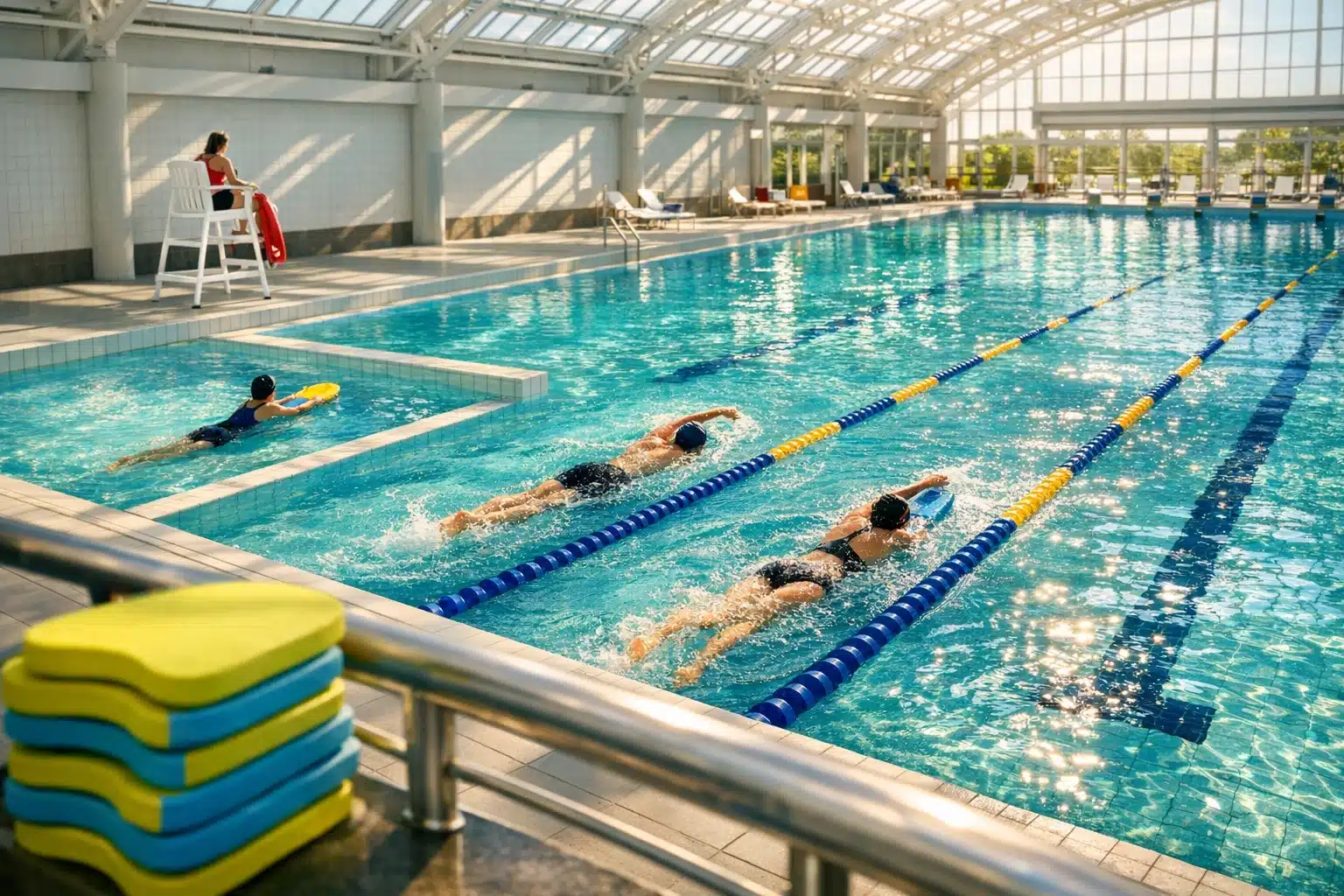
Explore the world of swimming
Introduction
Swimming is one of the rare activities that feels playful on the surface while quietly building strength, stamina, and confidence underneath. It can be a life skill, a sport, a therapy-friendly form of exercise, and a doorway to beaches, lakes, and pools around the world. Whether someone is learning to float for the first time or chasing faster lap times, swimming offers practical value at every level. This guide explores how it works, why it matters, and how to enjoy it safely.
Outline
This article moves from the big picture to the practical details. It begins with why swimming matters as a skill and a sport, then compares the main strokes and the mechanics behind them. After that, it explores physical and mental benefits, explains how to learn and train safely, and finishes with ways to make swimming part of everyday life for beginners, casual swimmers, and dedicated athletes alike.
- Why swimming remains relevant across ages, cultures, and lifestyles
- How freestyle, backstroke, breaststroke, and butterfly differ in purpose and feel
- What regular swimming can do for fitness, recovery, and mental well-being
- How to build skill step by step while staying safe in pools and open water
- How to turn swimming into a lasting habit, hobby, or competitive pursuit
Why Swimming Matters Beyond the Pool
Swimming occupies a special place among physical activities because it is both practical and deeply rewarding. A person can swim to compete, to relax, to rehabilitate after an injury, or simply to stay safe around water. Few sports carry this blend of utility and enjoyment. Learning to swim is not only about lap times or elegant technique; it is also about confidence, access, and freedom. A child who becomes comfortable in water gains a skill that can support family vacations, school programs, and future exercise habits. An adult who returns to the pool after years away often discovers that swimming offers a fresh start without the pounding impact that can make running or jumping uncomfortable.
Its relevance becomes even clearer when safety enters the conversation. The World Health Organization has reported that drowning remains a major global public health issue, causing hundreds of thousands of deaths worldwide each year. While swimming ability alone does not eliminate risk, water competence, supervision, and safe habits can significantly improve outcomes. In that sense, swimming is not just a leisure activity; it is part of a broader relationship with rivers, lakes, coastlines, and community pools. Knowing how to float, breathe calmly, and move efficiently in water can make ordinary life more secure.
Swimming also has a long cultural and historical reach. People have swum for transport, fishing, bathing, military training, and sport across many civilizations. Today, it belongs to multiple worlds at once:
- Public health and physical education
- Elite competition and Olympic sport
- Rehabilitation and low-impact exercise
- Travel, recreation, and family life
That broad appeal helps explain why swimming remains relevant from early childhood to older adulthood. It can be structured or playful, solitary or social. Some people love the measured rhythm of counting laps, while others prefer the sunlit unpredictability of a lake or sea. The water meets each person differently. One day it feels like resistance training, the next like moving meditation. That flexibility is part of swimming’s quiet genius: it adapts to changing goals, changing bodies, and changing seasons without losing its essential value.
Understanding the Main Strokes and What Each One Teaches
To many beginners, swimming can look like a blur of splashes and arm circles. In reality, each stroke has its own logic, pace, and personality. Learning the main strokes is less about memorizing formal rules and more about understanding how the body moves through water with less drag and more control. Water rewards balance, timing, and patience. It punishes tension, rushed breathing, and inefficient movement almost immediately.
Freestyle, often called front crawl, is the fastest and most commonly used stroke in fitness swimming and racing. Its alternating arm action and flutter kick allow for continuous forward motion, and once breathing rhythm improves, it becomes efficient over long distances. Freestyle teaches body rotation, streamlining, and the importance of keeping the head in a calm, stable position. Many new swimmers discover that the hardest part is not the arms but the breath. Turning to inhale without lifting the head too high can transform the stroke from exhausting to sustainable.
Backstroke flips the body onto its back and removes the challenge of face-down breathing, yet it introduces new demands. Swimmers must maintain alignment without being able to see where they are going. For many people, backstroke feels freeing because the chest stays open and the face remains above water. It can also highlight asymmetries in shoulder movement and core control.
Breaststroke is slower than freestyle but often easier for recreational swimmers to understand at first because the breathing pattern feels more natural. The stroke uses a pull, breath, kick, and glide sequence. When done well, it has a calm, almost conversational rhythm. When done poorly, it can become tiring and place unnecessary stress on the knees or lower back. Butterfly, by contrast, is powerful, technical, and physically demanding. It relies on coordinated arm recovery, dolphin kick, and wave-like body timing. Even strong swimmers treat butterfly with respect.
A simple comparison helps:
- Freestyle: fastest, efficient, ideal for endurance and fitness laps
- Backstroke: good for posture awareness and shoulder mobility
- Breaststroke: accessible pace, useful for control and timing
- Butterfly: advanced, explosive, and highly technical
Across all strokes, the same foundations matter: horizontal body position, relaxed exhalation into the water, steady kick mechanics, and a feel for balance. The real beauty of stroke learning is that progress often arrives in small moments. A smoother glide, a quieter kick, a breath taken without panic, a wall touched with energy still in reserve. Those details may seem modest, but they are the building blocks of confident swimming.
The Physical and Mental Benefits of Regular Swimming
Swimming has earned its reputation as a full-body workout for good reason. Every lap asks the body to coordinate the arms, legs, core, lungs, and nervous system while working against the resistance of water. Unlike many land exercises, swimming spreads effort across the whole body instead of concentrating impact on knees, hips, or ankles. Water buoyancy supports body weight, which is one reason swimming is often recommended as a lower-impact option for older adults, people returning from injury, and those seeking variety in their training. That said, technique still matters, and poor mechanics can strain shoulders, neck, or knees over time.
From a cardiovascular perspective, swimming can improve endurance and heart health when practiced regularly. Public health guidelines commonly suggest at least 150 minutes of moderate aerobic activity per week for adults, and swimming can absolutely count toward that target. A moderate lap session raises heart rate, challenges breathing efficiency, and builds stamina. Depending on body size, stroke choice, and intensity, swimming may burn roughly 400 to 700 calories per hour, with vigorous sessions sometimes exceeding that range. Numbers vary widely, so it is more useful to think in terms of consistency than perfect calorie math.
Muscularly, swimming develops strength with a different flavor than weight training. Water offers resistance in every direction, so even simple drills demand control. Freestyle and butterfly emphasize shoulders, back, and core; breaststroke brings strong involvement from the chest, inner thighs, and hips; kicking sets light up the legs in a way that many beginners do not expect. Over time, swimmers often notice better posture, stronger trunk stability, and improved mobility around the shoulders and ankles.
The mental side of swimming is just as compelling. The repetitive rhythm of strokes and breaths can create a focused, calming state that feels almost meditative. Many swimmers describe the pool as a place where outside noise fades and concentration sharpens. There is also a psychological reward in measurable progress. A person can track lap counts, split times, stroke efficiency, or simply how much easier the water feels after a month of practice.
Commonly reported benefits include:
- Improved aerobic fitness and stamina
- Low-impact conditioning for joints
- Greater body awareness and coordination
- Stress relief through rhythmic movement and breathing
- Accessible exercise options across many ages and ability levels
Swimming is not a miracle cure, and it does not suit every preference, but it offers an unusually balanced package. It can challenge elite athletes and welcome absolute beginners in the same building, often in lanes only a few meters apart. That range makes it one of the most adaptable forms of exercise available today.
Learning to Swim, Training Smarter, and Staying Safe
Learning to swim often begins with a surprisingly simple task: becoming comfortable enough in water to stop fighting it. Many adults and children assume progress starts with strong kicking or fancy arm movements, yet the real first lessons usually involve breath control, floating, submerging the face, and understanding buoyancy. Once those basics settle in, the body can start to trust the water rather than resist it. A good instructor knows this and builds skill progressively, moving from water confidence to streamlined gliding, then to kicking patterns, arm actions, and coordinated breathing.
For beginners, short and regular sessions usually work better than occasional marathon attempts. Twenty to thirty minutes of focused practice can be more effective than an hour spent tired and frustrated. Drills are especially useful because they isolate one skill at a time. A kickboard helps swimmers pay attention to leg action. Side-glide drills improve balance. Bubble practice teaches steady exhalation. Pull buoys can highlight body position and arm mechanics. Training tools should support learning, not hide weaknesses, so they are best used with purpose rather than as floating shortcuts.
Basic equipment is simple, which is part of swimming’s appeal. Most swimmers start with:
- A comfortable swimsuit that allows free movement
- Goggles that seal well without pressing too hard
- A swim cap if needed for hair control or pool rules
- A kickboard or pull buoy for drills during lessons
Safety deserves equal attention, especially because confidence can sometimes outpace judgment. In pools, swimmers should know depth changes, lane etiquette, and how fatigue affects technique. In open water, the equation changes dramatically. Currents, cold temperature, waves, low visibility, and distance from shore can challenge even capable swimmers. A pool swimmer who feels strong over 1,000 meters indoors may find a choppy lake surprisingly demanding.
Good habits reduce unnecessary risk:
- Swim where lifeguards or responsible supervision are present when possible
- Use the buddy system in open water
- Check weather, water conditions, and entry and exit points
- Wear bright caps or visibility gear outdoors
- Respect fatigue, cramps, and sudden temperature changes
Training smarter also means balancing effort and recovery. Not every session should be a hard one. Easy technique days, endurance sets, and occasional sprint work create a more durable swimmer than constant all-out effort. Progress in swimming is wonderfully honest. The water does not respond to ego; it responds to skill, calmness, and repetition. That is why steady practice, not dramatic struggle, usually leads to the biggest breakthroughs.
From Casual Laps to Open Water Adventures
One of the most appealing things about swimming is how many forms it can take once the basics are in place. For some people, the pool becomes a personal fitness studio with lane lines instead of mirrors. For others, it becomes a social world built around lessons, masters clubs, school teams, or weekend training groups. Some discover open-water swimming and suddenly trading ceiling tiles for sky and shoreline changes everything. The activity can remain gentle and recreational, or it can grow into a disciplined pursuit with training plans, races, and long-term goals.
Pool swimming offers structure. Distances are measurable, pacing is easier to track, and conditions stay relatively stable. That predictability is useful for building fitness and refining technique. A swimmer can see improvement in extra lengths completed, fewer strokes per lap, or more efficient breathing on turns. Competitive swimmers often thrive in this environment because it rewards precision. Starts, turns, and pacing strategy matter almost as much as raw strength.
Open-water swimming tells a different story. Lakes, rivers, and the sea replace lane ropes with currents, temperature shifts, and natural navigation. Many swimmers love the sense of exploration it brings. A calm morning lake can feel glassy and expansive, while ocean swimming introduces waves, swell, and the constant need to sight landmarks. The freedom is thrilling, but it demands extra caution and preparation. Wetsuits, tow floats, event support, and local knowledge can all play important roles depending on the setting.
Swimming also fits into wider lifestyles in flexible ways:
- Children may begin with lessons and move into clubs or school teams
- Adults may use lap sessions for fitness before work or during lunch breaks
- Triathletes add swimming as one part of a multi-sport routine
- Older adults often value it for mobility, circulation, and low-impact movement
For readers wondering where they fit, the answer is refreshingly open-ended. You do not need to race to belong in swimming, and you do not need perfect technique to benefit from it. Some people keep a simple routine of two weekly sessions. Some train for their first kilometer. Some learn at forty, sixty, or later and feel proud every time they push off the wall. Swimming welcomes seriousness, curiosity, and play in equal measure. If there is a common thread, it is this: the more thoughtfully a person engages with the water, the more the water gives back.
Conclusion for Readers Ready to Dive In
Swimming is worth exploring because it combines usefulness, fitness, and enjoyment in a way that few activities do. For beginners, it offers a practical life skill and a steady path toward confidence. For regular exercisers, it provides full-body conditioning with less impact than many other workouts. For experienced athletes, it opens the door to technical mastery, competition, and open-water challenge.
If you are just starting, focus on comfort, breathing, and consistency rather than speed. If you already swim, refining technique and building safer habits can make each session more effective. If you are returning after time away, begin with patience and let the water teach you again. Swimming does not demand the same goal from everyone, and that is exactly why it lasts. It can be your workout, your reset button, your weekend adventure, or your lifelong sport. The next step is simple: get in the water with respect, curiosity, and a willingness to learn.