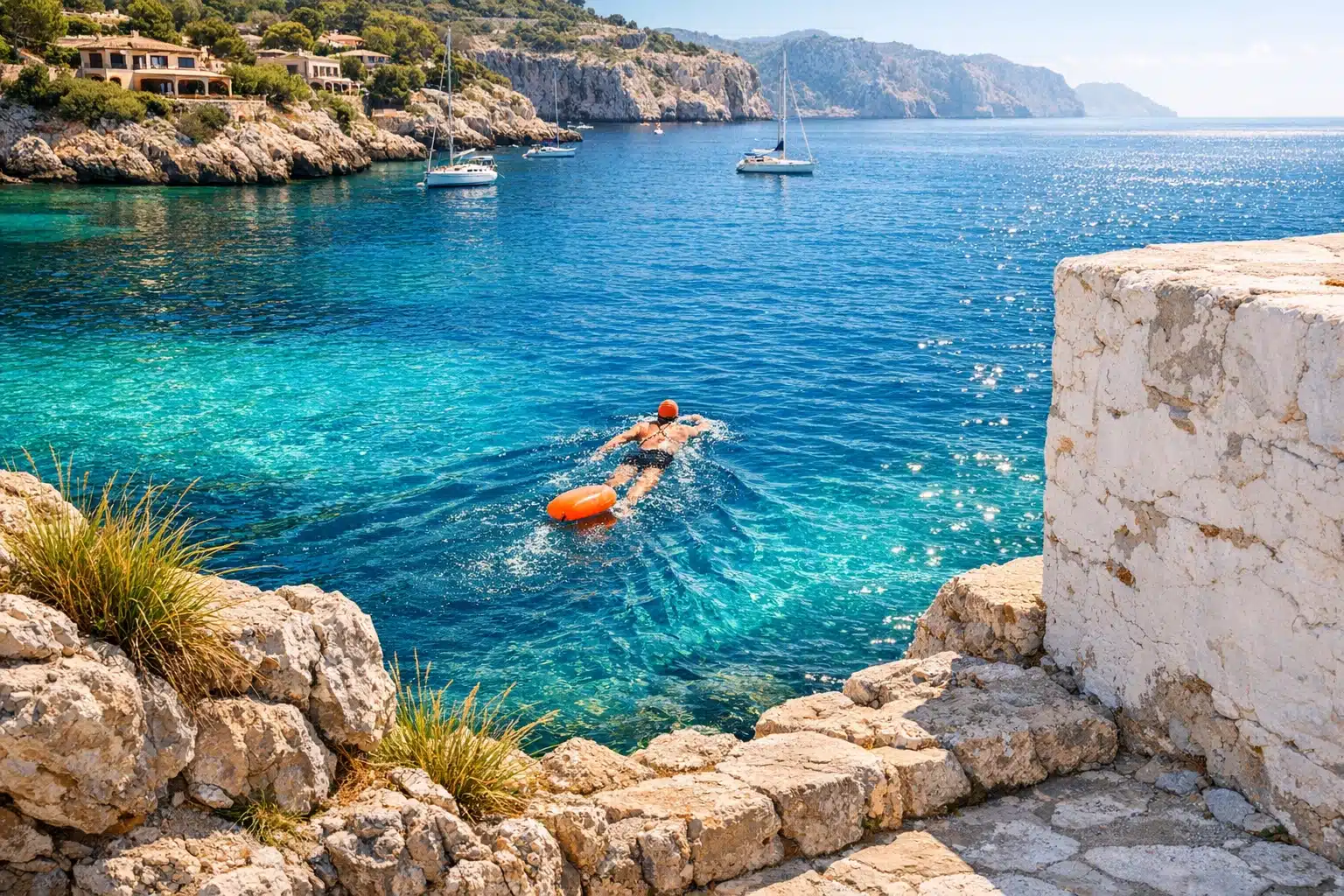
Explore the world of swimming
Swimming is one of those rare activities that feels playful and serious at the same time: a lifesaving skill, a competitive sport, and a reliable form of exercise in one. Whether you enter a quiet lap pool, a crowded public facility, or open water under a pale morning sky, the experience changes how your body moves and how your mind settles. That blend of purpose, challenge, and calm is why swimming continues to matter for children, adults, athletes, and older beginners alike.
Article Outline
- What swimming is and why it remains globally important
- How swimming supports fitness, health, and recovery
- Why technique matters more than many beginners expect
- How to think about safety, gear, and training environments
- What makes swimming a lifelong sport and a practical habit
Understanding Swimming: Skill, Sport, and Survival
Swimming is much more than moving from one side of a pool to the other. It is a physical skill, a form of recreation, a method of transport, a competitive discipline, and in some situations a basic survival ability. That broad usefulness is part of what makes it so enduring. Many sports are tied to a season, a specific age group, or a narrow setting. Swimming, by contrast, can begin in early childhood and continue well into later life. A person may first learn it for safety, return to it for fitness, and later rediscover it for stress relief or social connection.
One reason swimming stands apart is the environment itself. Water supports body weight, which changes the rules of movement. Joints experience less impact than they do during running or many court sports, yet the water still creates resistance in every direction. That means even a simple lap can ask the arms, shoulders, back, core, hips, and legs to work together. On land, gravity is the dominant force. In water, buoyancy and drag become central characters, and they quietly reshape every action. The result is a workout that can feel gentle and demanding at the same time.
Swimming also exists in several forms, each with its own purpose and personality. Competitive pool swimming usually centers on four main strokes: freestyle, backstroke, breaststroke, and butterfly. Open-water swimming adds different challenges such as sighting, currents, temperature, and visibility. Recreational swimming may involve games, casual laps, or family time in the water. Lifesaving and learn-to-swim programs focus on confidence, floating, treading water, and safe responses to risk. Each version teaches something slightly different, but all of them build familiarity with an environment that people often enjoy and underestimate at once.
Compared with some team sports, swimming can be highly individual. A swimmer often measures progress by time, distance, efficiency, or comfort rather than by a scoreboard alone. Yet it can also be deeply communal. Swim clubs, school teams, masters groups, and public lessons create routines and friendships around shared effort. Anyone who has stood on a pool deck before sunrise knows the feeling: steam in the air, lane ropes still, the day not fully awake, and a small group ready to begin. Swimming can be solitary in motion and social in structure, which is a rare combination.
At its core, swimming matters because it bridges practicality and pleasure. It teaches people how to navigate water safely, offers a strong full-body workout, and remains accessible across a wide range of ages and goals. Few activities cover that much ground with such quiet efficiency.
Health and Fitness Benefits Beyond the Lane Line
Swimming is often praised as a full-body workout, and that description is accurate, but it does not fully capture why the activity is so valuable. The health benefits come from a combination of cardiovascular effort, muscular endurance, breathing control, mobility, and mental reset. When someone swims regularly, the heart and lungs adapt to repeated rhythmic work. Laps performed at a steady pace can help support aerobic fitness, while faster intervals challenge the body in a way that resembles other structured endurance training. Because the water resists movement continuously, even moderate sessions can feel productive without the pounding commonly associated with high-impact exercise.
The muscular demands of swimming are also different from what many newcomers expect. Freestyle and butterfly place major emphasis on the shoulders, upper back, chest, and core, while breaststroke uses a distinct pull-and-kick pattern that highlights timing and lower-body coordination. Backstroke develops posture awareness and can feel more spacious because the face stays out of the water. Across strokes, the trunk plays a central role, especially in rotation, alignment, and balance. In other words, swimmers do not simply use their arms to pull and their legs to kick; effective movement depends on the body working as a connected system.
Swimming compares favorably with many other fitness options when comfort and sustainability are considered. Running is excellent for cardiovascular health and bone-loading, but it can be difficult for people managing joint pain or returning from inactivity. Cycling allows long aerobic sessions with low impact, yet it relies heavily on the lower body and may leave posture or shoulder mobility unchallenged. Walking is highly accessible and easy to maintain, though it usually provides lower resistance. Swimming sits in an interesting middle ground: low impact, technically rich, and scalable from gentle exercise to hard training. Depending on stroke choice, pace, body size, and session design, it can also use a meaningful amount of energy, making it helpful for overall fitness plans.
Mental wellbeing is another major advantage. Repetitive laps can create a calming rhythm, especially when breathing becomes more controlled and movement feels smoother. Many swimmers describe the water as a place where external noise fades. That does not mean swimming solves stress on its own, but it can support mood regulation and provide a reliable break from screens, traffic, and constant interruption. For some people, the pool becomes part workout, part reset button.
Swimming can also fit special circumstances. It is often recommended in modified form for people seeking gentle activity after periods of inactivity, for older adults who want lower-impact exercise, and for those rebuilding confidence after injury, provided they have appropriate medical guidance when needed. For general health, it can help people work toward widely recommended physical activity targets while adding variety to their routine. Few forms of movement combine conditioning, coordination, and recovery potential as neatly as swimming does.
How Technique Changes Everything in the Water
If fitness is one side of swimming, technique is the other. Many beginners assume success in the water is mostly about strength or bravery, but efficient swimming depends far more on position, timing, and relaxation than on raw effort. Water quickly exposes inefficiency. A tense neck, dropped hips, rushed breathing pattern, or mistimed kick can make a strong person feel clumsy and exhausted in a matter of minutes. By contrast, a technically sound swimmer often looks almost unhurried, moving forward with a kind of clean economy that seems simple only because it has been practiced carefully.
The foundation usually begins with comfort in the water. Before strokes become polished, swimmers need to exhale underwater, float, streamline the body, and understand how buoyancy behaves. Breath control is especially important. New swimmers often hold their breath too long, lift the head too high, or rush inhalations. Those habits disrupt body position and create a cycle of fatigue. Learning to exhale steadily into the water and inhale at the right moment can transform the entire experience. It is one of the first signs that swimming has started to make sense rather than feel like a struggle.
Body position is the next major piece. In freestyle, for example, the goal is not to fight the water head-on but to reduce drag and move through it with better alignment. The head should stay relatively neutral, the hips close to the surface, and the body should rotate rather than lie flat and rigid. Rotation helps the stroke lengthen and makes breathing easier. Backstroke has similar principles of alignment, though the face remains upward. Breaststroke and butterfly require more specialized timing, because propulsion and breathing are linked to a stronger rise-and-fall rhythm.
Good instruction matters because swimming includes details that are difficult to self-correct from feel alone. A coach or qualified teacher can identify whether a swimmer is crossing over with the hands, overkicking, lifting the chin, or shortening the stroke. Small adjustments often produce surprisingly large gains in ease and speed. Common technique priorities include:
- Steady exhalation in the water rather than breath holding
- A long body line through the head, spine, and hips
- Controlled kicks that support balance instead of splashing for show
- Relaxed recovery movements, especially in freestyle and backstroke
- Consistent practice of drills, not only nonstop laps
Technique also explains why stroke comparisons are so interesting. Freestyle is generally the fastest and most efficient for distance, which is why it dominates lap swimming and triathlon. Breaststroke is usually slower but easier for some beginners to understand because the face can rise forward more often. Backstroke helps body awareness and can be friendlier for people who dislike face-down breathing. Butterfly is the most demanding technically and physically, often admired precisely because it is difficult. Every stroke teaches something different, but all of them reward patience. In swimming, effort matters, yet precision multiplies whatever effort you bring. That is why the water can humble a novice and delight a learner in the same hour.
Safety, Gear, and Choosing the Right Place to Swim
Swimming is enjoyable and healthy, but water deserves respect. Safety is not a dull add-on to the sport; it is part of basic competence. Confident swimmers are not reckless swimmers. In pools, many hazards are manageable and familiar, such as slippery decks, fatigue, diving into shallow water, or overestimating one’s ability during hard sets. In open water, the picture becomes more complex. Weather shifts, water temperature, waves, currents, low visibility, and distance from immediate help all change the decision-making process. The skill required is not only swimming well but judging conditions honestly.
For beginners and children, formal lessons remain one of the best investments. They build essential habits such as floating, safe entry and exit, breath control, and awareness of what to do when tired or disoriented. Parents sometimes assume being comfortable splashing in shallow water is enough, but real water competence includes more than play. It means handling depth, recovering from unexpected movement, and understanding limits. Even strong adult exercisers can feel uneasy in deep water if they have never learned these basics well.
Choosing the right environment matters too. Pools offer lane markings, predictable conditions, and easier supervision. They are ideal for learning technique and tracking progress because distance is known and distractions are limited. Lakes, rivers, and the sea can be beautiful and deeply satisfying, yet they demand extra preparation. Open-water swimmers often need to sight forward regularly, adapt to chop, stay visible, and account for temperature changes that can affect performance quickly. Swimming in a pool and swimming in the ocean are related, but they are not interchangeable experiences.
Equipment should support safety and comfort rather than act as a shortcut. A few basics go a long way:
- A well-fitting swimsuit that allows free movement
- Goggles that seal properly without constant adjustment
- A swim cap when required or when hair management matters
- A kickboard, pull buoy, or fins for drills and structured training
- A brightly colored tow float or cap for many open-water situations
- A wetsuit in colder conditions when appropriate for the setting and rules
Pool etiquette is another overlooked form of safety. Swimmers should choose lanes that match their speed, rest at the wall without blocking others, and avoid pushing off directly into someone’s path. In group sessions, predictable movement prevents collisions. In open water, the equivalent habits include swimming with a partner when possible, checking local conditions, understanding access points, and never treating unfamiliar water casually.
Good safety habits do not reduce the pleasure of swimming; they protect it. The best sessions often look ordinary from the outside because the preparation was sensible. A swimmer who respects the environment, uses appropriate gear, and understands personal limits is more likely to keep returning to the water with confidence.
Swimming as a Lifelong Sport, Habit, and Community
One of swimming’s greatest strengths is that it can mean different things at different stages of life without losing its value. For a child, it may begin as a safety lesson and turn into joyful play. For a teenager, it can become a school sport that teaches discipline, pacing, and resilience. For an adult, it may serve as structured exercise before work, a low-impact return to fitness, or a complement to cycling, running, or strength training. For older adults, it often remains appealing because it is easier on the joints while still offering genuine physical challenge. That range is not a minor feature; it is the reason swimming stays relevant long after many people leave other sports behind.
Competitive swimming adds another layer. Training for races involves more than swimming long distances. Athletes use interval sets, stroke drills, starts, turns, and pace work to improve performance. Sprint events reward power and technical sharpness, while longer races demand efficiency and endurance. The clock gives immediate feedback, which can be motivating and unforgiving in equal measure. A fraction of a second matters in competition, but even outside formal racing, swimmers often enjoy the measurable nature of the sport. It is satisfying to see a 100-meter time improve or to realize that a once-daunting session now feels manageable.
Yet swimming does not need competition to be meaningful. Many people find their rhythm in masters groups, local community pools, hotel lanes while traveling, or gentle morning sessions done purely for health. The culture around swimming can be surprisingly welcoming because the sport includes so many entry points. Some arrive after injuries, some after years away from exercise, and some because the water gives them a sense of freedom they do not find elsewhere. The lane line has room for ambition and for quiet routine.
Swimming also pairs well with broader lifestyle goals. It can fit into a balanced weekly plan that includes mobility work, walking, strength training, or other sports. It teaches patience because improvement is rarely instant. It teaches humility because technique must be earned. It even teaches a kind of listening: to breath, to pace, to fatigue, to the subtle difference between forcing movement and finding flow. Over time, swimmers often become more observant about recovery, sleep, and consistency because the water reflects those habits clearly.
Perhaps most importantly, swimming offers durability. A person may not always race, chase personal records, or train for long sessions, but the basic practice can remain useful for decades. That makes it more than a seasonal hobby. It becomes part of how someone cares for fitness, manages stress, and stays connected to a skill that is as practical as it is rewarding.
Conclusion: Who Should Give Swimming a Serious Look
For beginners, swimming offers a safe place to build confidence and learn a skill that has real value beyond exercise. For busy adults, it provides efficient training that can improve cardiovascular fitness while placing less stress on the body than many land-based workouts. For parents, it is a practical reminder that water competence is not optional knowledge but an important layer of everyday safety. For older readers, returning athletes, and people who want sustainable movement, swimming can be both challenging and forgiving. If you are looking for an activity that combines health, discipline, calm, and long-term usefulness, the water is not promising an easy path, but it is offering a worthwhile one.