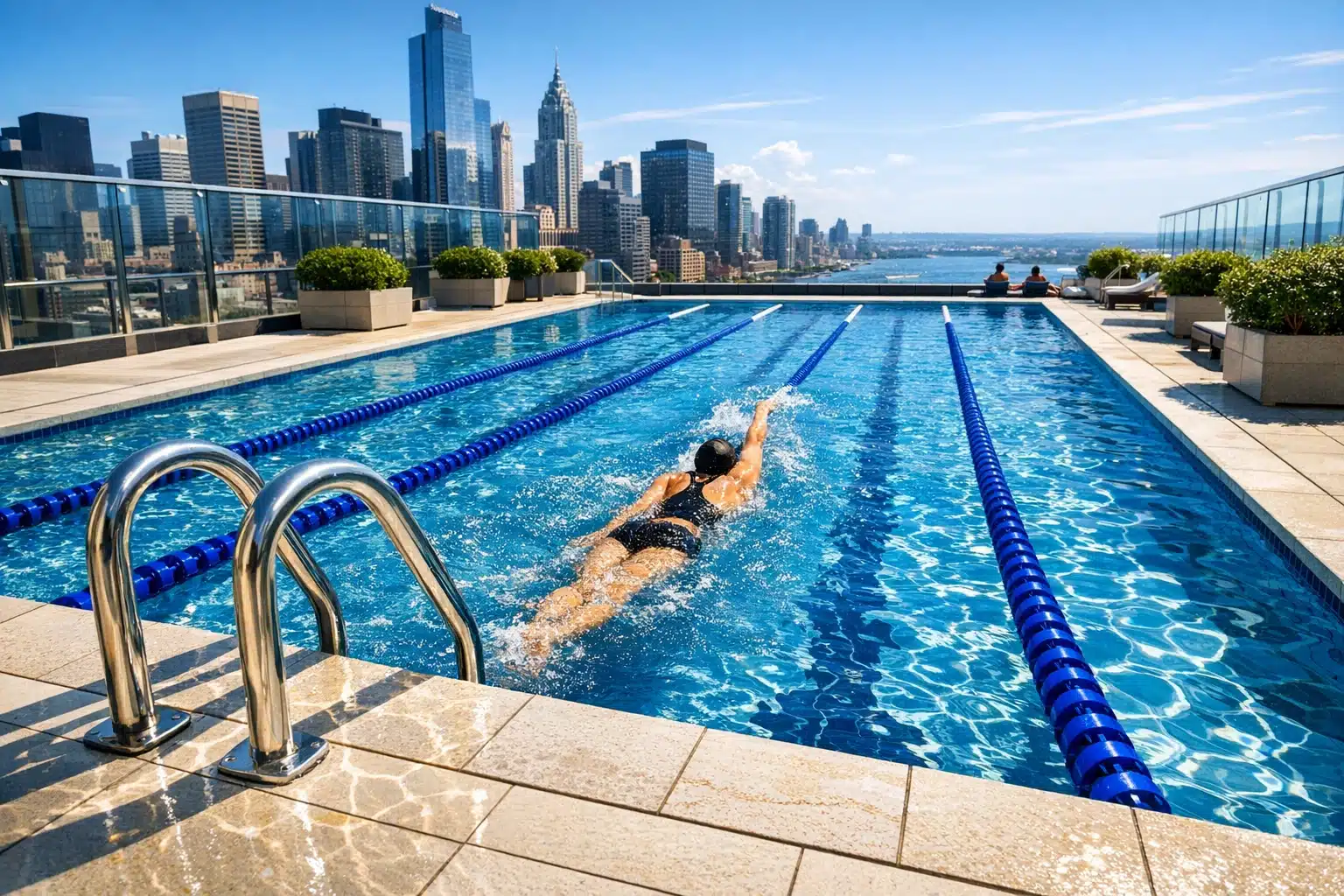
Explore the world of swimming
Swimming is one of those rare activities that feels ancient and modern at the same time. It is a survival skill, a competitive sport, a form of therapy, and for many people, a quiet escape from noisy routines. Whether someone enters the water to train hard, recover gently, or simply breathe a little deeper, swimming offers a unique mix of challenge and relief. That combination makes it relevant to children learning confidence, adults rebuilding fitness, and older swimmers protecting mobility.
Article Outline
- The broad importance of swimming as a sport, skill, and lifelong activity
- The physical and mental health benefits that make swimming widely recommended
- The main strokes, how they differ, and what technique changes in the water
- Training methods, safety principles, and equipment choices for steady progress
- A practical conclusion for readers who want to make swimming part of everyday life
Swimming as a Sport, Skill, and Lifelong Activity
Swimming stands apart from many other forms of exercise because it serves several purposes at once. It can be a recreational habit, a serious sport, a rehabilitation tool, and a basic safety skill. That range matters. A person may begin swimming for one reason and stay with it for another. A child might first learn to feel safe in shallow water, then discover a love for racing. An adult might join a pool to ease joint discomfort, then slowly become fascinated by lap times, stroke drills, and distance goals. Water has a way of turning practical learning into a lasting relationship.
Unlike some sports that require expensive facilities, specialized surfaces, or large teams, swimming can adapt to many settings. Pools, lakes, rivers, and coastal waters all offer different experiences, though they also demand different levels of caution and preparation. In organized settings, swimming is built around measurable progress. Distances, split times, stroke efficiency, and breathing rhythm all give swimmers clear feedback. That is one reason the sport appeals to people who enjoy seeing improvement in concrete terms. You do not need to guess whether you are moving better through the water. The lane line, the pace clock, and your own breath will tell you.
Swimming also compares favorably with land-based exercise in terms of accessibility across age groups. Running can be excellent for cardiovascular health, but it places repeated impact on joints and connective tissue. Cycling is efficient and enjoyable, yet balance and traffic conditions can limit participation. Swimming reduces impact because buoyancy supports the body. That does not make it easy. In fact, many beginners are surprised by how demanding it feels. Water resists movement in every direction, so even simple laps can challenge the lungs, shoulders, back, and core.
There is also a social and cultural dimension to swimming. For some families, it is a summer ritual. For others, it is a school subject, a club sport, or a quiet hour before work. Competitive swimming has produced iconic athletes and unforgettable Olympic moments, but the deeper value of the activity is more ordinary and more useful. It teaches discipline, body awareness, patience, and respect for the environment. A swimmer learns that efficiency matters more than force, that panic wastes energy, and that progress is often measured one careful length at a time. Few sports offer that lesson so clearly.
The Physical and Mental Benefits of Swimming
Swimming is often praised as a full-body workout, and that description is accurate when understood properly. Each stroke recruits multiple muscle groups at once. The arms pull, the legs kick, the core stabilizes, and the back helps maintain posture and alignment. Because water is denser than air, every movement meets resistance, which means swimmers train strength and endurance together. At the same time, buoyancy reduces stress on joints. This combination makes swimming useful for people who want challenging exercise without constant impact on knees, hips, or ankles.
From a cardiovascular perspective, swimming can help improve heart and lung function when practiced regularly at an appropriate intensity. Public health guidelines such as those from the World Health Organization recommend at least 150 minutes of moderate aerobic activity per week for most adults, and swimming can contribute directly to that goal. A steady lap session can raise heart rate, improve circulation, and build aerobic capacity. Faster intervals, sprint sets, and longer continuous swims can further increase training demand. Calorie expenditure varies widely depending on body size, stroke, speed, and efficiency, but swimming can rival many common gym workouts in energy use.
The benefits are not only physical. Many swimmers describe the water as mentally clarifying. The steady sound, repetitive motion, and controlled breathing can create a focused state that feels close to meditation. This does not mean every session is peaceful. Some are tough, noisy, and full of hard effort. Still, swimming often gives the mind fewer distractions than many forms of exercise on land. There are no incoming messages in the middle of a set, and conversation becomes secondary to rhythm. That alone can make a pool feel like a reset button.
Important benefits often associated with regular swimming include:
- Improved aerobic fitness and muscular endurance
- Lower-impact training for people managing joint sensitivity
- Better coordination through breath timing and body control
- Stress relief through repetitive movement and structured effort
- Support for mobility and active aging when practiced consistently
It is also worth noting that swimming can be scaled effectively. A beginner may start with short intervals and rest often. A trained swimmer may cover several kilometers in a session. Someone recovering from injury may use gentle water movement as part of a broader plan approved by a health professional. This range makes swimming unusually adaptable. It welcomes intensity, but it also respects limitation. That balance is one reason the sport stays relevant across life stages. You can meet the water where you are, and over time, it often helps you go further than expected.
Main Strokes, Technique, and the Art of Moving Through Water
To someone watching from the deck, swimming can look simple: enter the water, move the arms, kick the legs, and reach the other side. In practice, technique changes everything. Water rewards efficiency and exposes waste immediately. A poorly aligned head can sink the hips. A mistimed breath can interrupt momentum. A rushed kick can consume energy without adding speed. This is why stroke technique matters so much, even for swimmers who never plan to race.
The four competitive strokes each have a distinct rhythm and purpose. Freestyle, usually swum as front crawl, is the fastest and most widely used. It is built around alternating arm recovery, a streamlined body position, and side breathing. For fitness swimmers, freestyle is often the default stroke because it allows efficient forward movement over long distances. Backstroke reverses the orientation but keeps the alternating rhythm. It can help improve shoulder mobility and body awareness, though some swimmers struggle with direction and timing because they cannot see where they are going. Breaststroke uses a pull, breath, kick, and glide pattern that many beginners find approachable, but technically it is more complex than it looks. Timing is crucial, and poor form can place extra stress on knees. Butterfly is the most demanding stroke for most swimmers. It requires coordinated dolphin kicks, symmetrical arm recovery, and strong timing. When done well, it looks almost theatrical, as if the swimmer is briefly negotiating with gravity itself.
Comparing the strokes reveals how different swimming experiences can be:
- Freestyle is usually the most efficient for distance and speed.
- Backstroke promotes balance and body alignment while reducing face-in-water pressure.
- Breaststroke offers a distinct glide phase and is often used at gentler training paces.
- Butterfly develops power and timing but demands more energy and technical control.
Technique fundamentals cross all strokes. Swimmers benefit from a long body line, relaxed but purposeful breathing, and a stable core. Good swimmers are not only strong; they are organized in the water. They reduce drag, hold rhythm, and avoid fighting the medium they move through. That is the hidden beauty of swimming. On land, effort often looks like more motion. In water, better performance frequently comes from calmer motion.
Open-water swimming adds another layer. In a lake or sea, swimmers must sight forward, manage waves, adapt to temperature, and stay oriented without lane markings. Pool swimming is controlled and measurable. Open water is more fluid, both literally and mentally. One is a laboratory of repetition; the other feels closer to a conversation with nature. Both are valuable, and both remind swimmers that technique is not just about speed. It is about moving with intelligence, confidence, and economy.
Training, Safety, and Equipment for Better Swimming
A good swimming routine is built on patience. Many beginners make the same mistake: they try to swim too far, too fast, before they have learned how to breathe efficiently or maintain body position. That usually leads to frustration rather than progress. A more effective approach is to break training into manageable parts. Short repeats with rest, simple drills, and gradual increases in total distance allow technique and fitness to develop together. In swimming, the body often improves only after the brain understands the pattern.
A typical training session may include a warm-up, technique work, a main set, and a cool-down. The warm-up prepares the shoulders, lungs, and nervous system. Drills help isolate specific skills such as head position, catch mechanics, kicking rhythm, or bilateral breathing. The main set can focus on endurance, speed, pacing, or stroke variety. The cool-down encourages recovery and gives swimmers a final chance to restore smooth movement after harder effort. Structured sessions are useful because they transform random laps into targeted learning.
Safety is just as important as training quality. Swimming is enjoyable, but water demands respect. Pool swimmers should understand lane etiquette, depth markings, and the difference between comfort and carelessness. Open-water swimmers need even stronger habits, including weather awareness, visibility, local rules, and a realistic assessment of conditions. People often underestimate how quickly cold water, currents, or fatigue can change a manageable situation into a dangerous one.
Core safety practices include:
- Learn basic water safety and floating skills before attempting harder sessions.
- Never overestimate your endurance, especially in open water.
- Use supervised facilities or swim with others when possible.
- Warm up gradually and stop if you feel dizzy, unusually cold, or disoriented.
- For children, close and constant adult supervision remains essential.
Equipment can support progress, though it does not replace technique. A well-fitted swimsuit reduces drag and distraction. Goggles improve visibility and comfort. Swim caps help keep hair controlled and may reduce resistance slightly. Kickboards, pull buoys, fins, and paddles are common tools, each with a specific purpose. Fins can help beginners feel body position and speed, while paddles can build strength and awareness of the catch when used carefully. A pull buoy isolates the upper body, and a kickboard emphasizes leg work, though overuse of any tool can hide technical flaws instead of solving them.
The best training plan is usually the one a swimmer can repeat consistently. Two thoughtful sessions per week can be more productive than one exhausting workout followed by long gaps. Swimming rewards regularity. Show up, focus on one or two details, stay safe, and let improvement accumulate quietly. That is how confident swimmers are made.
Conclusion: Making Swimming Work for You
If you are the kind of reader who wants exercise to feel useful, sustainable, and mentally refreshing, swimming deserves serious consideration. It is not reserved for elite athletes, former competitors, or people who already look comfortable in a lane. It can begin with lessons, short sessions, and simple goals. For some, the first milestone is learning to float without tension. For others, it is swimming 25 meters without stopping, completing a first kilometer, or finally understanding how to breathe without panic. Each of those steps matters.
What makes swimming especially valuable for modern life is its flexibility. A student can use it to build confidence and discipline. A busy professional can use it to protect health and clear mental clutter. An older adult can use it to stay active with less joint stress. A recovering exerciser can return to movement through water more gently than through many impact-heavy routines. Even people who do not think of themselves as sporty often discover that swimming gives them a rare sense of progress without the noise, pressure, or self-consciousness that can come with some fitness spaces.
For readers wondering how to begin, the path does not need to be dramatic:
- Start with technique before distance.
- Choose consistency over intensity.
- Respect safety rules, especially beyond the pool.
- Track small improvements in comfort, form, and endurance.
- Allow the learning curve to be gradual.
Swimming is humbling in the best possible way. Water does not care about excuses, but it also does not demand perfection. It responds to attention. The more carefully you learn, the more generously it gives back. Over time, what once felt awkward becomes rhythmic, and what once felt tiring becomes calming. That transformation is part of the attraction.
In the end, swimming offers more than fitness. It offers competence, resilience, and a practical form of freedom. If you want an activity that can challenge your body, steady your thoughts, and stay with you for decades, this is a strong place to start. Step in carefully, learn well, and let the water teach you what steady progress feels like.