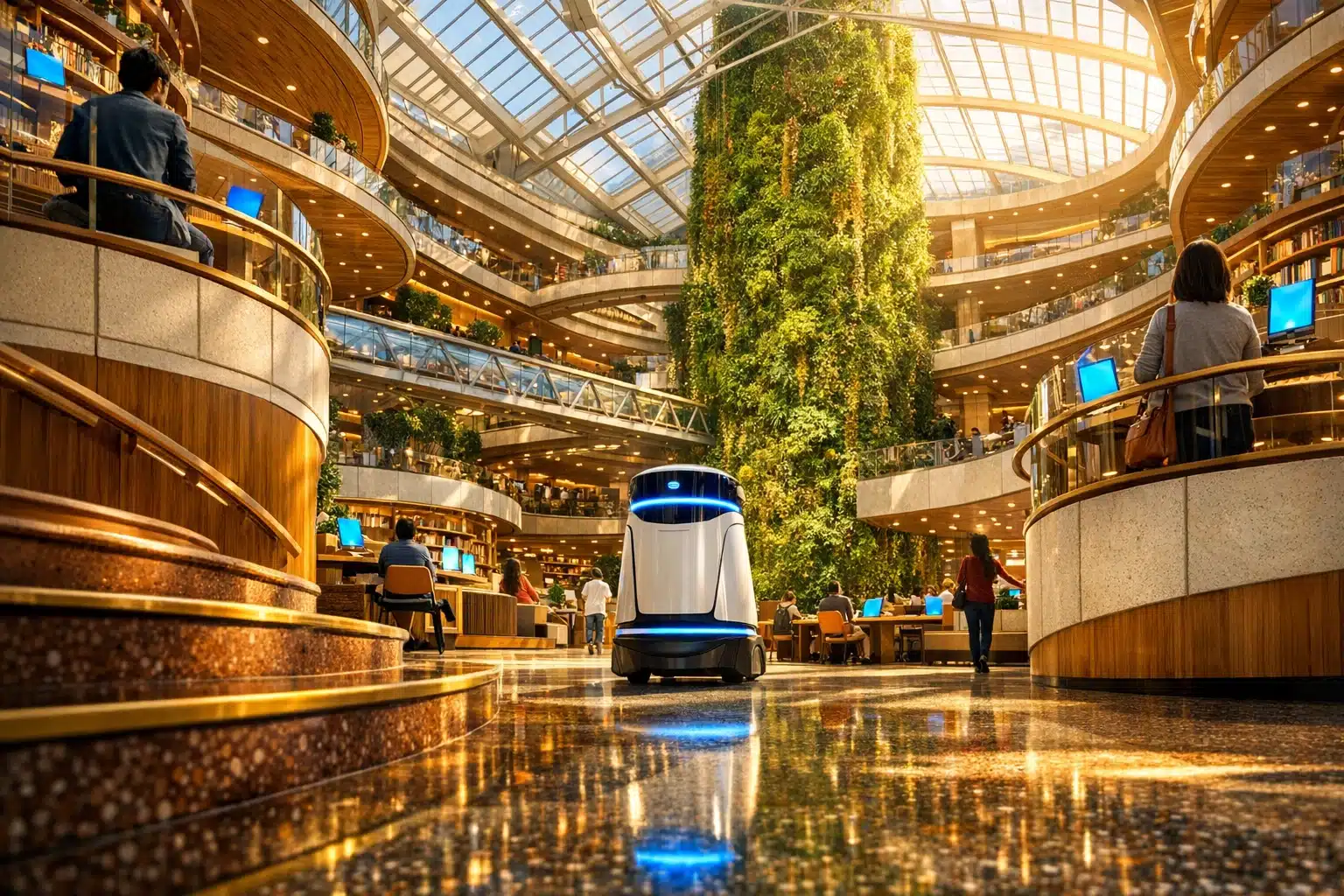
Exploring Society: Innovations and tech advancements impact on society.
Technology no longer waits in laboratories or behind factory doors; it travels with people in their pockets, speaks through home devices, and quietly guides decisions in offices, schools, hospitals, and streets. A faster network or a smarter tool can reshape routine behavior so quickly that yesterday’s novelty becomes today’s expectation. This article explores how innovation changes society in visible and hidden ways, from jobs and culture to health and public systems. Keep reading to see why understanding that shift matters for citizens, workers, students, and families alike.
Outline
This article unfolds in five connected parts. First, it explains how digital infrastructure became a foundation of daily life. Second, it examines automation, artificial intelligence, and the changing nature of work. Third, it looks at communication, culture, and the battle for attention in an always-connected world. Fourth, it explores the role of technology in health, sustainability, and public services. Finally, it closes with a practical, reader-focused conclusion on how society can shape innovation more wisely instead of simply reacting to it.
1. Digital Infrastructure: The Invisible Framework Behind Modern Society
When people think about technology, they often picture dramatic inventions: robots on assembly lines, self-driving cars, or artificial intelligence writing fluent text. Yet the deepest social impact often comes from less glamorous systems that act like plumbing for the digital age. Broadband networks, mobile towers, cloud computing, payment systems, satellite links, and data centers form the hidden framework that allows modern life to run at speed. They are rarely celebrated at dinner tables, but when they fail, everyone notices.
Over the last two decades, internet access has expanded from a specialty service into a basic social utility for billions of people. The International Telecommunication Union has repeatedly shown that internet use now reaches a clear majority of the global population, and smartphones have become the main gateway for many first-time users. This matters because connectivity is not merely about entertainment. It influences education, banking, healthcare access, transport planning, job searching, and civic participation. In many places, a weak signal does not just cause inconvenience; it can limit opportunity.
A useful way to understand this shift is to compare digital infrastructure with roads and electricity. Roads allow movement of goods and people; digital networks allow movement of information, money, and services. Electricity powers machines; cloud platforms power applications, storage, and collaboration across continents. A student in a rural community can watch lectures from a university in another country. A small business can sell products internationally using online marketplaces and digital payments. A hospital can store records securely and share scans with specialists far away. What once depended on physical proximity now often depends on stable connectivity.
Several layers work together to make that possible:
-
Networks connect homes, devices, offices, and public institutions.
-
Cloud systems store data and run applications at large scale.
-
Smart devices collect information and respond to users in real time.
-
Payment technology turns phones into wallets and storefronts.
The comparison between countries and communities is especially revealing. Places with affordable internet, strong digital literacy, and reliable infrastructure tend to adapt more quickly to new services. Areas with weak access can fall behind, creating what is often called the digital divide. That divide is not just technical; it is social and economic. If a school assigns online homework, a family without home access faces a different educational reality. If job applications move online, people with limited digital skills can be excluded before their abilities are even assessed.
Technology, then, is not only a collection of gadgets. It is a layered environment that increasingly shapes who can participate fully in society. The cables under streets, the servers in guarded buildings, and the signals moving invisibly through the air form a new civic architecture. Much like a city built on bridges and roads, modern society now rests on code, connectivity, and constant exchange.
2. Work in Transition: Automation, Artificial Intelligence, and the New Labor Landscape
If digital infrastructure is the stage, work is one of the main dramas playing out upon it. Every major technological wave has changed labor. Steam power shifted agriculture and manufacturing. Electricity extended production hours and transformed cities. Computers redefined office work. Today, artificial intelligence, robotics, and advanced software are creating another transition, and this one feels unusually personal because it affects both physical tasks and cognitive ones.
Automation is often misunderstood as a simple story of machines replacing people. In reality, it is usually a story of tasks being reorganized. A cashier may be supported by self-checkout systems, while an accountant may use software that handles repetitive data entry. In warehouses, robots can move shelves or scan inventory, yet people still manage exceptions, safety, maintenance, and coordination. The International Federation of Robotics has reported millions of industrial robots operating worldwide, especially in automotive and electronics manufacturing. Their spread reflects a clear pattern: firms automate predictable, repeatable tasks first.
Artificial intelligence extends this logic into new territory. Systems can summarize documents, detect patterns in medical images, recommend products, translate languages, and assist in customer service. That does not mean every job disappears. More often, jobs are restructured. A marketer may spend less time sorting spreadsheet entries and more time developing strategy. A teacher may use digital tools to track progress while focusing more on explanation and mentoring. A doctor may rely on software to flag anomalies but still make the final judgment.
Some occupations are more exposed than others:
-
Routine administrative roles are highly affected by software automation.
-
Factory and logistics jobs are influenced by robotics and sensor systems.
-
Knowledge work is being reshaped by generative AI and analytics platforms.
-
Hands-on care, negotiation, and creative leadership remain harder to automate fully.
The comparison between automation and augmentation is crucial. Automation removes or reduces human involvement in a task. Augmentation helps a person perform the task better, faster, or more accurately. Many workplaces now use a blend of both. For example, legal software can search thousands of documents in minutes, but a lawyer still interprets context, risk, and strategy. In journalism, software can organize information quickly, but reporting still depends on trust, verification, and judgment.
Technology also changes where work happens. Remote and hybrid work became more visible during the pandemic years, but the foundation had been built earlier through cloud collaboration, video conferencing, and shared digital platforms. For many workers, this increased flexibility. For others, it blurred boundaries between office time and personal time. A kitchen table became a temporary office; a phone became a leash as well as a tool. Efficiency rose in some settings, while fatigue and isolation rose in others.
The challenge for society is not whether technology will influence jobs. It already does. The real question is whether institutions can adapt fast enough. Education systems, employers, and governments must invest in reskilling, digital literacy, and transitional support. Workers do not merely need technical skills; they need adaptability, communication, ethical judgment, and the ability to learn continuously. In this new labor landscape, the strongest career advantage may not be mastering one tool forever, but learning how to evolve as tools keep changing.
3. Communication, Culture, and Attention: How Technology Rewrites Social Life
Technology has not only changed what people do; it has changed how people relate to one another. Communication once moved at the speed of mail, scheduled phone calls, or broadcast programming. Now it moves in a constant stream of messages, alerts, posts, and clips. The result is a social environment that feels immediate, crowded, creative, and occasionally exhausting. Society has gained extraordinary reach, but it has also entered an age where attention is contested every minute.
Social platforms, messaging apps, streaming services, and recommendation algorithms have transformed culture into something more interactive and fragmented. A teenager can watch a tutorial from Seoul, listen to music from Lagos, chat with friends across time zones, and post a video that reaches strangers in multiple countries. This is a remarkable expansion of cultural exchange. Small creators can build audiences without traditional gatekeepers. Communities once isolated by geography can find one another through shared interests, identities, or causes.
At the same time, the structure of digital communication introduces new pressures. Algorithms often prioritize content that generates strong reactions, and strong reactions are not always calm or thoughtful ones. Quick posts reward speed over reflection. Images can travel without context. Rumors can spread faster than corrections. The old public square has not disappeared, but it now competes with feeds designed to keep users engaged for as long as possible. If earlier media was like a scheduled train, digital media is more like a river in flood: fast, useful, noisy, and difficult to map while standing in it.
Technology has brought clear cultural benefits:
-
Independent creators can publish, earn revenue, and build niche communities.
-
Families and friends can maintain contact across distance at low cost.
-
Educational and cultural material is more accessible than in previous generations.
-
Social movements can organize quickly and attract public attention.
Yet the costs deserve equal attention. Constant connectivity can reduce deep focus. Notifications interrupt work and leisure alike. Comparison culture, especially on image-driven platforms, can intensify stress and self-consciousness. Children and adults alike are learning that digital life is not just about access to information; it is about managing emotion, identity, and credibility in a space where visibility itself can become a form of pressure.
This creates an interesting comparison between older and newer media systems. Traditional newspapers, radio, and television involved stronger editorial bottlenecks. Digital platforms opened participation dramatically, which is a democratic gain in many respects. But open participation without strong media literacy can leave users vulnerable to manipulation, confusion, or polarizing incentives. The answer is not nostalgia for a simpler era, because that era had exclusions of its own. The answer is a more mature digital culture: better platform design, stronger media education, and more deliberate user habits.
In practical terms, society now needs communication skills that were once optional. People must learn how to verify sources, read beyond headlines, recognize emotional manipulation, and set boundaries around screen time. Technology has turned each user into a tiny broadcaster, curator, and audience manager. That power is real, but so is the responsibility that travels with it.
4. Technology in Health, Sustainability, and Public Services: Progress with Trade-Offs
One of the most promising features of technological progress is its ability to improve systems that matter to everyone, not just early adopters or large corporations. In healthcare, environmental management, transportation, and public administration, innovation can make services more responsive and efficient. Yet these gains come with trade-offs that deserve honest discussion, because a useful tool can still create new forms of risk if it is introduced carelessly.
Consider healthcare first. Telemedicine expanded rapidly when in-person visits became difficult, and many patients discovered that routine consultations, follow-ups, and prescription management could be handled remotely. Wearable devices now track heart rate, sleep, movement, and other indicators, giving users more insight into daily health patterns. Hospitals use digital records to coordinate care more efficiently than paper-based systems allow. AI-assisted tools can help identify patterns in scans or flag anomalies for review. These developments can save time, reduce travel, and support earlier intervention.
Still, the comparison between digital convenience and equitable access is important. A video consultation is efficient only if the patient has a device, a stable connection, and the confidence to use it. Health data can be useful, but it is also deeply personal. Poorly managed data systems create privacy concerns, and algorithmic tools can produce uneven results if they are trained on incomplete or biased datasets. In health technology, trust is not a bonus feature; it is central to adoption.
Environmental technology tells a similarly mixed story. Smart grids help utilities balance electricity demand more effectively. Sensors can detect leaks in water systems. Precision agriculture tools allow farmers to use fertilizer, irrigation, and pesticides more selectively, which can lower waste. Navigation software can reduce fuel use by optimizing routes. Buildings with automated heating and lighting systems can improve efficiency. In this sense, technology can act like a good conductor, reducing waste in the orchestra of modern infrastructure.
But digital progress also has environmental costs. Data centers require substantial electricity and cooling. Device production depends on minerals, global shipping, and energy-intensive manufacturing. Electronic waste is a growing challenge, especially where recycling systems are weak. Society cannot simply celebrate the sleek surface of a new gadget while ignoring the material footprint beneath it.
Public services are also being redesigned through technology:
-
Online portals can make licensing, tax filing, and record requests faster.
-
Smart traffic systems can improve flow and reduce congestion.
-
Emergency response teams can use real-time data to allocate resources better.
-
Digital learning platforms can expand educational access beyond classroom walls.
The lesson across these fields is consistent. Technology works best when it supports human needs clearly, transparently, and fairly. A city does not become “smart” because it installs more sensors. A hospital does not become better because it has more dashboards. Improvement depends on whether innovation solves actual problems for actual people. Public trust grows when systems are understandable, secure, and inclusive. Without those qualities, even powerful tools can feel like distant machinery imposed from above.
5. Conclusion for Readers: Building a Human-Centered Technological Future
For the average reader, the most important insight is simple: technology is no longer a separate sector that only engineers, investors, or programmers need to follow. It is part of the environment in which modern life unfolds. It shapes how children learn, how adults work, how communities communicate, how patients receive care, and how governments deliver services. That means the future of technology is not only a technical matter. It is a civic, economic, and cultural question.
The good news is that society is not powerless. People often talk about innovation as if it were weather, something that arrives on its own and leaves everyone to adjust. In reality, design choices, regulations, business models, school curricula, and user behavior all influence what technology becomes. A tool can be built for speed alone, or for fairness as well. A platform can reward endless engagement, or support healthier interaction. A workplace can use AI to cut workers out, or to help workers perform better and learn new skills.
For students, this means digital literacy is now as important as traditional literacy in many contexts. For workers, it means career resilience depends on learning continuously rather than assuming one role will remain unchanged. For parents, it means guiding children not only on how to use devices, but on how to think critically about what appears on them. For business owners, it means choosing technologies that improve service and security without losing the human trust that sustains long-term success.
A practical way forward includes a few steady habits:
-
Stay curious about how tools work, not just what they promise.
-
Protect privacy by understanding data settings and platform policies.
-
Build adaptable skills such as communication, analysis, and ethical judgment.
-
Support institutions and leaders that treat access, safety, and transparency seriously.
The broader social goal should not be to slow every invention or celebrate every launch. It should be to align innovation with public value. Progress is most meaningful when it helps people participate more fully in society, not when it merely makes systems more complex or more profitable for a few. The brightest future will not come from technology acting alone. It will come from technology guided by human priorities: dignity, access, accountability, creativity, and care.
In the end, society does not simply live with technology; it teaches technology what kind of society it wants to be. That is why this subject matters to readers right now. Each choice, from the apps people trust to the policies they support, helps shape whether innovation becomes a bridge, a barrier, or something in between. Understanding that power is the first step toward using it well.