Top Tennis Basics: Rules, Skills, and Tips for Beginners
Tennis matters because it rewards patience, movement, strategy, and nerve in equal measure. A beginner can rally within a day, yet the sport stays challenging for decades, which is part of its lasting appeal. From local public courts to Grand Slam stadiums, the same lines, net, and scoring system connect casual play with elite competition. Learning the basics early makes the game more enjoyable, safer on the body, and far less confusing when points start to fly.
Outline: This article covers five essential areas for new players: the court, equipment, and playing formats; the rules and scoring system; the main strokes and movement patterns; practical tactics and training habits; and a realistic plan for building confidence, fitness, and long-term progress in tennis.
1. Understanding the Court, Equipment, and Match Formats
Before a player learns topspin or dreams about a clean winner down the line, it helps to understand the stage on which tennis is played. A standard tennis court is 78 feet long, or 23.77 meters. For singles, the court is 27 feet wide, while doubles uses the wider 36-foot court. The net stands 3 feet high at the center and 3 feet 6 inches at the posts. These measurements matter because they shape everything from serving angles to recovery steps. A beginner who knows the geometry of the court usually makes smarter choices about where to stand and where to aim.
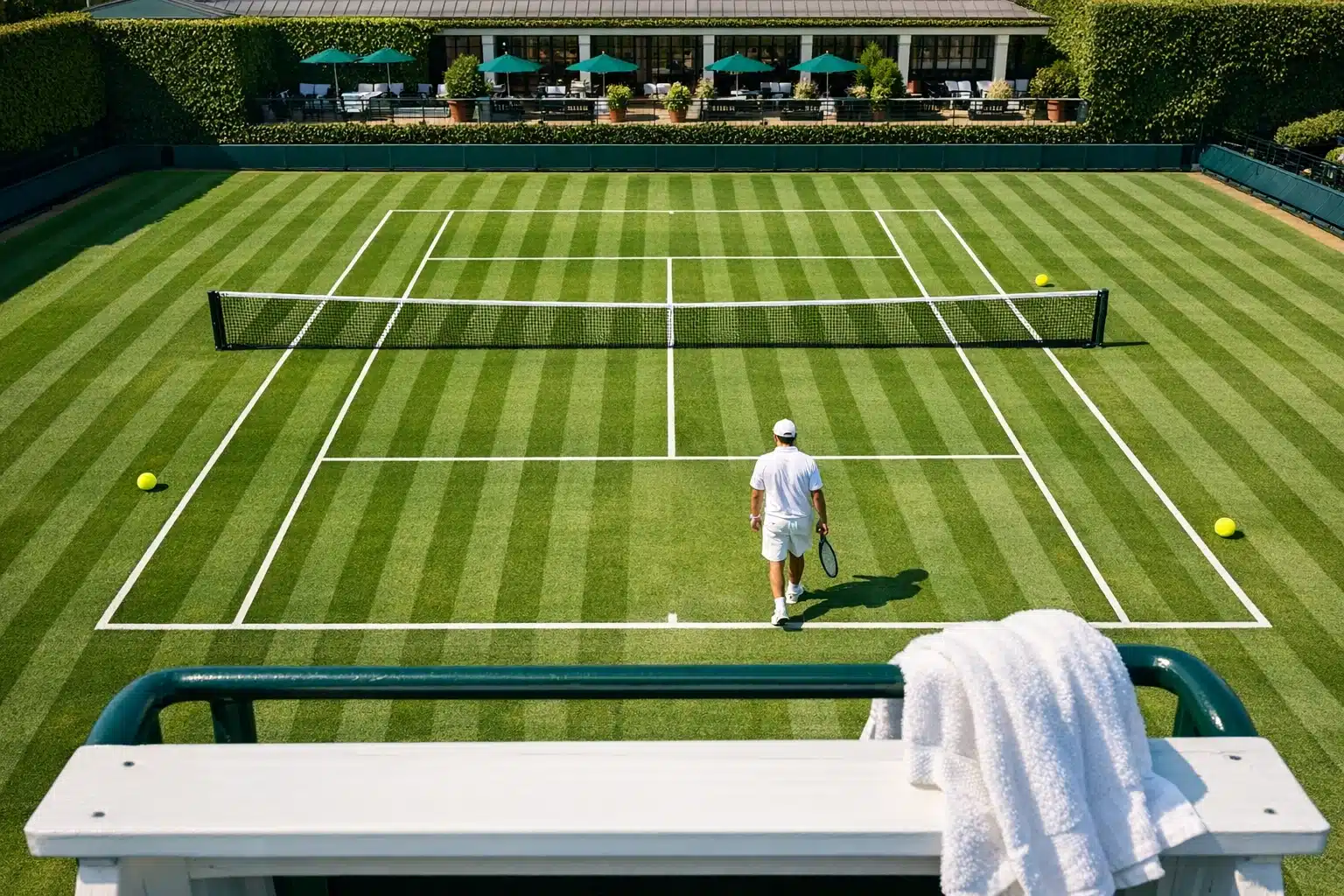
Surface also changes the character of tennis. Hard courts are the most common and usually offer a balanced bounce, which makes them practical for learning. Clay courts slow the ball and reward patience, longer rallies, and sliding footwork. Grass courts are faster and lower-bouncing, often favoring quick reactions and shorter points. If tennis were a conversation, hard court would be clear and direct, clay would be thoughtful and patient, and grass would answer before the question is finished. Understanding these differences helps beginners adjust expectations instead of assuming every bad bounce is their fault.
Equipment deserves careful attention because comfort and control matter more than appearance. A beginner does not need the heaviest racket or the tightest string setup. In fact, a racket that is too demanding can make learning harder. Most new players benefit from a lightweight to moderate racket with a forgiving head size, comfortable grip, and proper string tension. Shoes designed for tennis are equally important because they support side-to-side movement better than running shoes. A few useful basics include:
• Tennis balls made for the court surface being used
• A grip size that allows relaxed handling without squeezing too hard
• Tennis shoes with lateral support and durable outsoles
• Water, a towel, and sun protection for outdoor sessions
Beginners should also understand the difference between singles and doubles. Singles gives each player more space to cover, which means endurance, consistency, and recovery speed become major factors. Doubles is faster at the net, more tactical in positioning, and often more social. Many newcomers enjoy doubles first because shared responsibility lowers pressure and creates more opportunities to learn through teamwork. Whether you choose singles or doubles, knowing the court, surface, and equipment turns tennis from a mystery into a map, and every good rally begins with a map.
2. Tennis Rules and Scoring Without the Confusion
For many beginners, the strangest part of tennis is not the racket or the footwork but the scoring language. Why count 15, 30, and 40 instead of one, two, and three? The system has deep historical roots, but a new player does not need to solve its origins to use it well. What matters is the structure. A point is the smallest unit. Points build a game, games build a set, and sets build a match. A standard game moves from 15 to 30 to 40, and then game point. If both players reach 40, the score is called deuce. From there, one player must win two straight points: the first earns advantage, and the second wins the game. If the player with advantage loses the next point, the score returns to deuce.
The serve begins every point, and the server stands behind the baseline, hitting diagonally into the correct service box. Players get two serves. Missing both is a double fault, which gives the point to the opponent. If the serve clips the net and still lands correctly, it is usually replayed as a let. On the return, the receiver must let the serve bounce once before striking it, while in the rest of the rally the ball may be hit before or after the bounce, as long as it does not bounce twice. A ball that lands on the line is considered in, which can be frustrating for the player who hoped it was out and delightful for the one who painted the edge.
Sets are usually won by the first player to reach six games with a margin of at least two. At 6-6, most formats use a tiebreak, commonly first to 7 points with a 2-point lead required. Matches are often best of three sets in club and amateur play. Professional formats vary by event. Once these pieces are clear, tennis stops sounding like a coded language and starts to feel logical.
There are also practical rules and match terms that help beginners follow play:
• Break point: the receiver is one point away from winning the server’s game
• Hold serve: the server wins the game
• Love: zero points
• Unforced error: a mistake made without heavy pressure from the opponent
• Winner: a shot that is not returned in play
Beyond the written rules, tennis has an etiquette tradition that makes matches smoother. Players call lines fairly, avoid distracting movement while an opponent serves, and return balls courteously between points. At recreational level, honest calls and respectful pace matter just as much as clean strokes. Learning the rules gives beginners confidence, but learning the spirit of the game makes them welcome on any court.
3. Core Strokes, Spin, and Footwork Fundamentals
Every tennis point is built from a small group of essential shots, and beginners improve fastest when they understand what each shot is meant to do. The forehand is often the first stroke players trust because it usually feels more natural and powerful. The backhand can be hit with one hand or two, and both versions can be effective. Two-handed backhands often give beginners more stability, while one-handed backhands can offer reach and variety once timing develops. Then there is the serve, the only shot fully under a player’s control before the rally begins. It is also one of the hardest skills in sports to master because it combines timing, tossing accuracy, shoulder motion, balance, and confidence.
Volleys happen near the net before the ball bounces, and they reward short, efficient movements rather than big swings. The overhead, often used against lobs, looks dramatic but follows simple principles: move quickly, turn sideways, track the ball early, and strike above the head with balance. Returns of serve are different from regular groundstrokes because reaction time is shorter and preparation must be compact. A beginner who tries to hit every return like a full baseline forehand usually learns a hard lesson from the clock. In tennis, time is an opponent too.
Spin is another basic concept worth learning early. A flat shot travels fast and straight but leaves less margin over the net. Topspin makes the ball dip into the court and bounce higher, giving players a safer target zone. Slice creates backspin, producing a lower, skidding ball that can disrupt rhythm and buy recovery time. None of these are magical shots on their own. They are tools. Good players choose the right tool for the situation instead of swinging the same way every time.
Footwork is often the hidden engine of improvement. New players tend to focus on the racket because that is where contact happens, but the feet decide whether contact happens well. Useful movement habits include:
• Small adjustment steps before striking the ball
• Recovering toward a sensible central position after each shot
• Bending the knees instead of reaching with only the upper body
• Turning the shoulders early so the swing can stay smooth
The split step deserves special mention. This is a light hop or balanced landing just as the opponent hits the ball. It prepares the body to move in any direction. Without it, players often feel late even when they are fast. With it, the court seems to slow down. For beginners, the goal is not glamorous tennis but repeatable tennis: clean contact, stable balance, and enough movement to meet the ball instead of chasing it at the last second. When strokes and footwork begin to cooperate, tennis stops feeling random and starts feeling teachable.
4. Smart Beginner Tactics and Better Practice Habits
A common mistake among new players is believing that better tennis means hitting harder. In reality, early improvement usually comes from direction, height, depth, and patience. The player who keeps five more balls in play often beats the player who can hit one spectacular forehand and three into the net. High-percentage tennis is not boring; it is intelligent. In singles, this often means aiming safely over the lower center of the net, using topspin for margin, and targeting larger parts of the court instead of tiny corners. The baseline rally is a chessboard, not a slot machine.
One reliable beginner tactic is crosscourt play. Crosscourt shots travel over the lower part of the net and land in a longer diagonal distance, which gives more room for error. Down-the-line shots can be useful, but they demand greater precision and usually leave less recovery time. Another smart idea is to move the opponent before trying to finish the point. A short ball invites an approach. A weak reply creates space. A rushed player gives away options. In doubles, tactics change slightly because net positioning becomes more important. Teams often win points by controlling the middle, communicating clearly, and putting first volleys deep rather than trying for flashy angles too soon.
Practice habits matter as much as match tactics. Hitting casually is enjoyable, but focused repetition builds dependable skills. A good beginner session might include ten minutes of warm-up, twenty minutes of crosscourt rallying, ten minutes of serves, and a short game-based drill. Some useful priorities are:
• Rally for consistency before chasing speed
• Practice serves with a target, not just a bucket of random swings
• Work on recovery steps after every shot
• Finish sessions with point play so technique meets decision-making
Beginners also benefit from watching their own patterns. Do most errors happen on the run, on high balls, on serves, or on rushed backhands? Keeping simple notes after a session can reveal where the next improvement should come from. Video can help too. Many players are surprised to learn that what feels like a huge swing is actually short and tense, or that what feels like quick movement is mostly late reaching. Honest feedback, even when slightly humbling, saves months of guessing.
Finally, do not overlook warm-up, hydration, and pacing. Tennis involves bursts of acceleration, stopping, rotating, and pushing off sideways. That places stress on ankles, knees, hips, shoulders, and the lower back. A few dynamic movements before play and brief stretching after can support recovery. Good tactics help you win points; good habits help you keep playing long enough to enjoy the sport.
5. A Realistic Path for New Players: Confidence, Progress, and Long-Term Enjoyment
For beginners, the best way to improve at tennis is to build a routine that is ambitious enough to create progress and sensible enough to last. Many new players start with enthusiasm, buy equipment, play intensely for two weeks, and then disappear when results do not arrive quickly. Tennis rarely rewards impatience. Improvement usually comes in layers: cleaner contact, better movement, more reliable serving, smarter shot selection, and only then greater power. Accepting this order makes the learning process far less frustrating.
A practical starting plan could be two or three sessions per week. One session can focus on technique, one on rallying and point play, and one on fitness or match experience. Even a 45-minute practice can be effective if it has purpose. Beginners often progress faster when they mix private instruction, group clinics, and informal hitting. Lessons provide correction, clinics build repetition, and casual play turns skills into instinct. If formal coaching is not available, structured self-practice still works well when goals are specific: improve first-serve percentage, rally ten balls crosscourt, or recover to position after every shot.
The mental side of tennis deserves respect too. Because the score changes point by point, players can feel brilliant and frustrated within the same game. That emotional swing is normal. What helps is a simple between-point routine: turn away from the net, take a breath, decide on the next play, and reset posture. Beginners should measure success by more than wins. Useful signs of progress include:
• Fewer double faults
• Longer rallies with control
• Better balance during contact
• Smarter target selection under pressure
• Greater comfort in keeping score and managing pace
It is also worth choosing realistic goals. Not every player wants tournament competition. Some want exercise, some want social doubles, and some simply enjoy the challenge of mastering a technical sport. Tennis can meet all of those goals. It develops cardiovascular fitness, coordination, agility, and concentration, while also offering community through clubs, leagues, and public-court groups. Few sports let a child, a busy adult, and a retiree share the same basic game in such a meaningful way.
For readers just starting out, the message is simple: learn the court, trust the fundamentals, and let consistency arrive before ambition tries to sprint ahead. You do not need perfect strokes to enjoy tennis, and you do not need advanced tactics to begin playing thoughtful points. Start with sound basics, give yourself time, and treat each session as a small investment in a skill that can stay with you for life. That is where beginner tennis becomes real tennis.