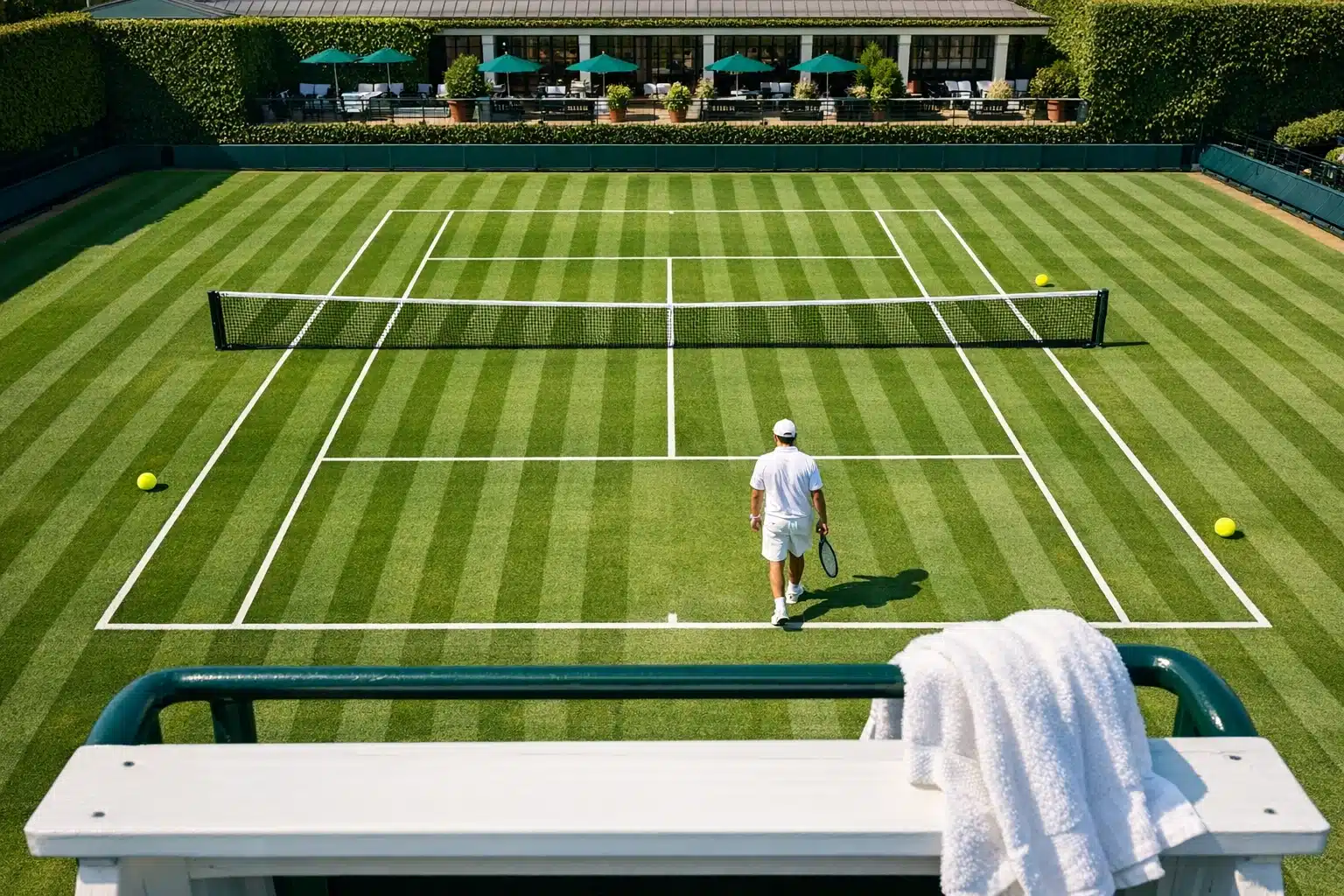
Explore the world of tennis
Tennis sits at a rare crossroads where athletic power, tactical patience, and personal expression meet on the same court. It matters because the game can be played casually in a neighborhood park, studied like chess at the highest professional level, and enjoyed across generations without losing its appeal. From Grand Slam drama to local club rallies, tennis continues to shape fitness culture, media, and community life in ways that reward both curiosity and commitment.
Outline of this article:
- The roots, rules, and surfaces that give tennis its structure.
- The techniques and tactical patterns that separate good players from great ones.
- The physical and mental demands that make tennis uniquely challenging.
- The professional circuit, ranking systems, and modern technology behind elite competition.
- The practical reasons tennis remains relevant for everyday players, families, and fans.
History, Rules, and Court Surfaces: The Framework of Tennis
Tennis feels modern when seen under bright stadium lights, yet its story stretches far back through older racquet sports before taking recognizable form in nineteenth-century Britain. What many people now call tennis was first standardized as lawn tennis, a game adapted for grass and social clubs, and from there it expanded into a global sport. Today, its simplicity remains part of its charm: two players or two pairs, a net, a marked court, and the constant puzzle of sending the ball back one more time with purpose. Beneath that simple setup, however, lies a carefully designed structure that rewards both discipline and imagination.
The dimensions of the court help explain how precise tennis really is. A standard court is 78 feet long. In singles, it is 27 feet wide, while doubles uses the full 36-foot width. The net stands lower in the middle than at the posts, subtly encouraging different trajectories and shot choices. The scoring system is even more distinctive. Points move from 15 to 30 to 40, and then to game, with deuce and advantage creating tension that can stretch a single game into a miniature drama. The exact origin of those numbers is debated, but their effect is unmistakable: momentum can swing sharply, and no lead feels entirely safe.
Match format adds another layer. Most matches are best of three sets, while men’s singles at Grand Slam events are traditionally best of five. That difference matters. Best-of-three tennis often rewards urgency and fast starts, while longer formats test endurance, adaptation, and emotional control.
Surface changes can make the same player look like a different athlete. The three major court types shape the ball in distinct ways:
- Grass usually produces a lower, quicker bounce and rewards first-strike tennis.
- Clay slows the ball, raises the bounce, and favors patience, spin, and movement.
- Hard courts sit between the two, offering a balanced but physically demanding environment.
These variations are not cosmetic. They influence rally length, footwork, serve effectiveness, and even career legacies. A powerful server may thrive on grass, while a relentless defender may build an identity on clay. That is one reason tennis stays so compelling. The rules remain constant, but the environment changes enough to create fresh tests, fresh heroes, and fresh arguments every season.
Technique and Tactics: How Tennis Turns Skill into Strategy
If tennis had only one language, it would still contain many dialects. Some players speak through heavy topspin, pushing opponents deep behind the baseline. Others use flat drives, early timing, and short points to steal time. Some build rallies like careful architects, adding layer after layer until an opening appears. Others swing like improvisational musicians, taking the ball on the rise and changing direction with bold intent. Technique gives players tools; tactics decide when and why those tools should be used.
The serve is the clearest example. It begins every point and is the only shot fully under the player’s control. A good serve is not merely fast. Placement, disguise, spin, and variation are just as important. A wide serve can drag an opponent off the court. A body serve can jam their swing. A kick serve can bounce high and force a weak reply. Elite players often combine these options rather than relying on one pattern. The return, meanwhile, is the answer to that opening question. Great returners shorten their backswing, read the toss, and react with calm aggression. They do not just block the ball back; they neutralize pressure before it grows.
Groundstrokes shape most rallies. The forehand is often the main attacking shot, capable of heavy spin or penetrating pace. The backhand can be struck with one hand or two, each style bringing advantages. One-handed backhands can offer reach, slice variety, and visual elegance. Two-handed backhands usually provide more stability on high balls and returns. Neither method is automatically better; each reflects a trade-off between leverage, timing, and comfort.
Movement may be the least glamorous skill, yet it is one of the most decisive. Good players do not simply run fast. They recover efficiently, split-step before the opponent strikes, and stay balanced through contact. A player who arrives half a second late often looks technically poor when the real problem is footwork.
Strong tactics usually rest on repeatable ideas:
- Attack the weaker wing without becoming predictable.
- Use cross-court shots for safety and angles, then redirect down the line at the right moment.
- Change height, speed, and spin to disrupt rhythm.
- Approach the net behind a quality shot rather than on hope alone.
At its best, tennis resembles a fast-moving debate. Every shot is an argument, every reply a counterargument, and the smartest player is not always the one who hits hardest, but the one who understands the point unfolding in real time.
The Physical and Mental Demands of Tennis
Tennis asks the body and mind to work like close partners in a difficult negotiation. One side must supply speed, strength, balance, and durability. The other must manage pressure, memory, patience, and risk. Unlike continuous sports, tennis is stop-and-start by nature, which makes its effort easy to underestimate. A point may last only a few seconds, but a match can stretch for hours, with repeated bursts of acceleration, rotation, and braking. That rhythm taxes multiple energy systems at once. Players need explosive movement for sprints and serves, but they also need the aerobic capacity to recover between points and maintain quality deep into a long contest.
Physically, the sport places heavy demands on the legs, core, shoulders, and forearms. Lateral movement is constant. The knees and ankles absorb sharp directional changes. The trunk transfers force from the ground into the stroke. The shoulder must repeatedly accelerate and decelerate through serving and overhead motions. At recreational level, poor preparation often leads to familiar problems such as tennis elbow, shoulder irritation, calf strains, lower back discomfort, and ankle sprains. At advanced levels, the margins become even smaller because volume and intensity increase.
That is why good training goes beyond simply hitting more balls. Effective preparation usually includes:
- Dynamic warm-ups that raise body temperature and improve mobility.
- Strength work for legs, core stability, and shoulder support.
- Agility drills that sharpen first steps, deceleration, and balance.
- Recovery habits such as sleep, hydration, and sensible scheduling.
The mental side can be even more revealing. Tennis offers no hiding place. There are no teammates to take the next possession, no clock to drain with a comfortable lead, and no guaranteed rhythm to settle nerves. A player can dominate one game and unravel in the next. Momentum shifts quickly because the scoring system magnifies key points. Double faults, missed volleys, and failed break points can linger in the mind unless a player learns to reset.
The best competitors develop routines that keep attention anchored in the present. They may adjust strings, take a breath, or repeat a cue word between points, not because superstition wins matches, but because focus needs structure. Emotional control does not mean feeling nothing. It means responding without panic. For everyday players, this lesson may be one of tennis’s greatest gifts. The sport teaches resilience in a public, measurable way. You miss, adapt, and try again. In that sense, tennis is not only exercise. It is training for composure under pressure.
The Professional Game: Tournaments, Rankings, Rivalries, and Innovation
Professional tennis is a layered ecosystem rather than a single tour. The men’s circuit is organized primarily through the ATP, the women’s through the WTA, and both lead toward the sport’s most visible events: the four Grand Slam tournaments in Australia, France, Britain, and the United States. Each major carries its own identity. The Australian Open often sets the early tone of the season on hard courts. Roland Garros tests patience and physical grit on clay. Wimbledon remains closely tied to grass-court tradition. The US Open finishes the set with a louder, faster, more urban energy. Together, these tournaments shape the public image of tennis, but the professional calendar extends far beyond them through Masters, 500 and 250 level events, team competitions, qualifiers, and challenger circuits.
The ranking system gives this long season its narrative thread. Players earn points based on performance, and those points determine seeding, entry, and status. That system rewards consistency as much as brilliance. A player who reaches quarterfinals week after week may build a stronger ranking than one who shines in isolated bursts. Rankings also create pressure. Defending points from the previous year can turn each return to a tournament into a test of memory as much as form.
Professional tennis has also been shaped by rivalries that became cultural events. Historic matchups have drawn new audiences because they offered more than shot-making. They embodied contrasts in style, personality, tempo, and psychology. One player might attack relentlessly, another absorb and redirect. One might play with icy control, another with visible fire. These clashes help casual viewers understand the sport’s richness because they make tactics feel personal.
Modern technology has changed the viewing and playing experience in important ways:
- Electronic line calling has reduced disputes and improved accuracy.
- Advanced analytics help players study serve patterns, return positions, and rally outcomes.
- String and racquet innovations have increased spin potential and power.
- Broadcast tools now reveal speed, placement, and shot trajectories with far greater clarity.
There are also broader conversations around scheduling, prize money, player welfare, travel demands, and equality in coverage. Tennis is global, but that global reach brings logistical strain and constant adaptation. Even so, the professional game remains compelling because it combines measurable performance with personal narrative. The scoreboard tells one story, but the season tells another: who improved, who endured, who reinvented themselves, and who found a way to win when every opponent already knew the script.
Why Tennis Still Matters for Everyday Players and Fans
For people outside the professional spotlight, tennis remains relevant for a simple reason: it gives back more than it asks, provided expectations stay realistic. You do not need a packed stadium, expensive academy, or highlight-reel forehand to benefit from the sport. A public court, basic instruction, and a willingness to look awkward for a while are enough to begin. Few activities combine cardiovascular work, coordination, balance, tactical thinking, and social interaction quite so naturally. One hour on court can feel like a workout, a puzzle, and a conversation all at once.
Tennis is also unusually adaptable across age groups and ability levels. Young children can start with slower balls and smaller courts. Adults can learn late without feeling excluded. Older players can modify intensity while keeping the strategic joy of point construction. Wheelchair tennis has shown with remarkable clarity that the essence of the game survives adaptation beautifully; the extra bounce changes the geometry, not the competitive spirit. That flexibility helps explain why tennis communities often stretch across generations. A teenager, a parent, and a retiree may not move at the same speed, yet they can still share the same sporting culture.
For beginners, progress often comes faster when the early focus is practical rather than glamorous. A sensible starting approach includes:
- Learning how to rally with control before chasing power.
- Choosing comfortable shoes and an easy-to-handle racquet instead of the most advanced gear.
- Playing on a regular schedule, even if sessions are short.
- Watching better players not just for entertainment, but to notice spacing, recovery, and decision-making.
Fans gain something valuable too. Tennis rewards close observation. Once you notice patterns such as serve direction, court positioning, and point construction, even a routine rally becomes rich with meaning. The sport slows down intellectually as it speeds up physically. That makes it deeply watchable over time.
For the target audience of curious readers, aspiring players, parents, and returning fans, the main takeaway is clear. Tennis is not only a heritage sport preserved by tradition; it is a living practice that still fits modern life. It can sharpen fitness without monotony, build resilience without preaching, and create connection without requiring elite status. If you want a sport that can challenge your body, occupy your mind, and keep teaching you long after the basics are learned, tennis remains a very good place to start and an even better place to stay.