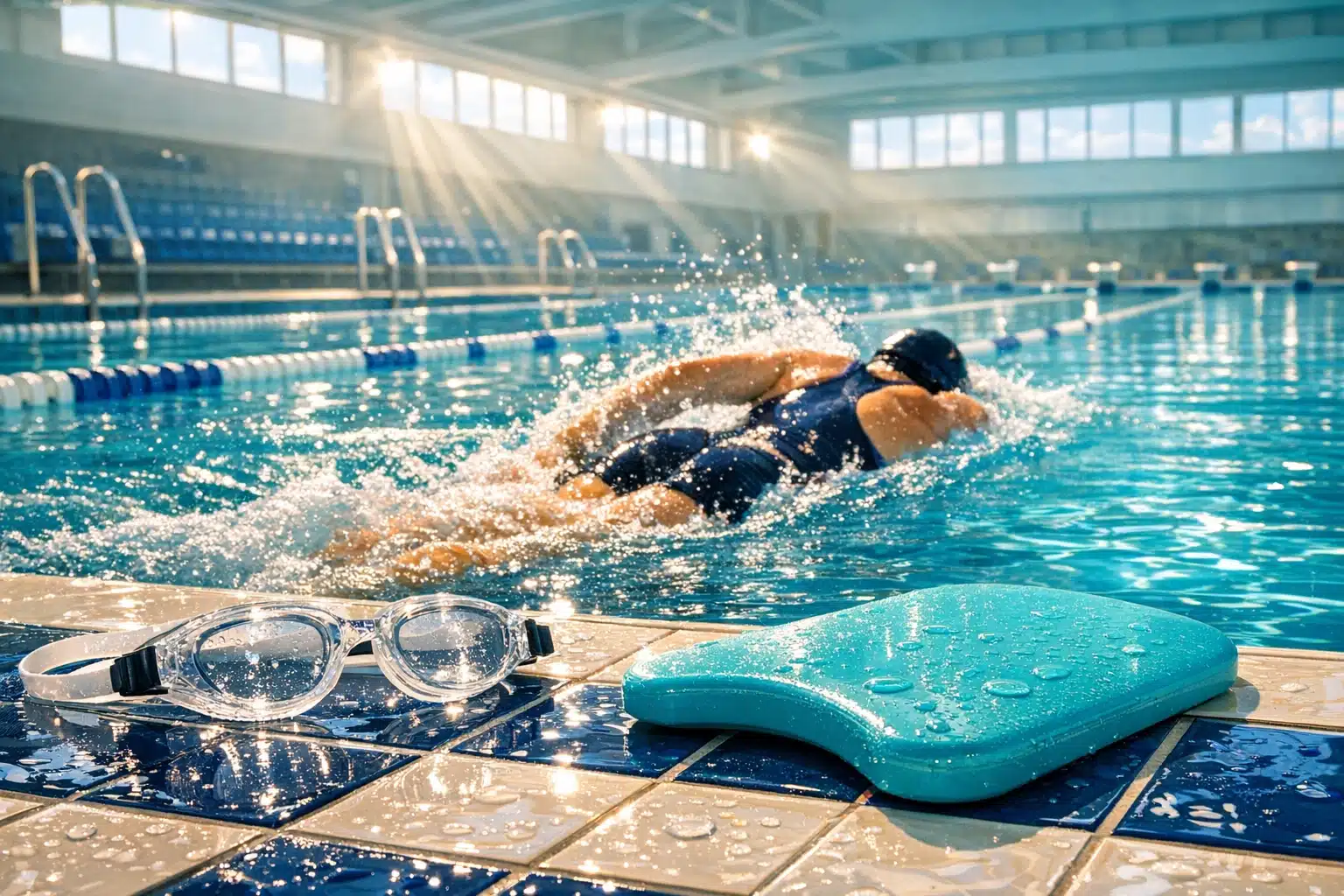
Explore the world of swimming
Why Swimming Matters: Introduction and Article Outline
Swimming is one of those rare activities that feels playful and purposeful at the same time. It can be a life skill, a competitive sport, a low-impact workout, and a quiet form of stress relief, all within a single session in the water. From children learning to float to adults training for triathlons, swimming reaches across ages and goals with unusual ease. That wide appeal makes it a topic worth exploring in depth.
Few physical activities are as versatile as swimming. It can serve survival, recreation, fitness, rehabilitation, and elite performance without changing its basic environment: a body moving through water. Unlike many land-based exercises, swimming places less impact on joints while still challenging the heart, lungs, muscles, and nervous system. Water also changes the sensory experience of movement. Sound softens, breathing becomes deliberate, and every motion meets resistance. For many people, that combination feels both demanding and restorative.
Swimming also matters beyond personal fitness. It is tied to public safety, school programs, summer culture, community recreation, adaptive sports, and international competition. Nations invest in pools not only for medals, but for health access and drowning prevention. Families often see swimming lessons as essential rather than optional, and with good reason. Knowing how to handle yourself in water can reduce risk and build confidence that lasts for life.
This article follows a clear path so readers can move from curiosity to understanding.
- First, it examines why swimming is relevant as a life skill, sport, and form of exercise.
- Next, it compares the major strokes and explains the mechanics behind efficient movement.
- Then, it looks at the physical and mental benefits supported by practical evidence and everyday examples.
- After that, it covers training structure, equipment choices, and safety in pools and open water.
- Finally, it explores swimming culture, access, and key takeaways for beginners, returning swimmers, and dedicated athletes.
If you have ever watched a calm lane swimmer cut through the pool like a zipper through fabric, or seen open-water swimmers vanish into gray dawn with surprising steadiness, you have already glimpsed the strange beauty of this subject. Swimming is simple to describe, but endlessly layered in practice. The rest of this guide dives into those layers with detail, context, and useful comparisons.
Understanding the Main Strokes and the Mechanics of Efficient Movement
At first glance, swimming can look like little more than arms pulling and legs kicking. In reality, technique shapes everything. A swimmer with average strength and sound mechanics often moves more efficiently than a stronger swimmer fighting the water. That is because water is far denser than air, so small errors in position create noticeable drag. Good swimming is not about overpowering the pool. It is about becoming streamlined, balanced, and rhythmic.
The four main competitive strokes are freestyle, backstroke, breaststroke, and butterfly. Freestyle, usually swum as front crawl, is the fastest and most commonly practiced. Its alternating arm action and flutter kick allow steady forward motion, especially when the swimmer maintains a long body line and rotates through the torso rather than windmilling from the shoulders alone. Backstroke uses a similar alternating pattern, but on the back, which changes breathing and orientation. Many beginners appreciate the easier access to air, though swimming straight can become a challenge without lane markings or ceiling cues.
Breaststroke is often described as more intuitive, but efficient breaststroke is technically demanding. Timing matters: pull, breathe, kick, glide. Done well, it feels smooth and compact. Done poorly, it becomes a stop-start battle against resistance. Butterfly is the most physically intense for many swimmers. It requires coordinated arm recovery, a dolphin kick driven from the core, and precise timing. When mastered, it looks almost theatrical, as if the swimmer is rising and falling with the water rather than fighting it.
Across all strokes, several principles stay constant:
- Body position should remain as horizontal and stable as possible.
- Breathing needs to support rhythm rather than interrupt it.
- Propulsion comes from coordinated whole-body movement, not isolated limbs.
- Relaxation matters because tension increases fatigue and often worsens form.
Beginners often focus on kick speed, but many coaches place greater emphasis on balance and alignment first. A frantic kick can waste energy if the hips sink and the head lifts too high. Likewise, breathing errors can derail an otherwise strong stroke. Lifting the head forward in freestyle, for example, often drops the hips and creates extra drag. Turning the head just enough to inhale while one goggle stays near the water usually works better.
Technique development is where swimming becomes deeply interesting. Two swimmers may cover the same distance, yet one appears smooth and economical while the other looks exhausted halfway down the lane. The difference usually lies in details: hand entry, catch angle, rotation, timing, and consistency. In that sense, swimming resembles music. Strength helps, but rhythm and control turn separate motions into something coherent.
Physical and Mental Benefits of Swimming
Swimming is often praised as a full-body workout, and that description is accurate, but incomplete. The real value lies in how many systems it engages at once. A steady swim session challenges cardiovascular endurance, muscular coordination, breathing efficiency, and mobility without the repetitive joint impact found in activities such as running on hard surfaces. For people managing knee discomfort, recovering from certain injuries, or seeking variety in their training, that combination can be especially appealing.
From a fitness perspective, swimming can help adults work toward widely recommended aerobic activity targets, such as 150 minutes of moderate-intensity exercise per week. Lap swimming can also be scaled easily. A beginner may swim short lengths with long rests, while an experienced swimmer can complete structured intervals that elevate heart rate substantially. Because water provides resistance in every direction, even non-weighted movement becomes demanding. Shoulders, back, chest, core, hips, and legs all contribute, though the emphasis changes by stroke and pace.
The benefits are not only physical. Swimming often produces a distinctive mental effect. The repetitive nature of laps can calm busy thoughts, especially when breathing settles into a predictable pattern. Some people find it meditative. Others enjoy the private focus of counting strokes or following the black line at the bottom of the pool. Open-water swimming offers a different kind of mental experience, one shaped by changing light, temperature, and natural surroundings. That environment can feel both humbling and freeing.
Research and lived experience both point to several practical advantages:
- Improved cardiovascular fitness through sustained rhythmic effort.
- Muscular endurance developed by repeated resistance against water.
- Lower impact on many joints compared with numerous land-based workouts.
- Better breath control and body awareness through technical practice.
- Stress reduction supported by focused movement and sensory immersion.
Swimming can also support confidence. Learning to float, tread water, or complete a continuous lap may seem modest from the deck, but these milestones matter. For children, skill in the water can build trust in their bodies. For adults, especially those returning after long gaps, progress often carries a quiet emotional charge. A person who once felt tense in the deep end may later find themselves moving calmly through twenty lengths. That shift is not only athletic. It is personal.
Of course, swimming is not magical, and it does not solve every fitness need on its own. Some swimmers still benefit from strength training on land, mobility work, or sport-specific conditioning. Yet as a durable, adaptable habit, it is hard to dismiss. It meets people where they are, whether they want better health, lower-impact exercise, emotional reset, or simply the satisfying fatigue that follows a well-earned session.
Training, Equipment, and Safety from Pool to Open Water
A thoughtful swimming routine does not have to look complicated, but it should have structure. Many new swimmers jump straight into repeated laps and stall quickly because they have no plan for pacing, technique, or recovery. A better session usually includes a warm-up, a focused main set, and a short cool-down. Even twenty to thirty minutes can be productive when the work has purpose. For example, a beginner might alternate easy lengths with kickboard drills and rest intervals, while an intermediate swimmer might combine technique work with timed repeats.
Drills are one of the most useful training tools because they isolate specific skills. Catch-up drill can help freestyle timing. Side-kicking can improve balance and breathing position. Single-arm work may highlight asymmetries. These exercises are not glamorous, yet they build the habits that make full-stroke swimming more efficient. Swimmers who want endurance should increase total distance gradually rather than rushing volume. Those who want speed often benefit from shorter, faster efforts with proper rest.
Equipment matters, though far less than advertisements sometimes imply. The essentials are simple: a swimsuit that stays secure, goggles that fit well, and access to safe water. Beyond that, tools can help but should serve a clear purpose.
- Swim caps reduce drag slightly and keep hair managed.
- Kickboards isolate leg work and can assist beginners.
- Pull buoys support the hips and emphasize upper-body mechanics.
- Fins can improve body position and help swimmers feel propulsion patterns.
- Pace clocks or waterproof watches aid interval training and consistency.
Safety deserves equal attention. In pools, that means understanding lane etiquette, entering water carefully, and respecting fatigue. Overconfidence is a common mistake, especially among adults who assume general fitness transfers directly to aquatic competence. It does not always. Water changes breathing patterns, visibility, orientation, and exertion. If technique breaks down badly, even strong people tire faster than expected.
Open water raises the stakes further. Conditions shift with temperature, currents, waves, visibility, and weather. Distances can feel longer without walls and lane lines. Anyone swimming outside a controlled pool setting should consider a bright tow float, a buddy or organized group, local rules, and realistic route planning. Cold water in particular can affect breathing and muscle function quickly.
Pool swimming is like practicing on a measured stage; open water is more like performing outdoors, where the setting becomes part of the challenge. Both can be rewarding. The key is respecting the environment, training progressively, and remembering that consistency usually beats bravado.
Swimming Culture, Access, and Final Takeaways for New and Returning Swimmers
Swimming is not only an exercise method or competitive event. It is also a culture shaped by schools, neighborhoods, national traditions, coaching systems, public facilities, and personal memory. In some places, swim clubs act as important community hubs. In others, access to safe pools remains limited by cost, geography, or infrastructure. That uneven access matters because swimming ability is connected not just to recreation, but to confidence and safety. A child who grows up near water without lessons faces a different set of risks and opportunities than one who enters formal classes early.
The culture around swimming is broad. There are young learners celebrating their first float, masters swimmers training before sunrise, triathletes refining efficiency, open-water enthusiasts chasing distance, and elite competitors measuring races in hundredths of a second. There are also adaptive swimmers whose skill and innovation expand the public understanding of what athletic performance can look like. The Paralympic movement, for example, has shown audiences worldwide that excellence in the pool is not defined by a single body type or pathway.
Swimming spaces can feel intensely social or pleasantly solitary. Some people love the ritual of seeing familiar faces in the same lane each week. Others value the independence of a session where conversation fades and only movement remains. Both experiences belong to the same world. That variety helps explain why swimmers often stay with the sport for years, even when their goals change.
For readers considering where they fit, a few practical conclusions stand out:
- If you are a beginner, prioritize water comfort and formal instruction over speed.
- If you are returning after time away, rebuild gradually and focus on technique before volume.
- If you already swim regularly, use structured sets and feedback to keep improving.
- If you are a parent, view swimming lessons as both skill development and risk reduction.
- If you are fitness-minded, remember that consistency matters more than heroic single sessions.
In the end, swimming offers something unusually durable. It can meet a child learning basic safety, an adult seeking joint-friendly exercise, a competitor pursuing performance, or a tired professional wanting a clearer head after work. The water does not care much about ego. It rewards patience, rhythm, and repetition. For the target audience of this guide, that is the central takeaway: start where you are, learn with intention, and let progress arrive one length at a time. Swimming does not need to be dramatic to be transformative; often its greatest power lies in the steady confidence built quietly between one wall and the next.