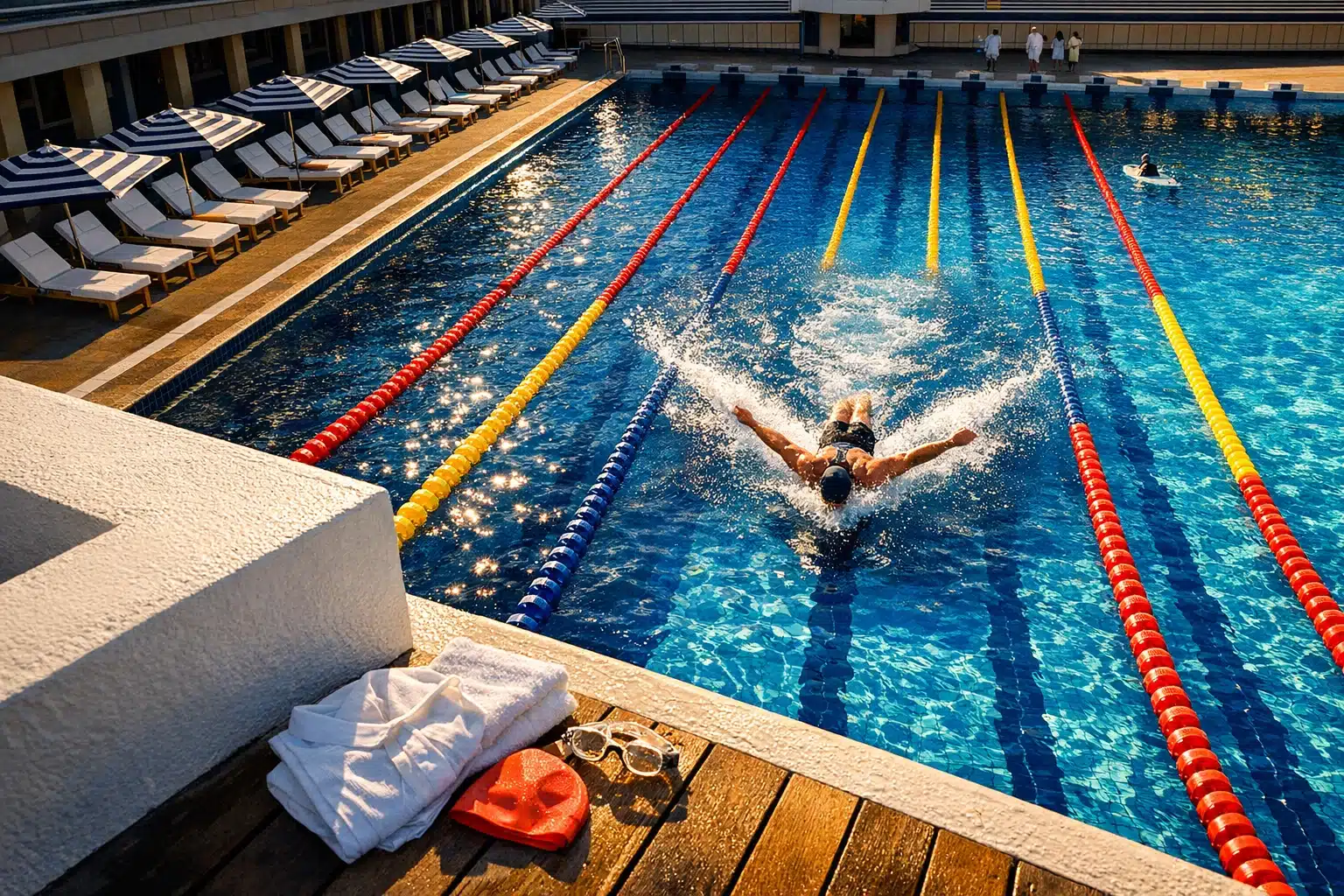
Explore the world of swimming
Swimming is one of the rare activities that blends sport, survival, therapy, and play into a single skill. It strengthens the heart and lungs, challenges the whole body, and offers a low-impact way to stay active across different ages. Pools, lakes, and coastlines also make water confidence a practical safety asset, not just a leisure pursuit. This article explores swimming through technique, training, health, and safety so readers can better understand why time in the water matters.
Outline:
– Why swimming matters as a life skill, sport, and form of recreation
– How the main strokes differ in rhythm, efficiency, and purpose
– How swimmers improve through practice, drills, and structured sessions
– What swimming can do for physical health and mental well-being
– Which safety habits and long-term strategies help people enjoy water for years
Swimming as a Life Skill, Sport, and Everyday Form of Movement
Swimming holds a special place among physical activities because it meets people at very different stages of life. For a child, it may begin as a lesson in floating, kicking, and learning not to fear the deep end. For a teenager, it can become a competitive sport built around lap times, starts, turns, and disciplined practice. For an adult, it often serves as a reliable way to stay active without the repeated impact that comes with running or jumping. For older adults, it can offer freedom of movement that feels surprisingly gentle, almost as if gravity has agreed to take the afternoon off.
That wide appeal comes from the nature of water itself. Buoyancy supports body weight, which reduces stress on joints and makes movement possible for people who may struggle on land. At the same time, water creates resistance in every direction, so even simple motion asks the muscles to work. This combination is unusual: the body is protected and challenged at once. A slow swim can feel restorative, while a hard set of intervals can be demanding enough to leave even trained athletes breathing hard at the wall.
Swimming also matters because it is not only exercise. It is a safety skill. Knowing how to float, tread water, control breathing, and move calmly in deep water can make beaches, rivers, lakes, and pools less intimidating and far safer. Around the world, water recreation is common, and in many communities it is part of everyday life during warm months. That makes basic swimming ability more than a hobby; it becomes useful knowledge.
As a sport, swimming has its own culture of precision. Distances are measured to the meter. Standard pool lengths are often 25 meters, 25 yards, or 50 meters, and each small improvement in time is earned through repeated practice. Competitive swimmers think about stroke count, pacing, reaction time, underwater phases, and efficiency. Recreational swimmers may care less about the clock, yet they still benefit from the same principles of balance, rhythm, and body position.
Swimming can be understood in several overlapping ways:
– As recreation, it offers enjoyment, cooling relief, and social connection.
– As exercise, it develops endurance, mobility, and muscular coordination.
– As sport, it rewards technique, consistency, and tactical pacing.
– As survival knowledge, it teaches control and confidence in a changing environment.
What makes swimming especially compelling is that these roles often blend together. A person may start by learning for safety, continue for health, and eventually discover the quiet satisfaction of moving smoothly through the water. Few activities move so easily between necessity and pleasure.
Understanding the Main Strokes and How They Compare
To an untrained eye, swimming can look simple: arms pull, legs kick, body moves forward. In practice, each stroke has its own logic, and learning those differences is one of the most rewarding parts of the sport. The four major competitive strokes are freestyle, backstroke, breaststroke, and butterfly. Each one asks the body to solve a different puzzle of timing, propulsion, and breathing.
Freestyle, usually swum with a front crawl technique, is the fastest and most common stroke in both fitness and competition. The body stays long and horizontal, the arms alternate in a continuous cycle, and the flutter kick helps maintain momentum. Efficient freestyle depends on more than effort. Good swimmers rotate through the hips and shoulders, keep the head stable, and breathe to the side without lifting the face too high. When done well, freestyle feels less like fighting the water and more like threading through it.
Backstroke is often the easiest stroke for breathing because the face remains above the surface. It uses an alternating arm action and flutter kick similar to freestyle, but the swimmer lies on the back. This position can improve posture awareness and shoulder mobility, though it also demands balance and spatial judgment. In a pool, lane lines and ceiling markers help; in open water, orientation becomes harder.
Breaststroke is slower than freestyle for most swimmers, yet it is widely loved because the head can rise naturally during each cycle and the stroke allows a clear forward view. Its kick is distinctive, using a whip-like action rather than a flutter. Timing is crucial: pull, breathe, kick, glide. When mistimed, breaststroke becomes tiring and inefficient. When coordinated, it has a calm, almost deliberate elegance.
Butterfly is the most physically demanding of the four for many learners. Both arms recover together over the water, and the body moves with a wave-like undulation supported by a dolphin kick. Butterfly rewards power, mobility, and excellent timing. It can feel fierce and dramatic, as if the swimmer is trying to carve a path through liquid resistance with every stroke.
A useful comparison looks like this:
– Freestyle: fastest, efficient over long distances, popular for fitness training
– Backstroke: easier breathing, good for balance and posture, harder to steer
– Breaststroke: comfortable visibility, technical timing, generally slower pace
– Butterfly: powerful and expressive, high energy demand, least forgiving for beginners
For new swimmers, freestyle and backstroke often provide the best starting point for building confidence and aerobic capacity. Breaststroke can be friendly once the timing clicks, while butterfly usually comes later. Yet no stroke is inherently superior in every context. A triathlete may depend on freestyle, a casual swimmer may prefer breaststroke, and a coach may prescribe backstroke to improve body awareness. Learning multiple strokes not only prevents boredom but also develops a more complete relationship with the water.
How Swimmers Build Technique, Stamina, and Speed
Improvement in swimming rarely comes from simply trying harder. Unlike some land-based activities, where extra force can temporarily hide poor mechanics, water exposes inefficiency almost immediately. A tense neck, dropped elbow, mistimed breath, or rushed kick can waste energy and slow progress. That is why strong swimming programs place technique at the center. Speed is often the visible result; efficiency is the hidden engine.
Most effective swim training sessions follow a structure. They begin with a warm-up to raise body temperature and establish rhythm. This is followed by drills or skill work, then a main set tailored to a goal such as endurance, pace control, sprint power, or stroke development. A cool-down closes the session and helps the body return to a calmer state. Even recreational swimmers benefit from this format because it turns aimless laps into purposeful practice.
Drills are especially valuable because they isolate one part of the stroke. A swimmer who crosses the centerline in freestyle may work on hand entry. Someone who struggles to breathe smoothly may practice side-kicking or single-arm freestyle. Breaststroke timing can be improved by pausing in the glide. Butterfly often becomes more manageable when broken into smaller pieces, such as body wave drills or single-arm repetitions. These exercises may look modest, but they can produce meaningful gains over time.
Endurance develops through repeated aerobic work, often in sets with controlled rest. A swimmer might complete 8 x 100 meters at a steady effort with 15 to 20 seconds of rest, or 4 x 200 meters with attention to pace consistency. Speed training looks different. Shorter repeats, sharper effort, and longer recovery help the nervous system and muscles produce force more effectively. Both forms of work matter. Endurance without technique can become sloppy, while speed without conditioning fades quickly.
Progress also depends on habits outside the pool:
– Regular attendance matters more than occasional heroic workouts.
– Mobility work can improve shoulder comfort, ankle flexibility, and body position.
– Adequate sleep supports recovery and learning.
– Nutrition and hydration influence energy, especially during longer sessions.
Equipment can help when used thoughtfully. Kickboards isolate the legs, pull buoys reduce lower-body demand, fins highlight body line and kick rhythm, and paddles can build strength while revealing flaws in hand placement. Still, tools should support skill, not replace it. A swimmer who depends on gear for speed may discover that the real issue is not fitness but form.
For beginners, a practical path is simple: learn to float, breathe calmly, and swim short distances with control before chasing volume. Intermediate swimmers often gain the most by refining stroke mechanics and pacing. Advanced athletes usually focus on details such as turns, starts, race strategy, and stroke count. Across all levels, the process is similar. Swim, observe, adjust, repeat. It is patient work, but that is part of the appeal. The water gives honest feedback, and over weeks or months, small changes become visible progress.
Physical Health, Mental Well-Being, and the Science Behind the Appeal
Swimming is frequently recommended because it combines cardiovascular work, muscular engagement, mobility, and coordination in a single activity. When people swim at a moderate effort, the heart and lungs must supply oxygen efficiently over time, which supports aerobic fitness. Public health guidance commonly encourages adults to aim for at least 150 minutes of moderate-intensity aerobic activity each week, and swimming can contribute meaningfully to that goal. Depending on stroke choice, pace, body size, and session length, energy use can range widely, with many swimmers expending several hundred calories in an hour.
The health benefits are not limited to endurance. Water resistance asks the arms, shoulders, back, core, hips, and legs to work through each stroke cycle. That means swimming can improve muscular endurance and full-body coordination while remaining relatively gentle on joints. For people with certain mobility concerns, previous injuries, or a dislike of high-impact exercise, this matters a great deal. The body still works hard, but it does so in an environment that cushions movement.
Breathing patterns add another interesting layer. Unlike walking or cycling, swimming forces a more deliberate rhythm of inhalation and exhalation. Swimmers learn to stay composed while managing breath under effort, and that can improve respiratory control and comfort during exercise. The first lessons may feel awkward, but over time the inhale becomes quick, the exhale becomes steady, and the whole stroke cycle begins to feel almost musical.
Mental benefits deserve equal attention. Water has a distinctive sensory effect: sound softens, visual distraction narrows, and repetitive movement can become meditative. Many swimmers describe a session as both tiring and clarifying, as though the mind has been rinsed clean along with the body. This does not mean swimming is a cure for stress or anxiety, but regular exercise is widely linked to better mood, improved sleep, and reduced tension, and swimming fits naturally into that pattern.
Some of its most practical advantages include:
– Low-impact movement for many age groups
– Whole-body effort rather than isolated muscle work
– Scalable intensity, from easy recovery swims to demanding interval sets
– Potential social value through lessons, clubs, teams, and group sessions
There are, of course, limits. Poor technique can irritate shoulders or neck muscles. Overtraining can lead to fatigue, especially in competitive environments. Access can also be uneven, since pools, lessons, and safe facilities are not equally available everywhere. Even so, the overall case for swimming remains strong. Few activities combine health support, skill development, and sensory pleasure in quite the same way. One session may feel like exercise; another may feel like therapy with lane lines.
Safety, Access, and Conclusion for Readers Who Want Swimming in Their Lives
Any useful discussion of swimming must end with safety, because confidence in water should never become carelessness. Pools are controlled environments, but they still require attention to depth, lane etiquette, fatigue, and supervision. Open water adds further complexity. Currents, waves, cold temperatures, limited visibility, and changing weather can transform a peaceful scene into a serious challenge. A lake can look calm from shore and still behave unpredictably beneath the surface.
Basic safety habits are simple, but they matter:
– Learn floating, treading water, and calm breathing before attempting longer swims.
– Respect lifeguard instructions and posted rules.
– Avoid swimming alone, especially in open water.
– Use bright caps or visible gear where conditions make sighting difficult.
– Enter unfamiliar water slowly and check depth, temperature, and hazards.
– Stop early if cramping, dizziness, or unusual fatigue appears.
For parents, swimming lessons can be one of the most practical investments in a child’s development. For adults who never learned, beginning later is not embarrassing; it is wise. Many competent swimmers started with fear, stiffness, and short breaths. Skill grew from repetition, not from natural ease. For older adults, swimming can offer a path back into movement when other forms of exercise feel punishing. For athletes in other sports, it can build aerobic capacity while giving joints a break. The audience for swimming is broad because the activity can be adapted to many bodies, goals, and comfort levels.
Access remains an important issue. Not every community has affordable pools, qualified instructors, or safe natural swimming areas. That reality shapes who learns early and who misses out. Expanding access to lessons, public facilities, and water safety education is therefore more than a recreational concern; it is a public health and community issue. When more people can swim, more people can exercise safely, enjoy water responsibly, and respond better in emergencies.
Conclusion for readers: if you want an activity that can challenge you, calm you, and stay with you for decades, swimming is worth serious attention. Start where you are, not where you think a swimmer ought to be. Learn the basics, build technique patiently, choose settings that suit your level, and treat safety as part of the skill rather than an afterthought. Whether your aim is fitness, relaxation, competition, recovery, or simple confidence around water, swimming offers a rare combination of usefulness and enjoyment. The first lengths may feel awkward, but with time the water stops feeling like an obstacle and begins to feel like a place you understand.