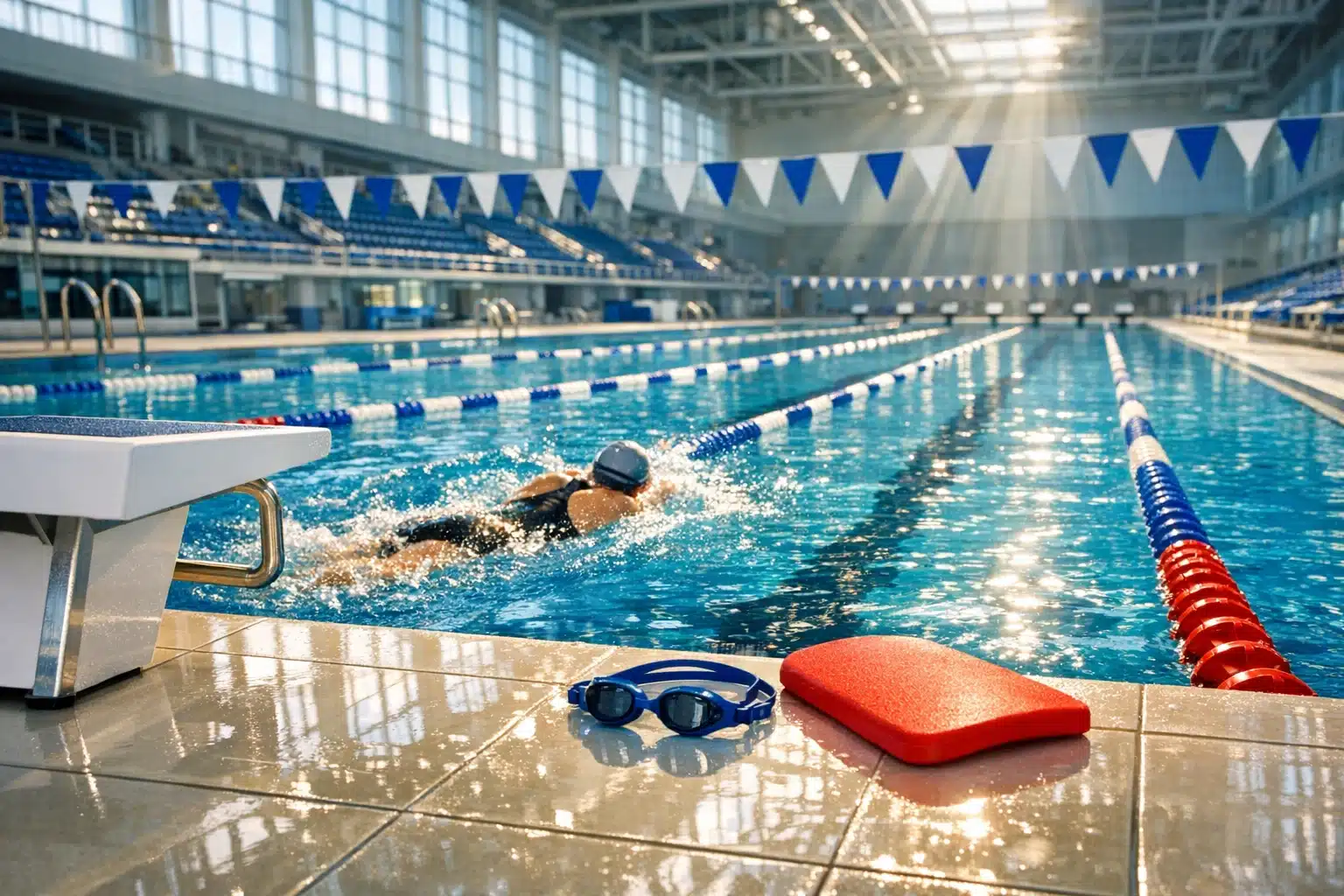
Explore the world of swimming
Introduction and Outline
Swimming is one of those rare activities that feels equally at home in a school lesson, an Olympic final, and a quiet weekend at the local pool. It builds endurance, sharpens technique, and offers a low-impact way to stay active across different ages and fitness levels. Beyond exercise, it also teaches safety, confidence, and rhythm in an environment that can be both calming and demanding. This article maps the topic clearly, then dives into the skills, science, culture, and practical value of swimming.
Its relevance goes far beyond sport. For children, swimming lessons can become an essential layer of water safety. For adults, lap swimming offers structured cardiovascular work without the repeated joint impact that often comes with running or court sports. For older people, it can support mobility and gentle strength work. Even for those who never plan to enter a race, swimming remains useful because it combines movement, breath control, coordination, and awareness of surroundings in a single practice. In water, the body has to negotiate buoyancy, resistance, temperature, and timing all at once, which is why progress often feels both physical and mental.
- First, the article outlines the foundations of swimming and compares the main strokes.
- Next, it explains the health and fitness benefits, including endurance, strength, and recovery.
- Then, it looks at learning progression, safety habits, and practical training tools.
- Finally, it explores how swimming functions as recreation, competition, and a lifelong activity.
That broad reach is part of what makes swimming fascinating. It can be meditative or fiercely competitive, social or solitary, playful or highly disciplined. A beginner may focus on floating and breathing, while an experienced athlete may think about stroke rate, turns, and pacing by the second. The same lane can host very different goals. By understanding the basics and the wider context, readers can see why swimming has remained one of the world’s most respected and widely practiced physical activities.
Understanding the Water: Core Skills and the Four Main Strokes
Swimming looks smooth when done well, but that smoothness is built on a series of precise decisions. Every swimmer is working with the same physical realities: buoyancy helps the body stay near the surface, drag slows movement, and propulsion comes from coordinated actions of the arms, legs, and torso. Beginners often assume strength is the main ingredient, yet technique usually matters more at first. A streamlined body position can save more energy than a powerful kick performed with poor alignment. In simple terms, swimmers move best when they make the body long, reduce unnecessary splashing, and time their breathing without lifting the head too high.
The four main competitive strokes are freestyle, backstroke, breaststroke, and butterfly, and each one asks for a different relationship with the water. Freestyle, often called front crawl in instructional settings, is usually the fastest and most efficient for distance. It relies on alternating arm recovery, a steady flutter kick, and side breathing. Backstroke uses a similar alternating rhythm, but the swimmer lies face-up, which changes orientation and spatial awareness. Breaststroke is slower for most people, yet it is often easier for newcomers to understand because the breathing pattern is more direct and the movements feel symmetrical. Butterfly is the most demanding for many learners because it combines simultaneous arm recovery with a wave-like body motion and dolphin kick that requires timing rather than brute force.
Several core skills support all four strokes:
- Body position: hips and legs should remain close to the surface instead of sinking.
- Breathing control: inhalation must be quick, while exhalation should happen steadily into the water.
- Kick economy: more force is not always better; efficient kicks stabilize the body and support rhythm.
- Catch and pull mechanics: the hands and forearms should press backward against the water rather than slip through it.
- Timing: stroke phases need to connect cleanly so the swimmer keeps momentum.
A useful comparison is to think of freestyle as the practical commuter, breaststroke as the deliberate walker, backstroke as the navigator working by feel, and butterfly as the sprinter with dramatic flair. That may sound poetic, but it captures something real: each stroke rewards a distinct tempo and body pattern. Even flip turns, open turns, and push-offs reveal how swimming is partly a technical craft. When swimmers improve, they do not merely move harder; they move smarter, using the water as a partner instead of treating it like an obstacle.
Why Swimming Is So Effective for Health and Fitness
Swimming is often praised as a full-body workout, and that description holds up well under scrutiny. Unlike activities that emphasize only the lower body or only the upper body, swimming recruits the shoulders, chest, back, core, hips, and legs in repeated cycles. At the same time, the heart and lungs work continuously to deliver oxygen during sustained effort. Many public health recommendations encourage adults to get at least 150 minutes of moderate aerobic activity per week, and swimming can help meet that target while feeling gentler on joints than many land-based options. For people managing knee discomfort, recovering from certain injuries, or seeking variety, that lower-impact quality can be a major advantage.
The calorie cost of swimming varies with stroke, intensity, body size, and skill level, but moderate lap swimming commonly falls in a broad range of roughly 400 to 700 calories per hour. Vigorous sets can push that higher. Freestyle intervals and butterfly sets tend to demand more energy than easy breaststroke or relaxed backstroke. Still, calorie burn is only one part of the story. Water resistance works in every direction, so even controlled movement requires effort. That means a swimmer can improve muscular endurance and coordination without the pounding associated with long road runs.
There are also strong reasons people stick with swimming over time:
- It supports cardiovascular fitness through continuous rhythmic effort.
- It can improve posture by strengthening the back and trunk.
- It encourages breath awareness, which many swimmers find calming.
- It offers scalable intensity, from gentle aqua exercise to race-pace intervals.
- It remains accessible across a wide age range when taught properly.
Mental benefits deserve equal attention. The sensory environment of a pool is unusual: sound softens, visual focus narrows, and breathing becomes deliberate. For many swimmers, this creates a pattern that feels almost meditative. Counting laps, listening to the splash of entry, and settling into a repeatable rhythm can quiet the clutter of the day. That does not mean every session is peaceful; hard training can be brutally demanding. Yet even demanding sessions often leave swimmers with a distinctive sense of reset. Compared with some gym routines, swimming can feel less like mechanical repetition and more like solving a moving puzzle with the whole body. That mix of exertion, skill, and mental engagement helps explain why people return to the water year after year, not just for fitness, but because the experience itself remains rewarding.
Learning Safely: Training Progression, Equipment, and Water Awareness
Learning to swim should never be treated as a single skill acquired in one leap. It is a progression made of smaller steps: comfort in the water, floating, breath control, kicking, arm patterns, coordinated stroke work, and eventually endurance or speed. A child clinging nervously to the pool edge and an adult returning after twenty years away may look very different, but they benefit from the same principle: confidence grows when tasks are broken into manageable pieces. Instructors often begin with bubbles, glides, back floats, and simple kicking drills because these create familiarity before technical detail becomes overwhelming.
Safety is central at every stage. Pools may appear controlled, but accidents still happen when people overestimate ability, ignore fatigue, or treat supervision casually. In open water, the variables increase quickly: currents, waves, depth changes, cold temperatures, limited visibility, and the absence of lane lines can unsettle even capable pool swimmers. That is why strong recreational swimmers sometimes feel humbled the first time they move from a calm pool to a lake or sea. The water does not become hostile, but it does become less predictable.
Several habits make training safer and more effective:
- Swim where qualified supervision is available, especially for beginners and children.
- Use the buddy system in open water rather than swimming alone.
- Build distance gradually instead of jumping into long sessions too soon.
- Stop when form falls apart from fatigue, because poor technique can create risk and frustration.
- Learn basic pool etiquette, such as circle swimming and checking the lane before pushing off.
Simple equipment can help, though it should support learning rather than replace it. Goggles improve visibility and reduce hesitation. Kickboards isolate leg work, pull buoys highlight upper-body mechanics, and fins can help learners feel body position, though overuse may hide flaws. More advanced swimmers may add paddles, tempo trainers, or snorkels for specific drills. The point is not to collect gear like trophies on a shelf, but to use tools with a clear purpose.
A practical training session usually includes a warm-up, skill work, a main set, and a cool-down. For example, a novice swimmer might do easy laps, then short drills focused on exhaling underwater, followed by several small repeats with generous rest. An experienced swimmer may organize sets by pace, stroke, or distance. In both cases, progress is steadier when sessions have structure. Water rewards patience. It teaches quickly, but not kindly, when rushed; it teaches deeply, and often beautifully, when approached with respect.
From Leisure to Competition: Swimming as a Lifelong Practice and Conclusion for Readers
One of swimming’s great strengths is its range. It can begin as family recreation, become a school activity, turn into serious training, and later settle into a lifelong routine for health and enjoyment. Competitive swimming has its own precise world of rules and measurements. Standard short-course pools are typically 25 meters or 25 yards depending on region, while long-course competition is held in 50-meter pools. Races span sprints such as the 50 meters up to longer pool events, and Olympic open-water competition extends to 10 kilometers. These formats remind us that swimming is not one thing; it contains explosive power, tactical pacing, endurance, and technical refinement under one broad name.
The culture around the sport is equally varied. Age-group programs introduce discipline and teamwork. High school and university meets create strong local communities. Masters swimming gives adults a structured path to return to training without pretending they are still teenagers. Para swimming demonstrates how adaptive sport and elite performance belong in the same serious conversation. Triathletes bring another angle, viewing swimming as the first chapter in a longer race. Meanwhile, recreational swimmers may care less about times and more about stress relief, mobility, or the satisfaction of completing twenty calm laps before work.
Comparing swimming with other sports also reveals why it lasts. Team games often depend on schedules, rosters, and impact tolerance. Gym routines can become repetitive for people who dislike indoor equipment. Walking is accessible but may not challenge the upper body much. Swimming sits in a useful middle ground: it is structured enough for measurable improvement, yet flexible enough to match changing goals across life. A person may train for a meet in one season, then later swim simply to stay mobile, sleep better, or clear the mind after a difficult week.
For readers considering where to begin, the smartest approach is modest and consistent. Learn basic water safety, get comfortable with breathing, focus on one or two strokes before chasing variety, and treat technique as a friend rather than a test. If you already swim, revisit fundamentals instead of assuming more distance automatically means more progress. Small technical gains often save more energy than trying to force speed.
In summary, swimming serves beginners who want confidence, fitness-minded adults who need a low-impact challenge, parents looking for a valuable skill for their children, and experienced athletes searching for a disciplined craft. It strengthens the body, trains the breath, and sharpens concentration without requiring a single fixed identity from the person doing it. You do not need to love racing to value swimming, and you do not need to be perfect to benefit from it. Step into the water with patience, curiosity, and respect, and it can remain useful for decades.