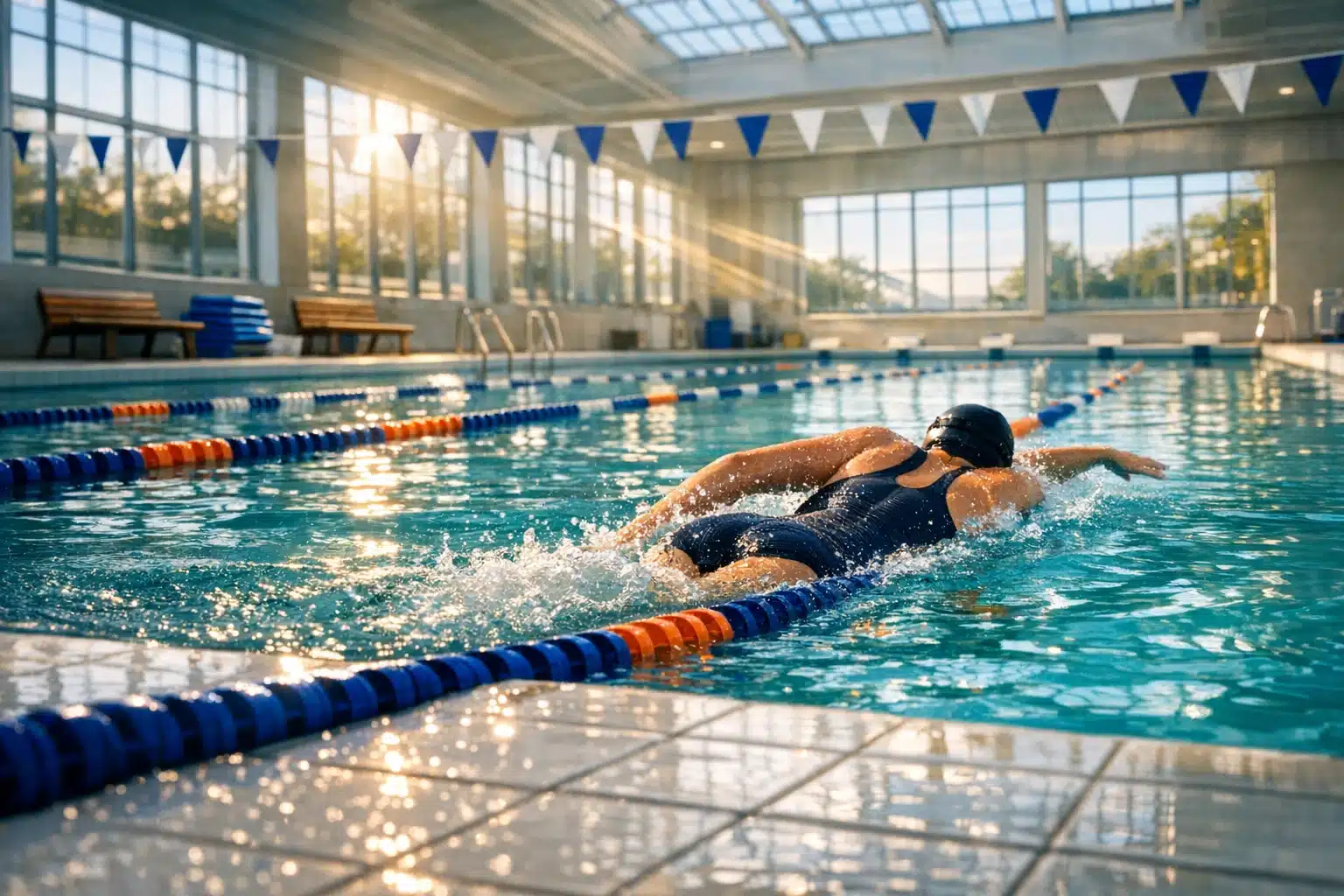
Explore the world of swimming
Swimming is one of those rare activities that can feel playful on the surface and deeply technical underneath. It matters because it blends fitness, safety, sport, and everyday confidence, whether you are chasing lap times or simply learning to float without fear. In a world where many workouts punish the joints, water offers resistance without the same impact. That mix of challenge and support is exactly why swimming deserves a closer look.
Outline:
• Why swimming matters and how water changes movement
• The main strokes, breathing patterns, and technique basics
• Physical and mental benefits, from endurance to recovery
• Safety, pool etiquette, and practical steps for beginners
• How swimming can become a lasting part of life
Why Swimming Matters: Water Changes Everything
Swimming stands apart from most forms of exercise because water changes the rules. On land, gravity is relentless and every impact travels through the ankles, knees, hips, and spine. In water, buoyancy supports body weight, which is why swimming often feels gentler than running or jumping. At the same time, it is not easy in the way a floating pool toy is easy. Water is far denser than air, so every kick, pull, and body rotation meets resistance. That means a swimmer is constantly negotiating two forces at once: support and drag. The result is a full-body activity that rewards patience, coordination, and efficiency.
This unusual environment explains why swimming serves so many purposes. For one person, it is a survival skill. For another, it is a competitive sport measured down to hundredths of a second. For someone recovering from stress or a physically demanding routine, it can be a way to move without feeling battered. A quiet pool before sunrise has the mood of a library and a laboratory at once: part calm retreat, part place for measured effort. That range is one reason swimming stays relevant from childhood through older age.
Compared with many other exercises, swimming asks more from coordination. A runner can begin with decent shoes and a sidewalk. A cyclist can coast while learning balance. A swimmer must manage body position, breathing rhythm, propulsion, and timing all together. That complexity may sound intimidating, but it is also what makes swimming so rewarding. Improvement is easy to feel. A small technique change, such as keeping the head steadier or exhaling more consistently underwater, can suddenly make a length feel smoother and less exhausting.
Swimming also matters outside fitness culture. It is tied to water safety, recreation, travel, and confidence around beaches, lakes, and pools. Many adults who learn later in life describe not just gaining a skill, but shedding a quiet fear. In practical terms, swimming can be:
• a cardiovascular workout
• a low-impact exercise option
• a social activity through clubs and lessons
• a competitive discipline
• a foundation for boating, surfing, triathlon, and other water sports
That broad usefulness helps explain why swimming continues to attract such a wide audience. It is rare to find an activity that can be technical without feeling exclusive, demanding without being punishing, and deeply disciplined while still carrying the simple joy of being in water.
The Four Main Strokes and the Technique Behind Them
To many beginners, swimming looks deceptively simple: arms pull, legs kick, body moves forward. In reality, each stroke is its own language, with a different rhythm, posture, and energy cost. The four main competitive strokes are freestyle, backstroke, breaststroke, and butterfly. Even recreational swimmers who never enter a race benefit from understanding them, because each stroke teaches something valuable about movement in water.
Freestyle, usually referring to front crawl, is the fastest and most common stroke. Its efficiency comes from a long body line, alternating arm recovery, steady flutter kick, and side breathing. Good freestyle is not about splashing harder; it is about reducing drag. Swimmers who lift the head too much or let the hips sink create extra resistance and tire quickly. A useful image is that of slipping through a narrow tunnel. The straighter and calmer the line, the less energy leaks away. Front crawl is often the first stroke adults focus on because it translates well to fitness swimming and lap training.
Backstroke is often underestimated. Since the face remains above the water, people assume it is easy, but it demands body awareness and balance. Without a visual line in front, swimmers must rely on feel, timing, and lane markers. It also teaches an important technical truth: the body travels best when it is long, level, and connected through the core. A rushed kick or windmilling arms may look energetic, yet smooth rotation and controlled hand entry do far more for propulsion.
Breaststroke is familiar to casual swimmers because it allows a natural forward-facing rhythm. However, it is highly technical. The kick must snap outward and inward with precision, and the timing between pull, breath, and glide determines whether the stroke feels graceful or clumsy. Breaststroke tends to be slower, but it can be sustainable for longer recreational swims when done well. Butterfly is the most demanding of the four. It uses a simultaneous arm pull and a dolphin kick driven from the chest, hips, and core. When people force butterfly with only their shoulders, it becomes exhausting almost immediately. When timed properly, it looks almost wave-like.
A simple comparison helps:
• Freestyle: fastest and usually most efficient for fitness
• Backstroke: great for posture awareness and shoulder rhythm
• Breaststroke: technical, rhythmic, and often comfortable for casual swimmers
• Butterfly: powerful, explosive, and physically demanding
Across all strokes, several technique principles repeat. Streamline matters. Breathing control matters. Balance matters. Good swimmers do not fight the water every second; they learn to organize movement so the water becomes something they travel through, not something they battle against. That is why lessons, video feedback, or a few targeted drills can transform performance far more quickly than simply adding more laps. In swimming, precision saves energy, and saved energy becomes speed, distance, or confidence.
Health Benefits: Fitness, Recovery, and Mental Focus
Swimming earns its reputation as a complete exercise because it combines cardiovascular work, muscular endurance, mobility, and breath control in one session. Few activities ask the heart, lungs, shoulders, back, hips, and core to cooperate so consistently. The resistance of water means that even moderate swimming can feel substantial, yet the absence of heavy impact often makes it accessible to people who struggle with high-impact training. This is one reason swimmers range from school athletes to older adults seeking steady movement.
From a fitness perspective, swimming can support heart health and aerobic capacity. Public health guidelines commonly recommend at least 150 minutes of moderate-intensity aerobic activity per week for adults, and swimming fits that target well. Depending on body size, stroke, and intensity, a person may burn roughly 400 to 700 calories in an hour of lap swimming, though the exact figure varies widely. Freestyle at a relaxed pace will not feel the same as hard butterfly repeats or sprint sets with brief rest. The point is not the number alone, but the combination of sustained effort and total-body involvement.
There is also the matter of strength. Water resists movement in every direction, so even simple drills recruit many muscle groups. Freestyle asks the lats, shoulders, chest, core, glutes, and legs to contribute. Breaststroke emphasizes inner thighs and timing. Butterfly places high demand on trunk control and upper-body power. Because resistance is built into the environment, swimmers develop endurance-oriented strength without necessarily handling external weights during the session.
Another advantage is recovery. For people with joint sensitivity, excess training fatigue, or a need for gentler conditioning, swimming can be a useful option. That does not mean it is effortless or universally suitable for every injury, but it often allows movement when pounding pavement does not. The cooling effect of water can also make longer sessions feel more manageable than similar effort levels in hot air. Some swimmers notice that their heart rate is lower in water than on land at comparable effort, partly due to body position and the surrounding pressure of the water.
The mental benefits deserve equal attention. Swimming can be social, but it can also be deeply private. Repeating lengths, hearing only bubbles and splashes, and focusing on breath count can create a meditative rhythm. Many people report leaving the pool calmer than when they entered. That may be due to exercise itself, but the sensory environment matters too. The pool strips away noise, screens, and endless notifications. For forty minutes, the next task is wonderfully simple: reach the wall, turn, begin again.
Its benefits can be summed up clearly:
• improved aerobic fitness
• full-body muscular engagement
• low-impact conditioning
• support for mobility and coordination
• a structured way to reduce stress
Swimming is not magic, and it does not replace every other form of training. Yet for many people, it fills a valuable gap between performance, health, and sustainable movement. That balance is one reason it remains popular long after fitness trends come and go.
Learning Safely: Pool Etiquette, Open Water Awareness, and Smart Progress
Swimming is enjoyable, but it should never be treated casually when safety is involved. Unlike many activities, mistakes in water can escalate quickly. That is why learning good habits matters just as much as learning good technique. The World Health Organization reports that drowning remains a major global public health issue, causing more than 200,000 deaths worldwide each year. That fact alone explains why swimming instruction is not merely recreational. It is practical knowledge with real-world value.
For beginners, safety starts with honesty. A person who is not comfortable in deep water should say so. A child who cannot yet float independently needs close supervision, not vague assumptions. Adults returning to swimming after years away often benefit from a few coached sessions, especially if anxiety is part of the picture. Basic skills such as floating, treading water, controlled exhalation, and safe entry and exit from the pool create a stronger foundation than rushing into long-distance lap work.
Pool etiquette is another part of safe progress. Shared lanes work well only when swimmers understand the unspoken rules. In many pools, lane users either split the lane down the middle or circle swim by staying to one side. Faster swimmers usually pass at the wall, not in the middle of a chaotic stretch. Resting at the end of the lane should leave space for others to turn. Small habits reduce collisions and frustration:
• check the lane speed before joining
• let quicker swimmers go ahead if needed
• avoid sudden stops in the center of the lane
• keep equipment organized and out of the way
Open water introduces a different level of complexity. Lakes, rivers, and seas can be beautiful, but beauty is not the same as safety. Water temperature may drop unexpectedly. Currents can shift. Visibility is often poor. Distances are harder to judge without lane lines and pool walls. Even strong pool swimmers can be surprised by chop, waves, or the psychological effect of dark water below. That is why open-water swimming is best approached with planning: swim with others, wear visible gear, understand the site, and respect weather conditions. Confidence in a pool does not automatically equal readiness for the ocean.
Progress should also be gradual. New swimmers sometimes try to prove toughness by adding distance too fast, holding their breath too long, or copying advanced sets without control. A smarter path is to build one layer at a time. For example:
• first learn to float and breathe comfortably
• then practice short, relaxed lengths
• next improve technique with drills
• only after that increase volume or speed
There is nothing glamorous about caution, but in swimming it is a sign of maturity, not fear. The most capable swimmers are usually the least reckless. They know that skill grows best in an environment where the body is prepared, the surroundings are understood, and pride does not outrun judgment.
Conclusion: Making Swimming Part of Your Life
For readers wondering whether swimming is worth the time, the most honest answer is yes, if you approach it with patience. Swimming offers an unusual combination of usefulness and enjoyment. It can improve fitness, build confidence in and around water, support recovery from high-impact routines, and open the door to other activities such as snorkeling, surfing, kayaking, or triathlon. Few skills carry that much value across health, recreation, and safety all at once.
The beauty of swimming is that it does not require a single identity. You do not have to become a racer to benefit from lap work. You do not need perfect technique to begin, though technique will make the journey smoother. A parent may take lessons to supervise children more safely. An office worker may use the pool to offset long hours of sitting. A former athlete may return for low-impact conditioning. An older adult may find in swimming a rare kind of exercise that feels challenging but manageable. The same water can meet very different goals.
If you are just starting, keep your expectations realistic and your attention narrow. Learn to breathe out comfortably underwater. Practice floating without panic. Swim short distances with clean form before worrying about speed. If you already swim, consider refining details rather than simply adding more distance. Often the next leap forward comes from efficiency, not brute effort. In a sport shaped by drag and rhythm, smoother is frequently stronger.
Swimming also rewards consistency more than occasional heroics. Two or three focused sessions each week can do more than one punishing workout followed by long gaps. A simple routine works well:
• one easy technique session
• one steady endurance swim
• one varied session with drills or faster repeats
Over time, the pool becomes more than a place to exercise. It becomes a place to measure progress that is quiet, tangible, and satisfying. One week you stop clinging to the wall. Another week your breathing settles. A month later, a distance that once felt impossible becomes your warm-up. These are small victories, but they accumulate into something bigger: competence.
That is the lasting appeal of swimming. It invites you in with the familiar image of water, then gradually teaches discipline, awareness, and self-trust. Whether your goal is health, skill, peace of mind, or performance, swimming gives you a path that is both demanding and generous. Start where you are, learn the basics well, and let each length teach the next.