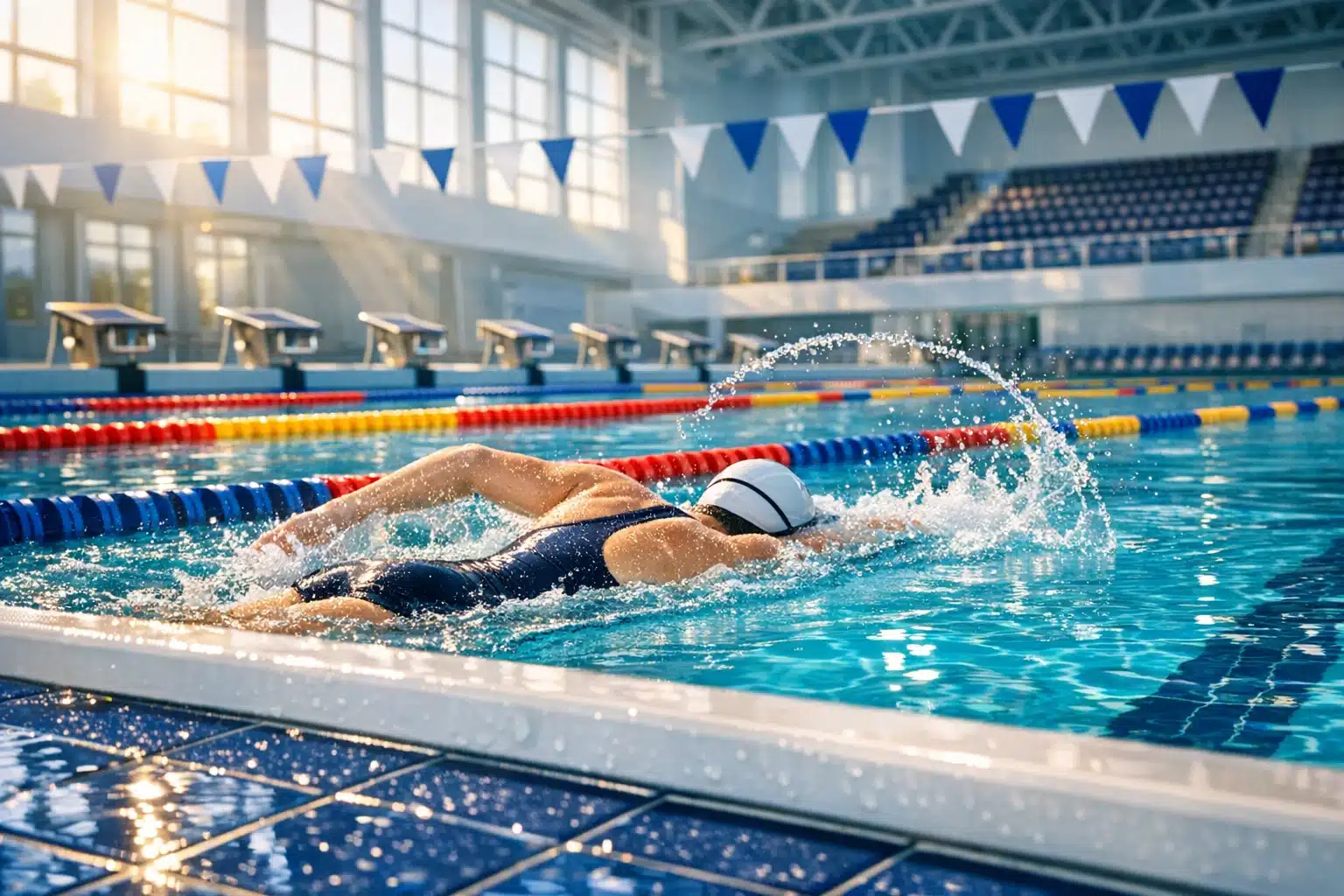
Explore the world of swimming
Swimming combines movement, skill, and water awareness in a way few activities can match. It matters because it can support cardiovascular health, build strength with low joint impact, improve safety around water, and offer both recreation and serious competition. From a child learning to float to an athlete chasing fractions of a second, swimming stays relevant across every stage of life. Step in, and the pool quickly becomes more than a place to exercise; it becomes a classroom, a challenge, and sometimes a small escape from noise on land.
Outline
- The history and global importance of swimming
- Physical and mental benefits for different age groups
- The main strokes and how they compare in technique and effort
- Training, safety, and beginner improvement strategies
- Swimming culture, competition, and long-term participation
The History and Lasting Importance of Swimming
Swimming is far older than modern sport. Humans have been entering water to cross rivers, gather food, survive floods, train for battle, and eventually compete for recognition. Archaeological and artistic evidence suggests that forms of swimming were known in ancient civilizations, including Egypt, Greece, and Rome. Over time, what began as a practical survival skill slowly developed into a recreational activity and then into an organized sport. By the nineteenth century, swimming clubs had started to appear in Europe, and formal competitions helped shape standardized rules. In 1896, swimming became one of the original sports in the first modern Olympic Games for men, while women’s Olympic swimming events were added in 1912. That timeline alone shows how deeply the activity is woven into human life.
Its importance today goes beyond medals and lane lines. Swimming is both a public health issue and a cultural one. Drowning prevention depends heavily on water competence, and in many countries, learning to swim is considered a basic life skill rather than a luxury. Coastal communities, island nations, and regions with many lakes or rivers often treat swimming knowledge as essential, much like cycling or road safety. Parents enroll children in lessons not just for fun but because confidence in water can save lives. At the same time, many adults return to swimming later in life because it feels accessible when running or contact sports become harder on the body.
Swimming also occupies a unique place among sports because it serves several roles at once:
- It is a survival skill.
- It is a leisure activity.
- It is a full-body form of exercise.
- It is an elite competitive discipline.
That combination is rare. A football pitch mainly offers sport. A pool can teach safety, host rehabilitation, train Olympic hopefuls, and provide stress relief in the same afternoon.
Another reason swimming remains significant is its global reach. Pools, open-water events, school lessons, triathlons, masters clubs, and beach culture all keep it visible. Technology has changed training with underwater cameras, pacing tools, and performance data, yet the core experience remains simple: a person moving through water using skill, rhythm, and breath. There is something timeless about that image. Even in a highly digital age, swimming asks for direct attention to the body and the immediate environment. You cannot scroll while doing butterfly. You have to feel the catch, the balance, and the turn.
In that sense, swimming matters because it connects past and present. It is ancient, modern, practical, graceful, and demanding all at once. That layered identity helps explain why it continues to attract beginners, recreational swimmers, and world champions alike.
Why Swimming Benefits the Body and Mind
Swimming is often recommended because it trains the whole body while reducing some of the impact associated with land-based exercise. Water creates resistance in every direction, so even simple movements require effort from multiple muscle groups. The arms pull, the legs kick, the core stabilizes, and the lungs adapt to controlled breathing patterns. Unlike some gym routines that isolate one area at a time, swimming naturally encourages coordination across the body. This makes it attractive to people who want a balanced form of exercise rather than a narrowly focused workout.
One of its major strengths is cardiovascular conditioning. Repeated laps can raise heart rate, challenge endurance, and help people work toward the widely cited recommendation of at least 150 minutes of moderate aerobic activity per week. The exact effort varies by stroke and speed, but swimming can range from gentle recovery movement to very demanding interval training. Freestyle at a relaxed pace may suit a beginner building stamina, while butterfly sets can leave even trained athletes breathing hard after a short distance. Because intensity is adjustable, swimming can grow with the person rather than forcing everyone into the same workload.
Many people also appreciate the lower-impact nature of aquatic exercise. Water supports body weight, which can reduce stress on joints compared with activities like running. That does not mean swimming is effortless or risk-free, but it often feels more manageable for people with joint sensitivity, older adults, or those returning to exercise after a break. This is one reason swimming appears in rehabilitation settings and gentle fitness programs, though individual medical guidance still matters.
The mental benefits deserve equal attention. A pool can become a place where repetition is calming rather than dull. The sound of splashing, the pattern of breathing, and the clear structure of lengths and rest intervals give swimming a rhythm that many find meditative. For some, it offers relief from busy schedules because water narrows attention to immediate tasks: reach, rotate, exhale, turn. Stress does not vanish, but it often loosens its grip. Open-water swimmers describe something similar in a different setting, where lakes and seas add a sense of adventure and humility.
Swimming can also build confidence in practical ways:
- Children gain independence as they learn floating and basic stroke control.
- Adults develop water safety skills that reduce fear.
- Older swimmers maintain mobility, routine, and social connection through clubs or group sessions.
That wide usefulness helps explain its staying power.
Perhaps the most compelling benefit is flexibility. A swimmer can train hard, recover gently, socialize, compete, or simply unwind in the same environment. Some sports demand a single identity from participants. Swimming does not. It allows the ambitious and the cautious, the fast and the slow, the beginner and the veteran, to share the same water while pursuing different goals.
Understanding the Main Strokes and How They Compare
Swimming becomes more interesting once the four competitive strokes are understood not just as techniques, but as distinct personalities in the water. Freestyle, usually swum as front crawl, is the fastest and most common stroke in both training and racing. It relies on alternating arm recovery, flutter kick, streamlined body position, and rhythmic side breathing. Because it is efficient and adaptable, freestyle is often the first stroke used for lap swimming and endurance sets. It suits long-distance training better than the others for most swimmers, and when technique is solid, it can feel smooth and almost mechanical in the best sense of the word.
Backstroke offers a different experience. Swimmers remain on their backs, using alternating arms and a flutter kick while facing the ceiling or sky. For people who dislike the feeling of breathing into splashes, backstroke can be more comfortable because the face stays above water. However, it demands strong balance and body alignment. Drifting hips or an unstable head position can create drag quickly. Compared with freestyle, backstroke is usually slower, but it can feel more open and spacious. If freestyle is a train moving forward on tracks, backstroke is closer to gliding while keeping the body long and quiet.
Breaststroke is often familiar to casual swimmers because its pace can be controlled more easily and its head-up variations are common in recreational pools. Competitive breaststroke, though, is highly technical. The timing of the pull, breath, kick, and glide is precise, and small errors reduce speed dramatically. It is generally slower than freestyle and backstroke, yet it can be physically demanding because poor timing increases resistance. Many beginners find it approachable at first, while experienced swimmers know it is one of the most detail-sensitive strokes in the sport.
Butterfly is the most dramatic and often the most feared. Both arms recover together over the water, supported by a powerful dolphin kick and wave-like body motion. It requires coordination, upper-body strength, timing, and breath control. Butterfly is usually the hardest stroke for beginners to sustain, but when done well it looks almost theatrical, as though the swimmer is negotiating with the water instead of fighting it. Beautiful butterfly is not just force; it is rhythm under pressure.
These strokes differ in several important ways:
-
Speed: Freestyle is typically fastest, followed by butterfly, backstroke, and breaststroke, though individuals vary.
-
Energy cost: Butterfly is often the most exhausting over short periods, while freestyle is usually the most economical for distance.
-
Technical demands: All four are technical, but breaststroke and butterfly punish timing mistakes especially quickly.
-
Accessibility: Freestyle and backstroke are often easier for lap swimming, while breaststroke may feel intuitive to recreational swimmers.
Learning the differences helps swimmers train more intelligently. Someone preparing for fitness may rely mostly on freestyle with occasional backstroke for variation. A medley swimmer must develop all four. A nervous beginner might discover that floating on the back unlocks confidence. The strokes are not simply categories on a results sheet; they are different ways of solving the same puzzle of movement through water.
Training, Safety, and How Beginners Can Improve
Good swimming progress rarely comes from brute effort alone. Technique, consistency, and safety shape improvement far more than occasional heroic workouts. Beginners often assume the main goal is to swim more laps as quickly as possible, but the smarter starting point is control. Body position, breathing, and relaxation usually matter more than speed in the early stages. A swimmer who fights the water wastes energy. A swimmer who learns to align the body, exhale steadily, and move with patience often improves faster even at lower intensity.
One useful principle is to break training into manageable parts. Rather than swimming nonstop until form collapses, many coaches use short repeats with rest intervals. For example, a swimmer might do several lengths focusing only on exhalation, then a few more concentrating on kicking, and then a short set bringing the pieces together. This method makes technique easier to absorb and prevents exhaustion from disguising mistakes. Drills can be especially valuable because they isolate specific skills such as catch mechanics, rotation, or streamline off the wall.
Safety should never be treated as a footnote. Even strong swimmers need situational awareness, especially in open water where waves, temperature, currents, and visibility can change quickly. Pool swimmers should also respect lane etiquette, rest areas, and personal limits. Confidence is useful; overconfidence is not.
Practical safety habits include:
- Swim in supervised areas or with a partner when possible.
- Warm up before intense efforts.
- Learn basic floating and treading water, not just forward motion.
- Use visible gear such as bright caps in open water.
- Stop if pain, dizziness, or unusual breathlessness appears.
These habits are simple, but they matter.
Beginners who want steady improvement usually benefit from three things: instruction, routine, and patience. Lessons provide feedback that self-correction often misses. A small technical adjustment, like breathing with one goggle in the water or finishing the stroke fully underwater, can change comfort dramatically. Routine builds familiarity. Swimming twice a week for several months generally teaches more than one exhausting session followed by long gaps. Patience matters because water rewards feel, and feel develops over time. Progress can seem invisible until one day the same distance feels strangely easier.
Equipment can help, but it should support rather than replace skill. Goggles improve visibility and comfort, kickboards isolate leg work, pull buoys emphasize upper-body mechanics, and fins can assist body position or drill work. Yet none of these tools substitutes for learning balance and timing. The goal is not to collect accessories; it is to become more at home in the water.
There is a quiet satisfaction in beginner progress. The first smooth breath, the first relaxed deep-water float, the first uninterrupted set of laps: these are modest milestones on paper, but they often feel enormous in real life. Swimming improvement is built from those moments, one calm correction at a time.
Swimming as a Lifelong Sport and Cultural Experience
Swimming has unusual staying power because it can remain meaningful across decades. Many sports are tightly linked to a particular age, body type, or competitive window. Swimming certainly has elite performance peaks, but participation does not end when racing ambitions fade. A teenager may begin in lessons, compete in school meets, switch to triathlon training in adulthood, and later join a masters group for fitness and community. The environment changes, the goals change, and the relationship with the sport changes, but the activity still fits. That adaptability is one of swimming’s greatest strengths.
Competition gives swimming part of its public identity. Major events such as the Olympics and World Championships showcase speed, precision, and intense preparation. Races are decided by tenths or even hundredths of a second, and details like starts, underwater phases, and turns become decisive. Yet the culture of swimming is broader than elite competition. Local clubs, community pools, open-water festivals, and charity swims create a more social version of the sport. In those settings, personal bests coexist with conversation, encouragement, and shared rituals like early-morning training sessions that feel equal parts discipline and strange devotion.
Open-water swimming adds another layer entirely. Lakes, rivers, and seas remove the black line on the pool floor and replace it with unpredictability. Distances can feel different without walls to push from, and navigation becomes part of the challenge. Some swimmers love that uncertainty. They speak of cold water, changing light, and long horizons with a kind of reverence. Pool swimming is about precision and repetition; open water introduces judgment, adaptability, and a closer relationship with nature. Neither is better in every way. They simply draw different qualities from the same athlete.
Swimming culture also reflects access and inequality. Not everyone grows up near safe facilities, lessons, or affordable programs. This matters because the ability to swim influences both recreation and safety. Community investment in pools, instruction, and inclusive programming can have real social value. When more people gain access to water skills, the benefits spread beyond sport into health, confidence, and public safety.
For long-term swimmers, motivation tends to evolve:
- At first, the goal may be overcoming fear.
- Later, it may become better technique or improved fitness.
- For some, it turns into racing, coaching, or exploring open water.
- Eventually, it may simply be the pleasure of feeling capable and clear-headed.
That evolution keeps swimming fresh.
In the end, swimming is not just a workout. It is a relationship with an element that resists, supports, and teaches at the same time. Water is honest. It does not flatter poor technique, but it rewards patience generously. That may be why swimmers keep returning, long after the stopwatch becomes less important. The sport offers effort, yes, but also perspective.
Conclusion for Readers Interested in Swimming
If you are curious about swimming, the most useful place to begin is not with perfect technique or ambitious distance goals, but with a simple, consistent connection to the water. Swimming can improve fitness, build confidence, and introduce a skill that remains useful for life. It welcomes many kinds of participants: the cautious beginner, the health-focused adult, the competitive athlete, and the person who simply enjoys moving quietly through a pool.
The key ideas are straightforward. Swimming has deep historical roots, strong physical and mental benefits, a rich technical side through its four main strokes, and a practical foundation in safety and steady training. It can be playful or disciplined, solitary or social, structured or adventurous. Few activities cover that much ground so naturally.
For readers deciding whether to start or continue, the answer is often to take the next manageable step:
- Book a lesson.
- Visit a local pool during a quiet hour.
- Practice floating and breathing before worrying about speed.
- Build a routine that feels realistic rather than dramatic.
Progress in swimming rarely arrives with fireworks. More often, it arrives as ease: a calmer breath, a smoother stroke, a little more distance, a little less fear.
That is what makes the sport rewarding. Swimming does not only train the body; it teaches composure, rhythm, and respect for a powerful environment. Whether your goal is health, skill, or pure enjoyment, it offers room to grow for years. The water is challenging, but it is also generous to those willing to learn from it.