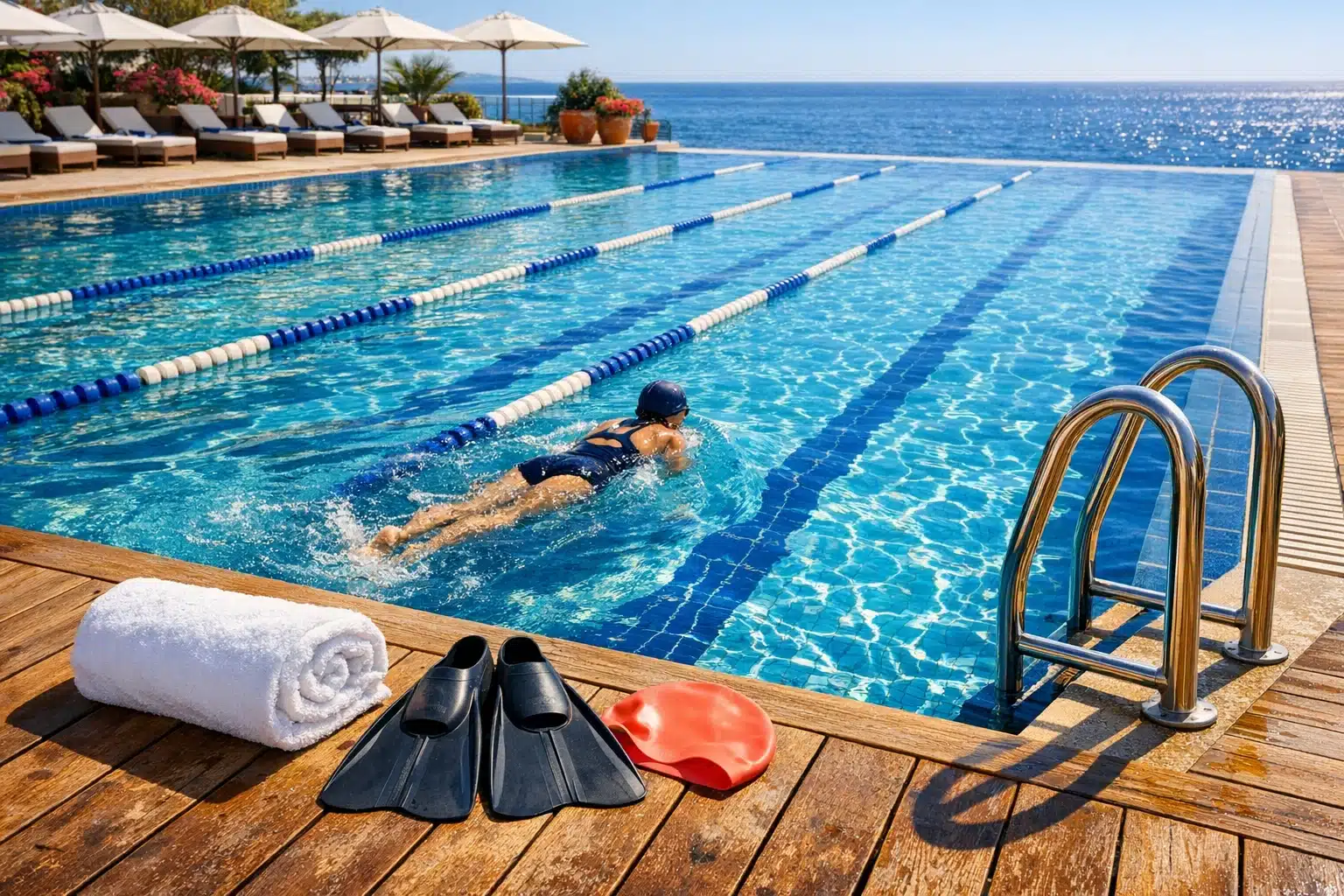
Explore the world of swimming
Swimming sits at a rare crossroads where sport, survival skill, and everyday well-being meet. A pool can be a training ground, a classroom, a place of recovery, or simply a welcome pause from hurried routines. Because water supports the body while still asking the muscles and lungs to work, children, adults, and older swimmers can all participate with purpose. That blend of usefulness, challenge, and quiet pleasure is why swimming deserves a closer look.
Outline: The Main Ideas This Article Will Explore
Before diving into details, it helps to see the shape of the subject. Swimming is not just one thing. It is a life skill, a form of exercise, a competitive discipline, a rehabilitation tool, and for many people, a small ritual of peace. Unlike activities that fit neatly into one box, swimming moves between worlds. A child may first meet it through safety lessons, a teenager through school competition, an adult through fitness goals, and an older person through gentle conditioning that feels kinder to joints than running or court sports.
This article follows that wide relevance in a practical order. It begins by looking at why swimming matters in the first place and what makes it distinct from land-based exercise. Water changes movement completely. It adds resistance in every direction, cools the body, supports body weight, and demands rhythm in breathing. Those features affect how people train, how they recover, and why even strong gym-goers can feel humbled by a few lengths in the pool.
Next, the article examines the major strokes and the technical ideas behind them. Freestyle, breaststroke, backstroke, and butterfly are not just different ways to move; they represent different balances of speed, efficiency, coordination, and energy use. A beginner may discover that the hardest part is not strength at all, but timing. An experienced swimmer often learns that small adjustments in body position can save more energy than much bigger efforts with the arms.
After that, the discussion turns to safety, learning, and equipment. This includes the value of lessons, the role of lifeguarded spaces, and the purpose of simple gear such as goggles, caps, kickboards, and pull buoys. Swimming has an inviting image, but safe progress still matters. Confidence in water should grow from skill and awareness, not from guesswork.
Finally, the article brings swimming into real life by considering recreation, competition, mental focus, and long-term habit building. In short, the roadmap is:
• why swimming is uniquely valuable
• how the main strokes compare
• what safe learning looks like
• which tools and settings support progress
• how different people can make swimming part of their lives
By the end, readers should have a grounded understanding of swimming as both a practical discipline and an enjoyable lifelong activity.
Why Swimming Matters: Health, Fitness, and the Value of Low-Impact Exercise
Swimming is often praised as a full-body workout, but that description is only the beginning. Its real strength lies in the combination of cardiovascular training, muscular engagement, and reduced impact. On land, gravity and repeated pounding can limit how often some people run, jump, or train hard. In water, buoyancy changes that equation. The body is supported, joints are spared much of the loading they feel on hard surfaces, and movement becomes smoother even while the muscles continue working against constant resistance.
That low-impact quality makes swimming attractive to a remarkably broad audience. Young athletes may use it for conditioning, office workers may turn to it to offset sedentary routines, and older adults often value it because it feels sustainable. Public health guidelines commonly encourage at least 150 minutes of moderate aerobic activity per week, and swimming can contribute meaningfully to that goal. Depending on pace, body size, stroke choice, and fitness level, even a moderate session can feel demanding in a very honest way. A calm-looking swimmer may actually be doing serious work with the heart, lungs, shoulders, back, core, and legs all at once.
Compared with some other forms of exercise, swimming asks for coordination as well as effort. Running can be intuitive for many people. Cycling often allows a newcomer to produce output quickly. Swimming is different because breathing is tied to timing and body position. That challenge can be frustrating at first, yet it also explains why improvement feels satisfying. When technique becomes more efficient, the reward is immediate: strokes lengthen, panic drops, and distance becomes manageable rather than punishing.
There are also practical fitness advantages worth noting:
• water resistance works in every direction, so movements are naturally resisted without heavy equipment
• different strokes emphasize the body differently, allowing variety within one workout
• many people find the cooling effect of water more comfortable than exercising in hot, dry air
• recovery sessions in the pool can feel gentler while still keeping the body active
Swimming supports mental well-being too. Repetitive laps, the hush of water, and the narrow focus on breathing can create a steady, almost meditative rhythm. It is not a cure-all, and it should not be romanticized as one, but many swimmers value the way the sport clears mental clutter. In that sense, the pool is more than a place to burn energy. It becomes a place to collect attention, rebuild consistency, and train without always feeling battered by impact.
Understanding the Strokes: Technique, Efficiency, and How Swimming Styles Compare
If swimming were only about strength, the biggest athlete in the pool would always move fastest. In reality, technique is the hidden engine. Water punishes wasted motion quickly, which is why learning the major strokes matters so much. Each stroke has its own rhythm, breathing pattern, and purpose, and understanding their differences helps swimmers choose the right one for fitness, speed, comfort, or skill development.
Freestyle, usually swum as the front crawl, is the most common stroke for general fitness and racing. It is typically the fastest because its body position is streamlined and its arm action allows continuous propulsion. The key ideas are a long body line, steady flutter kick, relaxed head position, and efficient side breathing. Beginners often fight the water by lifting the head too high, which causes the hips and legs to sink. When that happens, the stroke feels far harder than it should. A small technical fix can change the whole experience.
Breaststroke is slower but often easier for nervous beginners because the head can stay above water more often and the rhythm feels deliberate. Its glide phase gives swimmers a moment to reset, yet the timing is more technical than many people expect. A poorly timed kick or wide arm pull can create drag quickly. In comparison with freestyle, breaststroke may feel more controlled, but it also demands patience and precision.
Backstroke offers a useful contrast because it places the swimmer on the back, freeing the face from the constant breathing challenge of face-down strokes. That can make it comfortable for some learners, though keeping direction in the lane becomes its own task. Good backstroke depends on hip position, shoulder rotation, and a relaxed but consistent kick. It can be elegant when done well, like moving under a ceiling of light while the water breaks softly around the ears.
Butterfly is usually the most demanding stroke. It requires simultaneous arm recovery, a dolphin kick, and exact timing between upper and lower body movement. It is powerful and visually dramatic, but also tiring and technically unforgiving. Many recreational swimmers learn butterfly in short segments rather than full lengths at first.
A practical comparison looks like this:
• freestyle: fastest, efficient for distance, highly technical breathing
• breaststroke: slower, measured rhythm, useful for comfort and control
• backstroke: face-up position, helpful for breathing confidence, requires balance
• butterfly: explosive and athletic, best introduced gradually
Across all strokes, efficiency matters more than force alone. Good swimmers do not simply attack the water; they organize themselves within it. That is why lessons, video feedback, and patient repetition can transform performance more dramatically than brute effort.
Learning Safely: Water Confidence, Equipment, Pool Etiquette, and Smart Progress
Swimming is enjoyable partly because it looks effortless from the deck. That appearance can be misleading. Real confidence in water grows through practice, supervision, and gradual exposure, not through bravado. Whether someone is learning from scratch or returning after years away, safety should sit at the center of the process. This starts with choosing the right environment. A supervised pool with clearly marked depths, lane rules, and lifeguards is usually the best setting for beginners. Open water can be beautiful, but it adds currents, temperature changes, reduced visibility, and orientation challenges that demand extra experience.
Formal instruction remains one of the most effective ways to improve quickly and safely. A good teacher does more than explain arm movements. They help learners float without tension, exhale underwater, recover from minor mistakes calmly, and understand how to move from the wall, tread water, and rest efficiently. Those basic skills are often more important than early speed. Someone who can stay calm, float, and breathe properly is building a far stronger foundation than someone who can thrash through a short distance in panic.
Equipment can help, but it should support learning rather than replace it. Common tools include:
• goggles, which improve visibility and reduce eye irritation
• swim caps, which keep hair more controlled and are often required in some facilities
• kickboards, which isolate leg work and help beginners focus on body position
• pull buoys, which support the legs so swimmers can work on arm mechanics
• fins, which can improve propulsion and highlight body alignment, though they should be used thoughtfully
Pool etiquette matters more than newcomers often realize. Shared lanes work smoothly when swimmers choose appropriate speeds, circle swim when required, and rest at the wall without blocking others. A little awareness prevents frustration. In many pools, the quiet rules of courtesy keep sessions safer than any sign on the wall. Waiting a moment before pushing off behind a faster swimmer, passing only when space allows, and acknowledging others with simple politeness makes the whole environment easier to navigate.
Progress should also be measured sensibly. Many beginners think improvement means swimming farther immediately. In practice, progress may first look like exhaling without stress, completing a length without stopping, or finishing a session with energy left rather than exhaustion. Those are meaningful gains. Swimming rewards patience. The water remembers tension, but it also rewards calm attention, and over time that exchange becomes one of the sport’s most satisfying lessons.
Swimming for Real Life: Recreation, Competition, and a Conclusion for New and Returning Swimmers
One of swimming’s greatest strengths is its flexibility. It can be serious without becoming joyless, and relaxing without becoming meaningless. Some people swim for recreation, enjoying the freedom of moving through water on holiday or during family time. Others train by intervals, count strokes, monitor pace, and work toward meets or personal goals. Neither approach is more legitimate than the other. The beauty of swimming is that it scales well. A person can begin with two careful lengths and, months later, find themselves completing regular workouts or even trying open-water events.
Competitive swimming gives the sport a visible structure. Standard pool races usually take place in 25-meter or 50-meter pools, with events built around all four main strokes as well as medley formats. Training for competition sharpens discipline. Swimmers learn how starts, turns, pacing, and stroke efficiency influence results just as much as raw fitness. Yet the lessons of competition often travel beyond sport. Precision, consistency, and emotional control under pressure are useful habits in work and everyday life too.
For recreational swimmers, the rewards may look different but are no less valuable. Swimming can provide:
• a practical way to meet weekly exercise goals
• an option for cross-training alongside running, cycling, or strength work
• a social outlet through classes, clubs, or masters groups
• a calmer mental space built around breath and rhythm
• a durable habit that can continue across many life stages
There is also a quiet confidence that comes from feeling at ease in water. That confidence is not loud or theatrical. It shows up in small ways: entering the pool without hesitation, understanding your limits, helping a child feel less anxious, or joining a lane session that once looked intimidating. Bit by bit, the unfamiliar becomes familiar.
For readers considering their next step, the best advice is refreshingly simple. Start where you are, not where you think a swimmer should already be. If you are a beginner, take lessons and build comfort first. If you are returning, focus on technique before intensity. If you already swim regularly, refine purpose so your sessions match your goals. Swimming does not ask for perfection at the start. It asks for respect, repetition, and curiosity. For new and returning swimmers alike, that is the real invitation of the pool: not just to move through water, but to develop a skill that remains useful, challenging, and enjoyable for years.