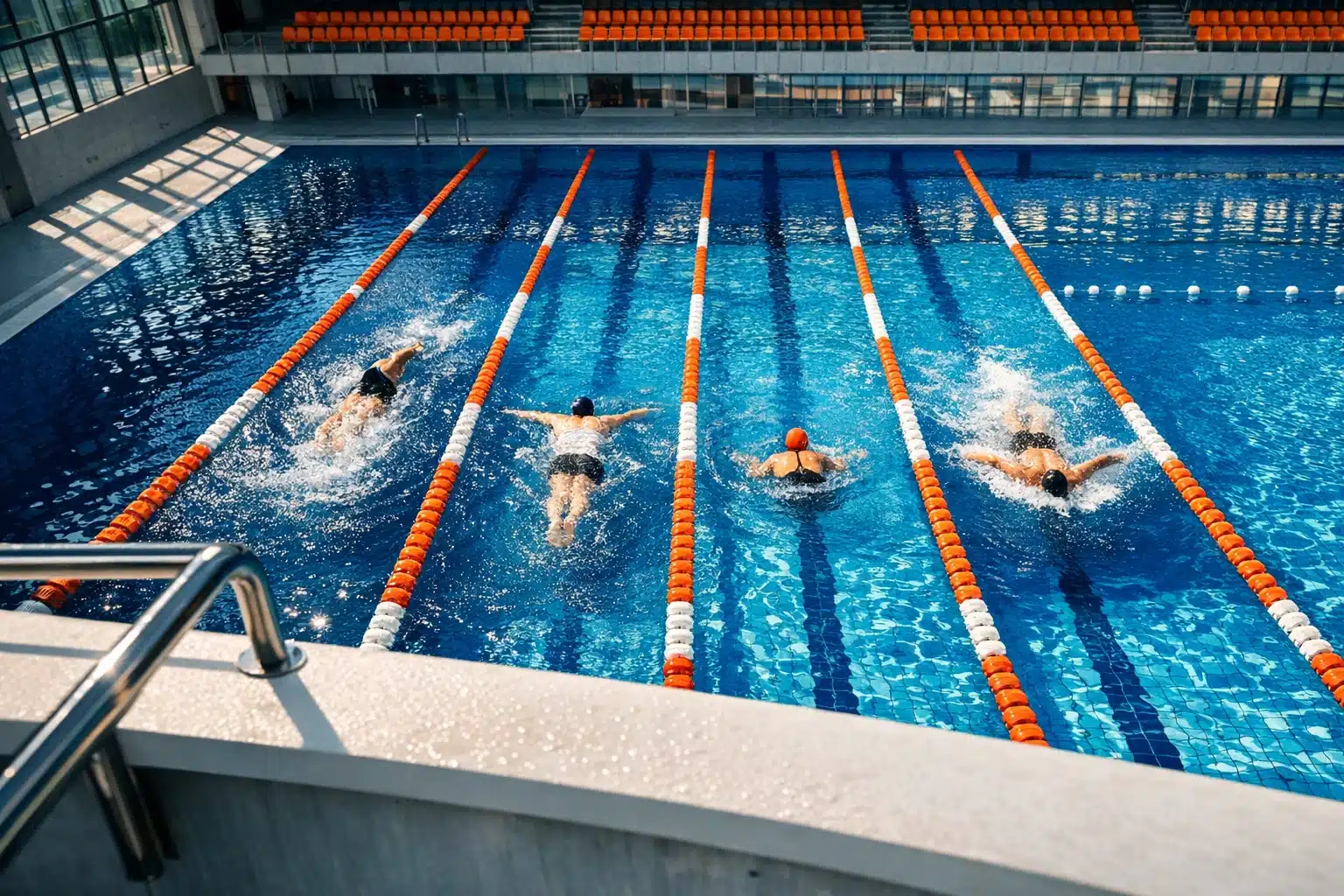
Explore the world of swimming
Swimming is one of those skills that feels practical, athletic, and quietly magical all at once. It can be a lifesaving ability, a low-impact workout, a competitive sport, and a way to clear the noise of a busy day. From children learning their first kick to adults chasing fitness or calm, it stays relevant across ages and goals. Understanding how swimming works, what it offers, and how to do it safely makes every minute in the water more rewarding.
This article begins with a clear outline, then moves through the core ideas that make swimming such a rich topic for everyday readers and serious learners alike.
- The nature of swimming and why water changes the way the body moves
- The four main strokes and how they compare in speed, rhythm, and difficulty
- The physical and mental benefits that make swimming valuable beyond sport
- Safety, technique, equipment, and training habits for smarter progress
- A concluding look at how swimming fits into modern life at every age
Why Swimming Matters: Movement in a Different Element
Swimming stands apart from many other forms of exercise because the water does not behave like a road, a gym floor, or a sports field. The moment a swimmer enters the pool, the rules of movement change. Buoyancy supports body weight, resistance pushes back from every direction, and balance becomes an active skill rather than a passive one. That mix is what makes swimming feel graceful when it goes well and stubborn when it does not. A pool can be forgiving on the joints while still demanding real effort from the lungs, shoulders, hips, and core.
One reason swimming remains globally important is that it is both a survival skill and a form of recreation. Being able to move safely through water can reduce risk in everyday life, especially in regions where beaches, rivers, or lakes are common. At the same time, swimming serves very different personal goals. One person swims to compete, another to recover after injury, another to escape summer heat, and another simply to enjoy the rhythm of lap after lap. Few activities bridge utility and pleasure so naturally.
Water itself explains much of swimming’s appeal and difficulty:
- It supports the body, which can reduce impact compared with running or court sports.
- It creates constant resistance, so even gentle movement can become exercise.
- It challenges breathing patterns, because inhaling must be timed rather than automatic.
- It rewards efficiency, since small technical changes can produce big differences in speed and fatigue.
That last point is especially important. In swimming, strength matters, but technique matters just as much. A relaxed swimmer with good body position often travels farther with less energy than a stronger swimmer fighting the water. This is why coaches spend so much time on streamline, kick timing, head position, and the shape of the pull. Water reveals waste quickly. Lift the head too high, and the hips sink. Rush the arms, and the stroke slips. Forget to exhale fully, and breathing feels frantic.
Swimming also adapts well to different environments. Pools offer structure, measured distances, lane lines, and clear progression. Open water adds currents, sighting, temperature shifts, and a sense of adventure that can feel expansive or intimidating depending on experience. In both settings, the swimmer learns the same essential lesson: progress comes from working with the water rather than trying to overpower it. That lesson is physical, but it is also oddly philosophical. The best swims rarely look violent. They look efficient, patient, and calm.
The Four Main Strokes: Technique, Personality, and Purpose
Most structured swimming revolves around four main strokes: freestyle, backstroke, breaststroke, and butterfly. Each one has its own logic, tempo, and personality. Learning them is not only a technical exercise but also a way of understanding how varied swimming can be. Two swimmers may share the same pool, yet the experience of a relaxed backstroke set and an all-out butterfly sprint can feel like entirely different sports.
Freestyle, usually swum with the front crawl, is generally the fastest and most commonly taught stroke for distance swimming. Its alternating arm action and flutter kick allow a steady rhythm, and its side breathing pattern can be adapted to different paces. For fitness swimmers, freestyle often becomes the default because it is efficient and versatile. In competition, it dominates long training sets and many race distances. However, freestyle is not automatically easy. Beginners often struggle with body rotation, breathing timing, and keeping the legs from dragging.
Backstroke is unique because it is performed face-up. That makes breathing easier in one sense, since the mouth is not turning out of the water for air, but it creates a different challenge: orientation. Swimmers must hold a straight line without seeing where they are going. Backstroke encourages hip rotation and shoulder mobility, and many people find it a useful contrast to freestyle because it opens the chest and changes the posture of the stroke cycle.
Breaststroke is often the most familiar stroke to casual swimmers, yet it is technically precise. The arm pull and whip kick must match carefully, and timing is everything. Unlike freestyle and backstroke, where momentum can flow continuously, breaststroke includes a brief glide phase. When done well, it looks smooth and measured; when mistimed, it can feel slow and tiring. It is usually the slowest competitive stroke, but that does not make it simple. In fact, many coaches consider it one of the hardest strokes to refine because small errors in kick angle or timing can waste a great deal of energy.
Butterfly is the most dramatic of the four. Both arms recover together, the body undulates, and the dolphin kick drives the rhythm. It is powerful, demanding, and often humbling. Even skilled swimmers respect butterfly because it punishes poor timing quickly. Yet it also offers a striking sense of flow when the movement clicks.
- Freestyle: fastest, efficient, flexible for training and racing
- Backstroke: face-up, rhythmic, useful for posture and balance
- Breaststroke: glide-based, technical, highly timing dependent
- Butterfly: powerful, demanding, and strongly dependent on coordination
Together, these strokes show that swimming is not one single skill but a family of related skills. A swimmer who understands their differences can train more intelligently, choose suitable goals, and appreciate why mastery takes time.
Health, Fitness, and Mental Benefits of Regular Swimming
Swimming earns its reputation as a valuable exercise because it combines cardiovascular work, muscular effort, and low-impact movement in a way few activities can match. Public health guidance in many countries, including advice commonly aligned with about 150 minutes of moderate aerobic activity per week, can be met through swimming. That matters because people often need exercise options that are sustainable, not merely intense. Swimming can be scaled for beginners, older adults, trained athletes, and people returning to movement after a break.
Physically, swimming trains the heart and lungs while involving major muscle groups across the body. Freestyle and backstroke recruit the shoulders, back, core, and legs in repeating patterns, while breaststroke and butterfly add distinct demands on timing and propulsion. Because water provides resistance in every direction, even non-impact drills can become meaningful work. This is one reason swimmers often build muscular endurance rather than only short bursts of power. A long set in the pool is less about lifting a heavy object once and more about maintaining quality over time.
Another major benefit is the reduced loading on joints. Water supports body weight, so many people who find running uncomfortable can tolerate swimming more easily. That does not mean swimming is effortless or risk free. Shoulders, knees, and lower back can still become irritated, especially with poor technique or excessive volume. But for many adults, the pool offers a practical compromise: meaningful exercise without the repeated pounding associated with some land-based training.
The mental side deserves equal attention. Repetitive lap swimming often creates a focused, almost meditative state. Breathing becomes patterned, distractions fade, and progress is measured in simple terms such as distance, time, or stroke count. For some people, that structure is deeply calming. Research on exercise more broadly has linked regular physical activity with improved mood, lower stress, and better overall well-being, and swimming can fit naturally into that picture. It is not a cure-all, but it can be a reliable part of a healthy routine.
Swimming also encourages useful habits that reach beyond the pool:
- Consistency, because technique improves through regular practice
- Patience, because efficient movement develops gradually
- Body awareness, because position and timing matter in every stroke
- Self-monitoring, because pace, fatigue, and recovery are easy to notice
For children, swimming can build confidence and coordination. For adults, it can support fitness goals without monotony, since pace work, drills, and different strokes create variety. For older swimmers, it may help maintain mobility and aerobic capacity in a manageable format. In short, swimming is not useful only because it burns energy or strengthens the body. It is useful because it can remain relevant through changing needs, changing ages, and changing seasons of life.
Safety, Technique, and Smarter Practice in the Water
Swimming is enjoyable, but safe swimming must come first. Around the world, drowning remains a serious and preventable public health issue, especially for children and in places with limited supervision or water-safety education. That fact alone is enough to treat swimming as more than a casual pastime. Confidence in the water should be built on skill, awareness, and respect for conditions, not bravado.
For beginners, smart practice starts with fundamentals. Learning to float, exhale underwater, kick with control, and recover calmly after swallowing water creates a stronger base than chasing speed too early. Many people want to swim a full length immediately, but real progress usually comes from breaking the skill into parts. A kickboard can isolate the legs, side-glide drills can improve balance, and short repeats can make breathing feel manageable. The best early sessions are not always the most impressive to watch; they are the ones that build repeatable habits.
Technique should remain a priority even after basic comfort develops. In swimming, form is not decorative. It directly affects efficiency and safety. Lifting the head too much strains the neck and drops the hips. Crossing the arms too far over the midline can reduce stability. Holding the breath creates tension and poor timing. Small corrections often unlock noticeable gains. This is why feedback from a coach, instructor, or even occasional video analysis can be so useful.
Good safety habits are simple, practical, and worth repeating:
- Never assume calm water is safe water, especially in open settings.
- Children need close, attentive supervision near any body of water.
- Open-water swimmers should know weather, currents, temperature, and exit points.
- Life jackets are essential in many boating and open-water situations, particularly for weak swimmers.
- Swimming with a partner or in supervised areas adds an important layer of protection.
Equipment also shapes the experience. Goggles improve vision and comfort. Swim caps can help with drag and hair management. Kickboards, pull buoys, fins, and paddles each have training uses, though they should support technique rather than replace it. For open water, bright caps and tow floats can improve visibility. For pool swimmers, etiquette matters too: circle swimming, passing respectfully, and choosing an appropriate lane speed make shared spaces smoother for everyone.
A sensible training approach balances challenge and recovery. Not every session should be a race. Endurance sets, drill work, easy recovery laps, and occasional faster intervals usually build better long-term progress than constant maximal effort. Swimming rewards patience. The swimmer who practices thoughtfully often advances farther than the swimmer who attacks every lap with the same frantic energy.
Conclusion: Making Swimming Part of Your Life
For the reader wondering whether swimming is worth the time, the answer is not based on hype or trend. It is based on range. Swimming can be practical, calming, demanding, social, solitary, playful, or highly competitive depending on how you approach it. That flexibility is rare. A child may begin with floating lessons, a teenager may join a team, an adult may return to the water for fitness, and an older swimmer may keep going because the pool still feels welcoming when other activities become less comfortable.
Swimming also creates multiple paths forward. You do not need Olympic ambitions to benefit from it. Some people enjoy lane swimming before work because it clears the mind. Others prefer recreational sessions with family, aqua fitness classes, masters groups, triathlon training, or occasional open-water events. Competitive swimming, from local meets to elite racing in 50-meter pools, shows the sport at high intensity. Recreational swimming shows something just as valuable: movement that people can sustain for years without losing interest.
What makes swimming especially durable is the way it combines skill and experience. There is always something to improve, whether that is a smoother catch, calmer breathing, better pacing, or more confidence in deeper water. Progress is not limited to faster times. It can also mean finishing a session less tired, learning a new stroke, or feeling relaxed where you once felt nervous. In that sense, swimming offers a quiet kind of motivation. The water gives honest feedback, and every small improvement is earned.
If you are new to swimming, start with instruction, patience, and realistic expectations. If you already swim, refine your technique and give your training more structure. If you are returning after years away, let consistency matter more than intensity. Swimming does not ask everyone to chase the same goal. It asks only for attention, respect, and willingness to learn. That is why it remains relevant across generations. The pool, the lake, or the sea may look simple from the edge, but once you enter, swimming becomes a lifelong conversation between body, breath, and water.