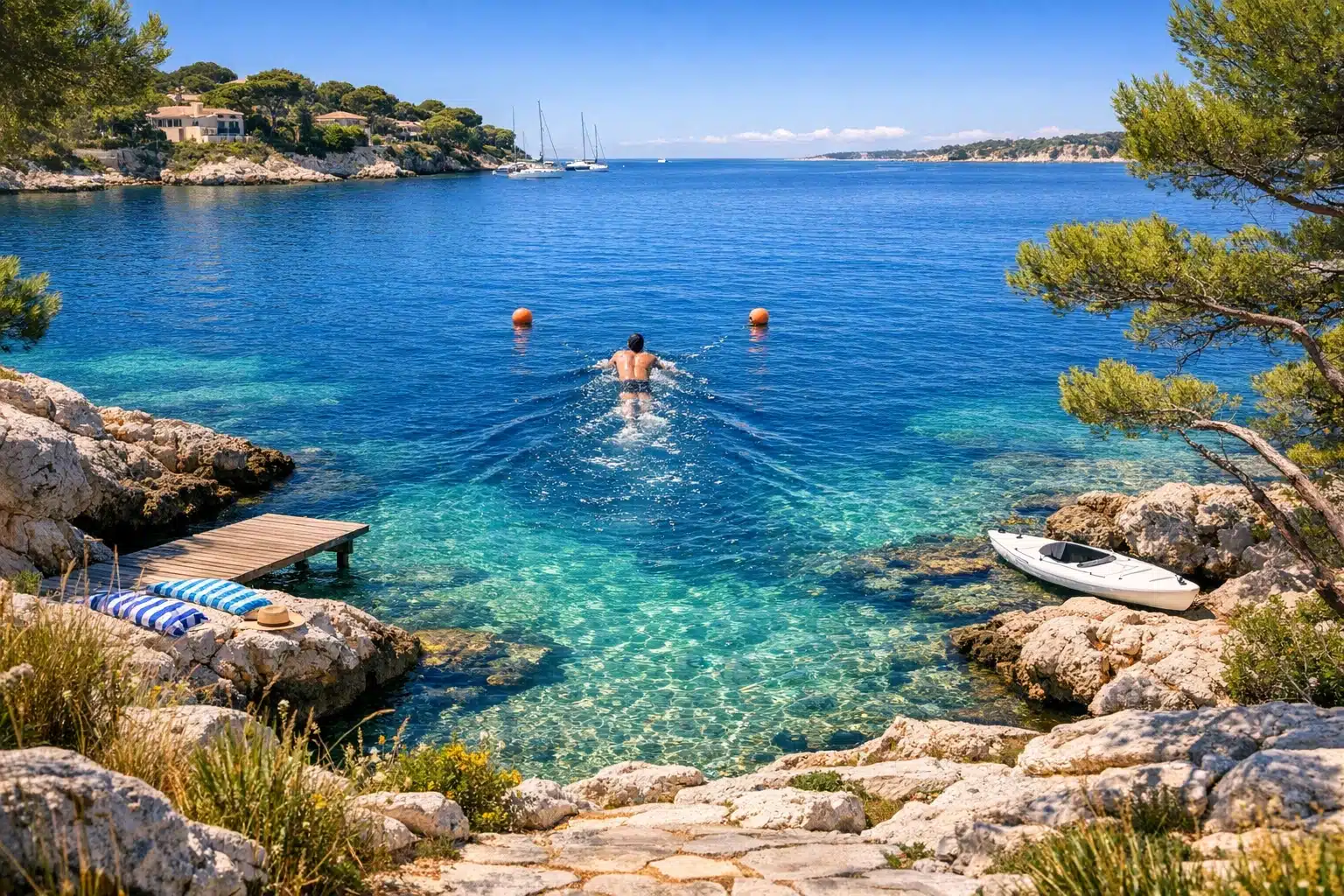
Explore the world of swimming
Swimming sits at a rare crossroads where survival, sport, and simple joy meet in the same body of water. It can teach a child confidence, give an adult a joint-friendly way to train, and offer older people movement that feels supportive rather than punishing. From local pools to open-water events, its relevance reaches into health, education, recreation, and competitive culture. Few activities combine practical safety with whole-body exercise so naturally, which is why swimming deserves a closer look.
The article will move through five main areas:
- Why swimming matters for health, safety, and everyday life
- How the main strokes differ in technique, purpose, and difficulty
- What effective training looks like for beginners and improving swimmers
- How swimming functions as a culture, a sport, and an outdoor pursuit
- Which habits help new swimmers start well and stay consistent over time
Why Swimming Matters Beyond the Pool
Swimming is often introduced as a sport, but that description is almost too narrow. It is also a life skill, a method of exercise, a rehabilitation tool, and in many places a basic element of personal safety. In countries with long coastlines, busy lakes, or strong water cultures, the ability to move calmly through water can be as practical as riding a bicycle. Even for people who never plan to compete, swimming can widen leisure options, improve confidence during travel, and reduce fear around beaches, rivers, and hotel pools. That everyday usefulness gives it a kind of relevance that extends far beyond medals and lap times.
From a health perspective, swimming is unusually versatile. Water supports body weight, which reduces the impact on joints while still creating resistance in every direction. That makes it attractive to people managing arthritis, carrying extra weight, returning from injury, or simply looking for exercise that feels less punishing than repeated pounding on pavement. Because the body must coordinate arms, legs, trunk rotation, and breath timing, swimming can challenge the cardiovascular system while also building muscular endurance. Depending on stroke choice, pace, and body size, an hour of swimming may burn roughly 400 to 700 calories, and vigorous sessions can go beyond that. Just as important, the resistance of water is smooth rather than jarring, so the effort often feels demanding without feeling brutal.
Its mental effects also deserve attention. Many swimmers describe the experience as both active and meditative. The soundscape narrows, vision simplifies, and movement becomes rhythmic. A set of laps can feel like a conversation between the body and the water: every rushed breath gets exposed, every careless kick gets corrected. This immediate feedback can sharpen concentration and reduce the clutter of the day. Research on physical activity regularly links regular exercise with better mood and stress management, and swimming fits neatly into that broader picture.
There is also a public safety angle that should not be overlooked. In many regions, drowning remains a major cause of accidental injury and death, especially among children. Learning to float, tread water, control breathing, and move to safety are not just athletic skills; they are protective ones. Even basic lessons can make a meaningful difference. The broad value of swimming can be summarized in a few practical points:
- It builds water confidence and supports safety awareness.
- It provides low-impact exercise for a wide range of ages and abilities.
- It can improve endurance, coordination, mobility, and posture.
- It opens doors to recreation, competition, and travel activities.
For that reason, swimming matters not only to athletes but to families, schools, health professionals, and anyone interested in lifelong movement.
Understanding the Main Strokes and What Each One Teaches
To an untrained eye, swimming can look like a series of similar splashes separated by lane ropes. In reality, each stroke has its own logic, rhythm, and personality. The four competitive strokesfreestyle, backstroke, breaststroke, and butterflyask the body to solve movement in different ways. Learning their differences helps swimmers choose the style that suits their goals, whether those goals involve speed, endurance, comfort, or technical growth.
Freestyle, usually performed with a front crawl, is the fastest and most widely used stroke. It relies on alternating arm recovery, a flutter kick, and side breathing coordinated with body rotation. Many beginners start here because it appears natural, yet efficient freestyle is more technical than it first seems. Good balance in the water, a long line from head to heel, and a relaxed exhale underwater are all essential. When swimmers lift the head too high or hold the breath, the hips often sink and the stroke becomes tiring. At its best, freestyle feels like sliding forward through a narrow tunnel, with the body rotating just enough to let each arm reach and anchor.
Backstroke mirrors some freestyle mechanics but changes the orientation completely. Swimmers stay on their backs, use a flutter kick, and alternate the arms overhead. Because the face remains above water, breathing is easier, which can make the stroke less stressful for new swimmers. At the same time, backstroke demands strong body alignment and awareness because swimmers cannot see where they are going. It often helps improve shoulder mobility, posture, and balance. For people who tense up when water covers the face, backstroke can be a useful bridge toward greater confidence.
Breaststroke is slower but highly distinctive. The arms pull together, recover forward, and the legs perform a whip-like kick. Its timing is precise: pull, breathe, kick, glide. Recreational swimmers often favor breaststroke because it allows forward visibility and a more measured pace. However, good breaststroke is technically demanding. A poorly timed kick or overly wide arm movement can waste a great deal of energy. Compared with freestyle, it emphasizes timing and glide more than constant propulsion. It also places different stresses on the knees and hips, which is worth noting for swimmers with joint concerns.
Butterfly is the most dramatic and usually the most physically demanding. Both arms recover together while the legs perform a dolphin kick driven from the core. When done well, butterfly looks almost theatrical, as if the swimmer is rising and falling with the water rather than fighting it. When done poorly, it can feel like trying to move a sofa through a storm. Butterfly develops power, timing, and body awareness, but it generally comes after a swimmer has built strong foundations in easier strokes.
Each stroke teaches something different:
- Freestyle rewards efficiency and sustained rhythm.
- Backstroke teaches balance and body alignment.
- Breaststroke sharpens timing and controlled propulsion.
- Butterfly develops coordination, power, and core-driven movement.
Knowing these contrasts makes swimming richer. Instead of seeing the pool as a place to merely survive a workout, swimmers begin to understand it as a laboratory of movement.
Training, Breathing, and Building Endurance in the Water
Good swim training is less about grinding through endless laps and more about combining technique, pacing, and recovery in a smart order. Beginners often assume improvement comes from simply staying in the pool longer, but water punishes poor habits with remarkable honesty. A runner may muscle through sloppy mechanics for quite a while; a swimmer usually gets immediate resistance in return. That is why strong progress tends to come from short, focused practice blocks rather than from heroic but chaotic efforts.
Breathing is often the first major hurdle. New swimmers frequently hold their breath underwater and then rush to inhale when the mouth clears the surface. This creates tension, disrupts rhythm, and leads to early fatigue. A better pattern is steady exhalation underwater followed by a quick, calm inhale during the breathing window. In freestyle, that often means turning the head with the body rather than lifting it forward. The difference can be dramatic: once breathing becomes rhythmic, the stroke stops feeling like a scramble and starts feeling sustainable.
Endurance should be built in layers. A useful beginner session might combine a warm-up, a skill drill, a manageable main set, and a cool-down. For example, a swimmer could start with easy lengths, practice kick work or body position drills, then complete short repeats with rest in between. Intervals matter because they teach consistency. Swimming 8 x 50 meters with 20 seconds of rest can be more beneficial than one untidy 400-meter effort if the shorter repeats preserve form. As technique improves, the volume and pace can gradually increase.
Tools can help when used wisely. Kickboards isolate leg work, pull buoys reduce kicking so swimmers can focus on arm mechanics, and fins can assist body position while making drills more accessible. None of these tools replaces skill, but they can highlight specific weaknesses. Coaches often emphasize a few recurring training principles:
- Quality beats quantity when technique is still developing.
- Consistent practice, even two or three sessions a week, is better than rare marathon workouts.
- Stroke drills improve efficiency, which often leads to speed without extra strain.
- Recovery matters because shoulders and upper back can become overworked.
For intermediate swimmers, structured variation keeps progress moving. That may include sprint sets, pace work, stroke changes, and aerobic efforts of different lengths. Competitive swimmers go further, using heart-rate zones, race-pace training, and video analysis, but the core lesson remains the same: improvement comes from deliberate practice. The water rewards patience. One day a swimmer struggles to cross the pool without panic; a few months later, the same person is counting strokes, controlling pace, and finishing the session pleasantly tired rather than defeated. That transformation is one of swimming’s quiet pleasures.
Swimming as Recreation, Competition, and Community
Swimming has a split personality in the best possible sense. It can be peaceful and solitary, like moving through a quiet lane before sunrise, or loud and intensely social, like a packed meet with whistles, relay starts, and teammates thundering at the edge of the pool. This range helps explain why the activity attracts such a broad audience. Some people swim to recover from desk-bound days, some chase qualifying times, and some simply enjoy the physical freedom of being in water. The same basic skill can support all three paths.
As a recreational activity, swimming offers unusual variety. A person might swim laps at a municipal pool, spend weekends at a lake, join water aerobics, or use the pool for active recovery after cycling or strength training. Families often treat swimming as shared leisure, which makes it one of the few activities where children, parents, and grandparents can participate in related ways even if their abilities differ. For travelers, swimming expands the experience of a destination too. A coastline, thermal bath, or calm bay becomes more meaningful when water feels inviting rather than intimidating.
As a sport, swimming has deep structure and tradition. Competitive swimming includes sprint and distance events, individual medleys, relays, and increasingly sophisticated performance analysis. Margins are tiny; a clean turn or disciplined underwater phase can decide a race. At elite levels, swimmers and coaches obsess over stroke count, split times, start reaction, pacing, and recovery. Yet the sport is not only for the young or the highly gifted. Masters swimming gives adults structured training and competition later in life, while para swimming demonstrates how adaptable and inclusive the sport can be when facilities and coaching are thoughtfully designed.
Open-water swimming adds another dimension altogether. Here the black line at the bottom of the pool disappears, replaced by currents, temperature shifts, waves, and navigation choices. Distance becomes psychological as well as physical. Some swimmers find open water liberating because it feels expansive and less repetitive than pool training. Others prefer the predictability of lanes and walls. Neither preference is superior; they simply ask for different skills. Open water places a greater premium on sighting, environmental awareness, and safety support.
Swimming also builds community in understated ways. Lessons connect teachers and learners, clubs create routine and belonging, and even casual lane etiquette teaches cooperation. In many places, pools function as public spaces where health, discipline, recreation, and social interaction overlap. The culture is shaped by simple rituals:
- Arriving early to stretch or chat before a session
- Sharing lanes and adjusting pace respectfully
- Encouraging younger swimmers during lessons or meets
- Celebrating personal milestones, not only podium finishes
That social fabric matters. It reminds people that swimming is not only about performance. It is also about participation, confidence, and the shared experience of learning how to move well in an environment that is beautiful, demanding, and completely honest.
A Smart Start for Beginners and a Clear Path Forward
If you are new to swimming, returning after many years, or trying to make it a steady habit, the most useful approach is a realistic one. You do not need elite technique, expensive gear, or fearless confidence on day one. You need a safe environment, patient progression, and enough consistency for the water to stop feeling unfamiliar. For many adults, the hardest step is not physical at all; it is emotional. Walking onto the pool deck can feel oddly vulnerable, especially when others seem more experienced. The good news is that swimming ability is built through repetition, not through bravado.
Start with the basics. If comfort in water is limited, spend time on floating, submerging the face, exhaling underwater, and pushing off the wall before worrying about speed. Formal lessons are often the fastest route to progress because a coach can correct issues that are hard to feel on your own. Small technical changes, such as relaxing the neck or narrowing the kick, can instantly reduce wasted effort. If lessons are not available, a cautious self-guided approach is still possible, but it should prioritize safety and simple goals over pride.
Equipment can remain minimal. A well-fitting swimsuit, goggles, and perhaps a swim cap are enough for most people. Fancy gear becomes useful only when it serves a clear purpose. What matters more is choosing a manageable routine. Two or three sessions a week often works better than one ambitious workout followed by a long gap. Progress in swimming is rarely dramatic from one day to the next. It tends to arrive quietly: the breath settles, the stroke smooths out, and one extra length appears without strain.
For beginners, these habits usually make the biggest difference:
- Choose quiet pool times to reduce stress and distractions.
- Warm up gently instead of launching straight into hard effort.
- Rest when technique falls apart rather than rehearsing bad movement.
- Track small improvements, such as easier breathing or more relaxed floating.
- Learn basic pool and open-water safety rules before becoming adventurous.
Safety deserves one final emphasis. Never overestimate your ability, especially in open water. Conditions can change quickly, and confidence should never replace preparation. Swim where supervision is present when possible, tell someone your plan, and respect fatigue, cold, and currents. These are not dramatic warnings; they are ordinary habits of sensible swimmers.
For the target audience of this articleanyone curious about swimming, eager to improve fitness, or looking for a sustainable form of exercise—the main message is encouragingly simple. Swimming meets people where they are. It can begin as a practical lesson, grow into a reliable workout, and eventually become a source of pleasure that lasts for decades. The first splash may feel awkward, but the long-term rewards are substantial: better movement, greater confidence, and a relationship with water that changes how the body and mind experience effort. That is a strong reason to begin, and an even better reason to keep going.