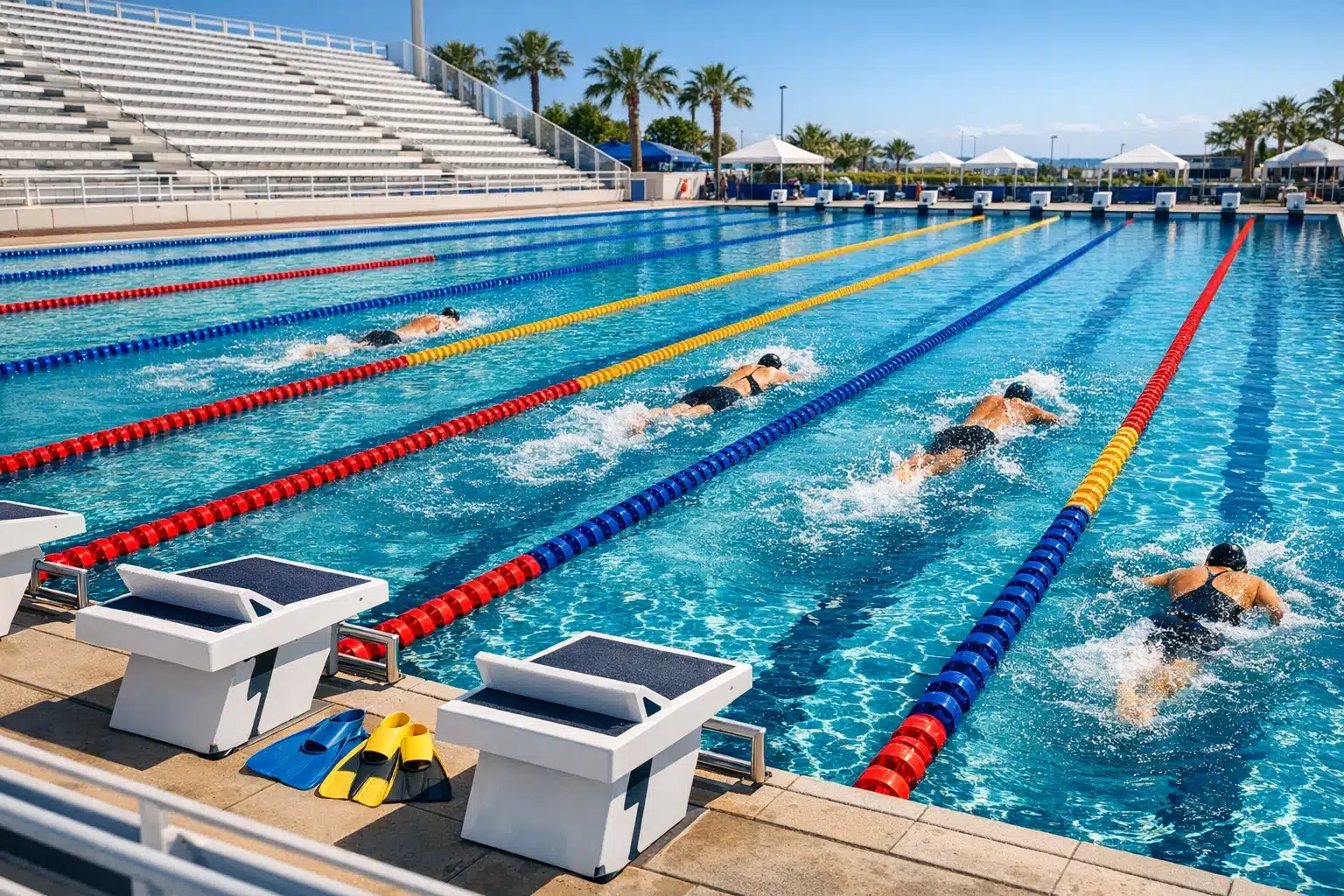
Explore the world of swimming
Swimming sits at a rare crossroads where survival skill, sport, therapy, and simple joy meet in the same body of water. A beginner may enter the pool hoping to gain confidence, while a competitor arrives chasing tenths of a second and cleaner turns. Families value it for safety, adults return for low-impact exercise, and coaches use it to teach discipline through rhythm and breath. That mix of practicality and wonder makes swimming relevant at nearly every age, from a child’s first float to lifelong fitness in later years.
Outline:
- The role of swimming as a life skill, recreational activity, and organized sport
- A comparison of the main strokes and the technique that makes each one effective
- The physical and mental benefits that make swimming valuable across age groups
- Training methods, equipment choices, and safety rules for pool and open-water settings
- A practical conclusion for beginners, parents, and fitness-focused readers
Why Swimming Matters: From Essential Life Skill to Global Sport
Swimming matters because it blends necessity with possibility. At its most practical level, it is a safety skill that can reduce risk around water, and that alone gives it enormous social value. The World Health Organization has reported that drowning claims roughly a quarter of a million lives globally each year, with children and young people carrying a significant share of that burden. Learning to float, tread water, control breathing, and move calmly in deep water does not guarantee safety in every situation, but it meaningfully improves a person’s chances of responding well when conditions become stressful. In that sense, the first swimming lesson is not just an activity; it is a form of preparation.
Beyond safety, swimming has grown into one of the world’s most recognizable sports. Competitive swimming has been part of the modern Olympic program since 1896 for men and since 1912 for women, and its events now range from explosive 50-meter sprints to tactical distance races and medleys. Yet swimming is not only about medals and world records. Community pools, lakes, seaside clubs, school programs, and masters groups give the sport a wide social life. A teenager training for a regional meet, a parent joining a water aerobics session, and a retiree swimming gentle laps may share the same facility while pursuing completely different goals.
Water changes the athletic experience in ways land sports cannot. Because water is far denser than air, every stroke meets steady resistance, which helps explain why even moderate swimming can feel demanding. At the same time, buoyancy reduces impact on joints, making the activity attractive to people who find running or court sports uncomfortable. This unusual combination of resistance and support is one reason swimming is often used in rehabilitation and cross-training.
A simple way to understand swimming’s importance is to see its three identities at once:
- It is a survival skill that improves water confidence and awareness.
- It is a training method that challenges the heart, lungs, and muscles.
- It is a sport with deep traditions, technical complexity, and international reach.
Very few activities move so easily between health, recreation, and elite performance. The pool can be a classroom, a testing ground, and a refuge all in the same afternoon, which is precisely why swimming continues to matter in modern life.
Understanding the Strokes: Technique, Efficiency, and Style in Motion
To an untrained eye, swimming may look like a sequence of splashes and lanes. In reality, each stroke follows a distinct logic, and the differences between them shape speed, energy cost, and difficulty. The four competitive strokes are freestyle, backstroke, breaststroke, and butterfly. Freestyle, usually swum as the front crawl, is generally the fastest and most efficient over long distances. Its alternating arm action, flutter kick, and side breathing allow swimmers to maintain momentum with relatively little interruption. That is why beginners are often introduced to freestyle early, even though proper breathing can take time to learn.
Backstroke shares some features with freestyle, but the swimmer remains on the back, looking upward rather than down. This position makes breathing easier because the mouth stays clear of the water more consistently. However, it creates a different challenge: navigation. In a pool, swimmers use ceiling lines, lane markers, and stroke counts to judge distance to the wall. Backstroke rewards balance and a stable hip position, and it often helps swimmers improve body awareness.
Breaststroke is slower than freestyle and backstroke, but it has a distinct rhythm that many recreational swimmers enjoy. Its pull, breath, kick, and glide sequence feels almost musical when performed well. Timing is everything. If the kick fires too early, the glide disappears; if the head lifts too much, drag increases sharply. Breaststroke is also the stroke where small technical errors become visible quickly. It can be comfortable for casual swimmers because the head rises forward regularly, but it is not automatically the easiest stroke. The whip kick demands flexibility and careful alignment.
Butterfly is often viewed as the most demanding stroke, and that reputation is earned. It uses a simultaneous arm recovery and a dolphin kick driven by the core and hips. Done well, butterfly looks like controlled power passing through the whole body in waves. Done poorly, it becomes exhausting within a few lengths. Because it requires timing, mobility, and strength, swimmers usually learn it after gaining confidence with the other strokes.
Technique matters in every stroke because water punishes inefficiency. Common principles apply across styles:
- A long, balanced body position reduces drag.
- Breathing should fit the stroke rhythm instead of disrupting it.
- Effective kicking supports alignment as much as propulsion.
- A strong pull depends on feel for the water, not just raw force.
Comparing the strokes also reveals different personalities. Freestyle is direct and economical, backstroke is calm but precise, breaststroke is patient and technical, and butterfly is dramatic and physically intense. Learning these contrasts helps swimmers choose goals wisely. A beginner may focus on freestyle and backstroke for confidence and fitness, while a developing athlete can use breaststroke and butterfly to build coordination, strength, and race versatility. In swimming, style is not decoration; it is function made visible.
Health and Fitness Benefits: Why Swimming Works for Body and Mind
Swimming remains one of the most respected forms of exercise because it trains multiple systems at once without demanding hard impact from the body. A steady session can challenge the cardiovascular system, strengthen major muscle groups, improve lung control, and increase mobility, all while the water supports body weight. That is a rare package. On land, high-effort workouts often come with pounding feet, joint stress, or overheating. In water, the body still works hard, but the environment changes the load.
The fitness benefits are broad. Swimming uses the shoulders, back, chest, core, hips, and legs in connected patterns rather than isolated motions. Even a relaxed set of laps asks the body to coordinate breathing with movement, which can improve endurance over time. Calorie use varies with body size, stroke choice, and intensity, but moderate swimming commonly burns roughly 200 to 350 calories in 30 minutes, while faster or more technically demanding work can go considerably higher. Butterfly and vigorous freestyle tend to raise the cost more than easy breaststroke or gentle backstroke, though efficiency and experience always matter.
Swimming also deserves attention for what it does not do. It does not usually pound the knees the way repeated running can. It does not require expensive fields, courts, or specialized strength machines. For people recovering from injury, living with arthritis, managing body weight, or easing back into exercise after a long break, this lower-impact profile can be a major advantage. Many rehabilitation programs use aquatic exercise because buoyancy reduces stress while resistance remains constant. Hydrostatic pressure may also help circulation and give some swimmers a noticeable sense of support.
The mental side is just as important. Repetitive laps can create a rhythm that feels meditative, especially during longer aerobic sets. Breathing becomes structured, outside noise fades, and attention narrows to stroke count, turns, and pace. For some people, that is a powerful antidote to a restless day. Studies on exercise and mental well-being consistently show that regular physical activity can reduce stress and improve mood, and swimming fits comfortably within that evidence. It can also build confidence in a very concrete way: a person who once feared deep water may eventually move through it with skill and control.
Some of the clearest advantages of swimming include:
- Full-body muscular engagement without harsh impact
- Cardiovascular training that can be adapted from gentle to intense
- Practical support for mobility, recovery, and long-term exercise adherence
- Mental calm created by rhythm, breath control, and focused repetition
In simple terms, swimming works because it asks the body to cooperate with the water rather than fight against it. That cooperation builds fitness in a way that can feel both demanding and strangely restorative, which helps explain why many swimmers leave the pool tired in the best possible sense.
Training, Equipment, and Safety: Building Skill the Smart Way
Good swimming rarely begins with speed. It begins with control. Many new swimmers make the same mistake: they try to muscle through the water before learning how to balance in it. A more effective approach builds skills in layers. First comes comfort with submersion, floating, and exhaling into the water. Next comes body position, followed by kick timing, arm mechanics, and finally pace control. This progression may feel slow at first, but it produces cleaner technique and better endurance later. In swimming, efficiency is a form of free speed.
Training structure helps translate that idea into practice. A balanced swim session often includes a warm-up, a drill segment, a main set, and an easy finish. Drills are especially useful because they isolate parts of a stroke that can otherwise get lost in full-speed effort. Freestyle swimmers may use catch-up drill to improve front-end timing, while backstrokers may focus on rotation and hand entry. More advanced swimmers add interval training, sprint work, pull sets, kick sets, or pace-based repeats. Distance and rest periods vary, but the principle stays the same: train specific qualities instead of swimming every lap at the same effort.
Equipment should support learning rather than distract from it. Common tools include goggles, a well-fitting swimsuit, a kickboard, a pull buoy, fins, and occasionally paddles for experienced swimmers. Goggles improve visibility and reduce irritation, while fins can help beginners feel body alignment more clearly. Paddles can strengthen the pull, but they also magnify technical mistakes, so they are best used with care. For open water, a brightly colored swim cap and, where appropriate, a tow float can improve visibility.
Safety deserves equal attention. Swimming is enjoyable precisely because water feels inviting, but that same environment can change quickly. A few practical rules go a long way:
- Learn and respect local conditions, especially currents, temperature, and depth.
- Never assume pool skill transfers perfectly to lakes, rivers, or the sea.
- Swim with supervision or a partner whenever possible, particularly in open water.
- Rest when technique falls apart, since fatigue often leads to poor decisions.
- For children, constant close supervision matters more than inflatable toys or casual watching.
Pool and open-water swimming also differ in mindset. Pools are measured, predictable, and lane-based; open water introduces sighting, waves, weather, and orientation. One is a metronome, the other a conversation with changing conditions. Both can be rewarding, but they require different habits. A careful swimmer understands this distinction and prepares accordingly.
The smartest path in swimming is usually the least flashy one: take lessons, practice often, review technique, and treat safety as part of the sport rather than a footnote. Progress built on those habits tends to last.
Who Swimming Is For: A Practical Conclusion for Beginners, Parents, and Fitness Seekers
Swimming has a wide appeal because it meets people where they are rather than forcing everyone into the same mold. For beginners, it offers a chance to build confidence step by step. The first victory may be something modest: placing the face in the water without panic, floating for ten calm seconds, or crossing a short distance with steady breathing. Those early gains matter because they turn uncertainty into competence. Anyone new to swimming should know that graceful movement usually arrives after repetition, not before it. Awkward first sessions are normal, not evidence of failure.
For parents, swimming deserves attention as both a safety priority and a positive routine. Lessons can help children learn boundaries around water, respond better in emergencies, and develop coordination in a playful environment. Just as important, swimming teaches patience. Progress often comes in visible stages, which can be encouraging for children who need confidence from small wins. Parents still need to remember the golden rule: lessons do not replace active supervision. Skill lowers risk, but it does not erase it.
For adults focused on health, swimming is one of the most adaptable exercise choices available. It can support weight management, heart health, mobility, and stress reduction without asking sore joints to absorb repeated impact. A person returning to exercise after years away may begin with easy lengths and water walking; another may join a masters group and discover a serious training outlet. The lane does not care whether someone arrives with an athletic background or with a doctor’s note suggesting more movement. It simply rewards consistency.
For athletes in other sports, swimming can be excellent cross-training. It builds aerobic capacity, challenges breath control, and strengthens the upper body and core in patterns that differ from running, cycling, or field sports. For older adults, it provides a way to stay active while respecting changing mobility and recovery needs. Few activities scale this well across life stages.
If there is one sensible takeaway for the target audience, it is this:
- Start with safety and comfort.
- Value technique before speed.
- Choose goals that match your age, experience, and environment.
- Let consistency do more work than intensity.
Swimming can be playful, demanding, calming, and deeply useful all at once. Whether you are learning your first stroke, guiding a child toward water confidence, or searching for sustainable exercise, the sport offers a clear invitation: enter patiently, practice thoughtfully, and let the water teach you what steady progress feels like.