Explore the world of swimming
Swimming is one of those rare activities that feels playful while asking the whole body to work with purpose. It can be a sport, a survival skill, a gentle form of rehabilitation, and a lifelong way to stay active without punishing the joints. From a child learning to float to an adult chasing faster laps, the water meets people at different stages and goals. This article explores why swimming matters, how it works, and what makes it so rewarding.
An Outline of Swimming: Why the Water Deserves a Closer Look
Before diving into the details, it helps to sketch a clear outline of the subject, because swimming is far richer than the stereotype of black lines on the bottom of a pool. At its core, swimming sits at the crossroads of movement, safety, health, and recreation. It is a practical life skill, a competitive sport, a therapeutic activity, and for many people, a small pocket of calm in an overstimulated week. Unlike land-based exercise, it asks the body to cooperate with buoyancy, resistance, balance, and breath control all at once. That combination makes it uniquely demanding, but also uniquely accessible. Someone recovering from joint strain may find freedom in the water that running cannot offer, while an athlete may use the pool to build endurance without repeated impact.
A useful outline for understanding swimming includes several connected themes:
– how water changes movement and effort
– why swimming supports cardiovascular fitness, strength, and mobility
– what separates the major strokes from one another
– how technique, training, and safety shape progress
– where swimming fits into everyday life, competition, and long-term wellbeing
Beginning with this framework matters because swimming often looks easier from the deck than it feels in the lane. A smooth swimmer seems to glide effortlessly, yet that appearance is the result of timing, body alignment, efficient breathing, and repeated practice. Water reveals inefficiency quickly. Lift the head too high, and the hips sink. Rush the arms, and rhythm disappears. Hold tension in the shoulders, and fatigue arrives early. In that sense, the pool is an honest teacher. It does not flatter poor mechanics, but it rewards patience with unmistakable progress.
Swimming also carries a social and cultural dimension worth noting. Around the world, people enter the water for different reasons: children learn safety, adults train for fitness, older swimmers preserve mobility, and communities gather around public pools, beaches, and competitions. The same body of water can host laughter during beginner lessons, disciplined interval work at dawn, and quiet reflection during an easy evening session. That range is part of swimming’s charm. It offers structure to people who like metrics and freedom to people who simply want to move. With that outline in place, the next sections will explore the physical benefits, technical foundations, training habits, and lifelong appeal that make swimming far more than just another workout.
The Physical and Mental Benefits of Swimming
Swimming is often praised as a full-body workout, and that description is accurate, but still incomplete. The water changes how effort is distributed across the body. Because water is far denser than air, every stroke meets resistance, which means movement itself becomes strength work. At the same time, buoyancy reduces the impact placed on many joints, especially the knees, hips, and spine. This is one reason swimming is frequently recommended as an exercise option for people who want serious activity without the pounding that can come with running or jumping. A lap session can challenge the shoulders, back, core, glutes, and legs while feeling smoother than many land exercises. Depending on pace, technique, body size, and stroke choice, swimming can also burn a substantial number of calories per hour, often falling in a moderate to vigorous range similar to other endurance activities.
The cardiovascular benefits are equally important. Repeated laps train the heart and lungs to work more efficiently, especially when swimmers learn to control breathing under mild stress. Unlike casual walking, swimming requires deliberate coordination between inhaling, exhaling, and body rotation. That alone creates a distinct aerobic training effect. Over time, many swimmers notice better stamina during daily activities, improved recovery between efforts, and a stronger sense of physical control. The benefits extend beyond conditioning:
– steady swimming can support heart health
– water resistance helps build muscular endurance
– the horizontal position may feel more comfortable for some people during exercise
– regular sessions can improve mobility, especially when paired with good technique
– varied strokes reduce monotony and challenge the body in different ways
Mental benefits deserve just as much attention. The pool has a strange and welcome way of narrowing focus. Once the face dips into the water, the mind often moves away from notifications, errands, and background noise. Many swimmers describe a session as meditative, not because it is easy, but because the repetition of strokes, turns, and breaths creates rhythm. There is also a measurable confidence factor. Learning to move well in water can reduce fear, increase independence, and build trust in one’s own body. For children, swimming lessons can become an early lesson in persistence. For adults, returning to the pool after years away can feel like reclaiming a forgotten language.
Compared with some other forms of exercise, swimming also offers unusual longevity. A person may step away from team sports or high-impact routines over time, yet remain in the water for decades. That matters because the best form of exercise is rarely the most intense one on paper; it is the one a person can sustain safely and meaningfully. Swimming checks that box for many people. It can be gentle, demanding, social, solitary, restorative, or competitive depending on the session. Few activities offer such range without changing the basic setting. The blue rectangle of a pool may look simple, but inside it lies a remarkably flexible path to better health.
Understanding the Strokes: Technique, Efficiency, and Common Differences
To an untrained eye, all swimming can look like a variation of arms splashing and legs kicking, but each stroke has its own mechanics, rhythm, and purpose. The four competitive strokes are freestyle, backstroke, breaststroke, and butterfly, and they differ in speed, energy cost, body position, and technical demands. Freestyle, usually swum as front crawl, is generally the fastest and most efficient for covering distance. It uses alternating arm recovery, a steady flutter kick, and side breathing. Backstroke mirrors some of that rhythm but places the swimmer face up, which can make breathing easier while introducing new challenges in direction and body alignment. Breaststroke is slower but highly technical, relying on a pull-breathe-kick-glide sequence that rewards timing more than brute effort. Butterfly is the most explosive of the four, pairing simultaneous arm movement with a dolphin kick that demands power, coordination, and strong core control.
Technique matters because swimming punishes wasted motion more quickly than many land sports. Good swimmers are not simply stronger; they are better at reducing drag and turning effort into forward travel. Small adjustments can produce major results. A slightly improved head position can lift the hips. A more relaxed arm recovery can conserve energy. A cleaner hand entry can help the body stay long and balanced. Coaches often return to a few essentials:
– maintain a streamlined body line
– keep the kick useful rather than frantic
– exhale steadily underwater
– rotate or time the breath without disrupting balance
– feel the water during the pull instead of slapping through it
Freestyle is often the first stroke people learn for fitness, but it is also the stroke where bad habits easily hide. Beginners frequently overkick, lift the head to breathe, or cross the arms over the center line. Backstroke can look simple because the face stays out of the water, yet swimmers often struggle with hip position and straight tracking. Breaststroke is especially revealing: when the timing is right, the swimmer seems to slide forward with quiet efficiency; when it is off, the stroke becomes exhausting and jerky. Butterfly, meanwhile, is the drama queen of the pool. Beautiful when controlled, brutal when rushed, it teaches the value of rhythm perhaps better than any other stroke.
Technique also changes according to goals. A triathlete may favor a sustainable freestyle built for distance and open-water conditions. A recreational swimmer might use backstroke to vary shoulder loading and ease breathing. A youth swimmer may practice all four strokes to build coordination and versatility. Even within one stroke, choices vary. Sprinters tend to use higher turnover and more aggressive kicking, while distance swimmers usually aim for economy and consistent pacing. That is why learning the strokes is not just about memorizing movements. It is about understanding how the body travels through water with the least friction and the greatest control. Once a swimmer begins to feel that relationship, the pool stops being something to fight and starts becoming something to work with.
Training, Safety, and Equipment: Building Skill the Smart Way
Swimming progress rarely comes from swimming harder every day. It comes from swimming with structure, recovering well, and respecting the environment. For beginners, that may mean short repeats with rest, simple drills, and a focus on comfort in the water before speed. For intermediate swimmers, it often involves interval sets, pace awareness, and targeted technique work. Advanced swimmers typically blend endurance, threshold sets, sprint efforts, starts, turns, and stroke-specific training. What unites all levels is the need for consistency. Two thoughtful sessions each week usually teach more than one heroic workout followed by long gaps. Because technique and conditioning are closely linked, even a tired swimmer benefits from choosing quality over mindless mileage.
A balanced training session often includes several parts: an easy warm-up, drills to sharpen mechanics, a main set built around endurance or speed, and a cool-down to bring effort back under control. Drills are especially valuable because they isolate pieces of a stroke that are easy to lose in full swimming. A catch-up drill can highlight front-body balance in freestyle. Kicking on the back may expose weak core control. Sculling can improve feel for the water. Useful equipment can support these goals when used carefully:
– goggles improve vision and comfort
– a swim cap reduces drag and helps keep hair managed
– kickboards isolate lower-body work
– pull buoys shift emphasis toward the upper body
– fins can improve body position and add propulsion during drills
– paddles increase resistance and should be used with good technique to avoid shoulder strain
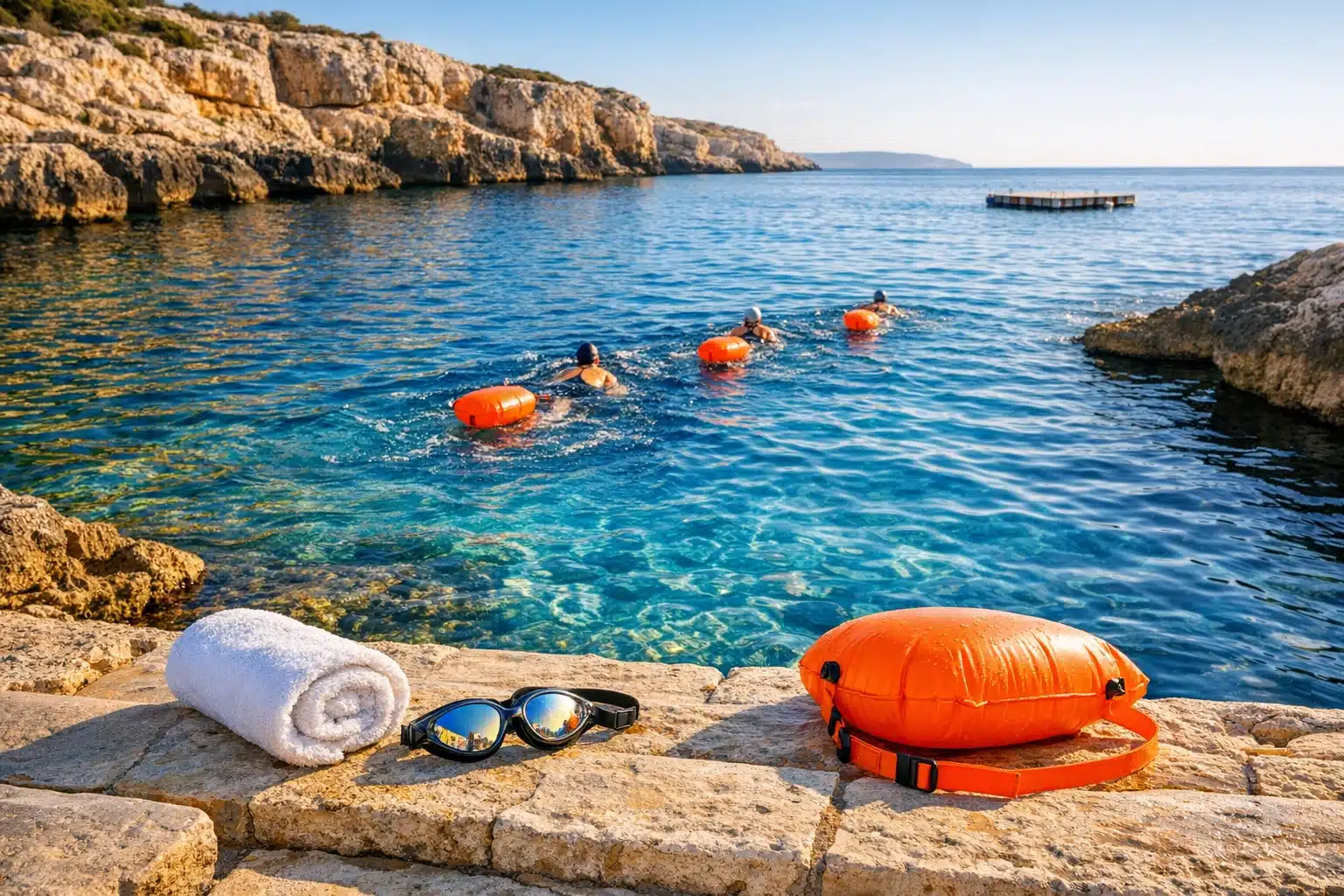
Safety is not a side topic in swimming; it is foundational. Even strong swimmers should respect fatigue, water temperature, weather conditions, and their surroundings. In pools, that means following lane etiquette, understanding depth changes, and avoiding overconfidence during underwater breath-holding games. In open water, the list grows longer. Currents, visibility, waves, boat traffic, and temperature all matter. Bright swim buoys, group swimming, and route planning are sensible precautions, not signs of weakness. Children need active supervision near water, even when lifeguards are present. Adults also benefit from humility. Many incidents happen not because people cannot swim at all, but because they misjudge conditions, effort, or their own limits.
Equipment, too, should serve the swimmer rather than distract from the basics. Expensive gear cannot replace sound mechanics. A well-fitted pair of goggles may improve a session more than any flashy accessory. Likewise, the best training plan is the one that matches current ability and available time. Someone preparing for a triathlon needs a different approach from someone using the pool for joint-friendly fitness. Coaching can accelerate improvement by providing feedback that swimmers often cannot notice on their own, especially regarding stroke timing and body position. Yet even without formal coaching, progress is possible through patient repetition, honest self-assessment, and attention to safety. In swimming, smart habits accumulate quietly. One day you notice the lap clock, the rhythm of your breath, and the long stretch of water ahead, and you realize the pool no longer feels intimidating. It feels familiar.
Swimming as a Lifelong Practice: Community, Competition, and a Conclusion for Readers
Swimming continues to matter long after a person learns the basics because it adapts so well to changing goals. For some, it becomes a sport defined by times, technique, and discipline. Competitive swimmers train with remarkable precision, often measuring progress in tenths of a second and refining details invisible to casual observers. For others, swimming belongs to a different world entirely: early morning laps before work, aqua exercise for mobility, weekend open-water swims, or family afternoons that quietly build water confidence. There is no single proper way to belong to the sport. That flexibility helps explain why swimming attracts such a broad range of people. A teenager may chase medals, a parent may value water safety, and an older adult may simply cherish an activity that keeps the body moving without harsh impact.
The community side of swimming is easy to underestimate. Pools and beaches gather people who might never share another hobby. Swim clubs create discipline and friendship. Masters programs give adults a place to train seriously without needing to be elite. Open-water groups mix adventure with caution, turning long swims into shared acts of trust. Even recreational public pools play an important social role by offering accessible exercise and teaching an essential life skill. In many places, access to swimming lessons and safe facilities can affect public safety, health opportunities, and confidence around water. That makes swimming more than a personal pastime; it is also part of community wellbeing.
There are many ways readers can translate this into action:
– if you are a beginner, start with comfort and breathing before worrying about speed
– if you want fitness, aim for regular sessions rather than perfect sessions
– if you are a parent, prioritize formal lessons and supervised practice
– if you are returning after years away, let technique rebuild gradually
– if you enjoy challenge, explore structured training or open-water events with proper preparation
For the target audience of this article, the most useful conclusion is simple: swimming rewards almost everyone, but it rewards patience most of all. You do not need to look graceful on day one, and you do not need a competitive goal to benefit from the water. Start where you are. Learn how to breathe, float, kick, and relax. Build skill layer by layer until confidence replaces tension. If you stay with it, swimming can become more than exercise. It can be a practical skill, a physical reset, a mental clearing of the room, and a habit that travels with you through different ages and seasons of life. Few activities offer that kind of staying power. The next time you stand at the edge of a pool, think of it not as a test, but as an invitation.